
What is a Foxtrot Dance? Steps, Music, and History Explained
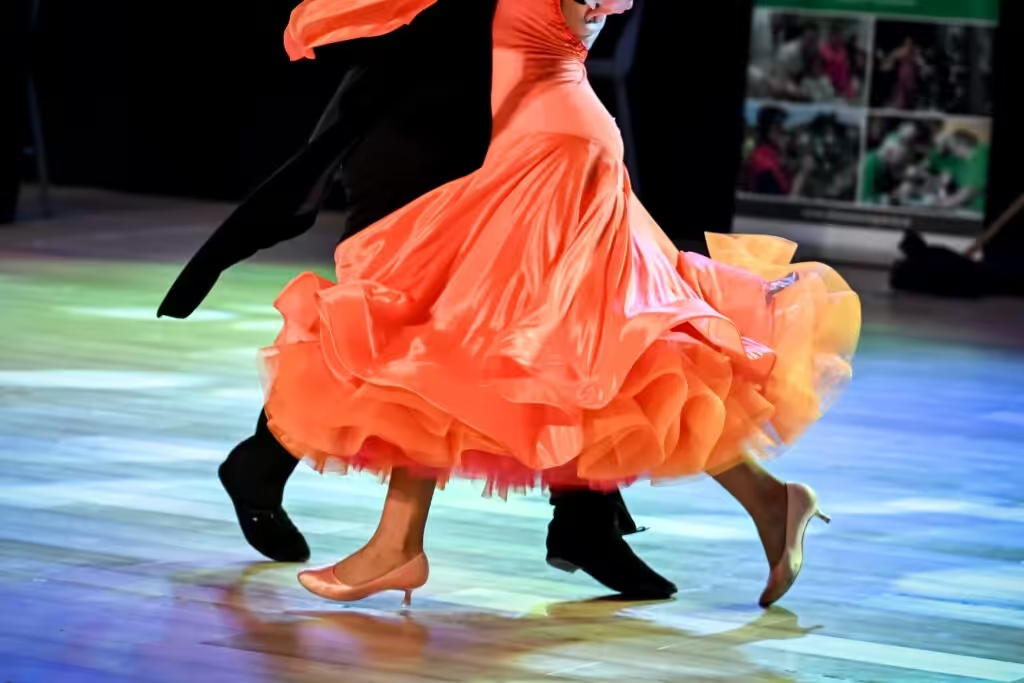
The foxtrot is a smooth ballroom dance known for long, gliding steps and a “slow, slow, quick, quick” rhythm. It uses 4/4 time, unlike the Waltz, which uses 3/4. Its simple rhythm works with many styles of music and makes the foxtrot popular with both new and experienced dancers. Key Takeaways Foxtrot Dance Quick Overview […]
The Anniversary Dance at a Wedding: A Heartfelt Tradition
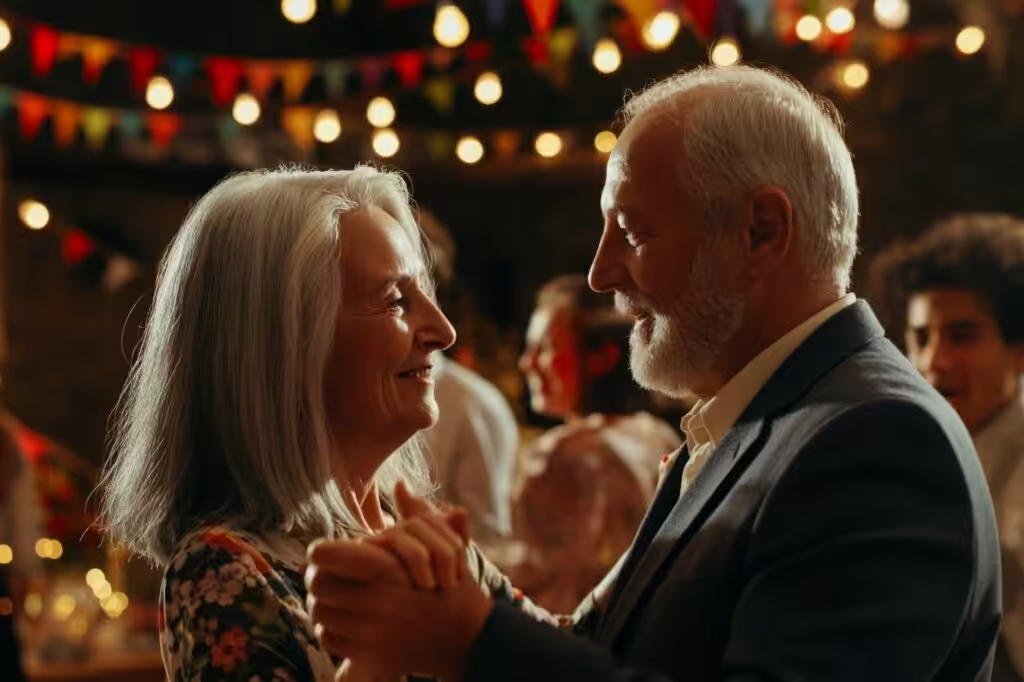
An anniversary dance at a wedding is a reception tradition where all married couples start dancing, then couples are gradually “called off” by years married until the longest-married couple is left on the floor. It’s a simple way to honor long-lasting relationships, create a meaningful moment for guests of every age, and give the newlyweds […]
Ballroom Dance Classes: Your Journey to Confident Movement
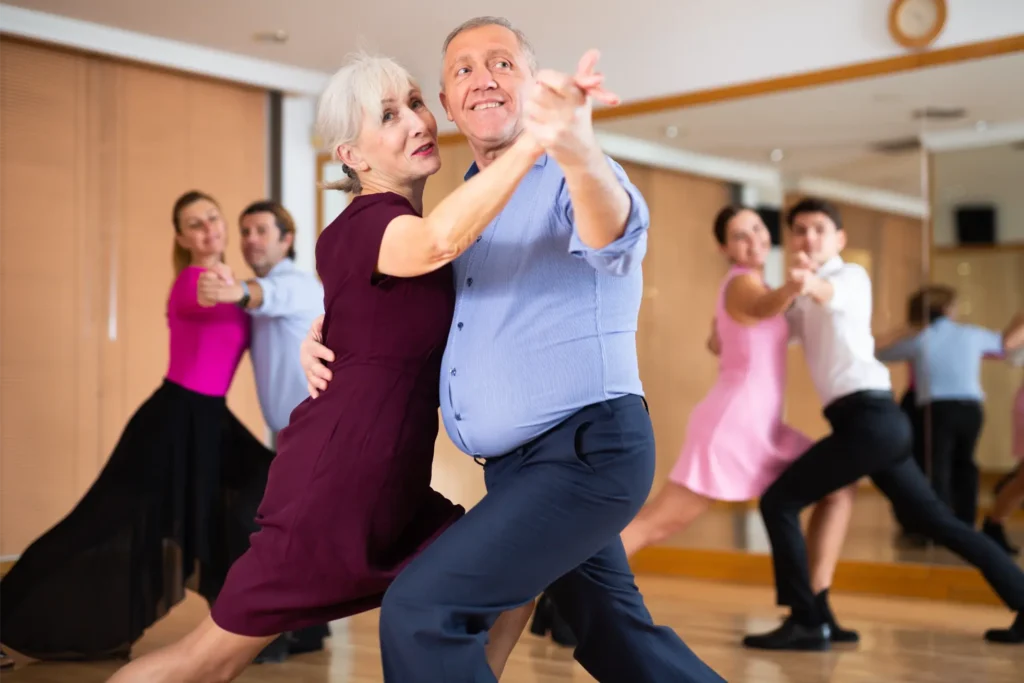
Ballroom dance classes teach you how to dance with confidence in real-life settings—weddings, parties, date nights, and social events. Most programs use a mix of private lessons (to learn and correct technique), small group classes (to drill patterns and timing), and practice parties (to use your skills with different partners and songs). This page explains […]
The Evolution of Ballroom Dance Costumes: From Corsets to Crystals

Ballroom dance costumes changed for one reason: the dances got faster, bigger, and more performance-driven. As ballroom moved from European court salons to competitions, heavy gowns and corsets gave way to lighter fabrics, fitted bodices, fuller skirts, and eventually rhinestones and crystals built to catch stage lighting. Latin costumes followed a different path—shifting from cultural […]
Tango Dancing: The Rhythmic Allure

Tango is a partner dance known for its sharp, grounded walk, dramatic pauses, and strong lead-and-follow connection. It originated in the Río de la Plata region (Buenos Aires and Montevideo) and later evolved into two common styles you’ll see today: Ballroom Tango (structured, traveling, competition-friendly) and Argentine Tango (more intimate, improvised, and musical). In this […]
A Guide to Latin Dance Styles: Decoding the Rhythms
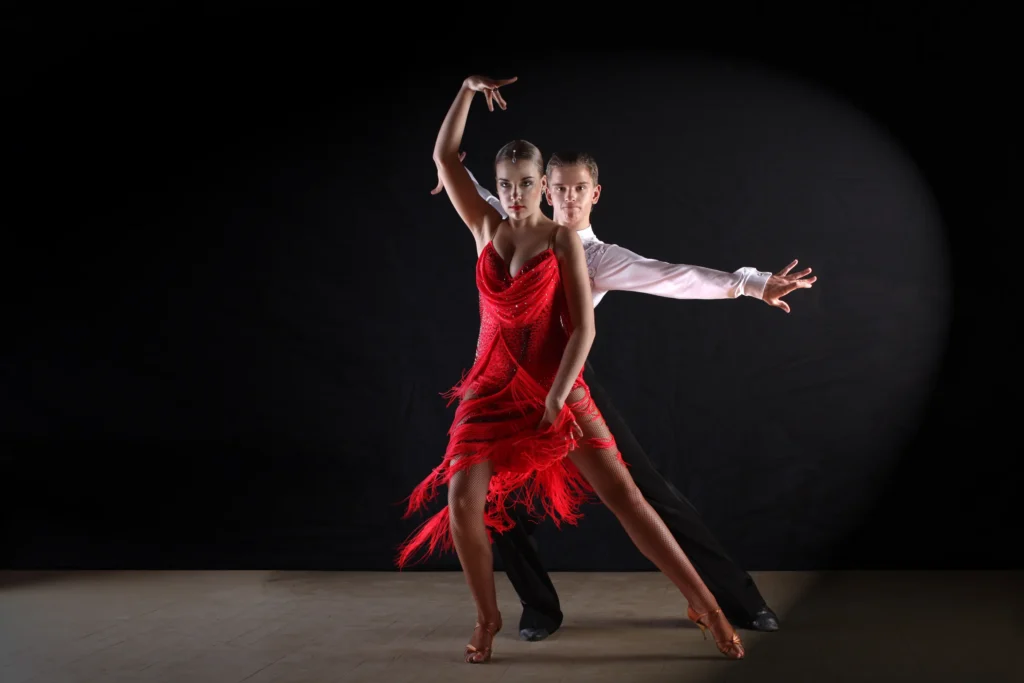
Latin dance styles include ballroom dances like Cha Cha, Rumba, Samba, Paso Doble, and Jive, plus social dances like Salsa, Bachata, Merengue, and Brazilian Zouk. The main split is between ballroom Latin, which follows structured techniques and partner patterns, and social Latin, which focuses more on improvisation, musicality, and connection. This guide explains the major […]
Tips for a Meaningful Father Daughter Wedding Dance

The father-daughter wedding dance is a short, traditional moment where you and your daughter share one song on the dance floor—usually a simple slow dance with light turns or a basic box step. Pick a song that matters to both of you, keep the dance around 90 seconds, and practice just enough to feel comfortable […]
History of the Waltz: From Scandal to the Ballroom
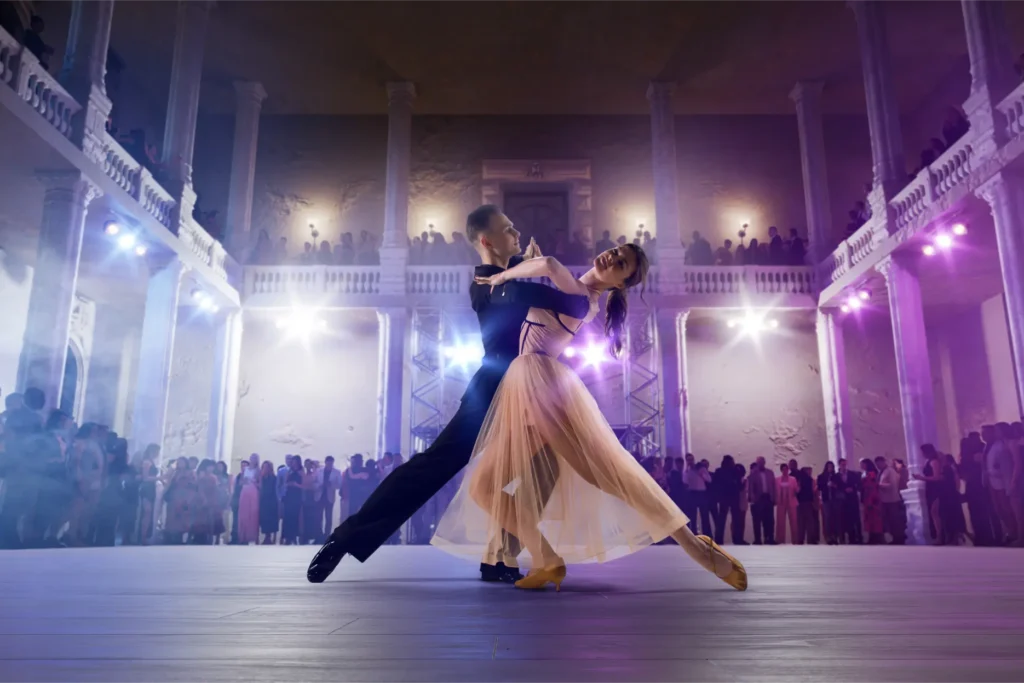
The history of the waltz began in 18th-century Austria, where it grew from folk dances. Its close partner hold caused controversy at first, but the dance soon became popular in ballrooms across Europe. By the 19th century, the waltz was closely linked with Vienna. It later spread around the world and developed into styles such […]
Types of Ballroom Dances: Standard, Latin, Smooth, and Rhythm
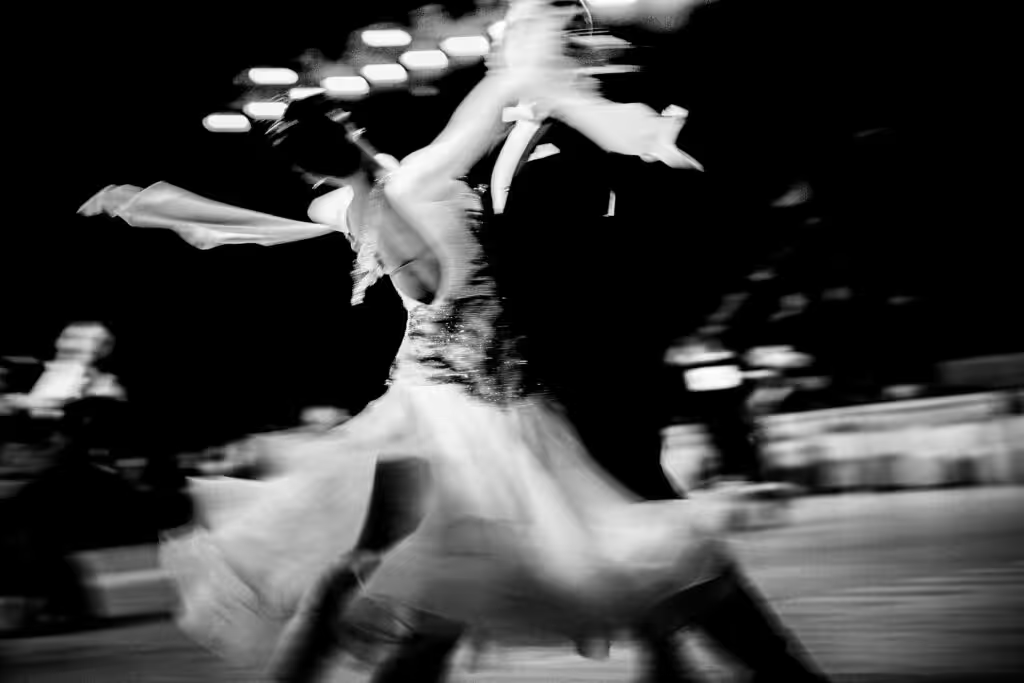
Ballroom dancing is divided into two schools, International and American. Together, they include four competitive styles, International Standard, International Latin, American Smooth, and American Rhythm, with 13 dances in total. Many dance studios also teach social dances like salsa and hustle alongside these competitive styles. Key Takeaways How Many Types of Ballroom Dances Are There? […]
Salsa vs Bachata: A Comprehensive Comparison of Two Latin Dance Traditions

Salsa and bachata are both social Latin dances, but they feel different because the music and movement are built differently. Salsa is driven by percussion and a stronger rhythmic structure (often danced with sharper direction changes and turns), while bachata is typically slower and more lyrical, with simpler footwork and a closer, smoother partner connection. […]