Knowing the steps is only half of social dancing—etiquette is the other half. A few unwritten rules (traffic flow, where to stand, when to chat, and how to invite partners) prevent collisions and keep the room welcoming. Here are six essentials to help you feel confident in your next ballroom class or dance party.
Key Takeaways
- Keep it friendly: patience and encouragement make the room better for everyone—especially beginners.
- Follow floor traffic: traveling dances move counterclockwise around the room.
- Use space correctly: travel on the outside; practice non-traveling steps toward the center—don’t cut through.
- No unsolicited teaching: social time is for dancing, not correcting.
- Ask people to dance: don’t wait for “the other person” to initiate—be inclusive.
- Chat off the floor: if you’re not dancing, clear the space so others can move safely.
Navigating the Social Dance Environment: Kindness, Movement, and Focus
The dance floor is a shared space, a communal stage where everyone should feel welcome and encouraged. Adhering to good etiquette ensures that this environment remains supportive and safe for all participants, from the newest student to the most experienced instructor. A thriving dance community is built on mutual respect and understanding.
Cultivating a Supportive Atmosphere in Ballroom Dance Classes
Good vibes ONLY!
Everyone here is in the process of learning. Give each other patience, kindness, and support. This is the bedrock of any successful group activity, especially one as vulnerable as learning to dance.
You will encounter dancers at all stages of their journey. Some may pick up the steps instantly; others may struggle. A simple smile, a patient pause, or a word of encouragement can make a world of difference.
Remember that the journey of learning is continuous, and tomorrow, you might be the one needing that extra patience. The energy you bring to the room directly impacts the experience of everyone else. Leave any frustration or negative self-talk at the door.
Understanding the Flow of Traffic: The Line of Dance
The dance floor is a one-way street. Counterclockwise only.
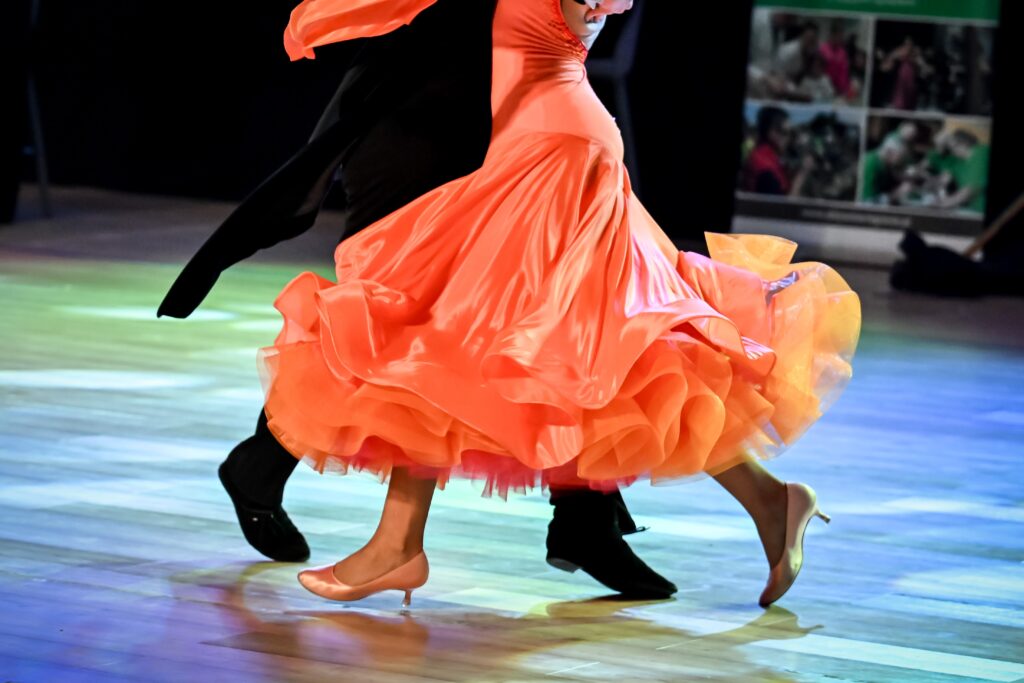
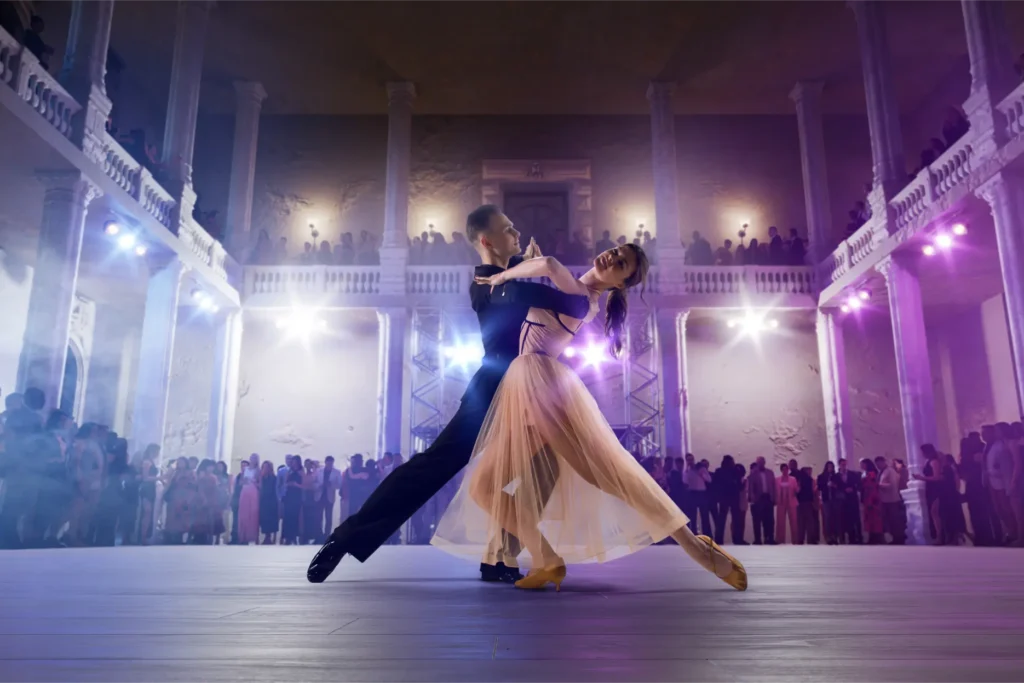
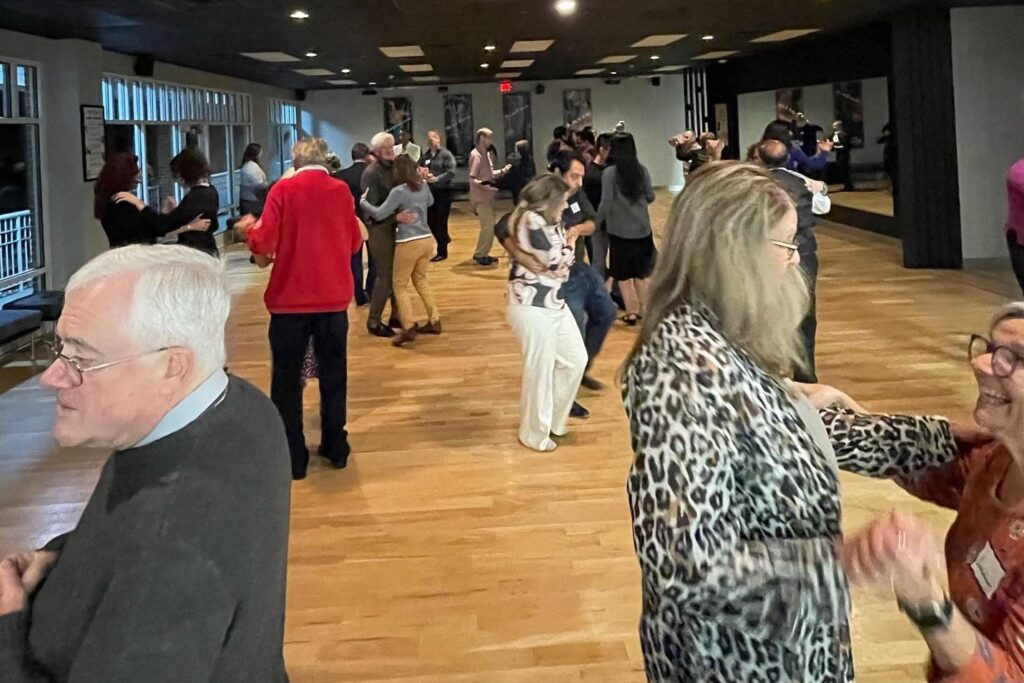
When dancing a travelling dance at a party/practice (i.e., Foxtrot, Waltz, Quickstep, Tango, Viennese Waltz, Peabody) ensure you are moving with the flow of traffic counterclockwise around the room.
This established pattern is known as the Line of Dance and is a crucial safety and flow mechanism. Imagine a busy highway: if everyone followed their own direction, chaos would ensue.
Similarly, in dances where couples move around the perimeter, maintaining the counterclockwise flow prevents collisions and allows a smooth, continuous experience for everyone.
Always keep your eye on the traffic and adjust your speed or path as necessary to maintain the flow. New dancers should prioritize a safe, steady travel over executing complex patterns that might disrupt the line.
The Center vs. The Perimeter: Managing Space
Don’t cause a traffic jam—stay in the middle of the floor if not travelling and no cutting through the middle when travelling.
If you haven’t learned to travel a dance yet, the middle of the dance floor is like the “pit” at a racetrack. You don’t want to be on the track if you aren’t travelling, and it is not safe to zoom through the pit if you are travelling.
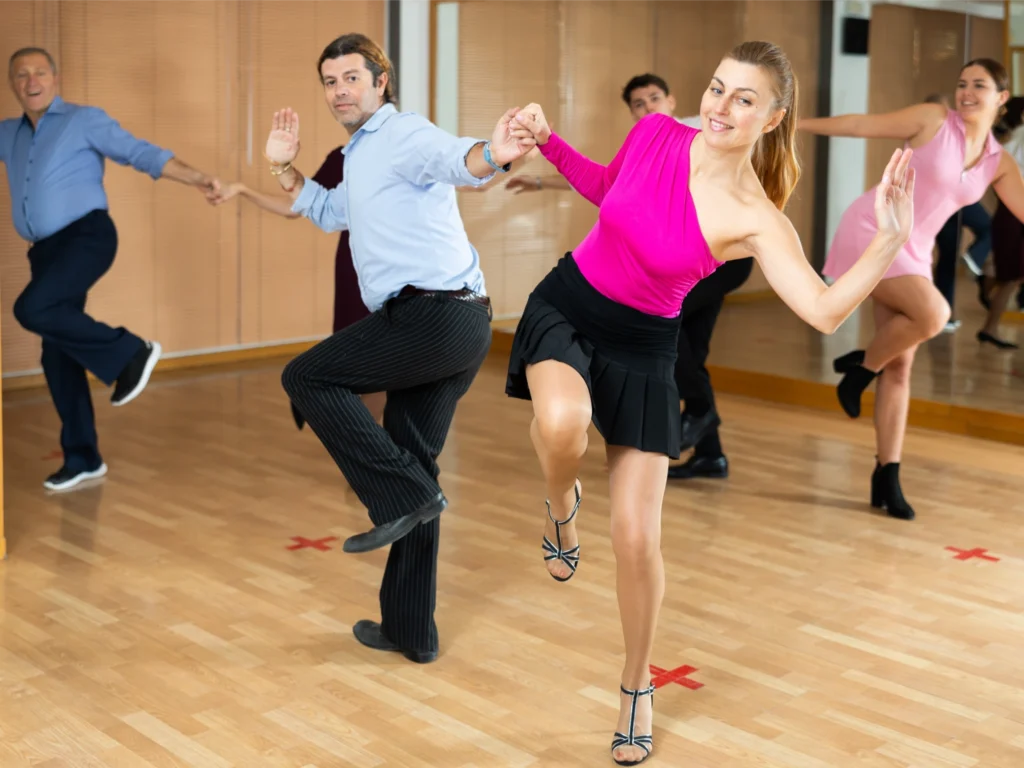
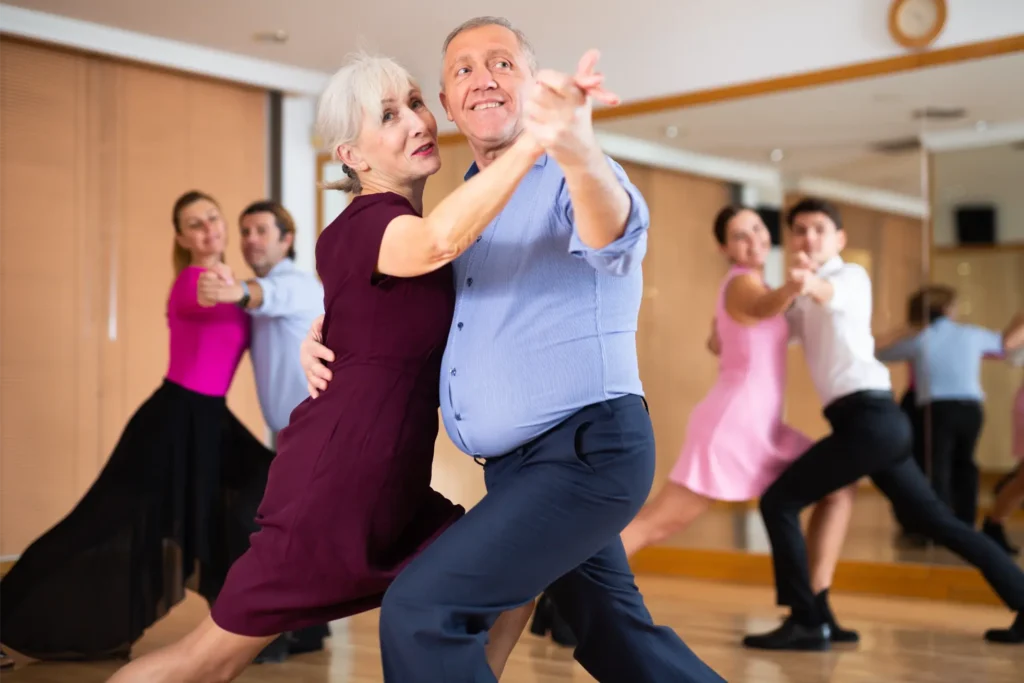
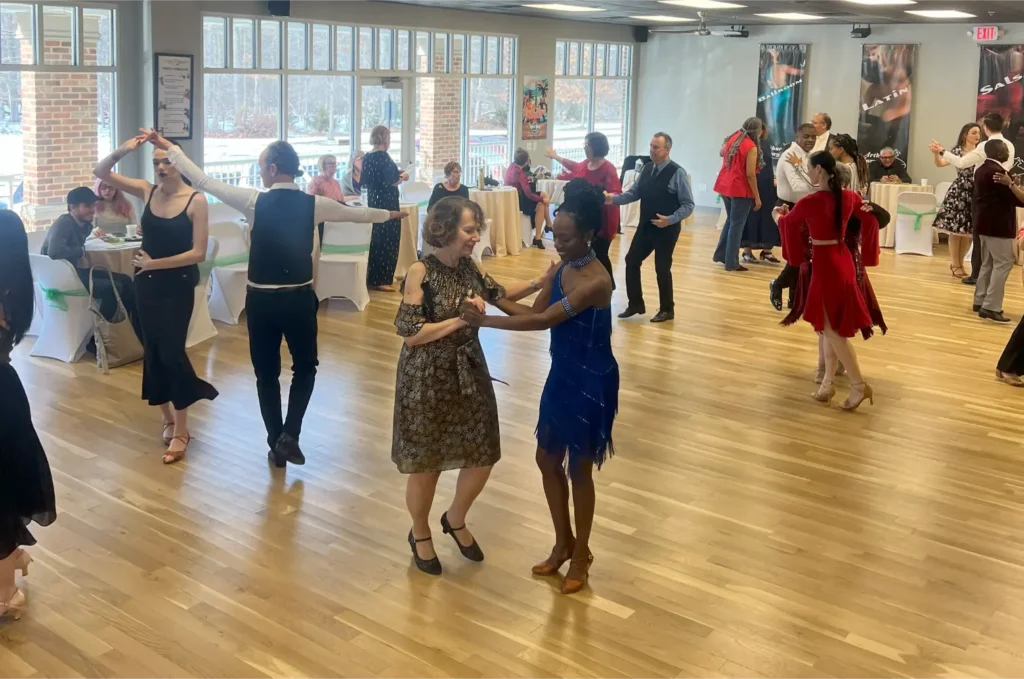
The dance floor is traditionally divided by function. Travelling dances (like Waltz, Foxtrot) utilize the outer ring (the “lane”), while spot dances (like Cha-Cha, Rumba, Swing) generally take place in the center (the “pit”).
This spatial division is key to preventing collisions. If a travelling dance is playing, and you wish to practice a spot dance or a non-travelling step variation, move to the middle. If you are travelling, stick to the outer ring and never cut across the center, as this is where spot dancers are focused on their movements.
Social Dynamics and Community Building: Respect and Participation
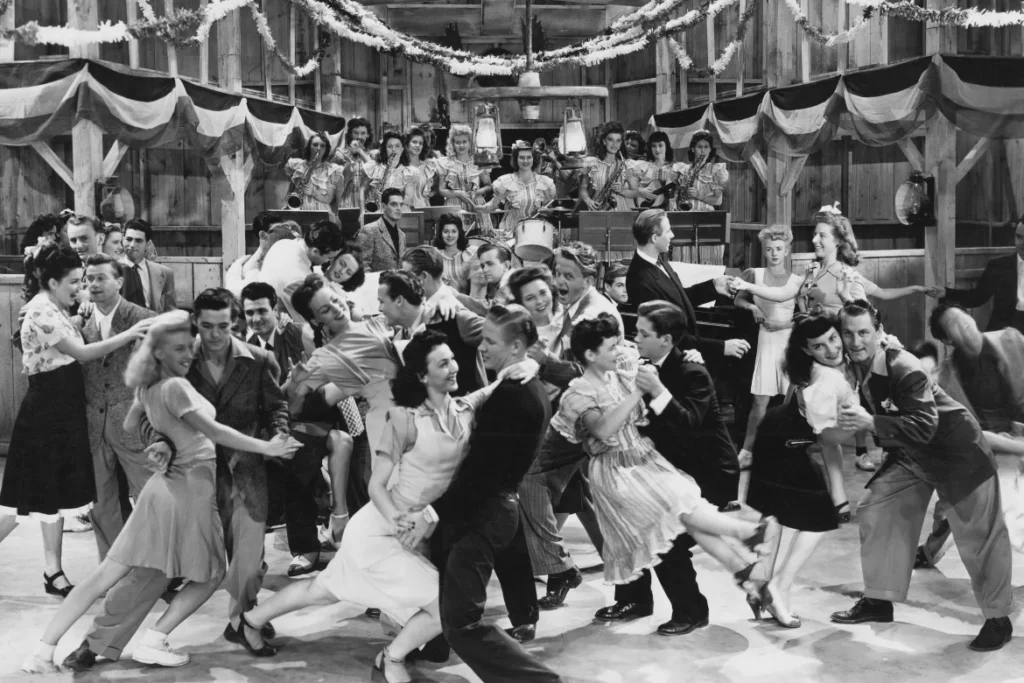
A dance party is fundamentally a social event. Etiquette here centers on how you interact with your fellow dancers, balancing the desire for connection with the need for individual space and avoiding unsolicited instruction.
Prioritizing Fun Over Instruction on the Social Floor
This is a Party, not a lesson—so dance and have FUN. No teaching please.
Remember kindness and support. You may think you are helping, but someone else may take it as criticism and feel like they don’t belong. (And anyhow, no one can learn the Cha Cha in 2 minutes!)
This is perhaps the most important rule for the social dance floor. Unless you are the paid instructor, refrain from giving unsolicited advice, corrections, or critiques to your partner or others.
A social dance is a time to enjoy the music and benefits of the dance, not a practice session for form critique. If your partner is struggling, smile, adjust your movement slightly to accommodate, and keep dancing.
Save the technical corrections for the structured environment of a Ballroom dance studio. Unsolicited teaching can severely damage a new dancer’s confidence and make them less likely to return.
The Importance of Asking and Being Inclusive
It is NOT leading to ask someone to dance—so don’t wait for THEM to ask YOU!
Go up and ask another person to dance, especially if they are new at the party. Waiting for “the man” to ask “the woman” to dance is not a thing anymore.
Additionally, feel free to ask a “more-advanced” person to dance. They would much prefer to dance the basics with you than to sit out. The responsibility for asking someone to dance falls equally on everyone.
If you want to dance, ask! Don’t let outdated social norms keep you waiting on the sidelines. Furthermore, make a conscious effort to dance with people you don’t know, including beginners.
Experienced dancers often cherish the opportunity to dance the basics with someone new, focusing on connection and musicality over complex patterns. Extending an invitation to a newcomer is the quickest way to integrate them into the community and demonstrate the warm, welcoming spirit of dance.
Respecting the Dancer’s Focus: When to Chat and When to Dance
The dance floor is for dancing— if you would like to chat, move to the lobby.
We realize you may not want to dance every dance and we love that you enjoy talking with one another. But don’t be a hazard to other dancers, talk your chat to the lobby.
The dance floor is a high-traffic area requiring dancers’ full attention to movement, music, and the surrounding couples. Standing on the edge or, worse, in the middle of the floor to chat creates a dangerous obstruction.
Even a small group standing still can force traveling couples to make risky maneuvers to avoid a collision. If you need a break, want to talk, or grab a drink, kindly move completely off the dance surface to a designated seating area or the lobby. This small courtesy significantly enhances the safety and enjoyment of everyone on the floor.
Dancing Your Way into the Community
Adhering to these six etiquette essentials—patience, flow, spatial awareness, no unsolicited teaching, active participation, and clear the floor when socializing—is the mark of a thoughtful and respected social dancer.
These principles are not about rigid rules; they are about fostering a vibrant, safe, and inclusive community. By integrating these practices into your dance routine, you ensure that every group class and dance party is a positive experience for yourself and everyone around you.
Remember that dance is a language, and courtesy is its most eloquent dialect.
FAQs: Common Etiquette Questions in the Ballroom Scene
Q: What should I do if I bump into someone on the dance floor?
A: Immediately stop, check to see if they are okay, and offer a sincere apology. A brief “I’m so sorry!” and a concerned look are usually enough. Accidents happen in a crowded social environment, but acknowledging the collision with grace is key. Avoid the urge to blame or critique the other person’s movement.
Q: Is it okay to refuse a dance?
A: Yes, it is perfectly acceptable to refuse a dance. You do not need to give an extensive explanation, though a polite “Thank you for asking, but I’m going to sit this one out” or “I need a water break” is gracious. However, never refuse a dance only to accept one immediately after from a different person, as this can be deeply insulting. If you sit out, sit out the entire song.
Q: How can I safely navigate a crowded dance floor?
A: In a crowded environment, prioritize safety over steps. Shorten your steps, use smaller lead/follow movements, and look where you are going (especially when moving backward). Travel more slowly than you normally would and be ready to adapt or pause briefly to avoid collision. When in doubt, simplify your pattern to maintain control.
Q: As a leader, is it rude to take my partner into a complex move I know they haven’t learned?
A: Yes, generally. A social dance is not the place to “test” your partner’s skills or try out a brand-new, complex move you just learned. Stick to patterns you are confident leading smoothly and that you believe your partner can comfortably follow. A smooth, simple dance is always preferable to a disjointed, complex one. Save the experimentation for practice time with your regular partner or an instructor.