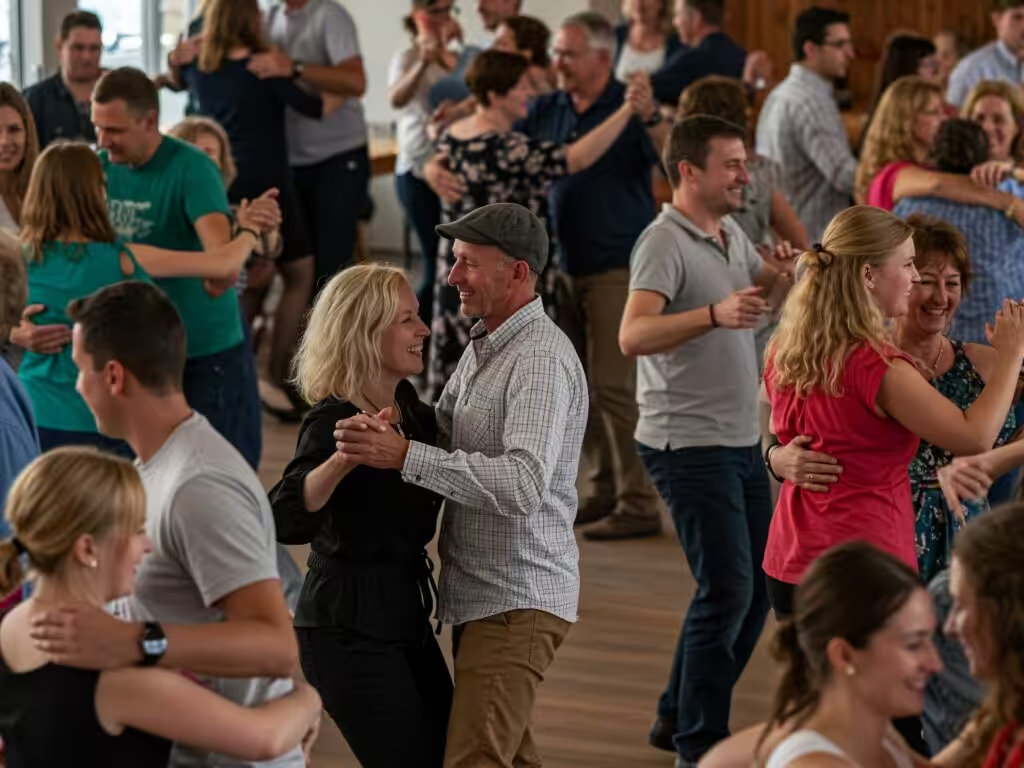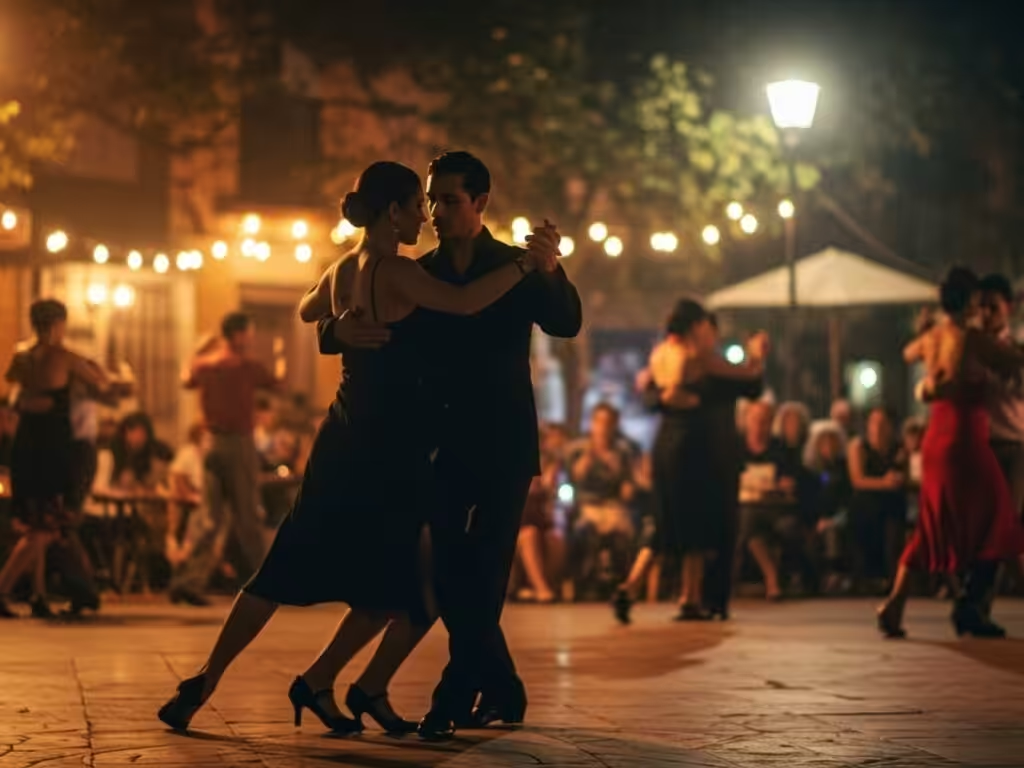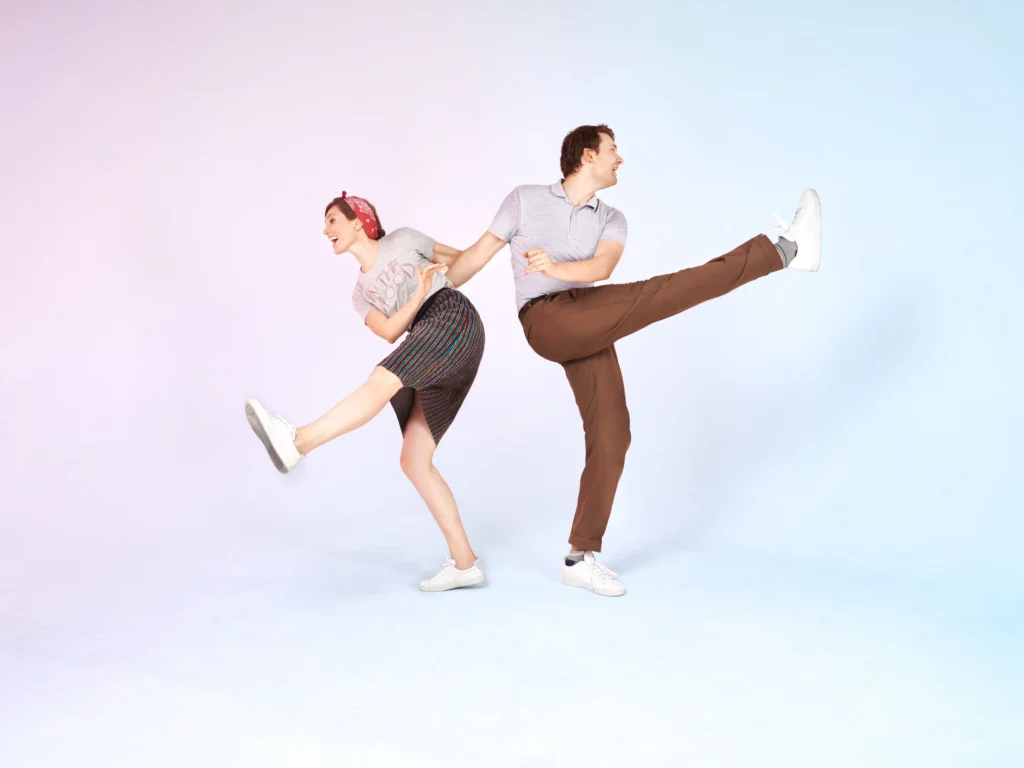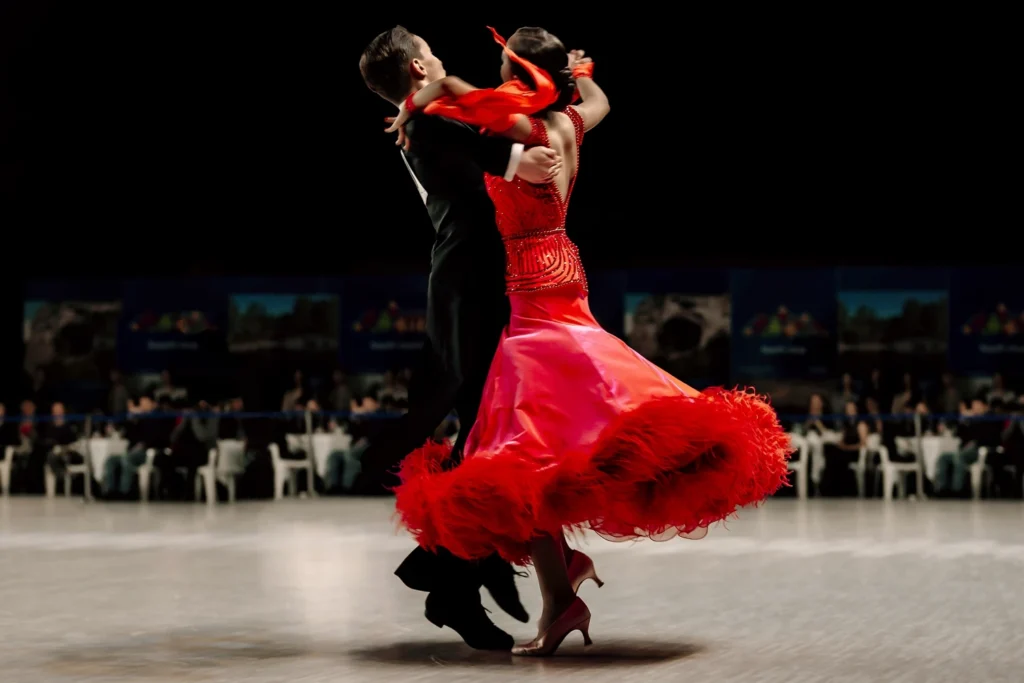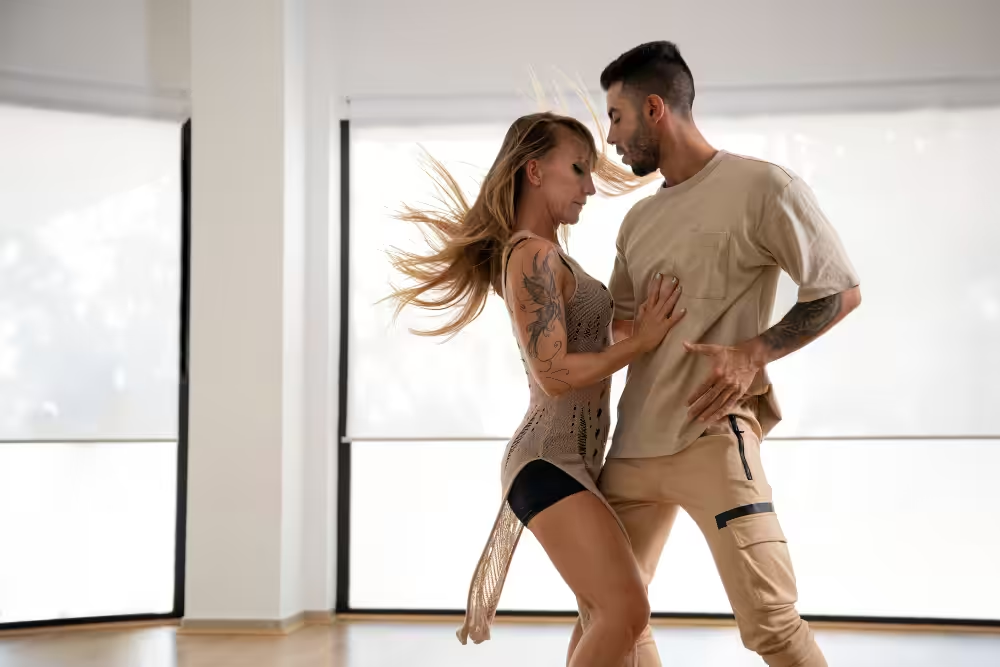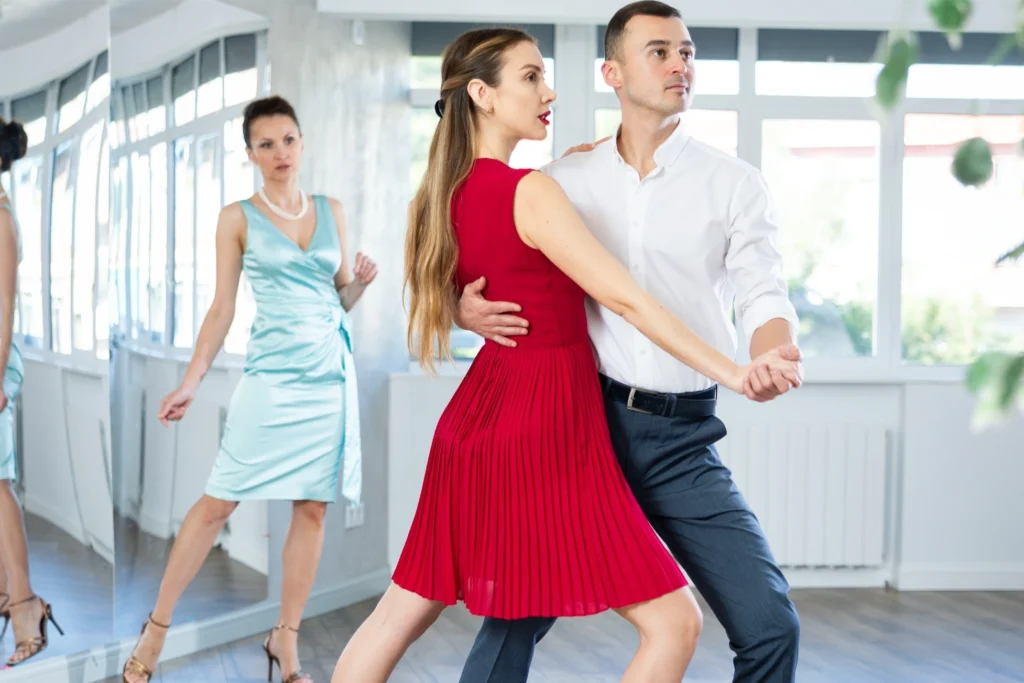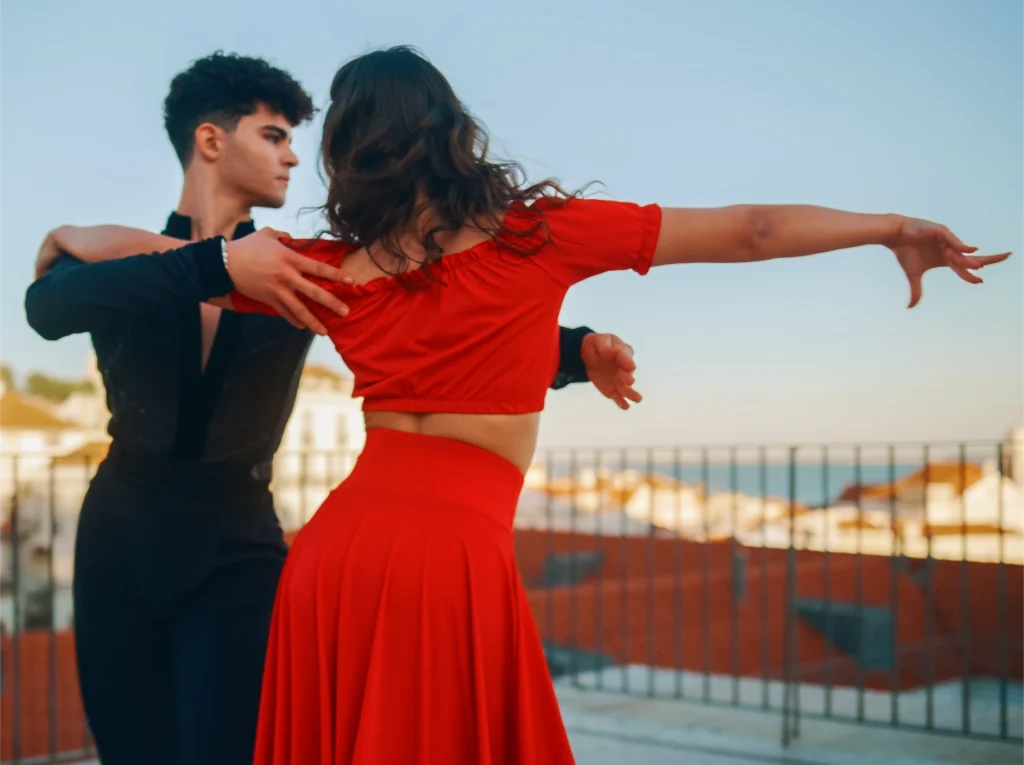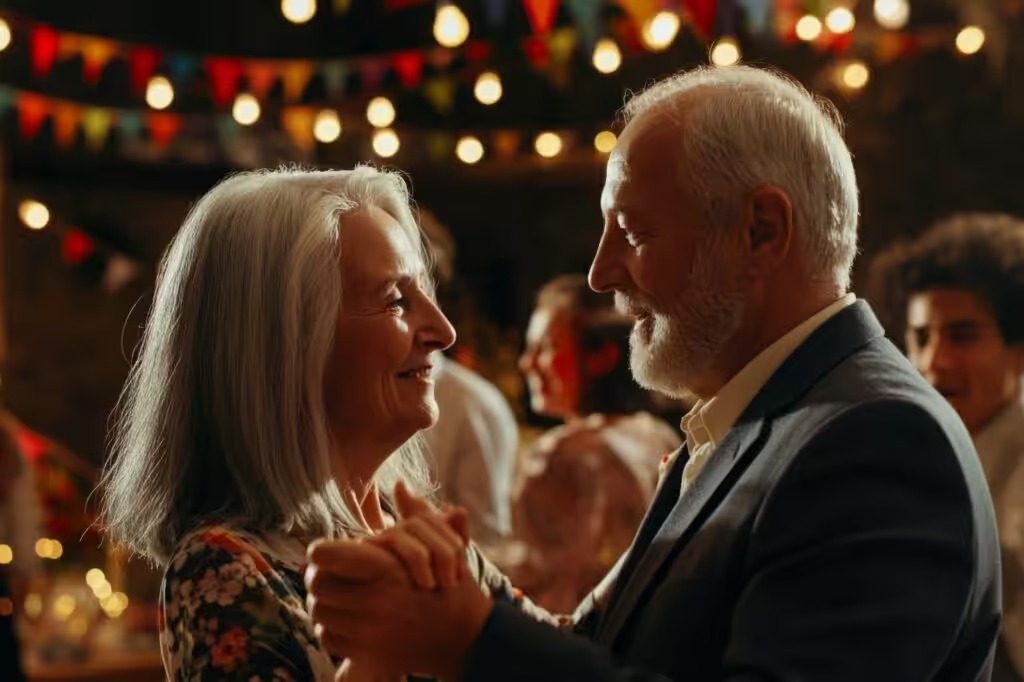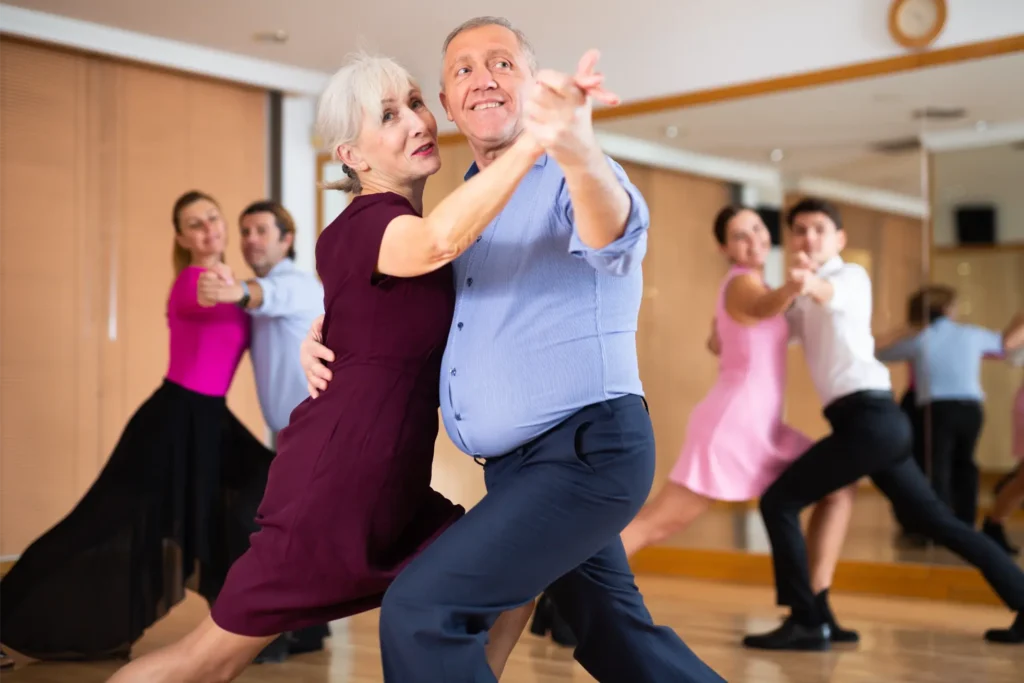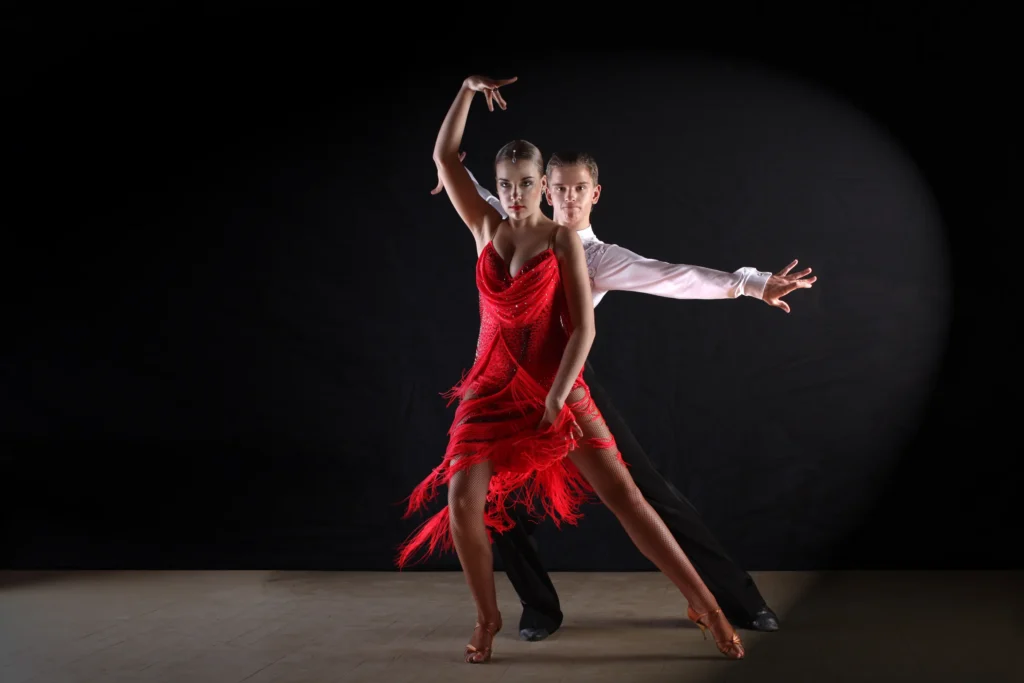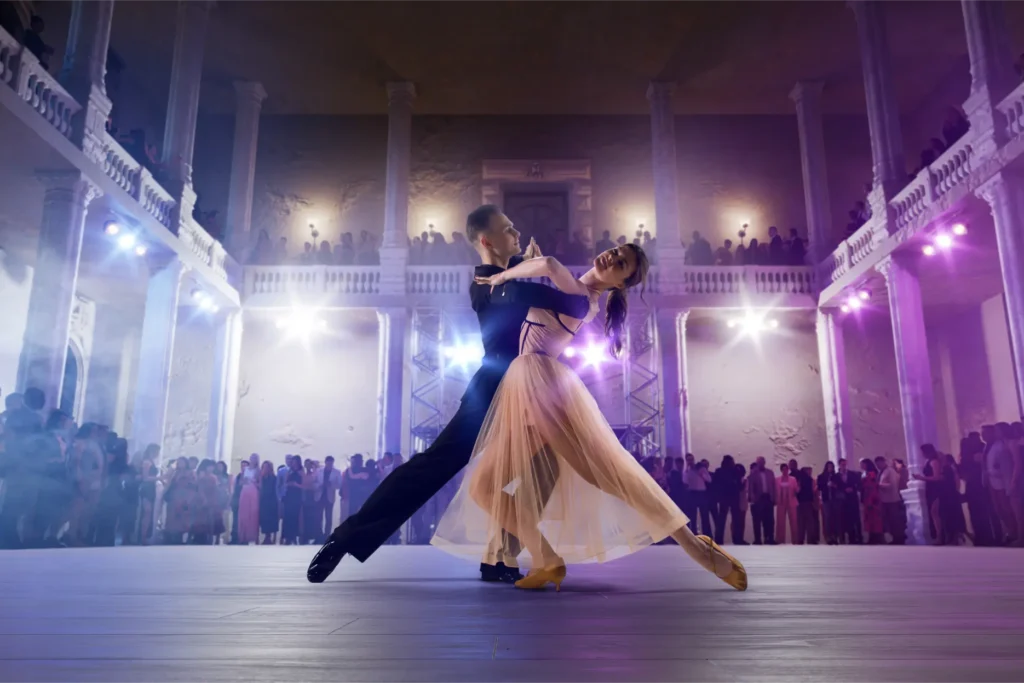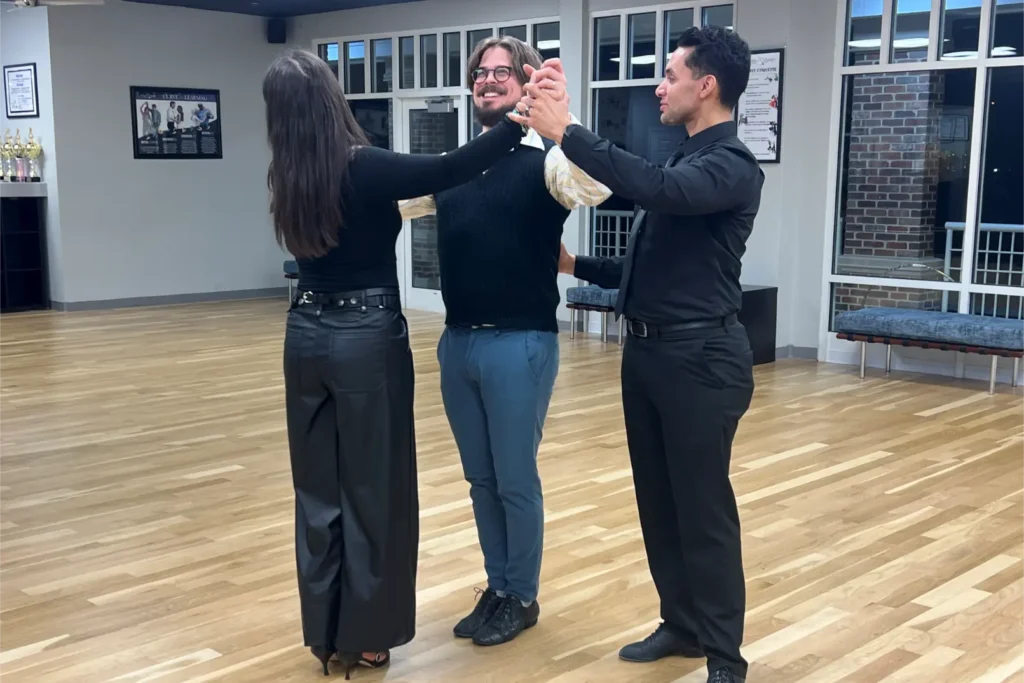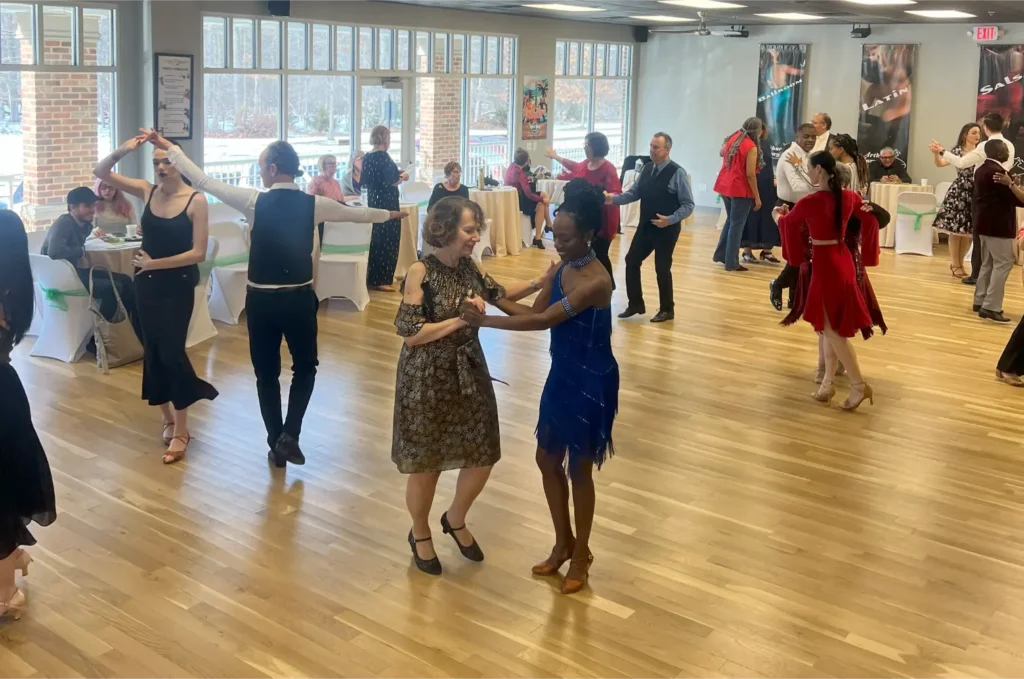
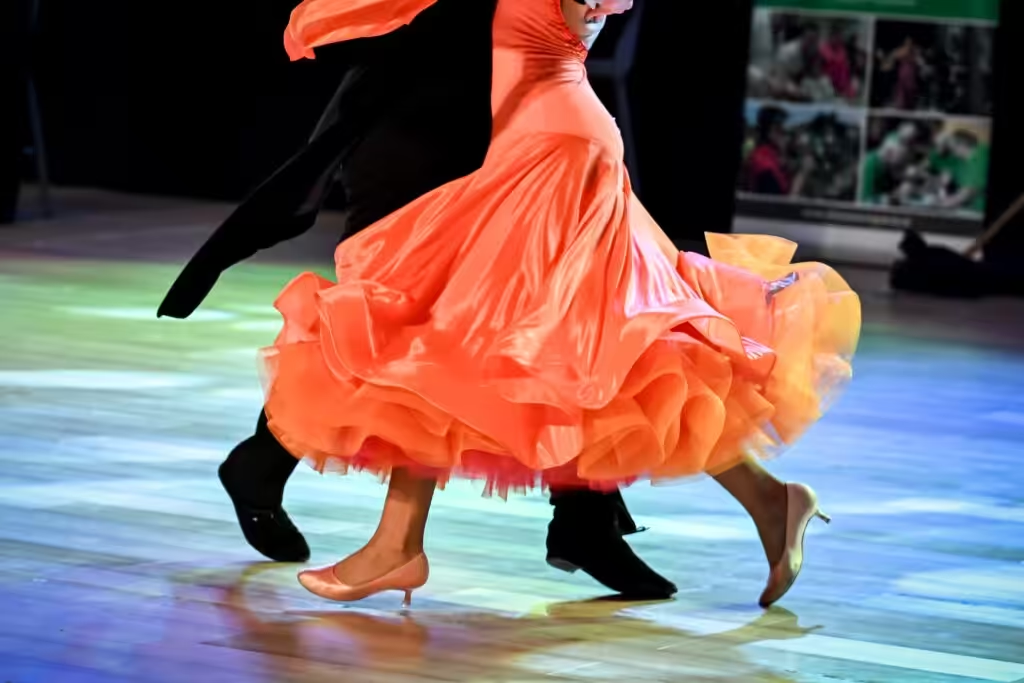
The foxtrot is a smooth ballroom dance known for long, gliding steps and a “slow, slow, quick, quick” rhythm. It uses 4/4 time, unlike the Waltz, which uses 3/4. Its simple rhythm works with many styles of music and makes the foxtrot popular with both new and experienced dancers.
Key Takeaways
- American Social Foxtrot commonly uses slow-slow-quick-quick, while International and American Continuity use slow-quick-quick.
- Start with American Foxtrot if you are a beginner. International Slow Foxtrot requires more precise technique and is considered one of the hardest Standard dances.
- The foxtrot developed into two distinct dances over time: the slower Foxtrot and the faster Quickstep.
- Foxtrot belongs to the Smooth/Standard family, not Latin.
- Choose music with a relaxed 4/4 beat, such as big band, jazz, or lounge music.
Foxtrot Dance Quick Overview
| Category | Details |
| Type | Smooth/Standard ballroom dance, travels counter-clockwise |
| Time signature | 4/4 |
| Timing | Slow-slow-quick-quick and slow-quick-quick |
| Beat value | Slow = 2 beats, Quick = 1 beat |
| Tempo | ~28–34 measures per minute (~120-136 BPM) |
| Styles | American (Social / Continuity). International (Slow Foxtrot) |
| Music | Big band, jazz, swing, lounge |
| Origin | United States, premiered in 1914 |
Foxtrot Origins and Evolution
To fully appreciate the art of the foxtrot, it’s essential to understand where it came from and how it developed over the decades.
A Dance Born from Jazz
The foxtrot originated in the United States in the 1910s, as ragtime and early jazz were becoming popular. Its exact origin is debated, but vaudeville performer Harry Fox is closely associated with the dance. In 1914, his trotting dance steps attracted public attention and helped popularize the style that became known as the foxtrot.
From Dance Craze to Ballroom Staple
The early foxtrot was faster and more energetic than the smooth dance we know today. Vernon and Irene Castle helped refine its style, while Arthur Murray later helped standardize its steps and teaching methods. By the 1920s and 1930s, the foxtrot had developed into a smoother, traveling ballroom dance.
The foxtrot also played a role in the development of the Quickstep. Learn more about the history of the Quickstep.
How to Do the Foxtrot
The foxtrot combines a steady rhythm with smooth, traveling steps that move around the dance floor. Beginners can start with a few basic steps and add more figures as their timing and control improve.
The Fundamental Rhythm
The foxtrot uses two common timing patterns: slow-slow-quick-quick (SSQQ) and slow-quick-quick (SQQ). A slow takes two beats, while a quick takes one beat. Both patterns fit the foxtrot’s 4/4 time signature.
This also separates the foxtrot from the Waltz. The foxtrot is danced in 4/4 time, while the Waltz uses 3/4 time.
Another ballroom dance that uses 4/4 time is the nightclub two-step. Learn more in our guide to the nightclub two-step.
Foxtrot Steps
The basic foxtrot steps are two walking steps followed by a side step and a closing step. Leaders typically step forward with the left foot (slow), forward with the right foot (slow), then step to the left (quick) and bring the right foot next to the left (quick). Followers mirror the pattern, starting with the right foot and moving backward.
Practicing the pattern at a steady tempo helps you develop timing and control before moving on to more advanced foxtrot figures.
The Artistry of the Foxtrot: Beyond the Basics
Once you know the basic steps and timing, technique becomes the focus. Posture, movement, and partner connection give the foxtrot its flowing appearance.
Styling and Technique
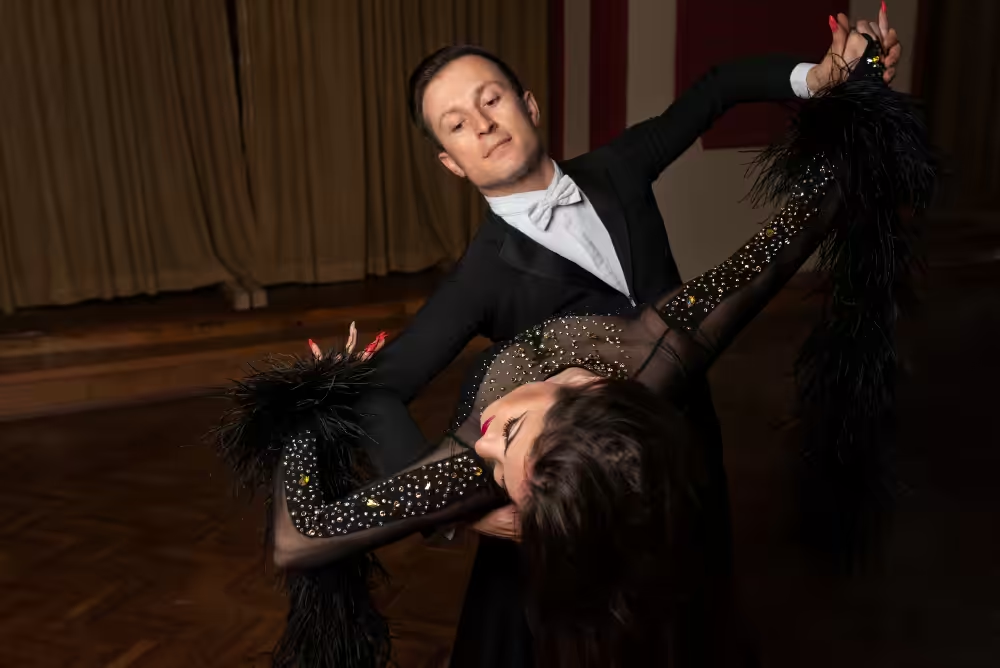
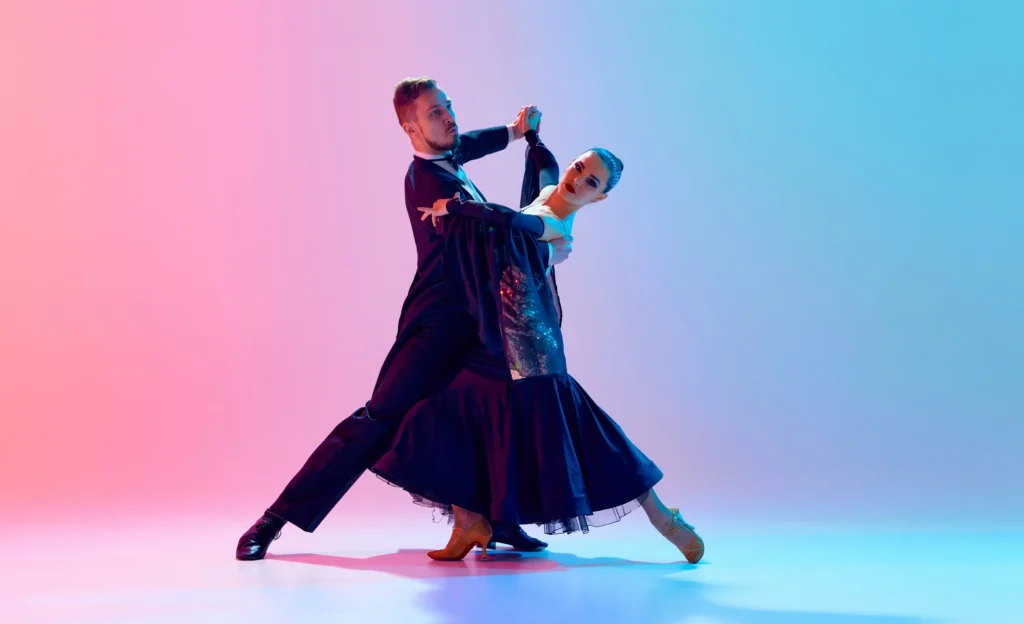
Good foxtrot technique relies on upright posture, a stable frame, and body flight that carries the dancers smoothly across the floor. Sway and controlled rise and fall also shape the movement without interrupting its flow.
In International Foxtrot, figures such as the feather step and heel turns are important markers of the style. Organizations such as the Imperial Society of Teachers of Dancing (ISTD) codify International ballroom technique, including the figures and technical principles dancers study as they progress.
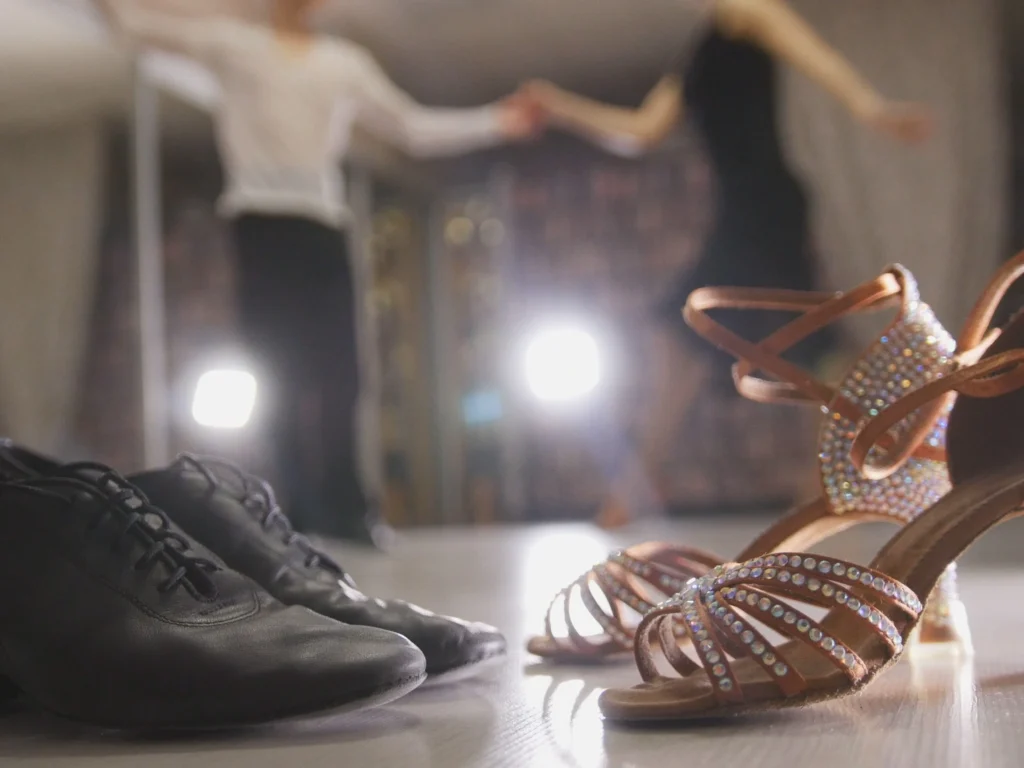
Good posture and smooth footwork also depend on comfortable footwear, so choosing the right ballroom and Latin dance shoes can make practicing the foxtrot easier.
Partnership and Communication
Foxtrot partners communicate through their frame, body movement, and changes in direction. A consistent connection helps both dancers stay coordinated as they travel around the floor and move between figures.
Foxtrot in the Spotlight: Social and Competitive Dance
| Foxtrot Style | Where You’ll See It | What It Feels Like | Beginner-Friendly? |
| American Foxtrot | Social dancing, weddings, showcases | Relaxed, versatile, with more freedom of movement | Yes |
| International Foxtrot | Ballroom competitions | Smooth, controlled, and technically demanding | Simple basics, challenging at advanced levels |
Social Dancing
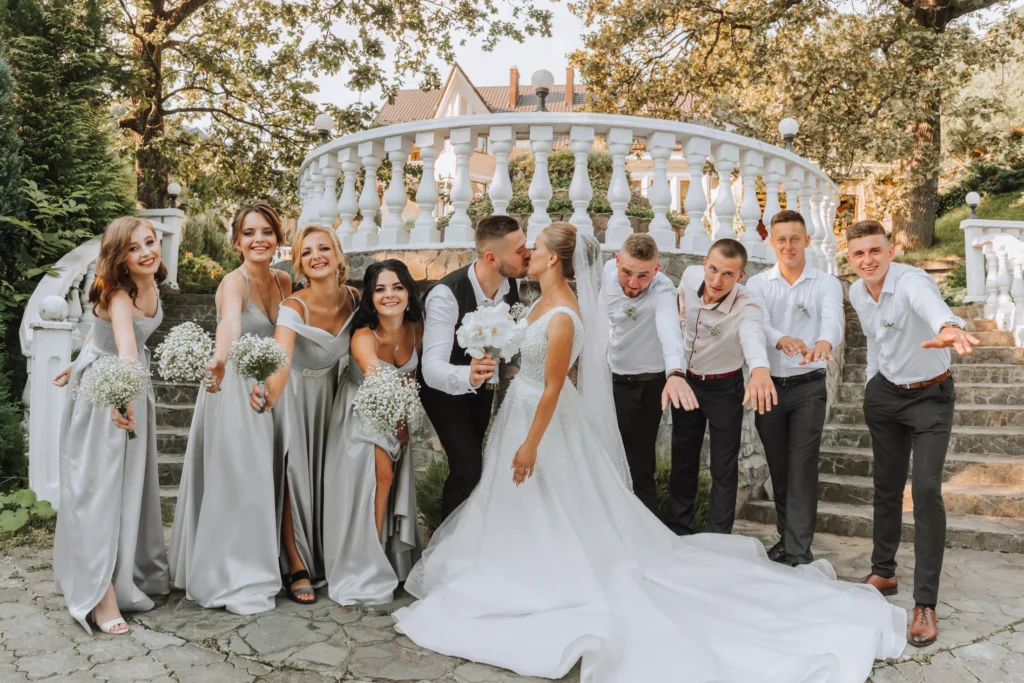
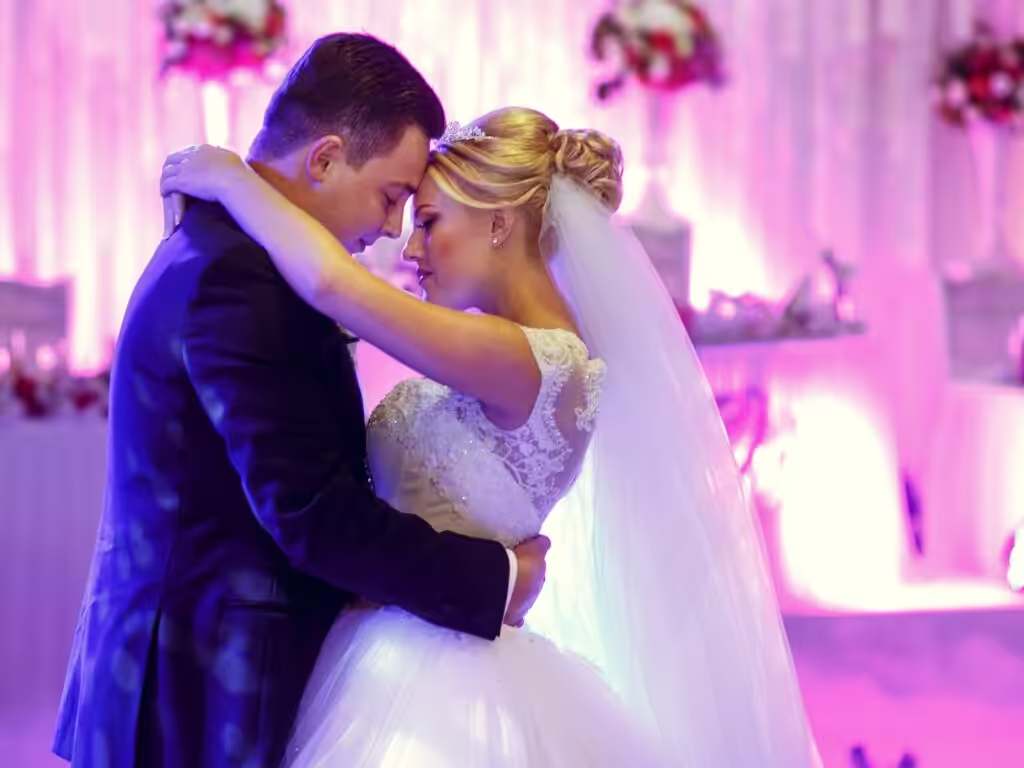
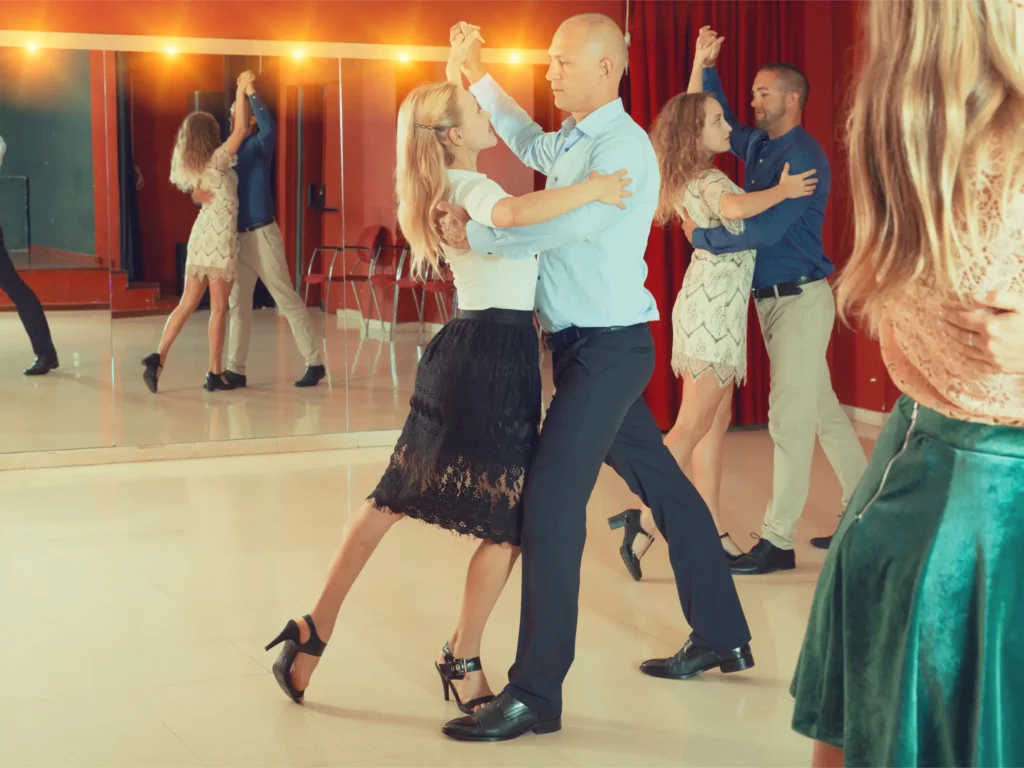
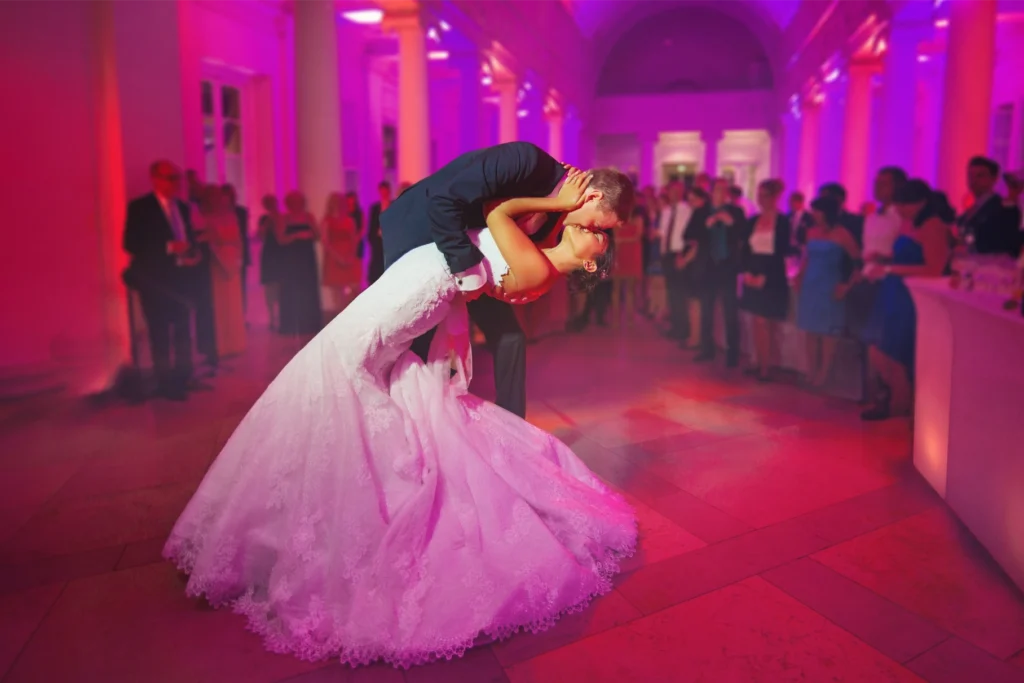
American Foxtrot is one of the most beginner-friendly American Smooth dances. Its basic steps are easy to pick up, and dancers can use them at weddings, ballroom events, formal dances, and other social occasions.
As dancers gain experience, they can add more figures and variations while keeping the smooth character of the dance.
Learn more about preparing for your wedding dance at Arthur Murray Dance Studio.
Competitive Foxtrot
International Slow Foxtrot is widely regarded as one of the hardest Standard dances to master. Dancers maintain body contact throughout while coordinating continuous movement, precise timing, and technical figures such as heel turns and feather steps.
In competition, judges look at technique, timing, movement, posture, and presentation. These demands make advanced Slow Foxtrot considerably more challenging than its beginner social counterpart.
Foxtrot is one of several Standard dances, each with its own rhythm and movement style. Explore the different types of ballroom dances to see how they compare.
How the Foxtrot Compares to Other Dances
The foxtrot shares some features with other ballroom dances, but its smooth progression and gliding steps give it a distinct character.
| Dance | Time Signature | Character | How It Differs From the Foxtrot |
| Waltz | 3/4 | Rise and fall, rotational | Slower with stronger rise and fall, while the foxtrot focuses more on smooth forward progression |
| Quickstep | 4/4 | Fast and bright, with hops and runs | Developed as a faster offshoot of the foxtrot, while the foxtrot is slower and smoother |
| Tango | 2/4 | Sharp, staccato, with no rise and fall | More dramatic and angular, while the foxtrot uses smooth, gliding movement |
Of these dances, the Quickstep is most closely related to the foxtrot. Waltz offers a more rotational feel, while Tango uses sharper movements and a more dramatic style.
Foxtrot Music: What to Dance To
Foxtrot works best with music that has a relaxed 4/4 beat and a steady rhythm that supports long, smooth steps. Big band, jazz, swing, and modern interpretations of these styles are all popular choices.
Some well-known foxtrot songs include:
- Frank Sinatra, “Fly Me to the Moon”
- Frank Sinatra, “The Way You Look Tonight”
- Michael Bublé, “Everything”
- Taylor Swift, “Lover”
When choosing foxtrot music, listen for a clear beat and enough space between accents to use both slow and quick steps. More experienced dancers can also use changes in the melody and phrasing to vary the length, energy, and expression of their movements.
Final Thoughts: What Is a Foxtrot Dance?
The foxtrot combines smooth movement, simple rhythms, and close partner connection, with plenty of room to progress as your skills improve. If you’re ready to learn the foxtrot, sign up for dance lessons at Arthur Murray Dance Center in Princeton, NJ.
FAQ
What Are the Common Mistakes in the Foxtrot?
Common foxtrot mistakes include rushing the slow steps, losing posture and frame, bouncing instead of gliding, and failing to pass the feet as you move. Keeping the timing steady and your movement smooth will help correct many of these issues.
Is the Foxtrot a Latin Dance?
No. The foxtrot is a Smooth/Standard ballroom dance performed in 4/4 time. It focuses on smooth, traveling movement rather than the hip action and sharper footwork associated with Latin dances.
How Long Does It Take to Learn the Foxtrot?
Most beginners can learn the basic foxtrot pattern within a few lessons. Developing consistent timing, posture, partner connection, and styling typically takes a few months of regular practice.