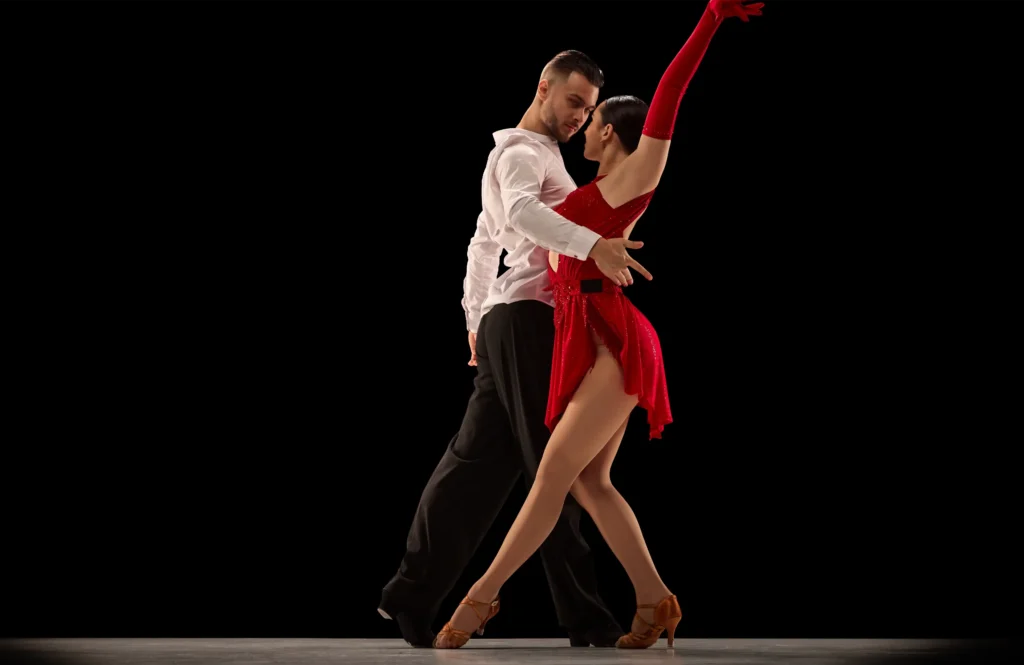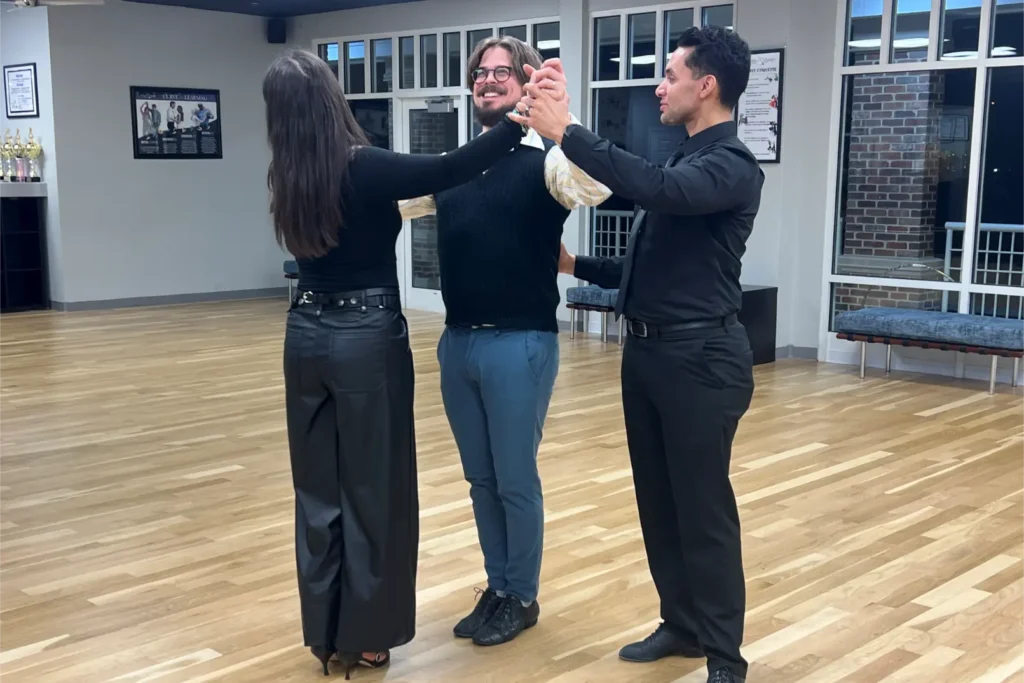

Brazilian Zouk is a partner dance built on connection. It’s all about how you move with another person, how you feel the rhythm, and how your body flows naturally with the music. From the outside, it can look astonishing and difficult. This may sound surprising, but beginners can absolutely learn this style faster than they think. In this blog post, we’re going to explain exactly how to dance Zouk as a beginner to see progress faster.
Key Takeaways
- Brazilian Zouk looks complex, but beginners progress faster when they focus on basic steps, timing, and connection first.
- Strong partner communication and body awareness are more important than memorizing patterns.
- Skills like posture, weight transfer, and rhythm create smooth, confident movement on the dance floor.
- Elements like waves and head movement come later, only after you build control and consistency.
- Stay relaxed, don’t rely on your arms to lead, and don’t rush into flashy techniques too early.
- Consistent sessions, short practices at home, and dancing with more experienced partners will accelerate your progress.
What Is Brazilian Zouk?
Brazilian zouk is a dance known for its close connection between partners and fluid movements.
It’s a fusion style that evolved from Caribbean Zouk music and Brazilian partner dance culture.
You can think of it as sitting right between different dance styles. It’s more controlled than Lambada, more expressive than Salsa, and overall more fluid than Bachata.
One of the key characteristics of this dance is head movement. Those flowing turns are what make Zouk look so impressive from the outside. But if you’re a beginner, this is not something you should worry about or feel intimidated by.
Instead, you’ll start with grounding steps, basic fundamentals, simple direction changes, and learning how to move with another person. It may not look impressive at the beginning, but that’s part of the process.
With a little time and consistency, once you master those basics, you can start expanding into more advanced movements that truly stand out and impress anyone watching.
What Should You Learn First in Zouk?
These are Zouk basics that you should master first.
- Rhythm and timing: Learn how to stay on beat consistently, which is the foundation of every movement in Zouk.
- Posture and balance: You’ll train your body to stay aligned and stable, so your movement feels smooth instead of awkward or off-center.
- Frame and connection: This is where you build a strong connection with your partner that allows you to communicate clearly while dancing.
- Lead and follow awareness: You’ll learn how signals are given and received. This is what makes partner dancing work and helps it look smooth.
- Weight transfer: You’ll focus on cleanly shifting your weight from one foot to the other to create that flowing Zouk style.
- Controlled turns and direction changes: You’ll start with simple turns and master them first. Once you do, more complex movements will come naturally.
The Best Zouk Moves for Beginners to Start With
When you start to learn Zouk, here are the exact moves that you should focus on in the beginning.
Basic Step (Passo Básico)
This is where everything starts.
- What it is: A simple forward and back stepping pattern that keeps you on time
- Why it matters: It builds rhythm, balance, and coordination
- What it develops: Timing and weight transfer
- Common mistake: Rushing the steps or losing the beat
Lateral
This is where you start expanding your movement.
- What it is: A side-to-side step that opens up your range
- Why it matters: It teaches direction changes and awareness of space
- What it develops: Balance and control across the floor
- Common mistake: Overstepping and losing stability
Viradinha
This is one of the first turning patterns you’ll learn.
- What it is: A simple turn that smoothly changes direction
- Why it matters: It introduces rotation without making things complicated
- What it develops: Partner coordination and timing
- Common mistake: Using too much force instead of guiding gently
Simple Turn
Turns are a core part of Zouk, and this is your starting point.
- What it is: A clean, controlled turn for one partner
- Why it matters: It builds the foundation for all future turns
- What it develops: Balance, spotting, and timing
- Common mistake: Spinning too fast and losing control
Ioiô (Yo-Yo)
This is where things start to feel more dynamic.
- What it is: A back-and-forth traveling pattern between partners
- Why it matters: It builds connection and responsiveness
- What it develops: Timing and elasticity in movement
- Common mistake: Pulling instead of guiding
Soltinho
This is where you begin to loosen up and flow.
- What it is: A relaxed, open movement pattern
- Why it matters: It introduces freedom and flow into your dancing
- What it develops: Musicality and adaptability
- Common mistake: Becoming too loose and losing structure
Why Zouk Basics Matter More Than Fancy Moves
In Brazilian Zouk, just like in other partner dances, beginners often get drawn to the flashy moves first. Those are the things that stand out and make people want to jump ahead.
But this is the wrong approach.
Every great dancer you’ve seen… Every impressive move that caught your attention… It is built on strong Zouk fundamentals. Those advanced elements, like head movement and more complex patterns, all come from first mastering the basics.
If you skip that step, your dancing will feel off. Even if you try the more advanced moves, they’ll look and feel messy, no matter how much effort you put in.
There’s also something important to keep in mind about the dance floor. Space is limited, and you’ll be dancing with partners of different skill levels. In most of those situations, you’ll spend the majority of your time using Basic zouk steps, not advanced ones.
That’s why focusing on your foundation matters so much. When your basics are strong, you’ll feel more confident, move more smoothly, and stay on rhythm without thinking about it. You’ll also become a great partner. Someone who can adapt, connect, and make the dance enjoyable for both people.
If you’re looking for a dance studio in Princeton Junction where you can learn Zouk, visit Arthur Murray Dance Center. Right now, new students can take advantage of a special offer and get the first lesson for free.
When Should Beginners Learn Waves and Head Movement?
Here’s a general timeline to help you understand when beginners typically move from basic Zouk moves into more advanced elements like waves and head movement.
1-2 Months: Building Your Foundation
This is where everything starts.
- Basic steps and lateral movement
- Rhythm and timing
- Connection with your partner
- Simple turns
- Posture and balance
At this stage, your goal is to feel comfortable moving, staying on beat, and keeping your structure consistent.
Months 2 to 4: Introducing Body Waves
This is where you begin adding more control to your movement.
- Body isolations, chest, and hips
- Smoother weight transfer
- More control over how your body moves
You’re ready for this phase if:
- You can stay balanced while moving
- You can add upper-body movement without losing timing
- Your basic steps feel clean and consistent
Months 4 to 6: Learning Head Movement
This is where things start to look more advanced.
Head movement is one of the last elements you’ll learn because it requires strong connection, trust, and precision between partners.
You will do:
- Soft head movement drills
- Preparation techniques
- Practicing in a controlled setting before using it in social dancing
You’re ready for this stage if:
- You can maintain posture during turns
- You understand partner connection beyond just steps
- You can lead and follow smoothly without hesitation
What are the Zouk Mistakes Beginners Usually Make?
Mistakes are part of the process, but if you know what to watch for early, you can avoid building bad habits and progress much faster.
Here’s what beginners should keep in mind:
- Don’t be too stiff: Zouk is all about fluid movement. If your body is rigid, everything will feel forced. Stay relaxed, but still in control.
- Focus less on steps, more on connection: Yes, steps matter, but they are not the main focus. Zouk is about connection, not choreography. Pay attention to your partner, your body, and how you move together.
- Limit head movements early on: This is especially important if you’re following. If you haven’t mastered the basics yet, don’t rush into advanced elements.
- Maintain good posture: You don’t want to be too tense, but you also don’t want to collapse your frame. Aim for a balance, stable and relaxed at the same time.
- Don’t lead with your arms: In Zouk, your body leads and your arms communicate. If you rely only on your arms, the movement will feel disconnected.
Keep this in mind as well. Just because Zouk is often danced slower doesn’t mean it’s easier than faster dances like Salsa. You might also be surprised by how challenging it is to stay relaxed while still feeling stable. That balance is a key part of developing strong control, so pay close attention to it as you practice.
How to Get Better at Zouk Faster
If you want to improve quickly in Zouk, here’s what you can do that will speed up the process significantly:
- Prioritize connection over patterns: Spend entire songs dancing just the basics. Focus on how your partner feels, not on what move comes next.
- Slow everything down: Practice at 50 to 70 percent of your normal speed. Pause mid-movement and check your control. This is where real improvement happens.
- Drill body movement daily, even alone: 10 to 15 minutes every day will take you further than practicing for hours once a week.
- Fix your posture and frame first: Keep a neutral spine, relaxed shoulders, and a stable but flexible frame.
- Get feedback early and often: Ask your partners if your lead or follow felt clear and comfortable. Take occasional private lessons. Record yourself so you can see what’s actually happening.
- Dance with better dancers: This is one of the fastest ways to improve. You’ll feel correct timing, better technique, and what proper connection should actually feel like.
A Fast-Track Checklist
If you want a simple way to stay consistent, follow this routine:
Daily (10 to 20 minutes):
- Body isolations
- Slow basic step with music
2 to 3 times per week:
- Social dancing or class
- Focus on one thing only, for example connection
Weekly:
- Record yourself dancing
- Get feedback from one experienced dancer
What to Focus on First as a Beginner?
Here is what you should prioritize in specific order.
- Posture and frame
- Timing and basic step
- Connection
- Body movement
- Simple patterns
- Musicality and expression
FAQ
Is Zouk hard for beginners to learn?
Zouk can look complex at first, but it’s not as difficult as it seems when you approach it the right way. If you focus on the basics, you will progress faster than expected, and most beginners struggle only when they try to rush into advanced moves.
What are the first Zouk moves beginners should learn?
Beginners should focus on the basics, including the basic step, lateral movement, simple turns, and direction changes.
Should beginners learn head movement right away in Zouk?
No, beginners should not learn head movement right away, because it is a more advanced technique. You will usually start learning head movements around 4-6 months of learning.
Do you need a partner to start learning Zouk?
You don’t need a partner to start learning, since you can practice fundamentals like timing, steps, and body movement on your own. But because Zouk is a partner dance, progress will happen much faster when you practice with others.