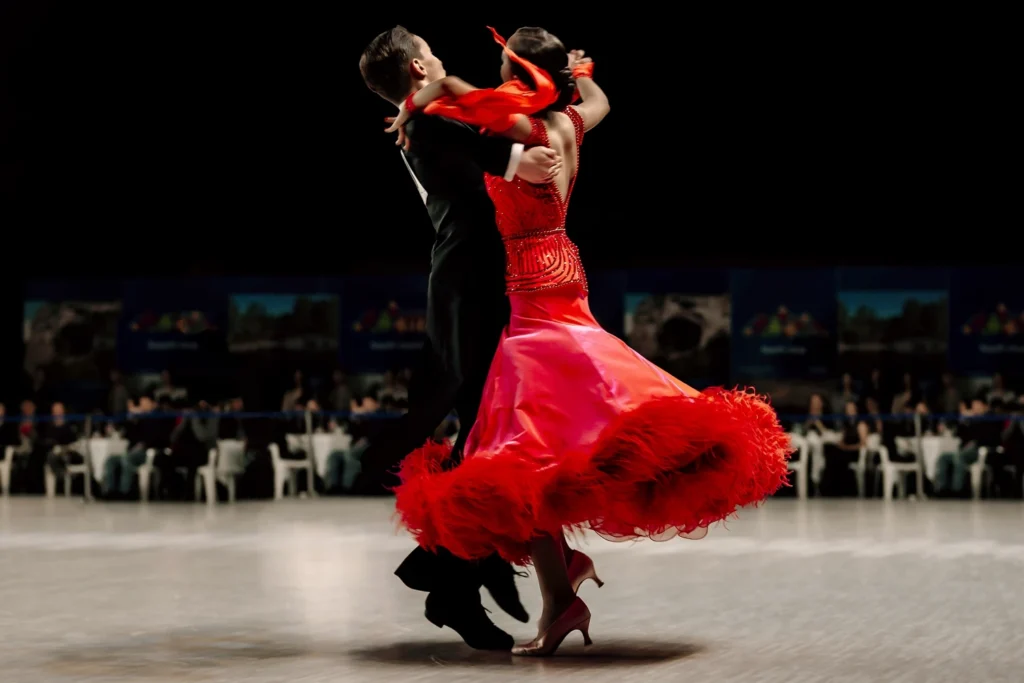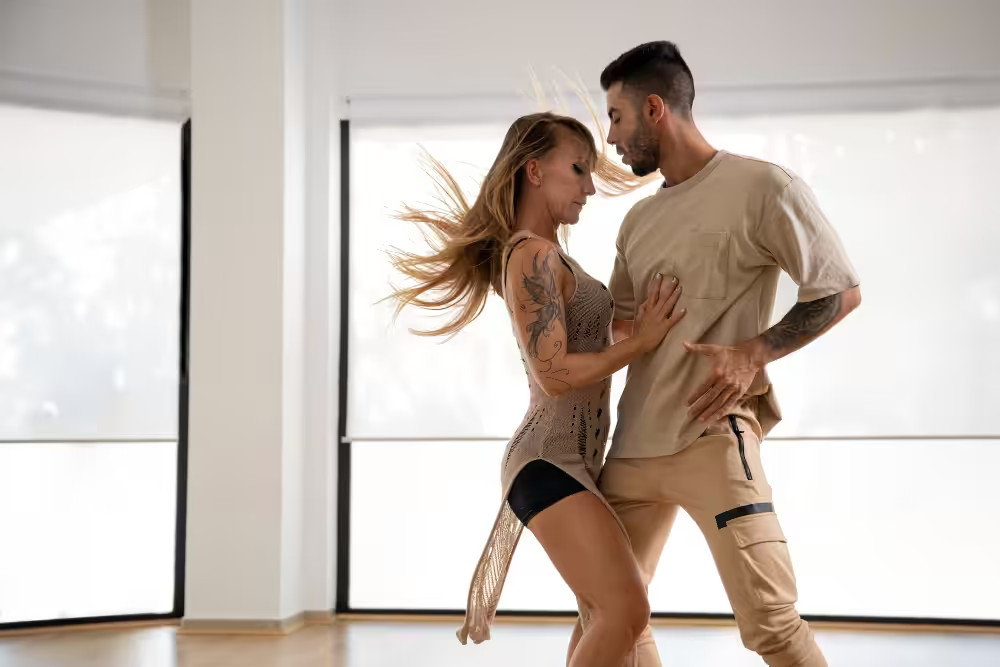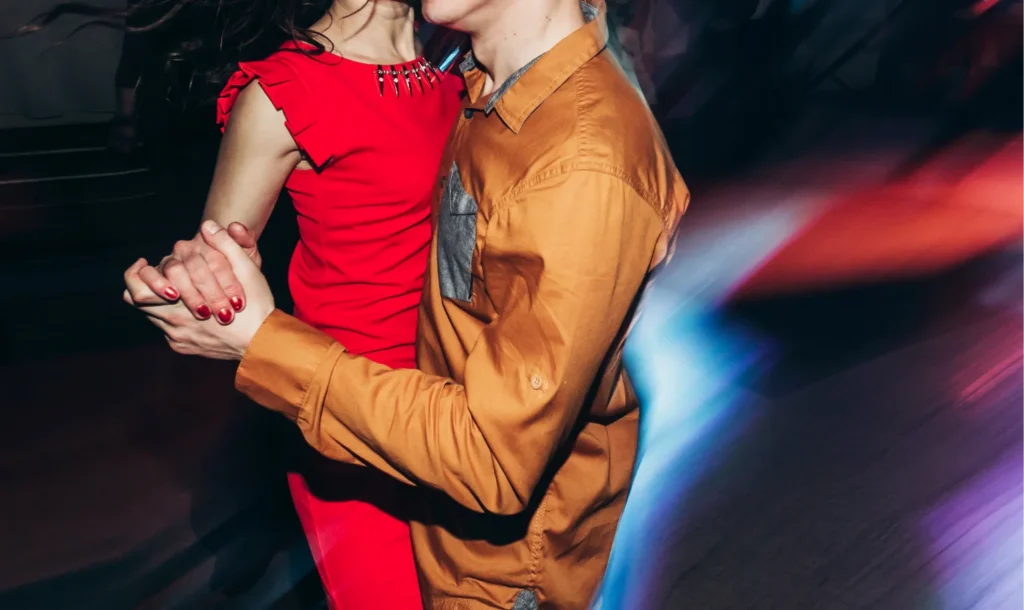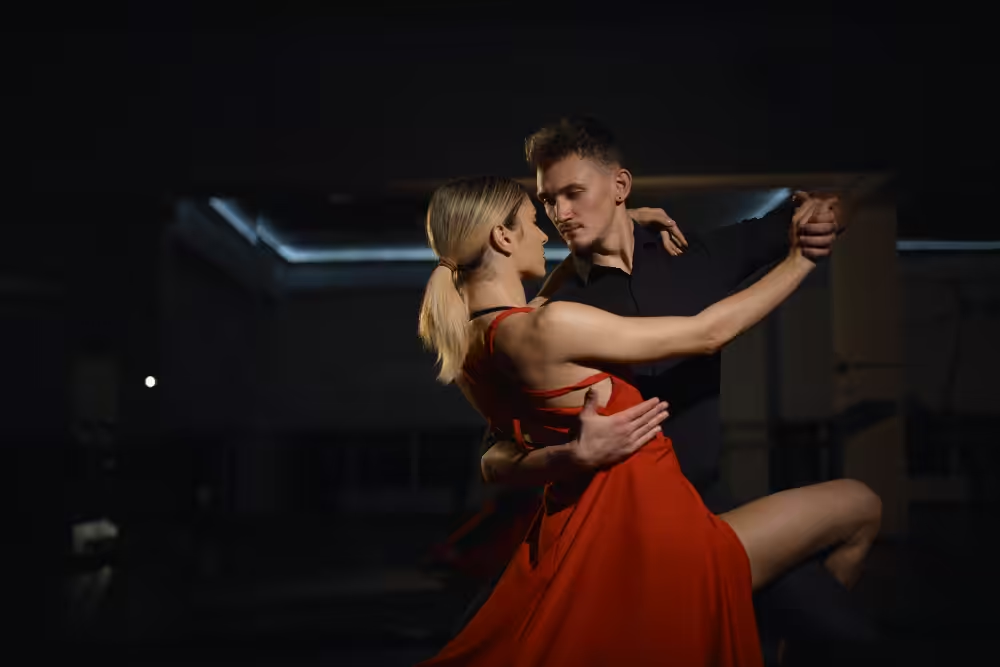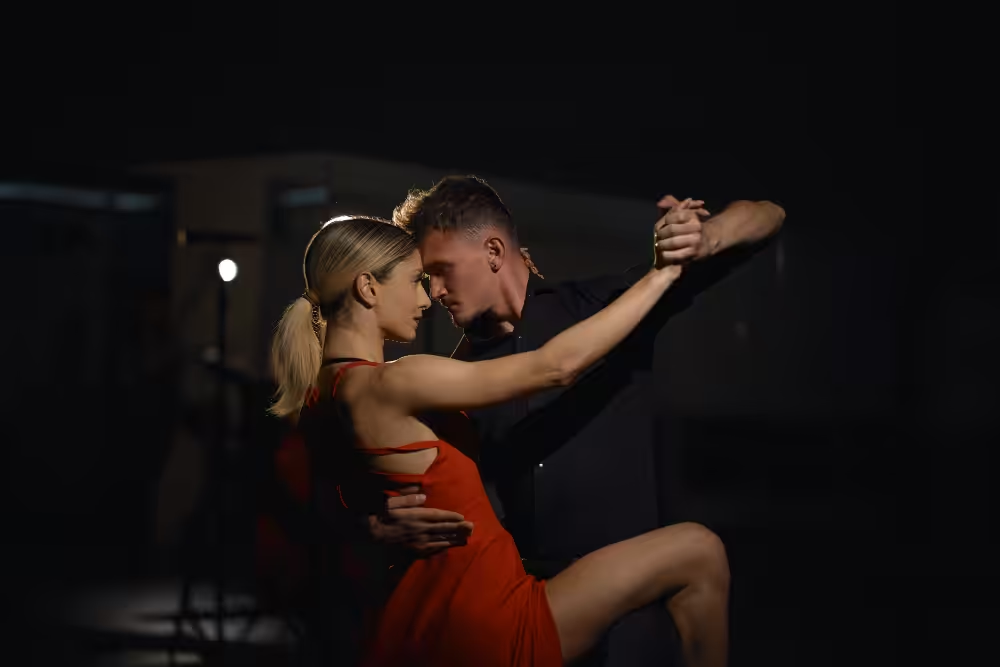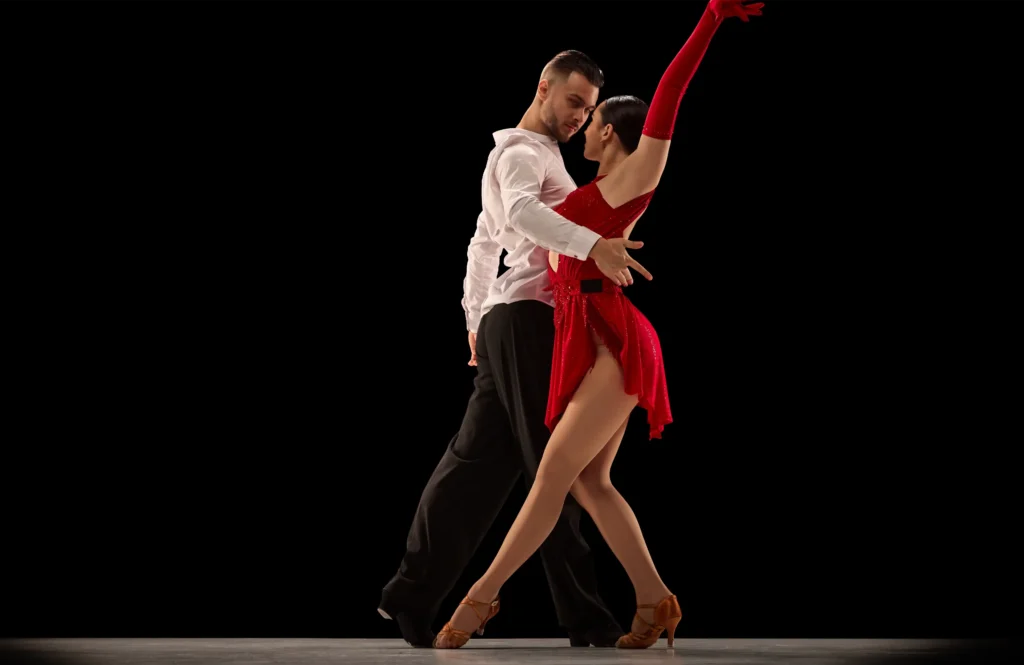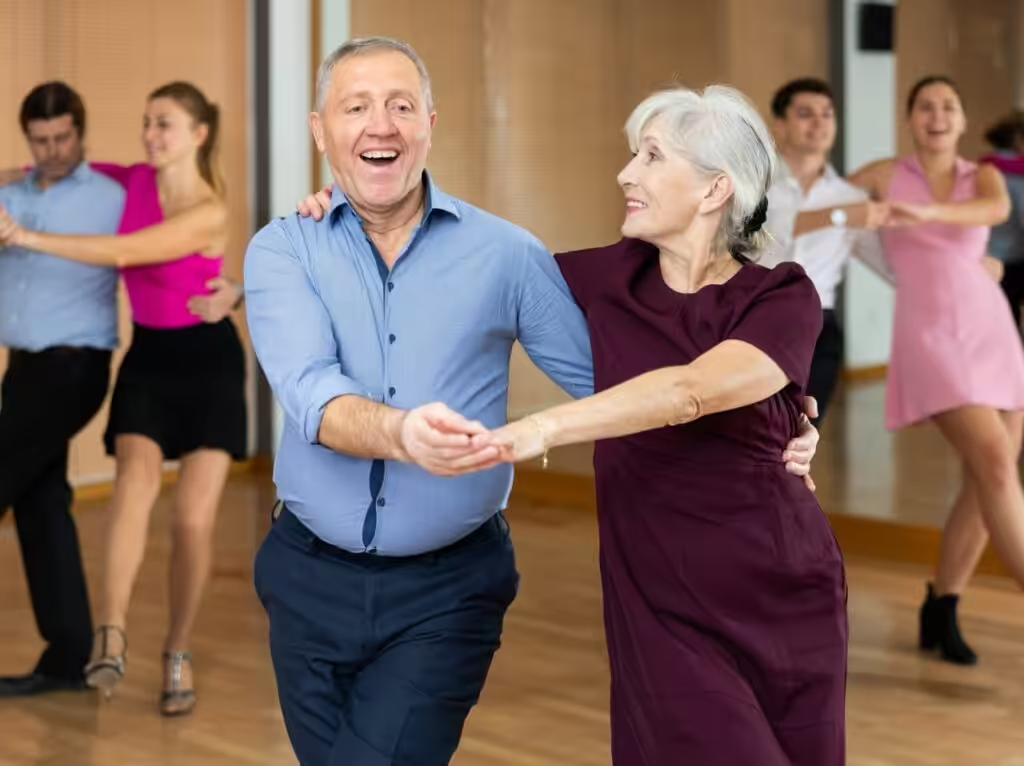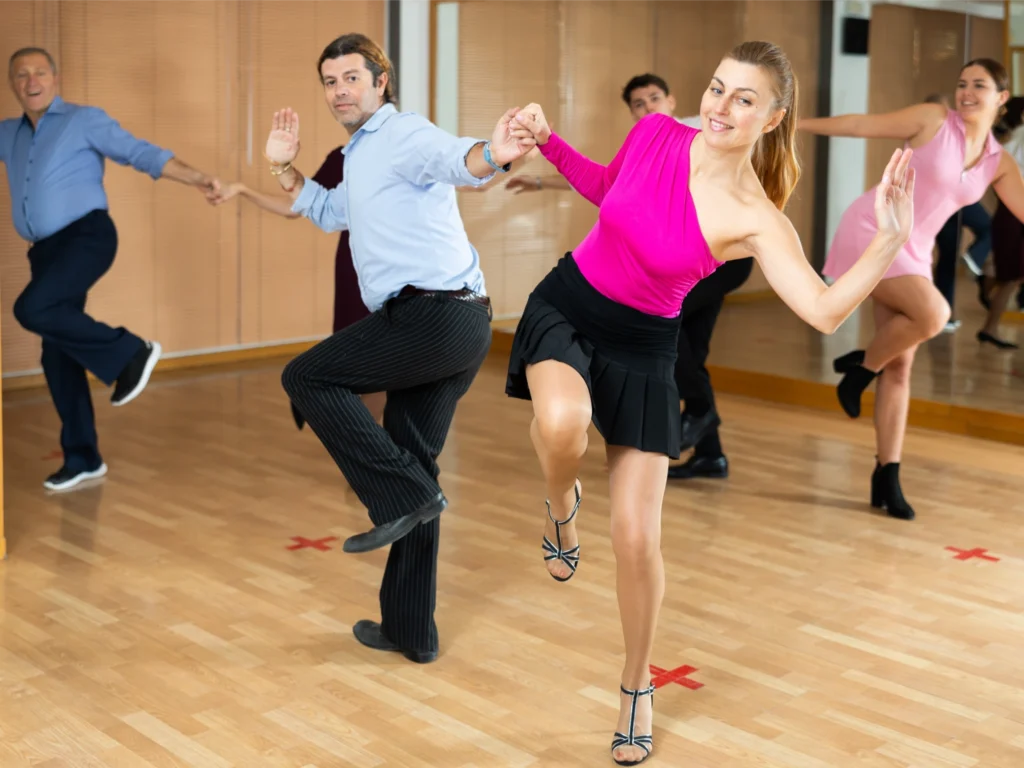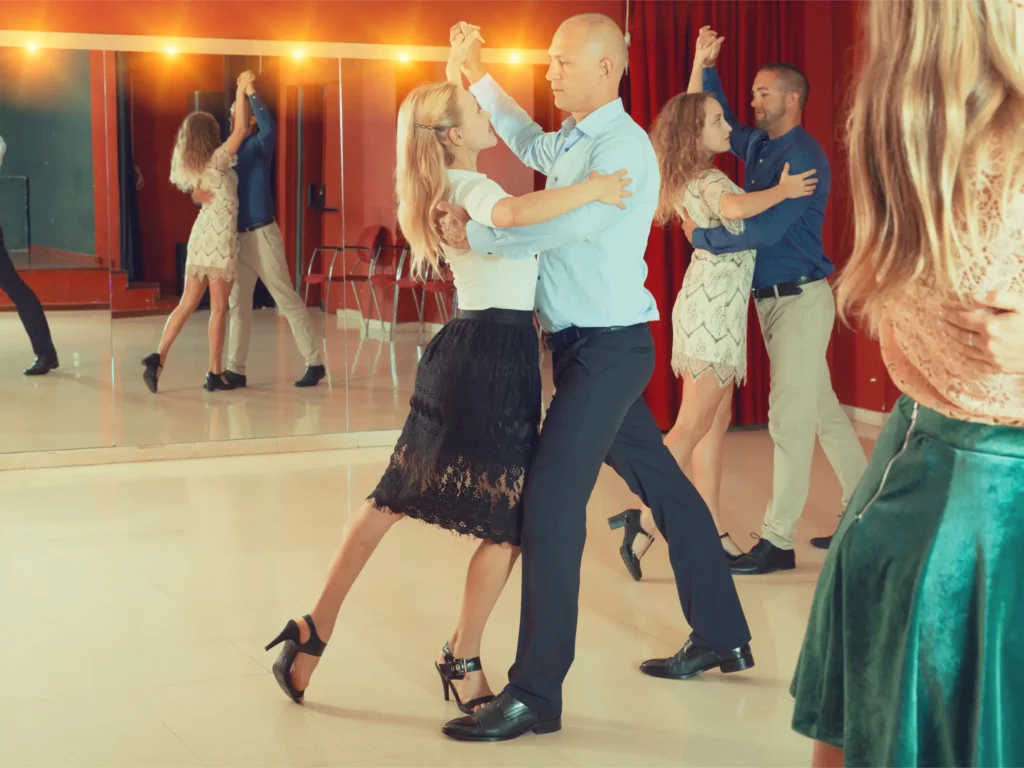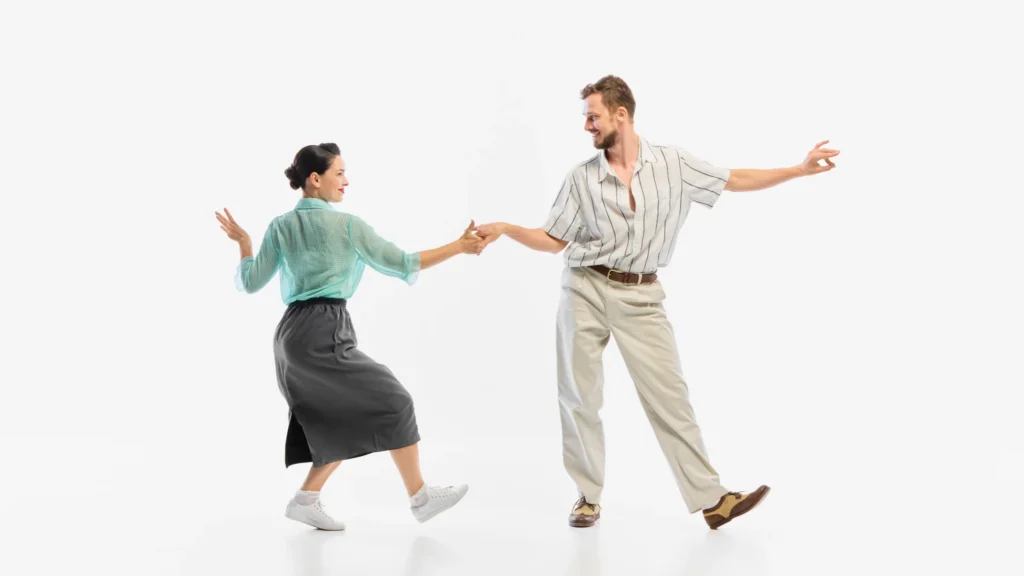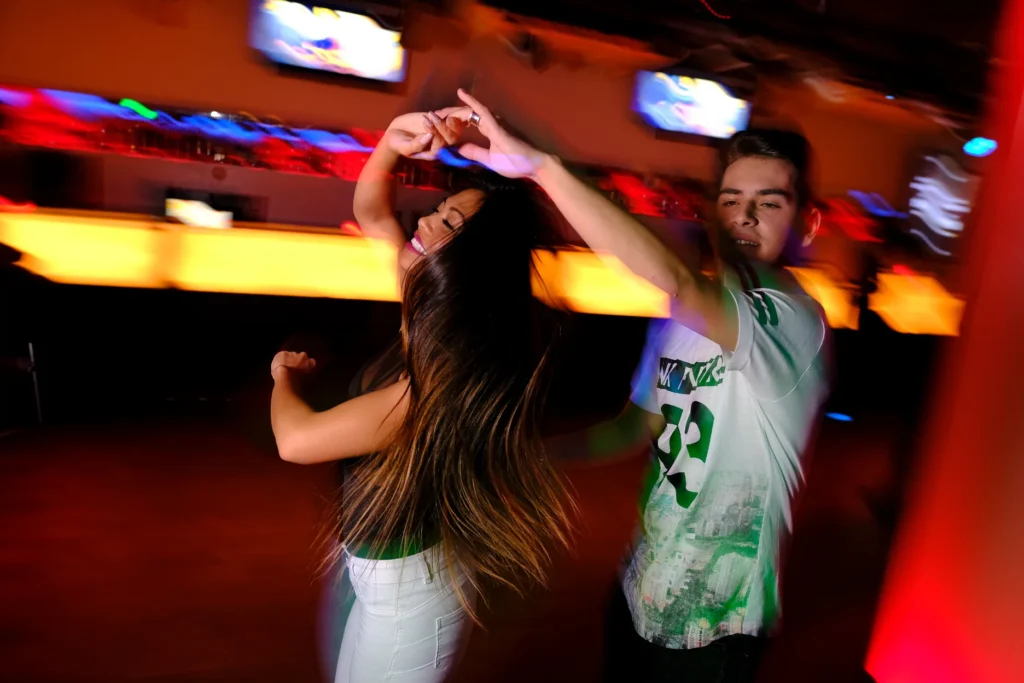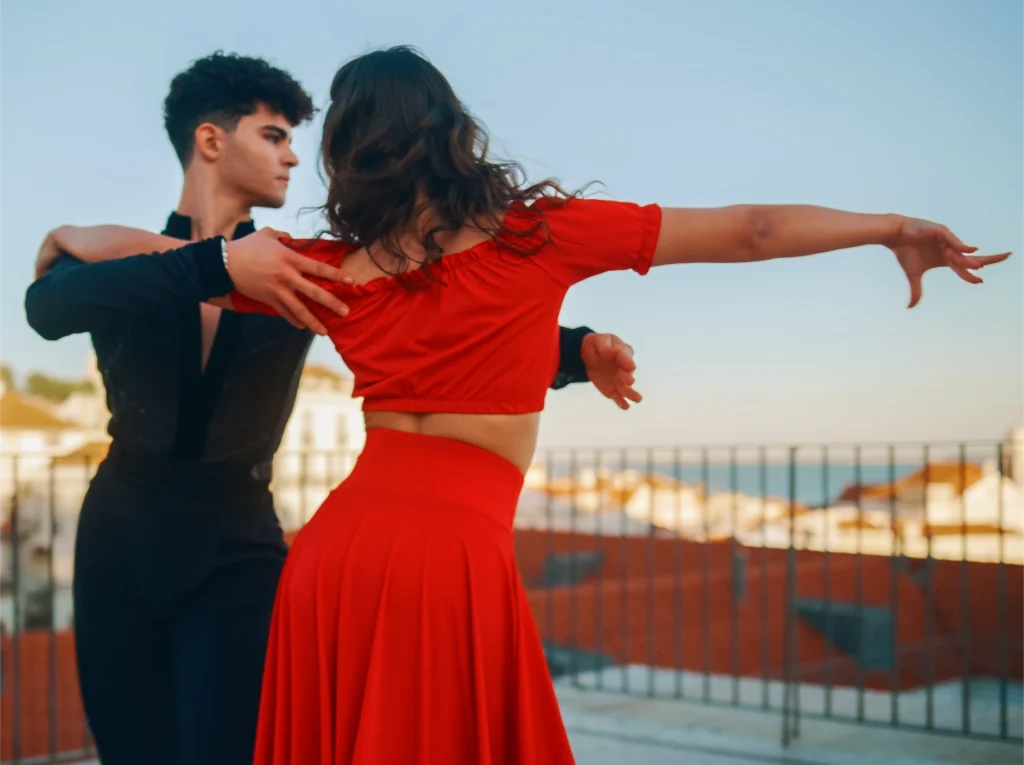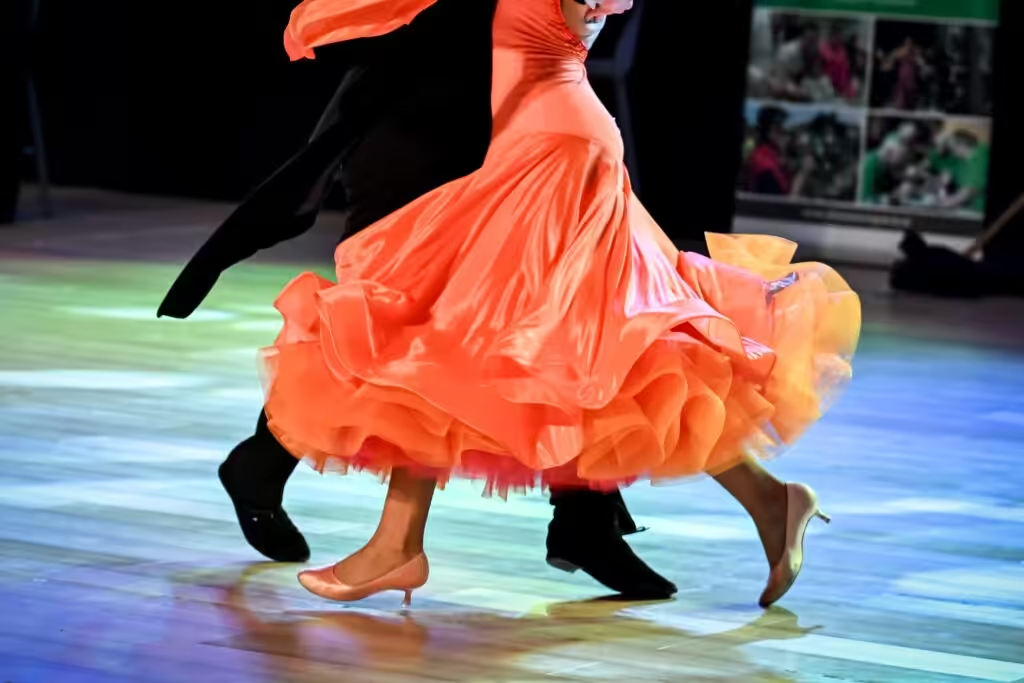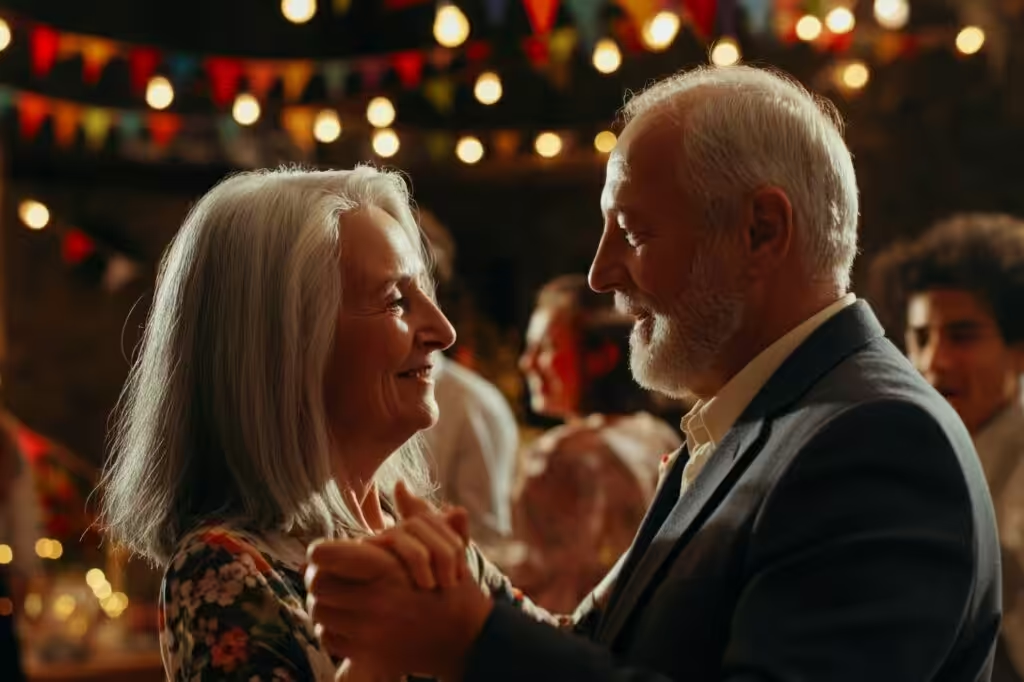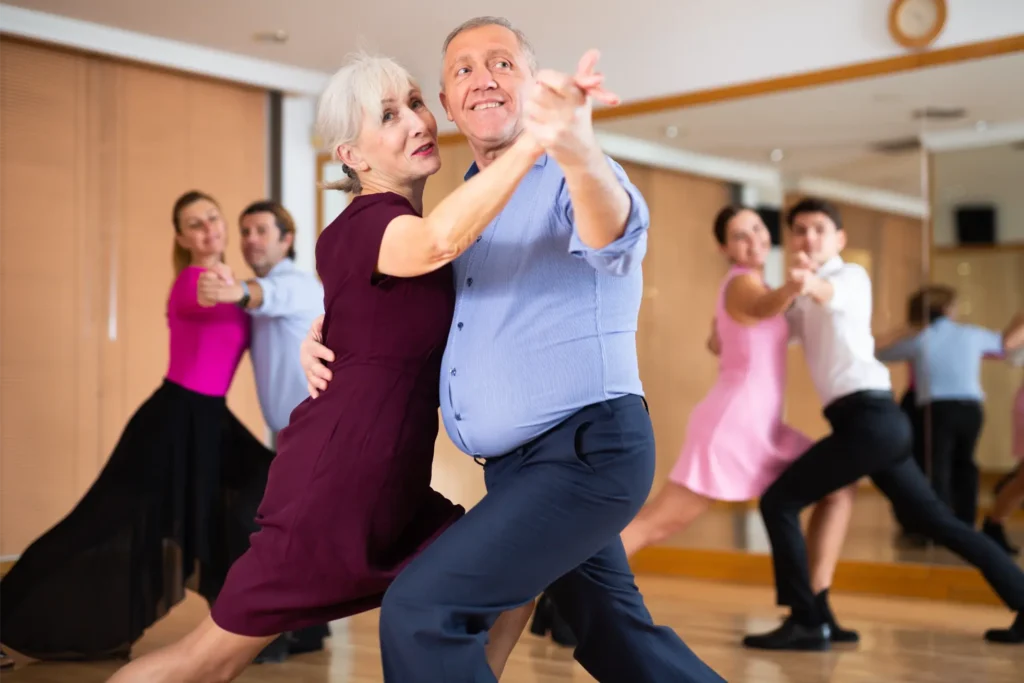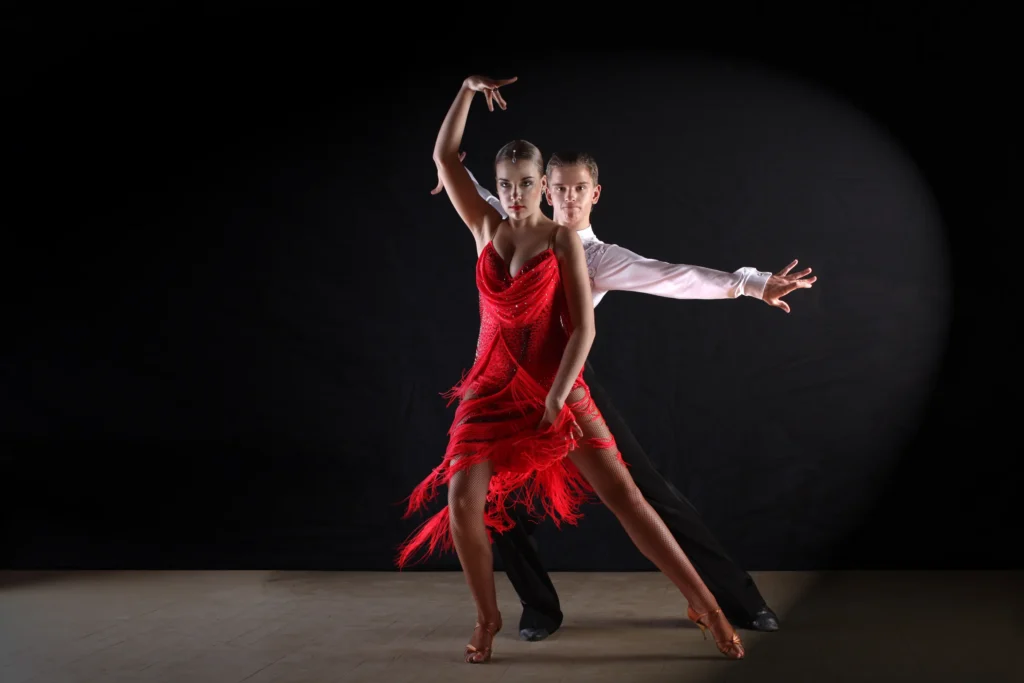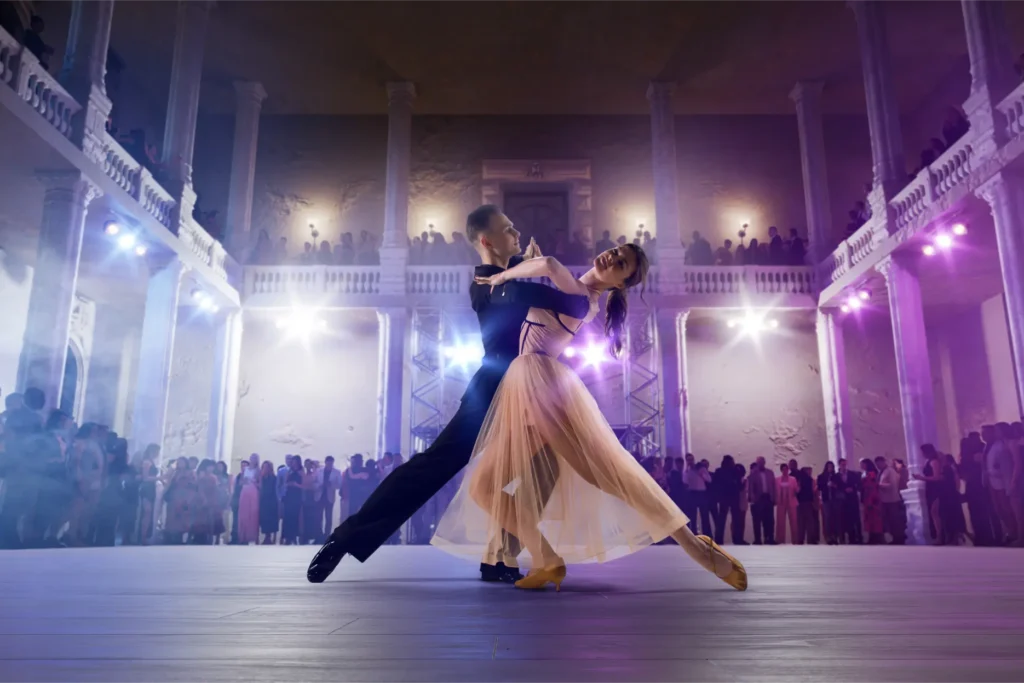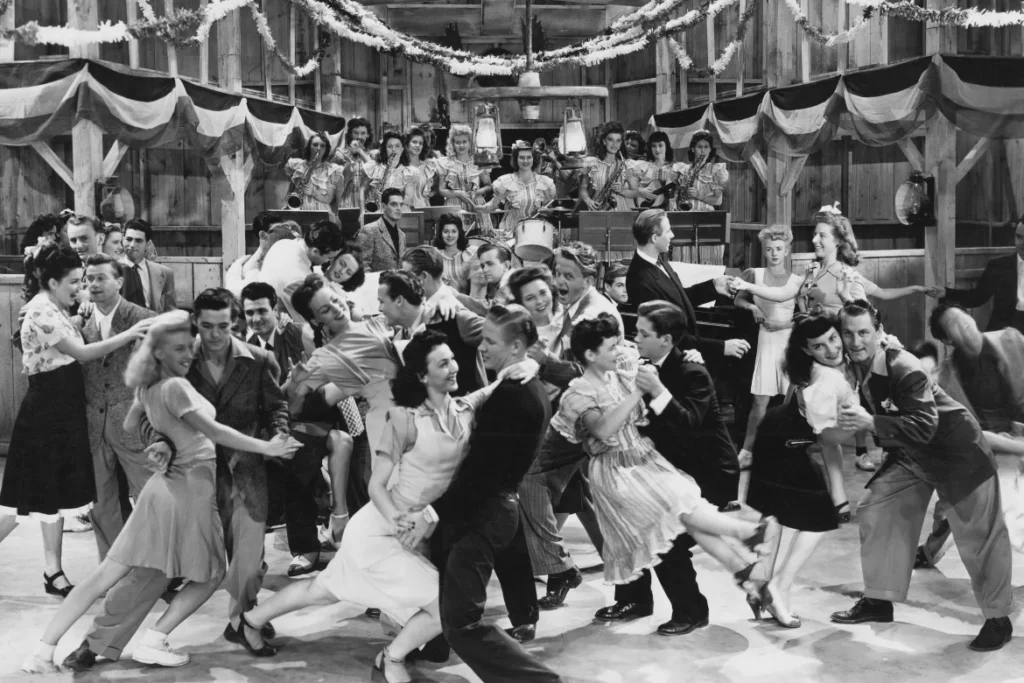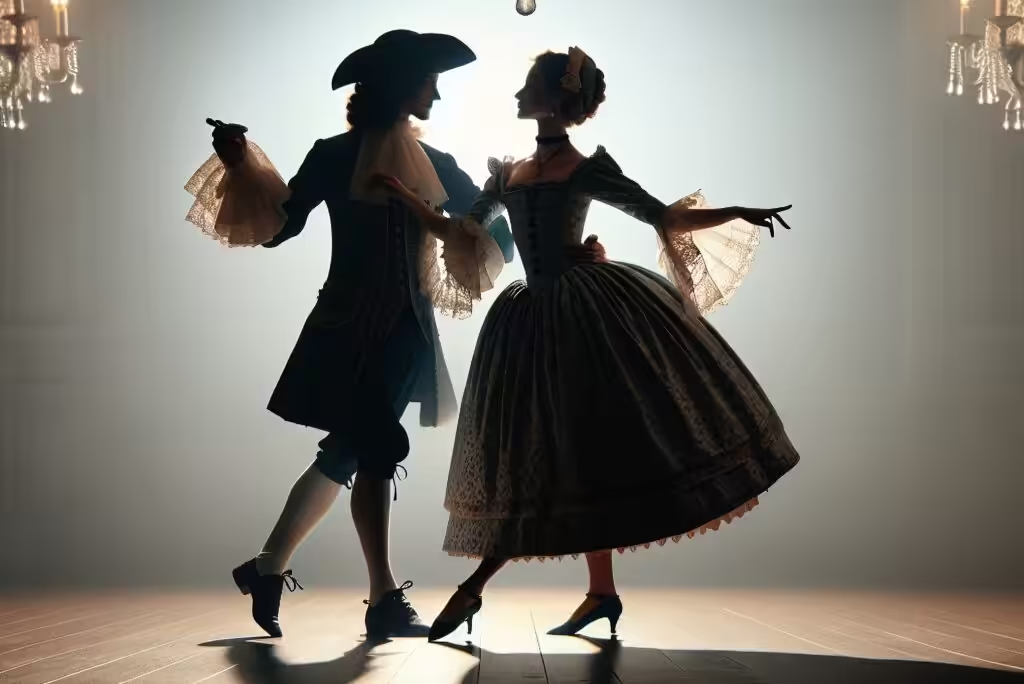
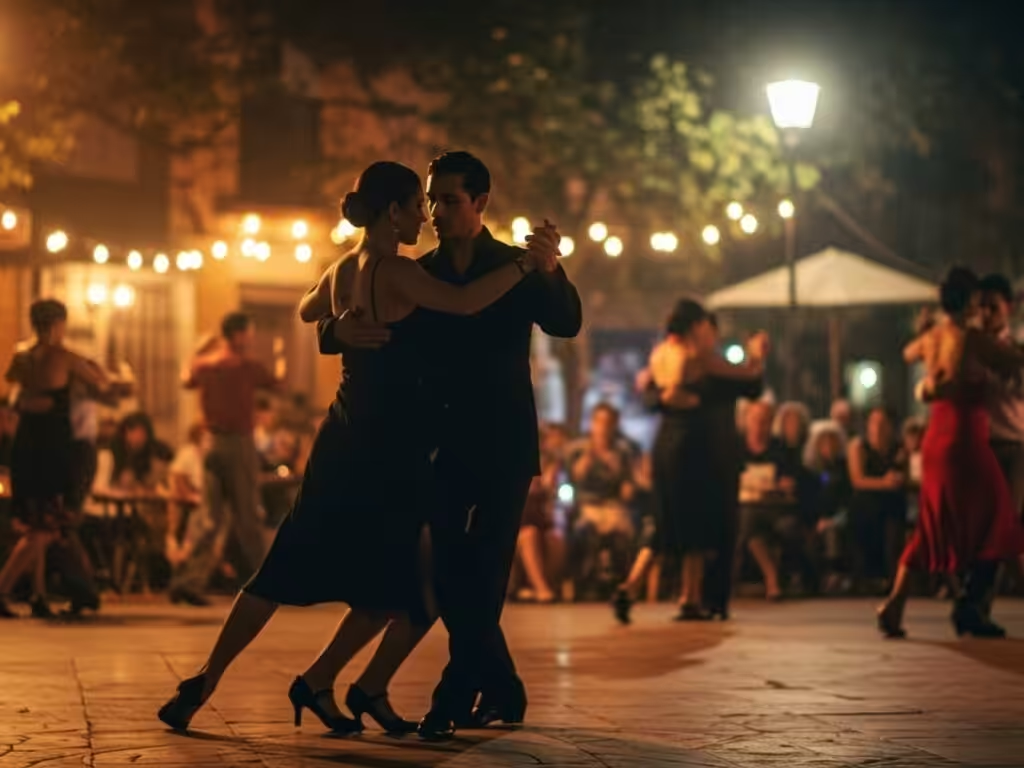
Milonga is a fast-paced partner dance closely related to Argentine tango, with roots in Argentina and Uruguay. It is typically danced with quicker, more continuous steps and a lively rhythm.
Takeaways
- Milonga developed in the Río de la Plata region during the 19th century, with influences that include candombe and the Cuban habanera.
- Milonga music commonly uses a 2/4 rhythm with syncopated patterns that dancers can reflect through changes in timing.
- Traditional milonga ensembles commonly feature the bandoneón, violin, piano, and double bass.
- Compared with tango, milonga generally favors smaller steps and fewer extended pauses to match its quicker music.
- The word milonga also refers to a social event where people gather to dance tango, milonga, and often vals.
- At a milonga event, dancers follow customs such as the cabeceo and ronda, while tandas and cortinas organize the flow of dances throughout the evening.
What Is the History of Milonga Dance?
Milonga developed in the Río de la Plata region of Argentina and Uruguay during the 19th century. Its history reflects a mix of African, European, and regional musical influences that also contributed to the development of Argentine tango.
Where Did Milonga Originate?
Milonga emerged around Buenos Aires and Montevideo, where musical traditions including candombe and the Cuban habanera influenced its rhythm. These influences helped shape the syncopated sound associated with milonga.
How Did Milonga Become a Partner Dance?
The term milonga was also associated with payadas, improvised songs performed by traveling singers known as payadores. As milonga developed in urban areas, it became associated with instrumental music and partner dancing.
Milonga remained part of Argentine tango culture during the 1930s and 1940s. Musicians including Sebastián Piana helped develop new forms of milonga music, while tango orchestras recorded milongas that dancers continue to use at social events today.
What Is Milonga Dance Music Like?
Milonga dance music has a quick, rhythmic feel that distinguishes it from Argentine tango. Its strong pulse and syncopation encourage dancers to use compact steps and respond closely to changes in the rhythm.
What Rhythm Does Milonga Use?
Milonga is traditionally associated with a 2/4 rhythm and syncopated patterns influenced by the habanera. Dancers can respond to these accents with changes in timing rather than relying only on the melody.
Essential Instruments
Traditional orchestras rely on a balanced mix of instruments to build their driving tempo:
- Bandoneón: Provides rhythmic accents and sharp harmonic pushes.
- Violin: Delivers fast, staccato melodic runs that contrast with the bassline.
- Piano: Drives the percussion-like timing using heavy left-hand accents.
- Double Bass: Anchors the underlying 2/4 pulse.
Key Composers and Orchestras
Composers like Sebastián Piana, along with legendary orchestrations by Juan D’Arienzo and Edgardo Donato, created timeless tracks defined by clear, playful rhythms that invite spontaneous movement.
What Is the Difference Between Milonga and Tango?
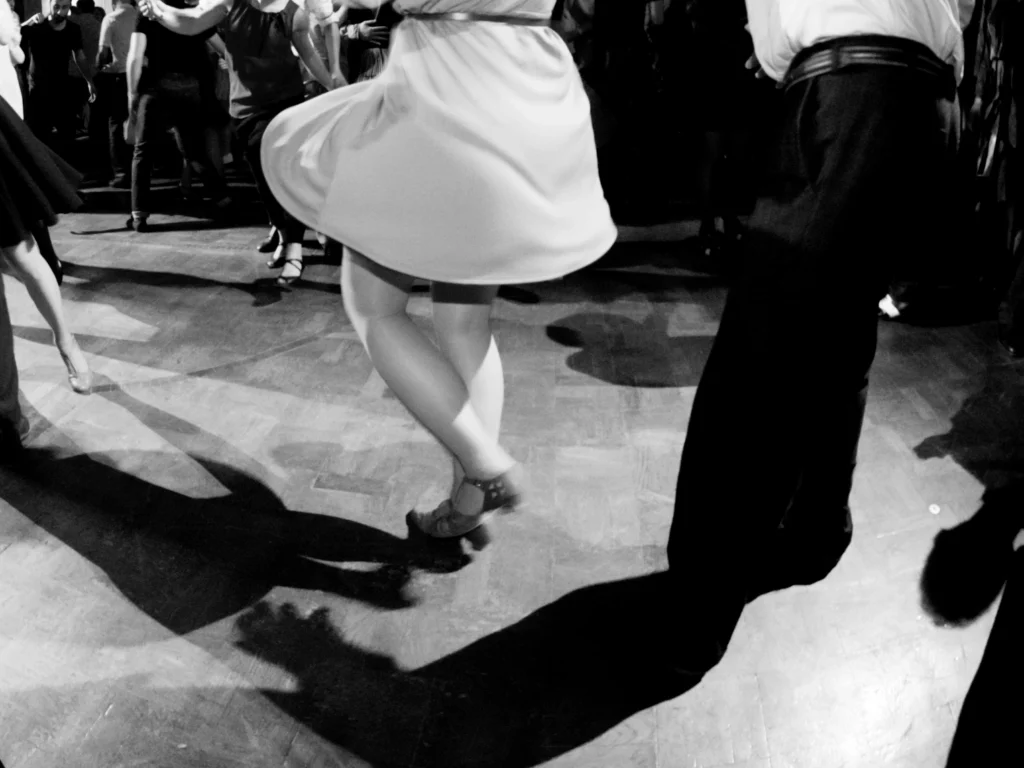
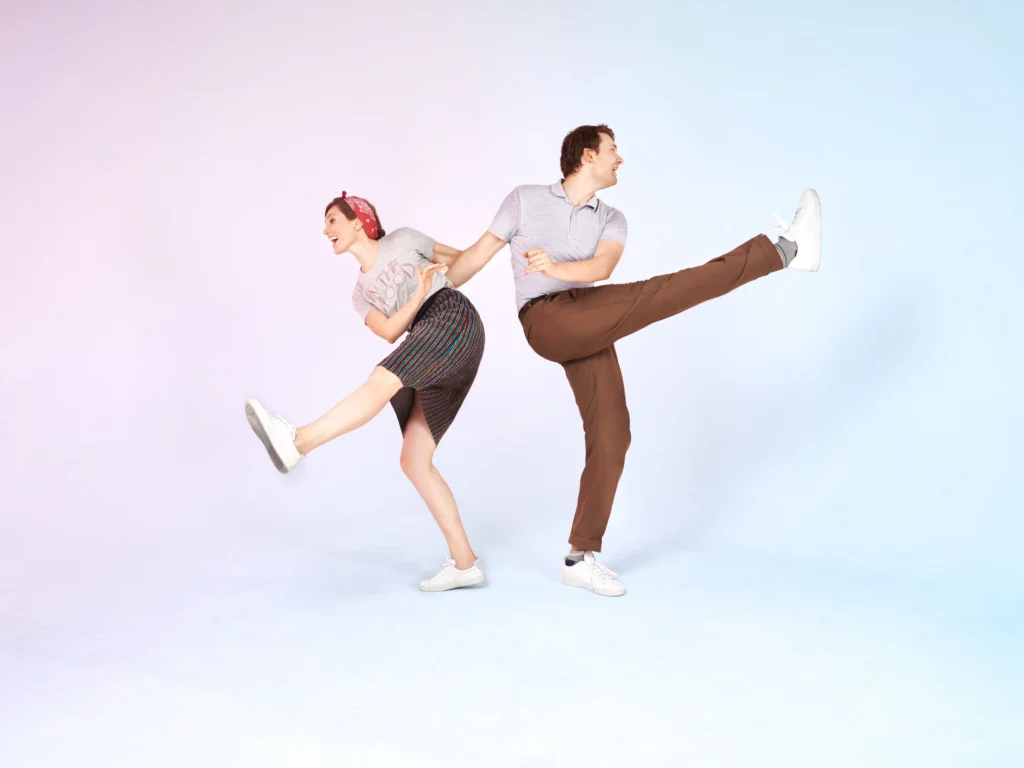
Milonga is generally faster and more rhythmic than Argentine tango. The two dances share related movement vocabulary, but milonga typically uses smaller steps and more continuous movement to accommodate its quicker music.
Here you can see a Milonga Dance vs. Tango comparison.
What Happens at a Milonga Social Dance Event?
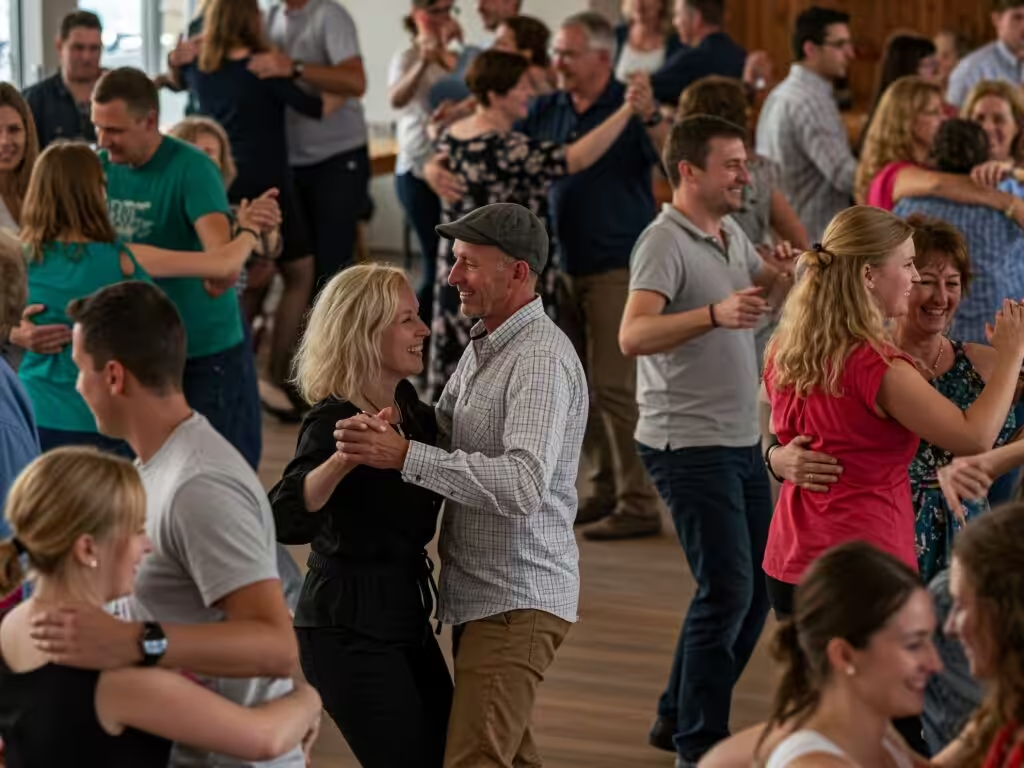
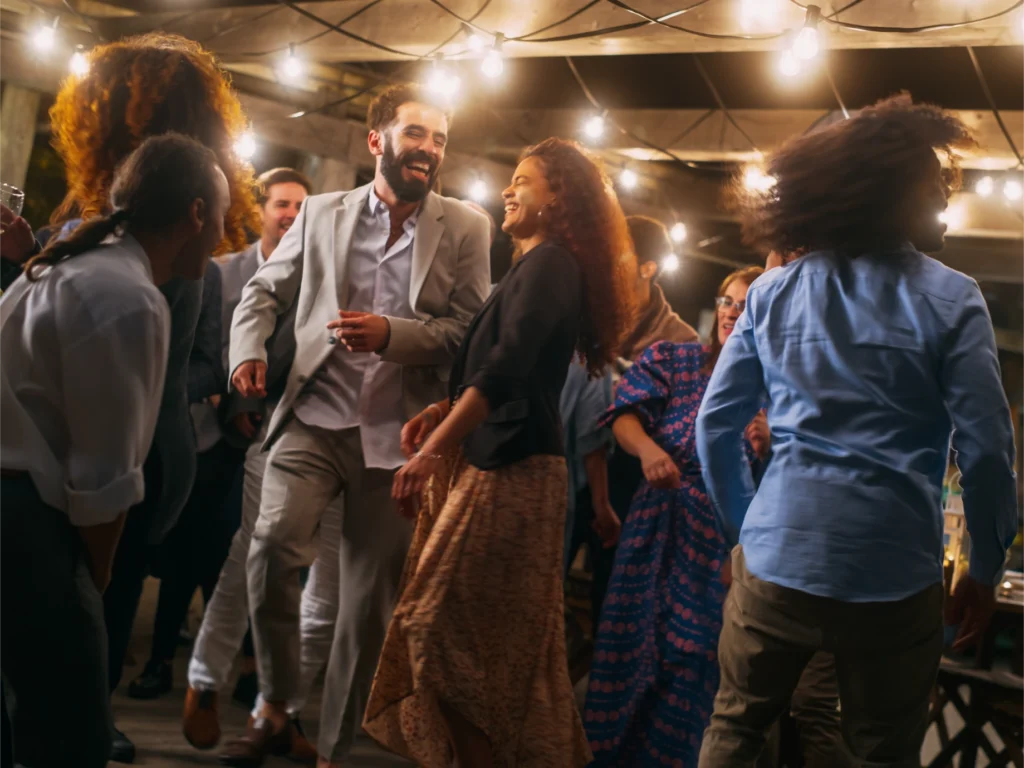
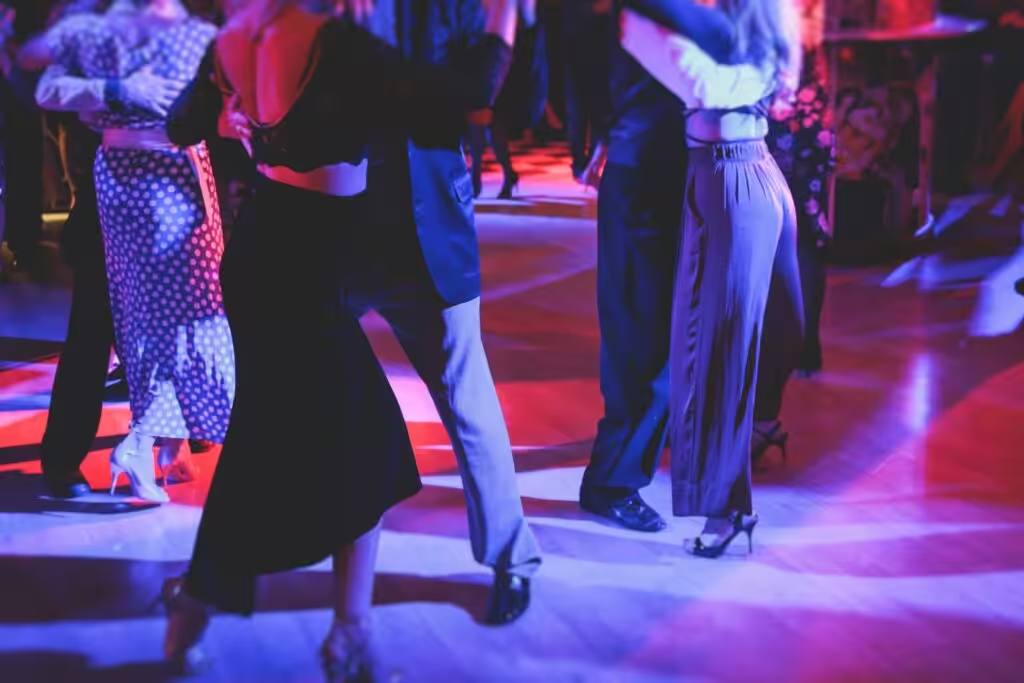
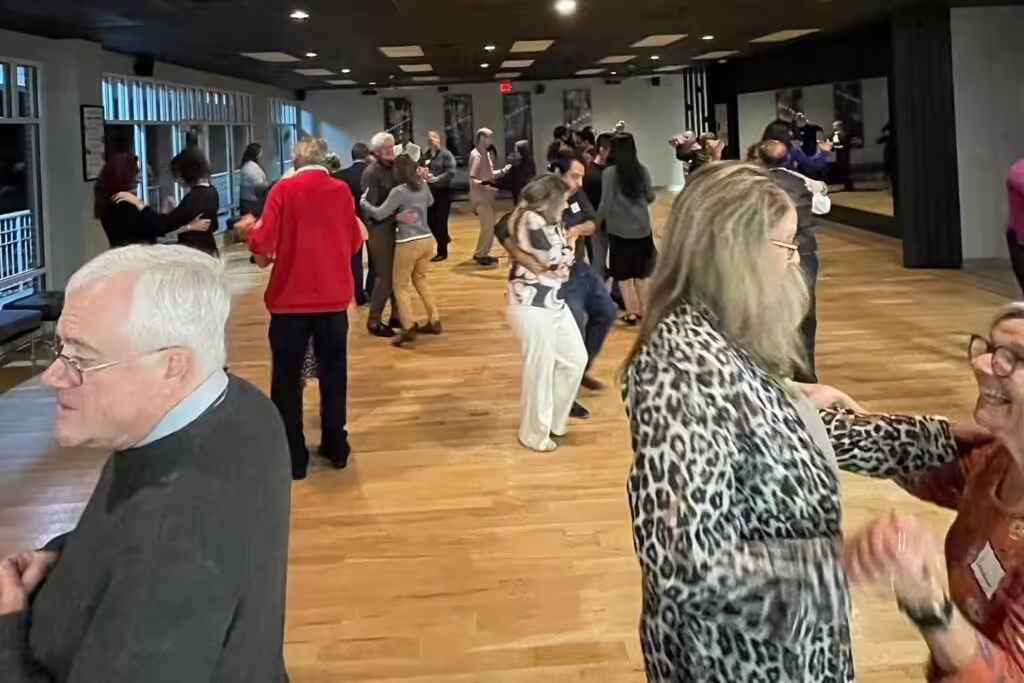
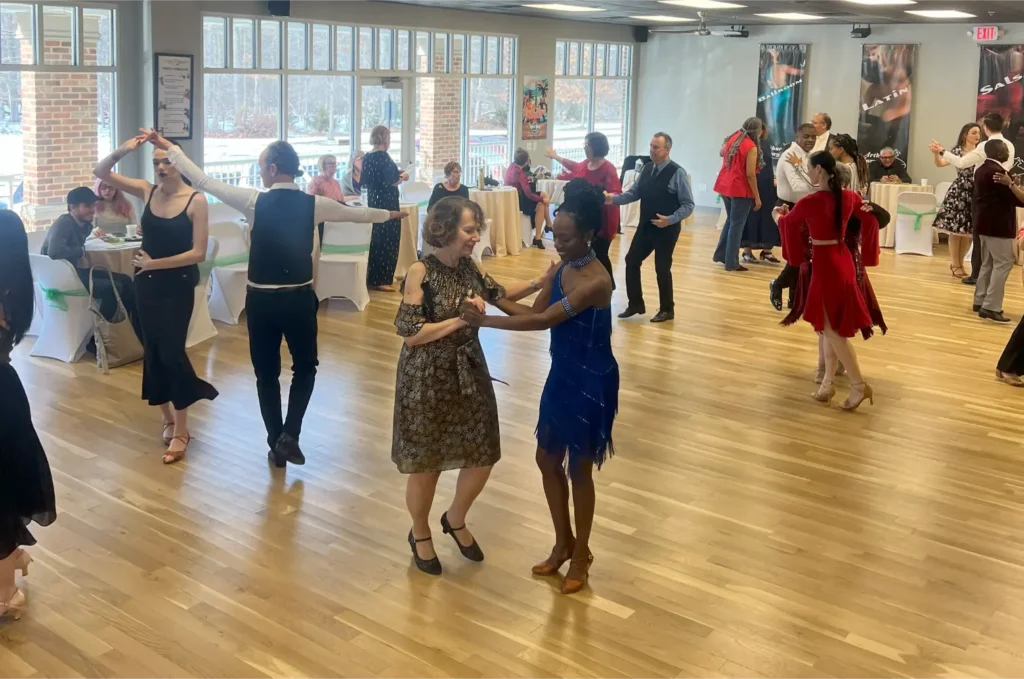
A milonga is also the name for a social event where people gather to dance Argentine tango, milonga, and often vals. These events follow established customs that help dancers share the floor and organize partner changes.
The Unique Codes of the Dance Floor
Social events run on clear codes (códigos) designed to make dancing comfortable for everyone:
- Cabeceo: The practice of inviting a partner from across the room using subtle eye contact and a nodding motion.
- Ronda: The circular flow of movement moving counter-clockwise around the perimeter of the room.
- Lanes: Dancers stay in defined lanes to prevent collisions in crowded spaces.
What Are Tandas and Cortinas?
Music is commonly organized into tandas, or sets of several songs with a similar style. A short piece of different music called a cortina separates the tandas and signals a break before the next set begins.
Etiquette for Beginners
Beginners should keep their steps compact, follow the ronda, and leave enough space for nearby couples. Paying attention to the flow of the floor is especially important when the milonga is crowded.
Conclusion
The milonga dance remains one of the most exciting, joyful, and historically rich expressions of South American culture. Whether viewed as an energetic musical genre, a fast-paced partner dance, or a vibrant social gathering, it offers a uniquely playfulness that continues to captivate dancers across the globe. By embracing its syncopated beats, close connection, and rich traditions, anyone can step onto the floor and experience the enduring magic of Río de la Plata culture.
FAQs
What should I wear to my first dance event?
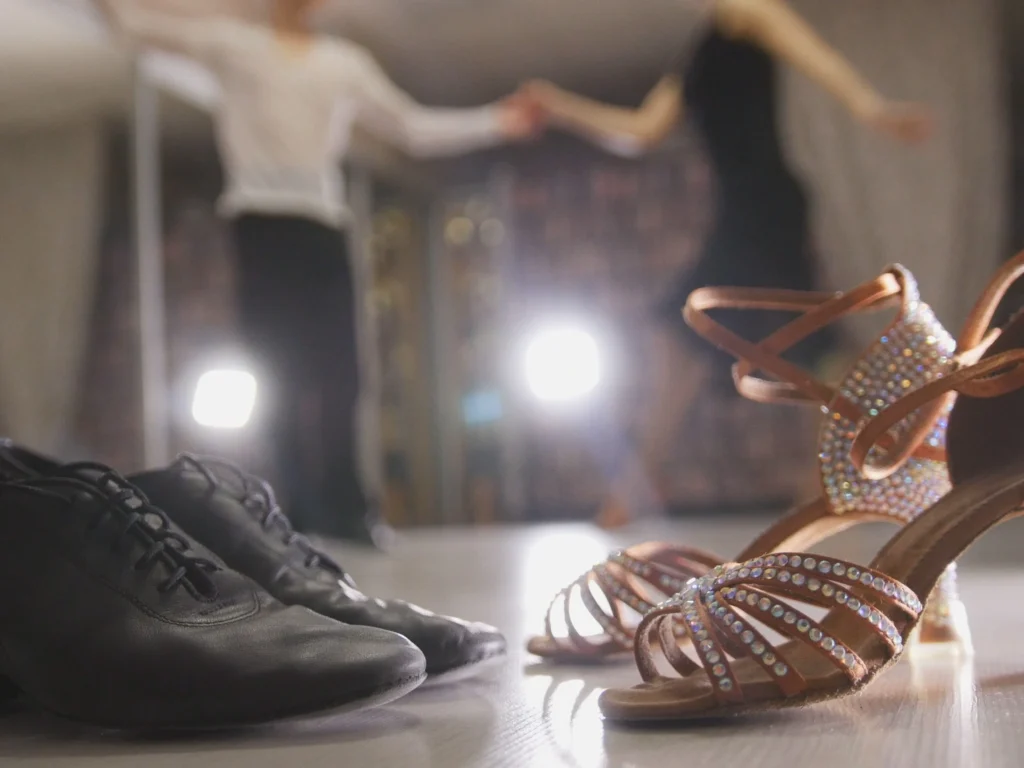
Wear comfortable, smart-casual clothing that allows for free movement. For footwear, choose smooth-soled shoes—such as leather or suede—that allow you to pivot easily without catching on the floor.
Is this dance harder to learn than classic tango?
While the fast tempo can feel intimidating at first, the core footwork is actually simpler and more repetitive. The primary challenge lies in training your feet to keep pace with the syncopated rhythm.
Can I attend a social event if I don’t have a dance partner?
Yes! Social tango culture is built around dancing with multiple partners throughout the evening. Most attendees arrive solo and use traditional non-verbal invitations to dance with different people.
How are milonga, tango, and vals related?
All three belong to the Argentine tango family and are played at social dance events. Milonga is fast and syncopated, tango is dramatic and grounded, and vals adapts the smooth, turning motions of the classic waltz to tango music.