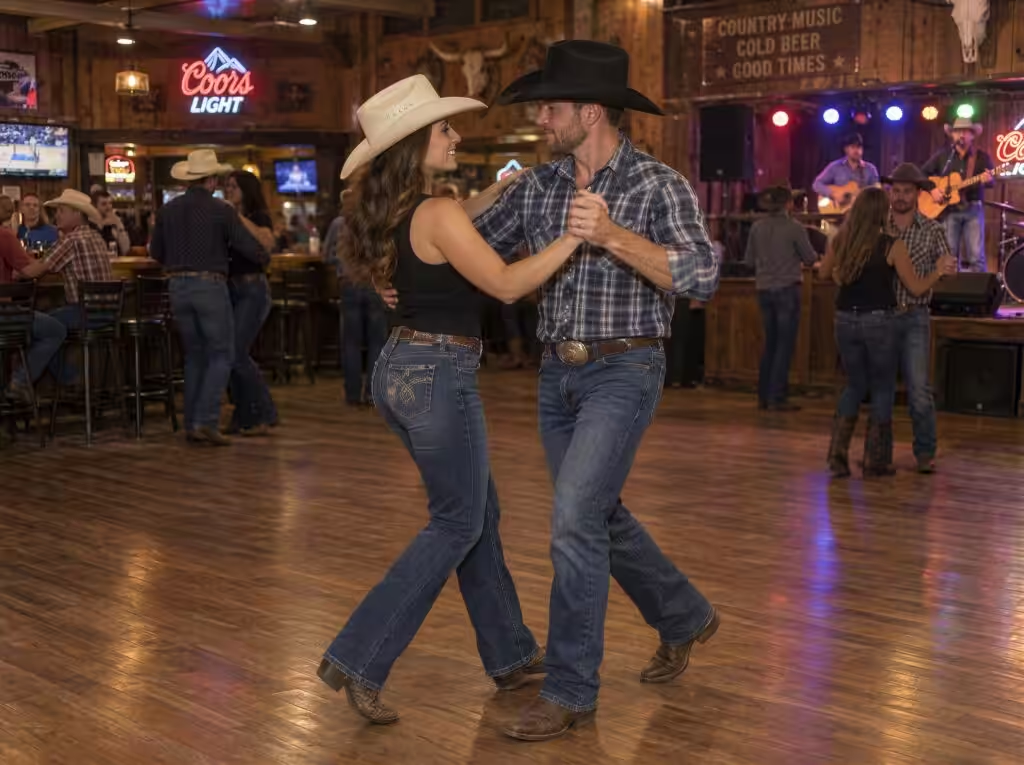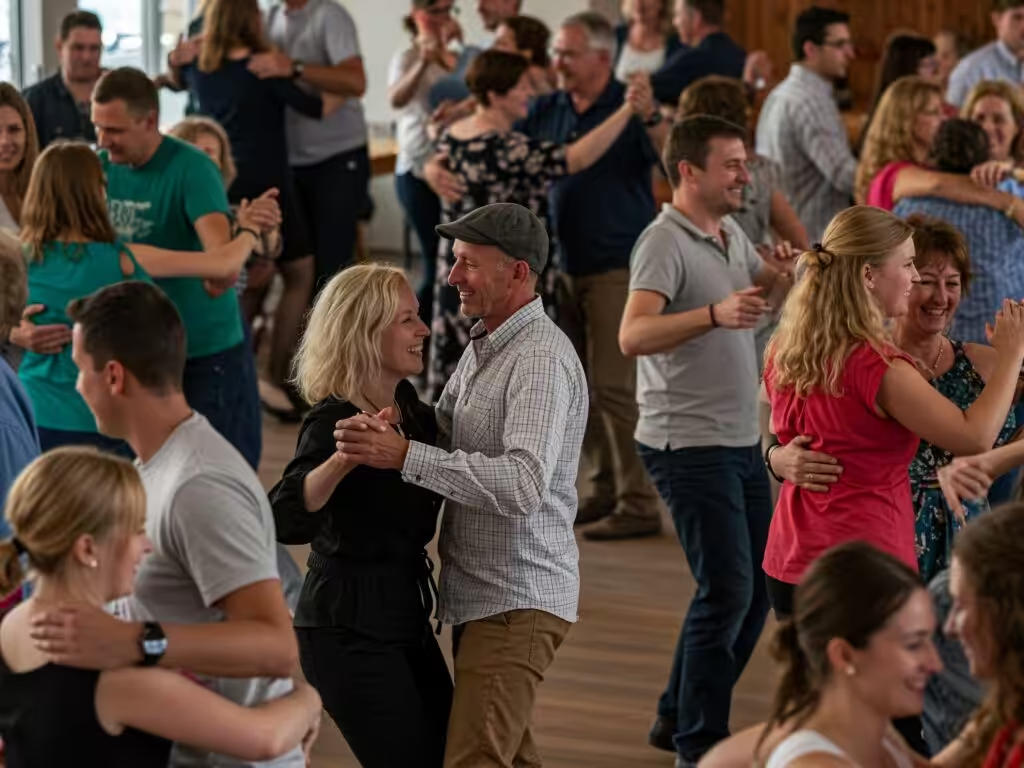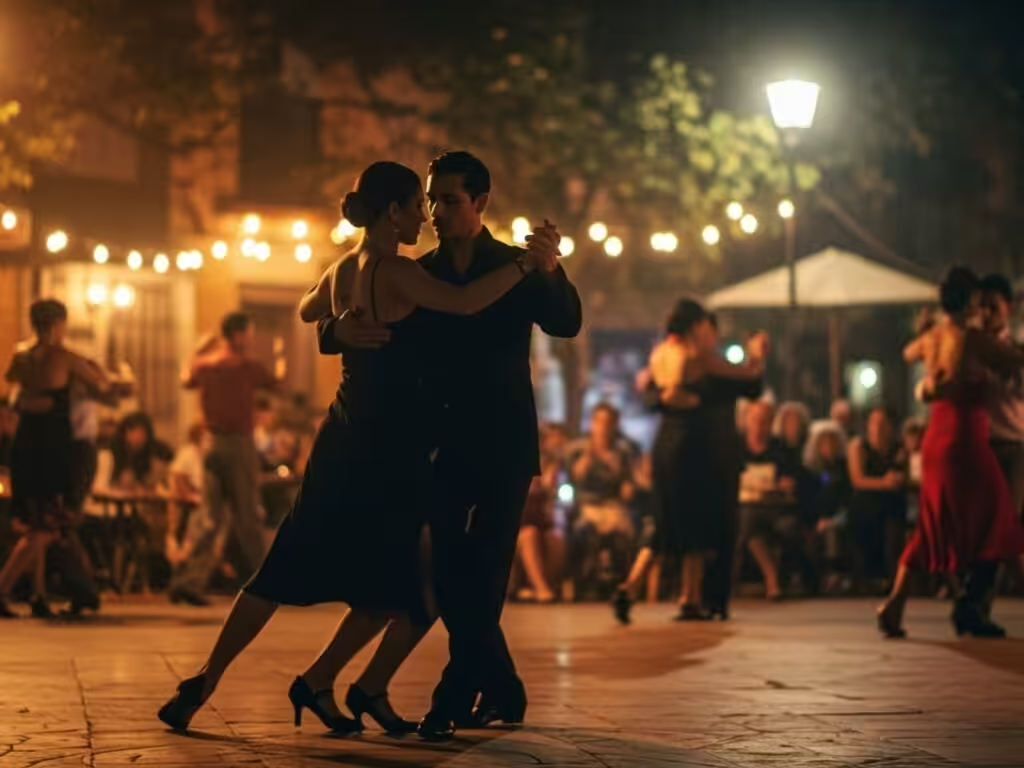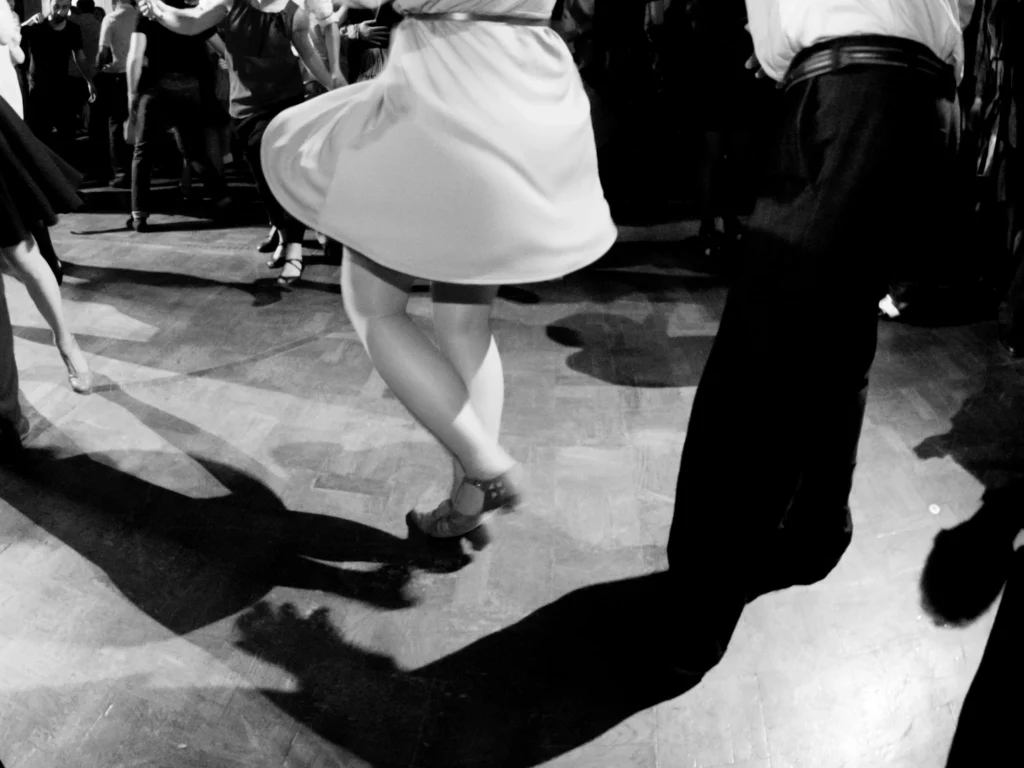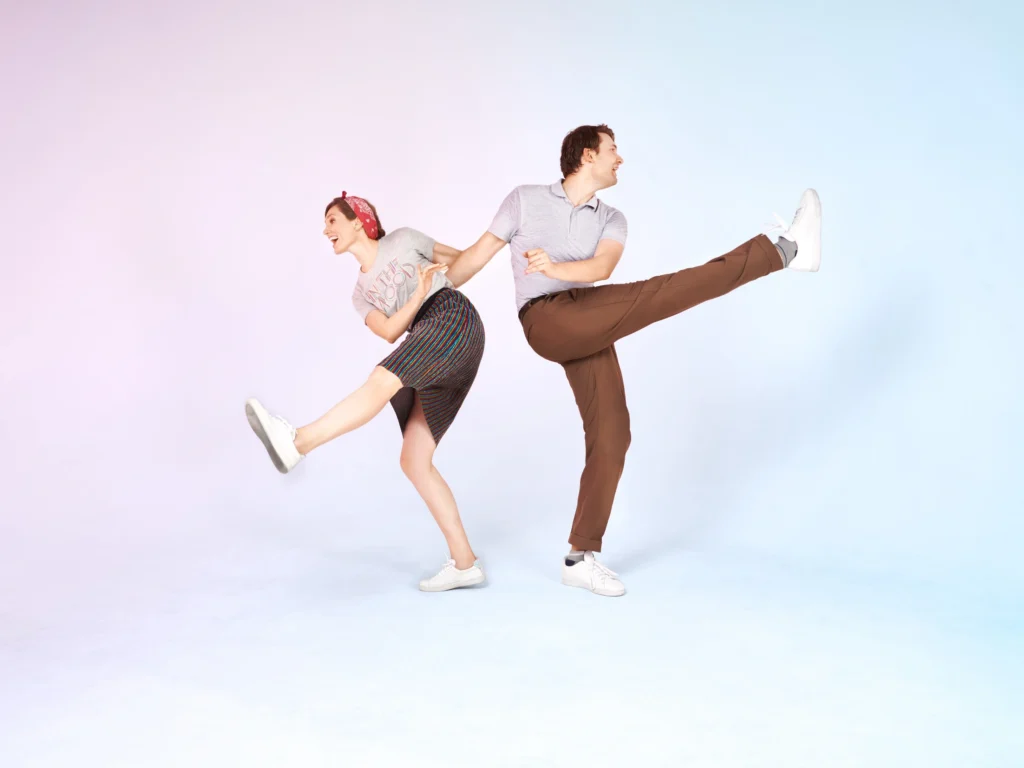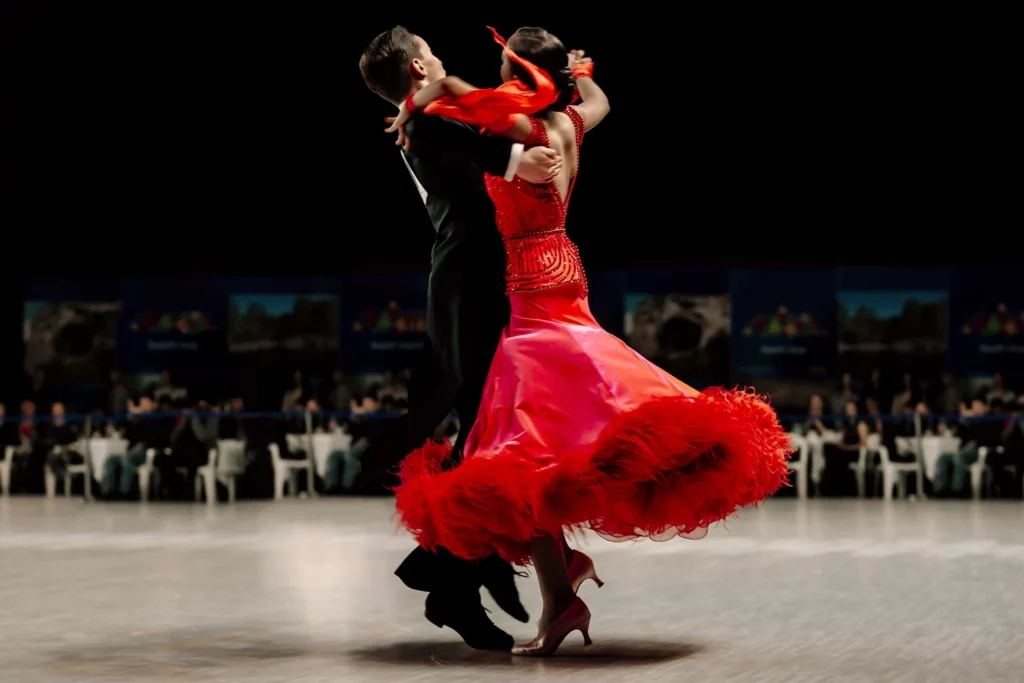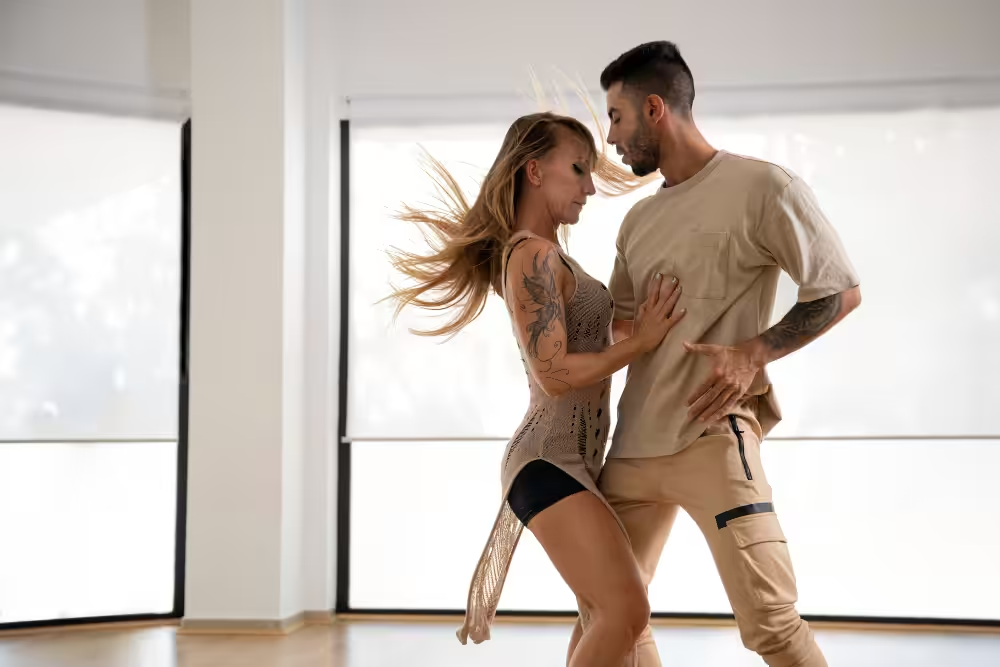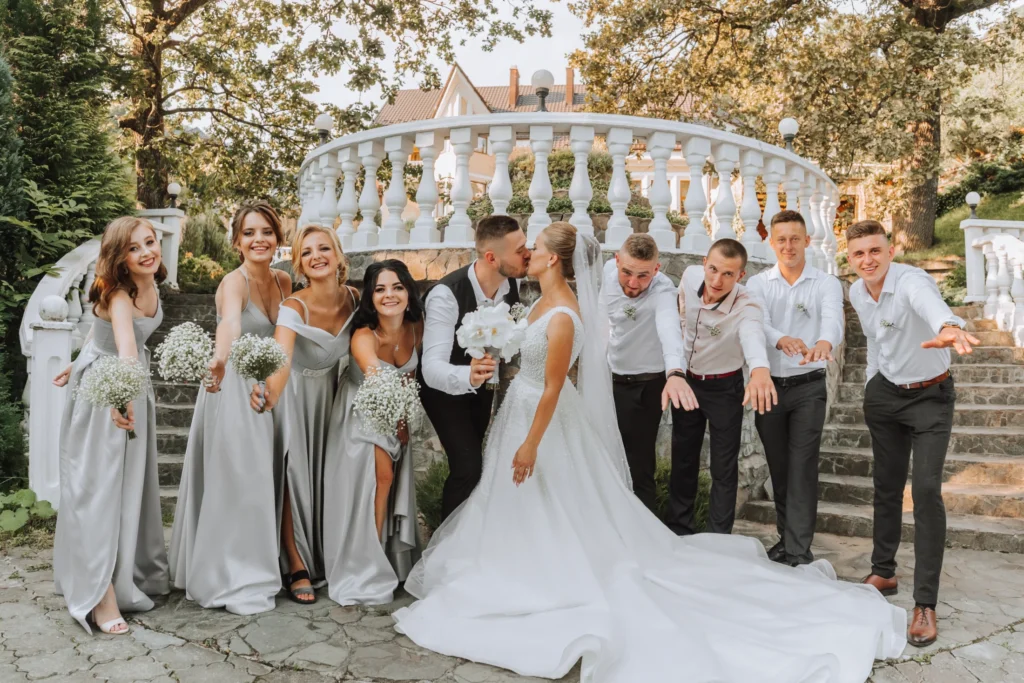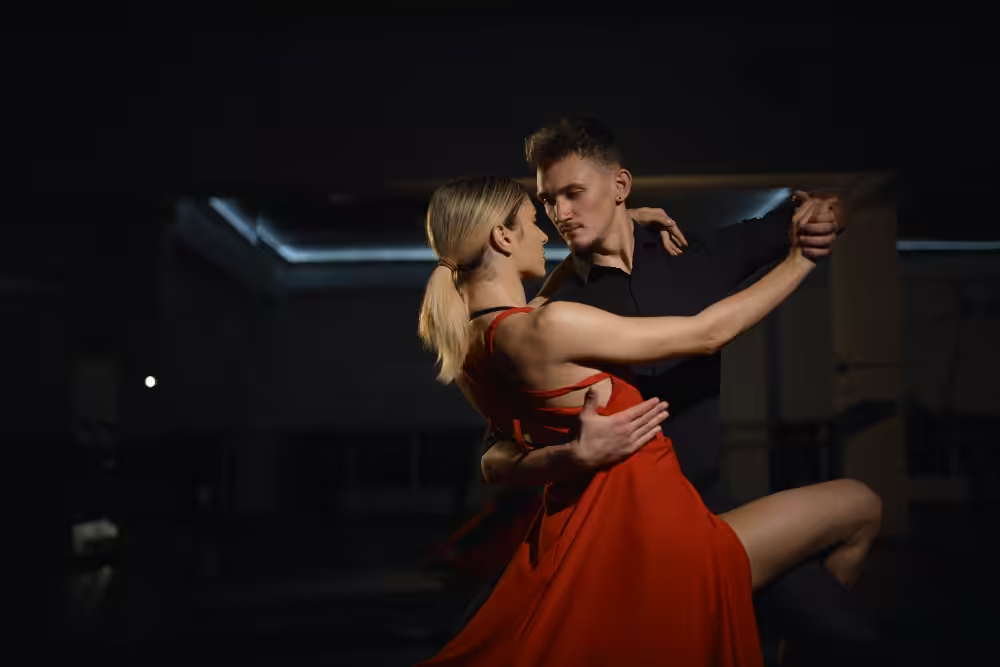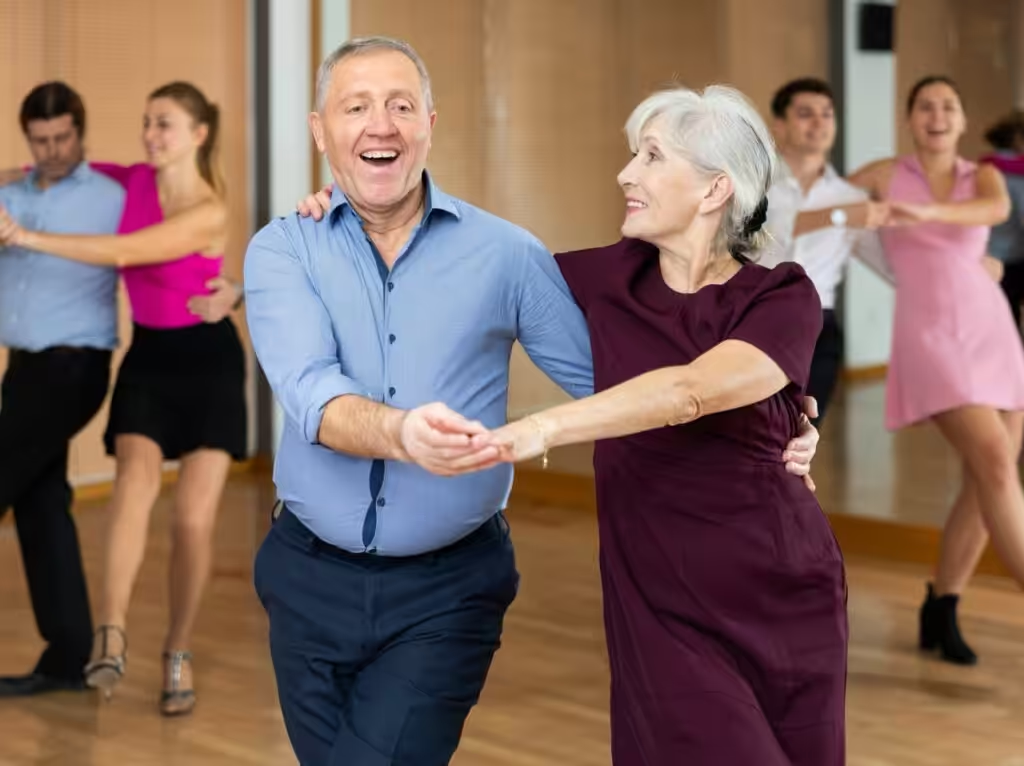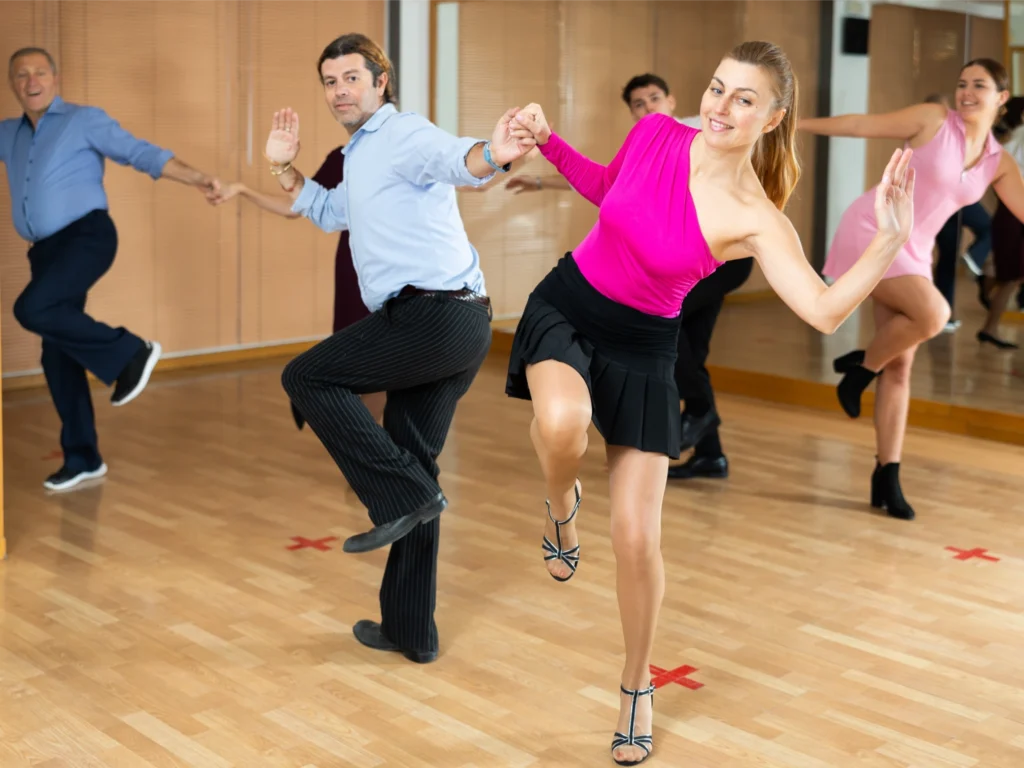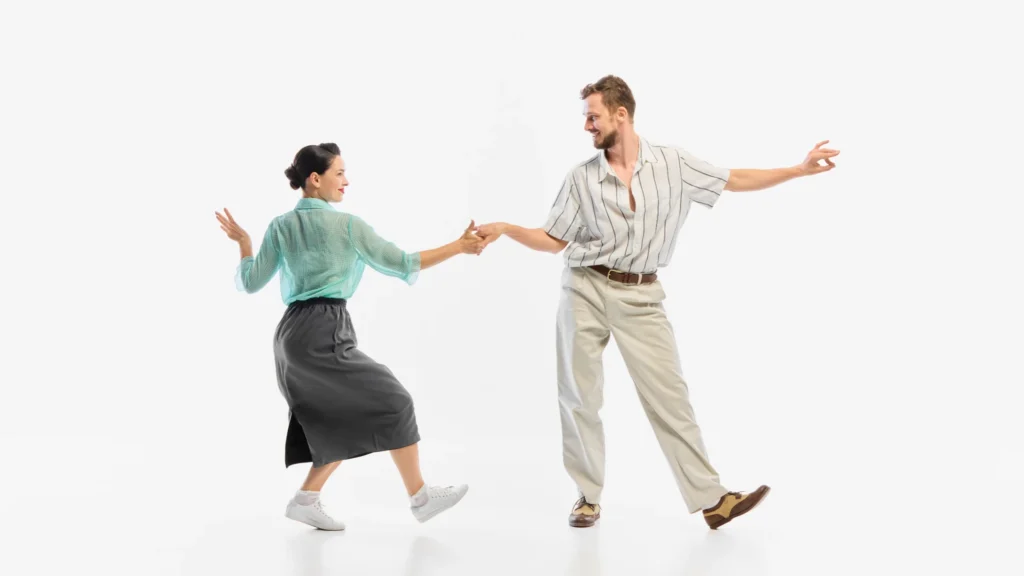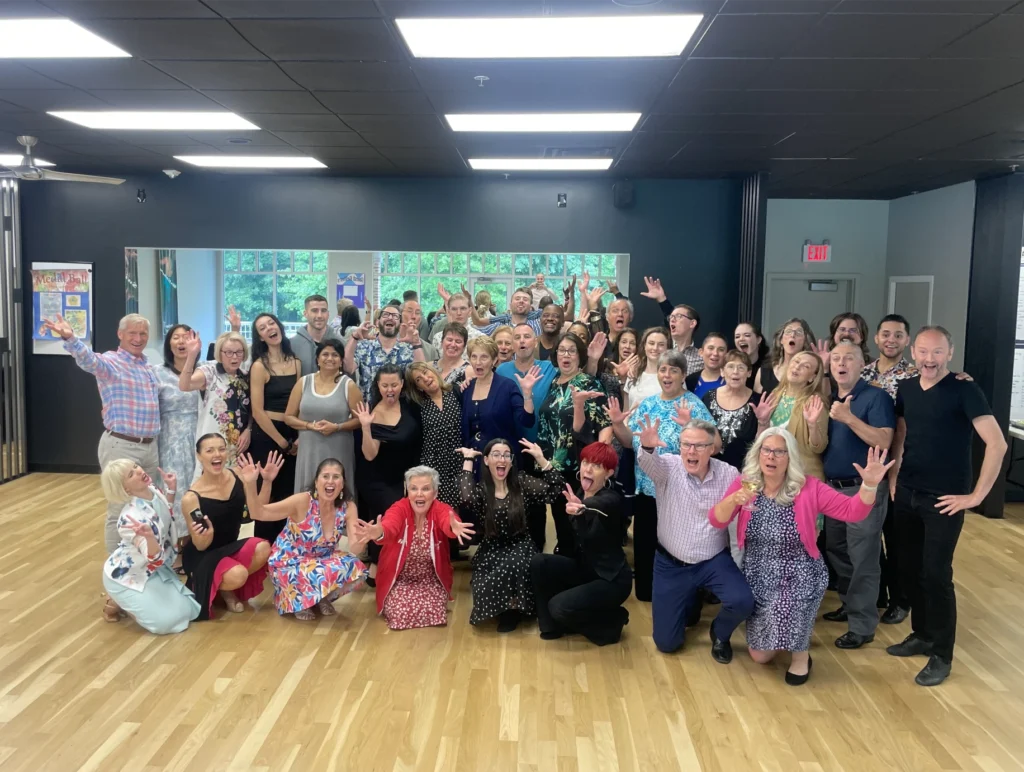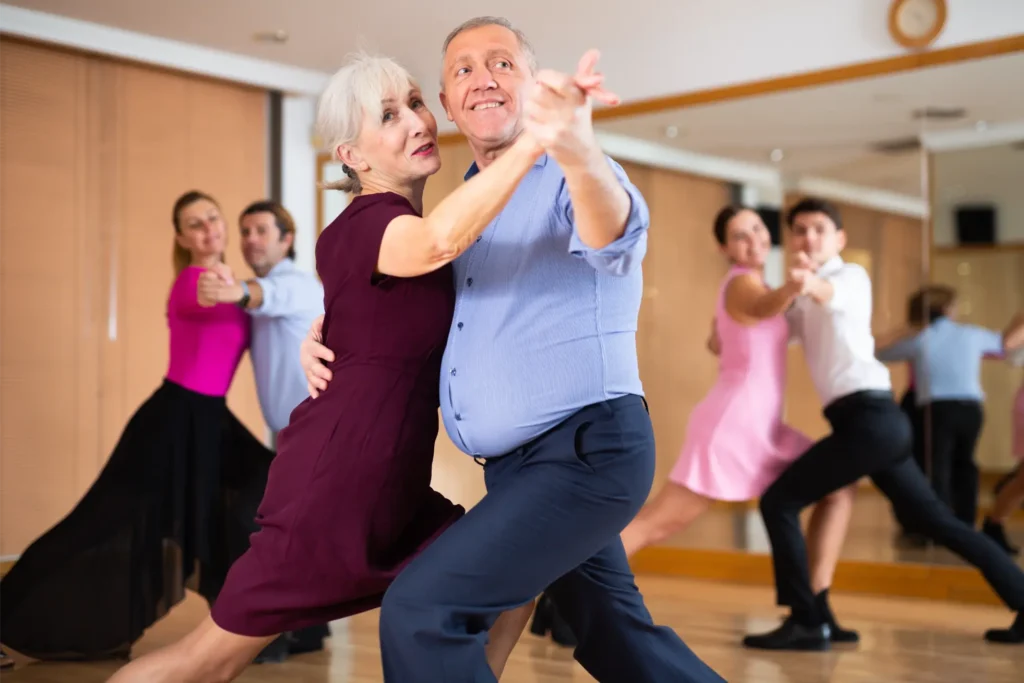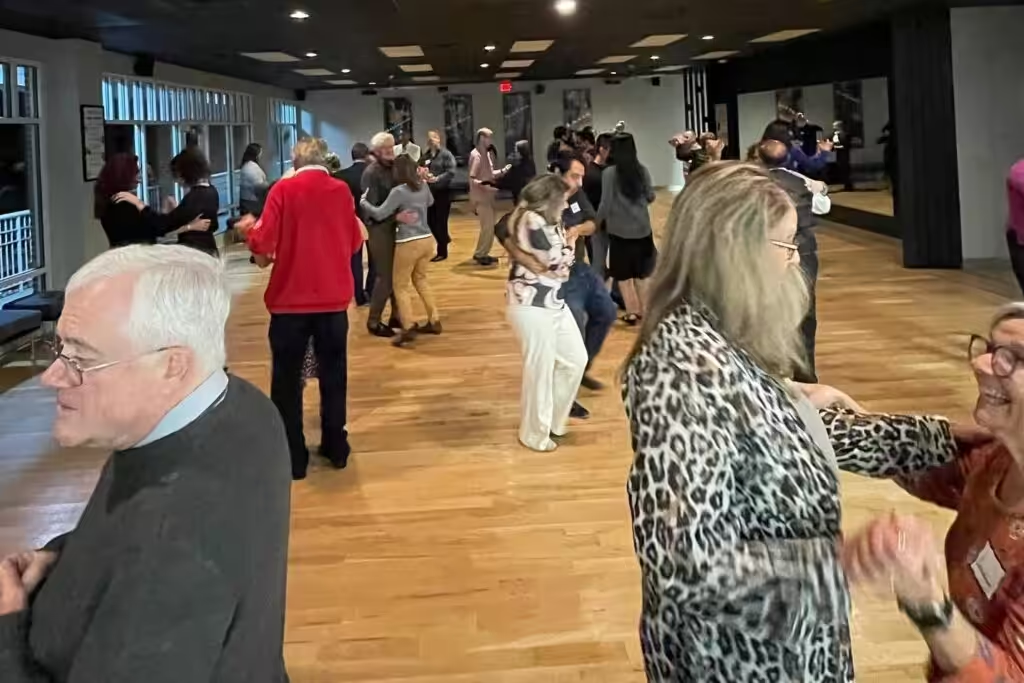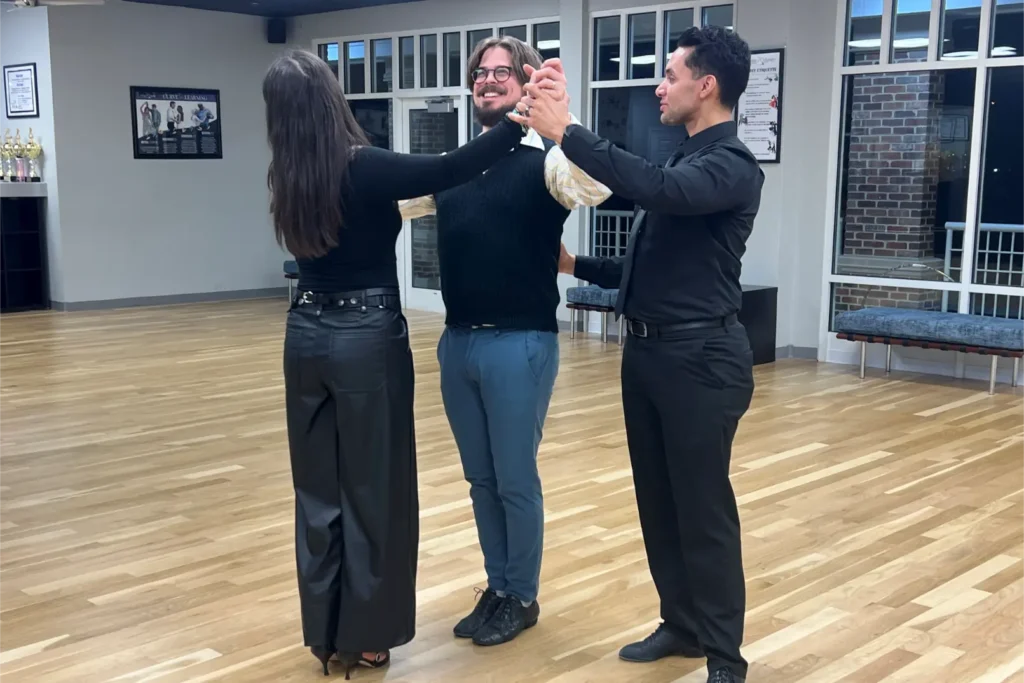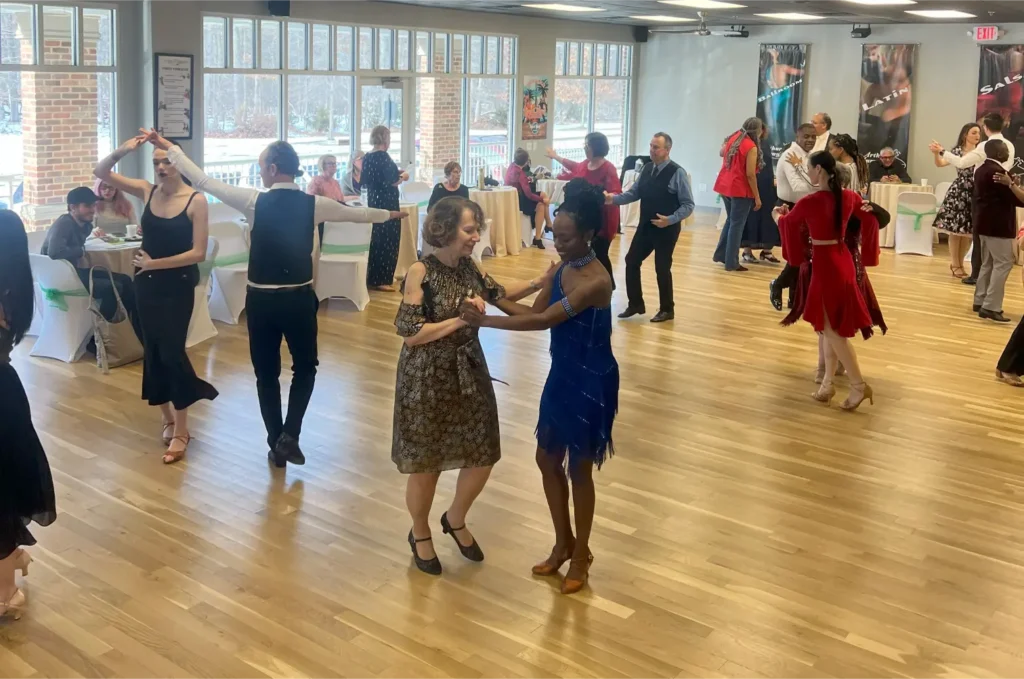

Wedding party line dances are group dances where guests follow the same steps side by side, often with cues from the song or DJ. The most popular choices are Cha-Cha Slide, Cupid Shuffle, and Electric Slide. They work well at wedding receptions because guests don’t need a partner or previous dance experience to join in. These familiar dances will bring guests of all ages onto the floor.
Key Takeaways
- 3 to 5 line dances spread throughout the reception are a good starting point for most weddings.
- Country line dances like Copperhead Road and Boot Scootin’ Boogie work best when guests already know the routines.
- Newer dances like Boots on the Ground may appeal to younger guests, but others may need a quick demonstration.
- After dinner or slow songs is a good time to play a line dance and encourage guests back onto the floor.
- Share your playlist with the DJ, including exact song versions, must-play favorites, and songs to avoid.
- Ask the wedding party to lead unfamiliar dances so guests can watch and follow the steps.
Wedding Party Line Dances: A Quick Overview
The Cha-Cha Slide, Cupid Shuffle, and The Git Up include instructions in their lyrics, while dances like the Electric Slide, Copperhead Road, and Boot Scootin’ Boogie will probably require a quick demonstration for first-timers.
| Dance | Song and artist | Song calls the steps? | Difficulty | Best for |
| Cha-Cha Slide | “Cha Cha Slide,” DJ Casper | Yes | Easy | Beginners and all ages |
| Cupid Shuffle | “Cupid Shuffle,” Cupid | Yes | Easy | Mixed-age crowds |
| Electric Slide | “Electric Boogie,” Marcia Griffiths | No | Easy | Classic wedding receptions |
| The Wobble | “Wobble,” V.I.C. | No | Easy to moderate | High-energy party crowds |
| Copperhead Road | “Copperhead Road,” Steve Earle | No | Moderate | Country music fans |
| Boot Scootin’ Boogie | “Boot Scootin’ Boogie,” Brooks & Dunn | No | Moderate | Country-themed weddings |
| Cotton-Eyed Joe | “Cotton Eye Joe,” Rednex | No | Moderate | Fast-paced country parties |
| Boots on the Ground | “Boots on the Ground,” 803Fresh | Partially | Easy to moderate | Guests who enjoy newer dance trends |
| The Git Up | “The Git Up,” Blanco Brown | Yes | Easy to moderate | Country and pop music fans |
| Macarena | “Macarena,” Los del Río | No | Easy | Multigenerational celebrations |
Classic Line Dances Every Generation Knows
The Cha-Cha Slide, Cupid Shuffle, Electric Slide, and Wobble are popular wedding choices because many guests already know the steps.
Read next: The History of Wedding Dances.
Cha-Cha Slide
The Cha-Cha Slide by DJ Casper is one of the easiest wedding line dances for beginners. The song calls out each move, including steps to the left and right, hops, stomps, and turns. Guests can follow the instructions without learning a routine beforehand.
It’s a good choice early in the reception when people may need a little encouragement to join the dancing. Even guests who have never tried it can watch the people around them and pick up the moves as the song plays.
Cupid Shuffle
The Cupid Shuffle by Cupid uses a simple four-part pattern: step right, step left, kick, and turn. The lyrics announce each move, and the same sequence repeats throughout the song.
Its steady pace gives beginners time to follow along. It’s especially useful for mixed-age wedding crowds.
Electric Slide
The Electric Slide is traditionally danced to Marcia Griffiths’ “Electric Boogie.” Its repeating step pattern includes side steps, backward steps, and a quarter turn before the sequence starts again.
Unlike the Cha-Cha Slide, the song doesn’t call out instructions. Guests who don’t know the routine may need a quick demonstration. It’s a familiar choice for weddings with older relatives and guests who enjoy classic social dances.
The Wobble
The Wobble by V.I.C. brings a more energetic feel to the reception. Dancers move their hips, bounce to the beat, and turn as they repeat the routine.
The song doesn’t explain the full choreography, so some guests may need a step demonstration. The movements also leave room for personal style, which makes it a popular choice for groups that enjoy dancing with more energy and expression.
Country Line Dances for Rustic and Barn Weddings
Country line dances are popular at rustic and barn weddings, but they work best when guests already know the steps.
Read next: Country Western Dancing: History, Styles, and Steps.
Copperhead Road
Copperhead Road by Steve Earle is a popular country line dance with stomps, kicks, and quick changes of direction. The routine follows a repeating pattern, but the music doesn’t provide step-by-step instructions.
The song starts slowly before the stronger beat comes in, so experienced dancers can recognize when to begin. Beginners may need a demonstration, especially for the turns and faster footwork.
Boot Scootin’ Boogie
Boot Scootin’ Boogie by Brooks & Dunn is a country dance favorite, often performed with a routine that includes heel taps, toe touches, kicks, and turns. The steps repeat throughout the song, but dancers need to know the sequence to stay together.
This dance works particularly well for guests who have experience at country dance halls or have taken line dancing lessons. For beginners, a short demonstration before the music starts can help them follow the group.
Cotton-Eyed Joe
Cotton-Eyed Joe by Rednex is a fast-paced wedding favorite, especially at country-themed receptions. Its lively rhythm works well with hopping, kicking, and stomping movements, although the choreography varies between groups and regions.
The quick tempo can make it difficult for beginners to learn a full routine during the song. If your guests are unfamiliar with the dance, choose a simplified step pattern and have someone demonstrate it first.
New Line Dances for Younger Guests
Newer line dances often gain popularity through TikTok, YouTube, and other social platforms. Younger wedding guests may already know the routines, while older relatives might be seeing them for the first time. For those older guests, you should probably do a quick demonstration before the song starts.
Boots on the Ground
Boots on the Ground by 803Fresh became a viral line dance hit in 2025, with its catchy chorus and signature fan movements. The routine includes side steps, footwork, and coordinated arm movements, often performed with a folding fan.
The standard song includes some verbal cues but doesn’t explain the entire routine. Guests who have seen the dance online may recognize it immediately, while beginners will benefit from watching a demonstration.
The Git Up
The Git Up by Blanco Brown combines country music with hip-hop influences. The song calls out moves such as the two-step, cowboy boogie, and butterfly, so dancers can follow the lyrics as they go.
Some movements require more coordination than basic line dances, especially when the routine picks up speed. It’s a good option for couples who want a mix of country and modern music.
Group Dances That Work Like Line Dances
Some wedding party dances aren’t traditional line dances, but they serve a similar purpose. Guests follow a shared routine, so everyone can participate together.
Macarena
The Macarena by Los del Río is a familiar wedding party dance built around a repeating sequence of arm movements, hip movements, and a quarter turn. Unlike traditional line dances, which often focus on footwork, the Macarena relies mainly on upper-body movements.
The song doesn’t call out the steps, but the routine is easy to follow by watching other dancers. Its slower movements also give beginners time to catch up if they lose their place. It’s a good choice for mixed-age crowds.
Line Dance Music for Weddings: Building Your Set
For most wedding receptions, 3 to 5 line dances are a great starting point. Space them between regular dance songs to keep the playlist varied.
- Start with a dance that gives instructions in the lyrics, such as the Cha-Cha Slide or Cupid Shuffle. Once guests are comfortable on the floor, follow with a familiar classic like the Electric Slide or Macarena.
- Save newer or more challenging routines for later, such as Boots on the Ground or Copperhead Road.
Before the wedding, share a few details with your DJ:
- Must-play songs: Choose the line dances you want included and which ones should play earlier or later in the reception.
- Exact song versions: Provide the artist and preferred recording, and request clean edits when needed. Some remixes have different tempos or instructions.
- Do-not-play list: Identify songs you dislike or dances you know your guests won’t enjoy.
- Guest participation: Let the DJ know which dances may need a short demonstration or an invitation for experienced dancers to lead.
A good DJ should watch how guests respond rather than follow a fixed order. If a line dance brings plenty of people onto the floor, another familiar routine may work well later. If participation is low, the DJ should switch to a different style of music.
When to Play Line Dances at the Reception
The best time to play wedding line dances is right after dinner or following several slow songs, when guests may need encouragement to return to the dance floor.
Timing also depends on your reception schedule. Keep these points in mind:
- After dinner: Start with an easy and familiar dance to encourage guests to get up from their tables.
- Between music sets: Play a line dance after a few slower songs to bring more energy back to the floor.
- Later in the evening: Save faster or more challenging routines for guests who enjoy energetic dancing.
Before finalizing your playlist, review your order of the wedding dances to see how group dances fit around the couple’s first dance and other wedding traditions.
We recommend that you avoid scheduling a line dance immediately before the last dance at the wedding.
How to Get Wedding Guests Into a Line Dance
Ask your DJ to announce the dance before the music starts and invite guests onto the floor. For dances without spoken cues, the DJ can briefly explain the basic pattern or have an experienced dancer demonstrate it.
The wedding party can also help guests feel more comfortable. Ask a few bridesmaids, groomsmen, or relatives to learn the routine ahead of time and stand near the front. Guests who don’t know the steps can watch them and figure out the movements.
If you’re planning a surprise wedding dance, you can have the wedding party begin with a rehearsed routine before inviting everyone else to join.
For couples wondering how many wedding dance lessons they need, the answer depends on the routine and everyone’s experience. If you want the wedding party to learn one or two line dances together, reach out to Arthur Murray Dance Center Princeton about lesson options and how much practice to plan.
FAQ
How do you learn a line dance fast?
The fastest way to learn a line dance is to practice one short sequence of steps before trying it with music. Start slowly, repeat the pattern until you remember it, then practice at the song’s normal speed. Focus on the direction changes and turns, since these are common places for beginners to lose their place. A few dance lessons can also help you learn the steps and correct mistakes before the wedding.
What song gets everyone dancing at a wedding?
“Cupid Shuffle” by Cupid is a great choice because the lyrics tell guests which steps to follow. Other highly requested reception songs include “I Wanna Dance with Somebody” by Whitney Houston, “Uptown Funk” by Mark Ronson featuring Bruno Mars, and “Shut Up and Dance” by Walk the Moon. The best choice depends on your guests’ ages and music preferences.
Final Thoughts: Wedding Party Line Dances
The best wedding party line dances are the ones your guests will enjoy. Familiar favorites like the Cupid Shuffle and Electric Slide work well for mixed-age crowds, while country dances and newer hits may be better suited to guests who already know the routines. Choose a few crowd favorites and spread them throughout the reception.
If you want to prepare a group routine or feel more comfortable dancing at your reception, Arthur Murray Dance Center Princeton offers wedding dance lessons to help you and your wedding party practice before the big day.