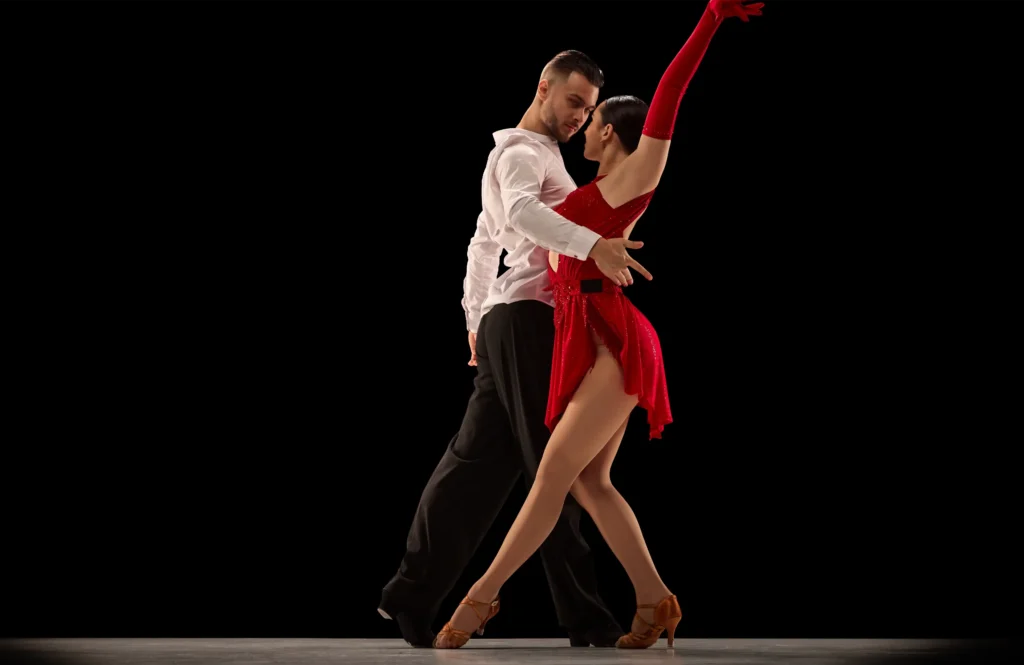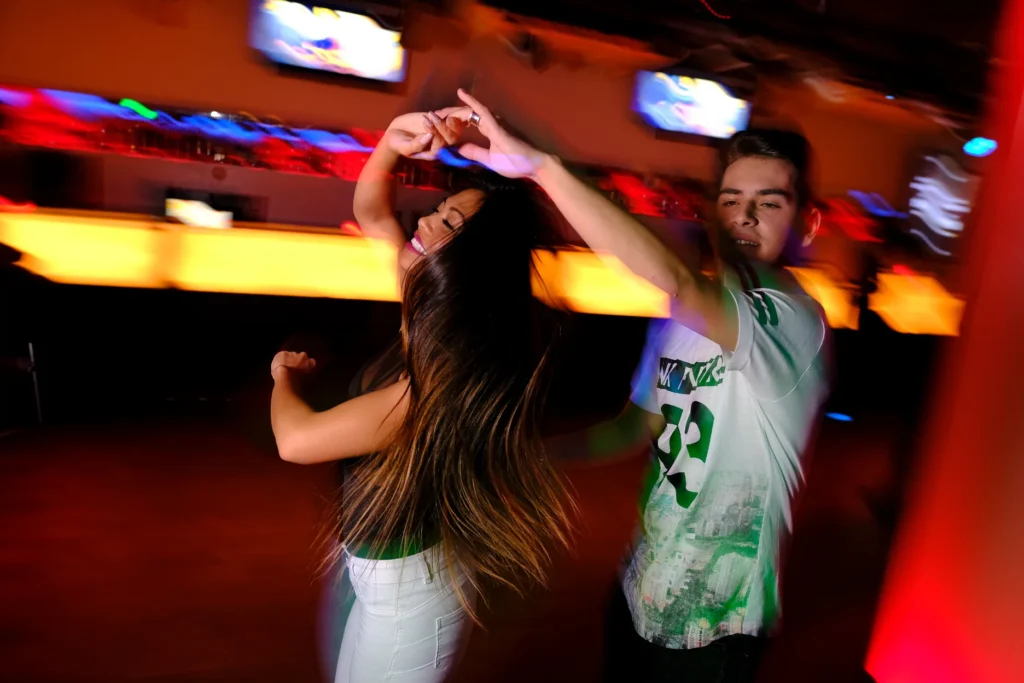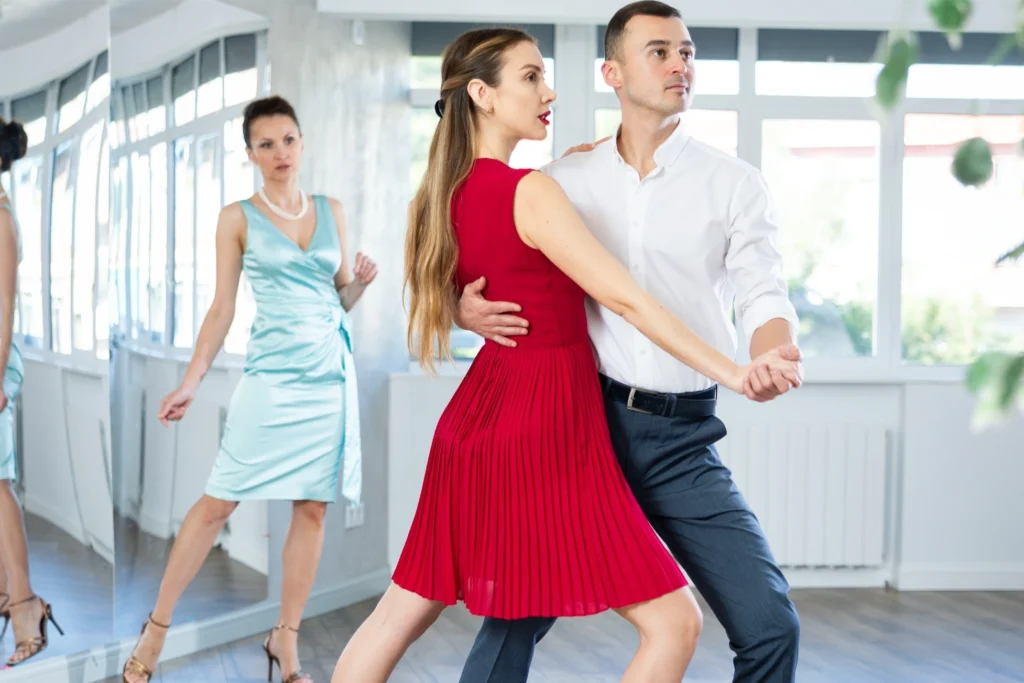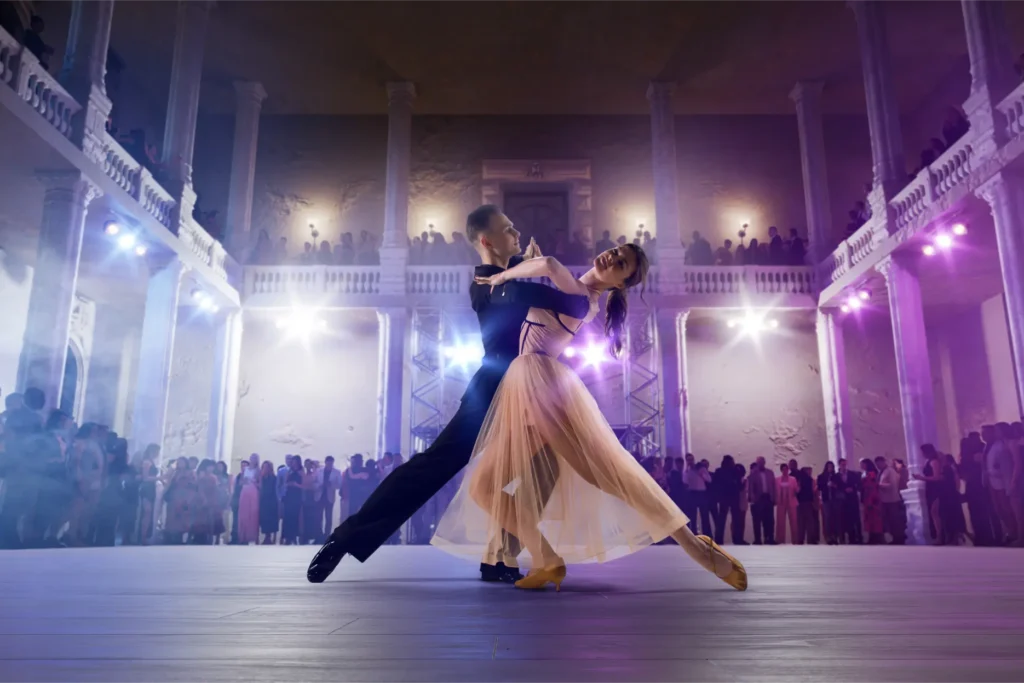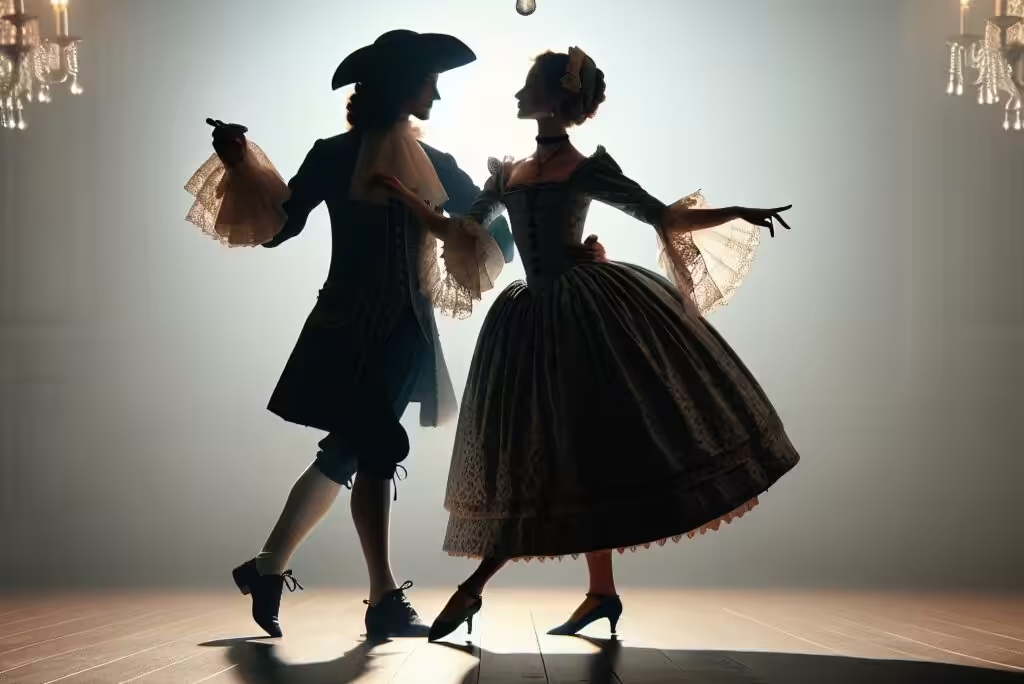
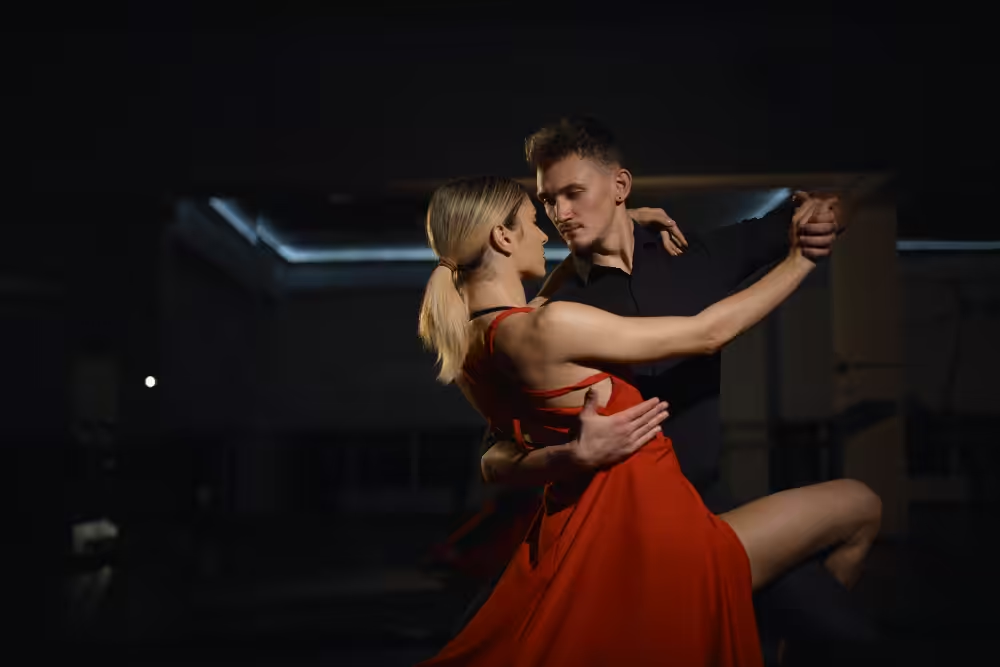
Milonga is like tango, but quicker, lighter, and more playful. If tango is a slow-burning romance, then milonga is a playful flirtation. Both originated in late 1800s Buenos Aires and share many of the same figures, yet they create completely different experiences on the dance floor.
Key Takeaways
- Milonga came first and served as the foundation for tango’s structure, music, and social style.
- The music defines the dance, milonga uses a quick 2/4 rhythm with continuous motion, while tango allows pauses and dynamic timing.
- Steps are similar, but milonga keeps them short and quick, while tango uses longer steps with full weight transfer.
- Milonga maintains a close, consistent embrace, while tango shifts between close and open positions.
- Milonga focuses on rhythm and flow, while tango emphasizes emotion, interpretation, and musical expression.
Where Milonga and Tango Come From
Milonga and tango both come from the late 1800s in Buenos Aires and Montevideo. Milonga came first, and most dancers see it as the foundation of tango.
Milonga developed from a mix of cultures that shaped the region.
- African rhythms brought strong, grounded timing.
- European immigrants added melody and musical structure.
- Local styles like payada and milonga criolla contributed storytelling and phrasing.
All of these elements combined into something new that people could dance to.
Different Meanings of Milonga
Milonga can mean 2 different things.
- Milonga as music is faster and more playful than tango. The rhythm is steady and lively. Dancers take smaller steps and keep moving without long pauses.
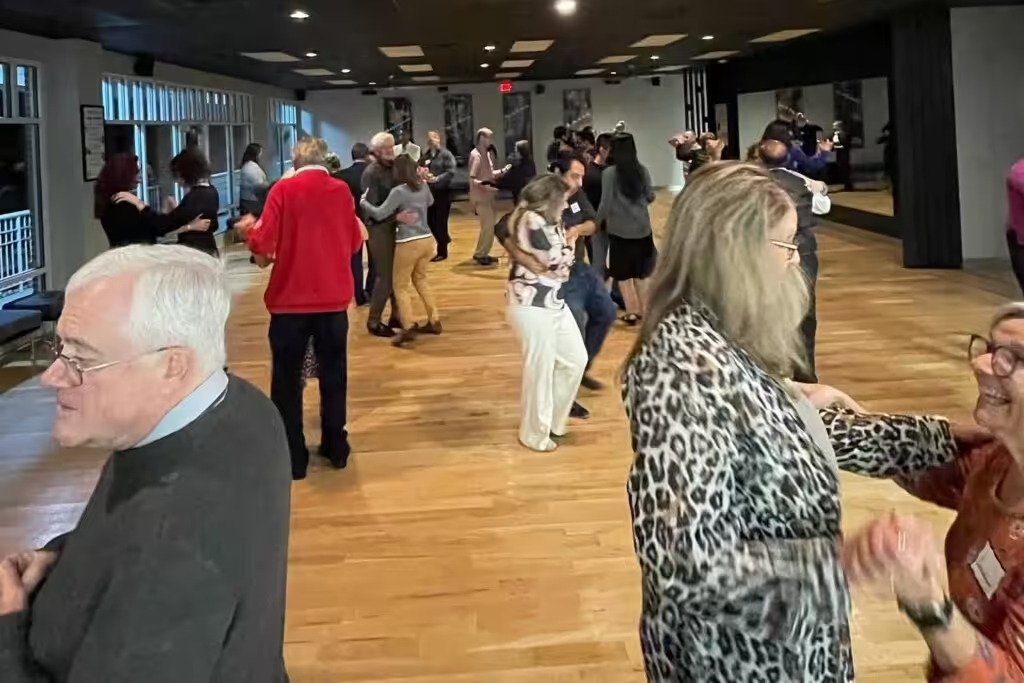
- Milonga as an event is a social gathering where people dance. You will hear tango, milonga, and vals throughout the night. These events follow clear etiquette. One example is the cabeceo, where dancers make eye contact to invite each other.
Learn more about milonga in the article fully dedicated to this dance.
How Tango Became Popular
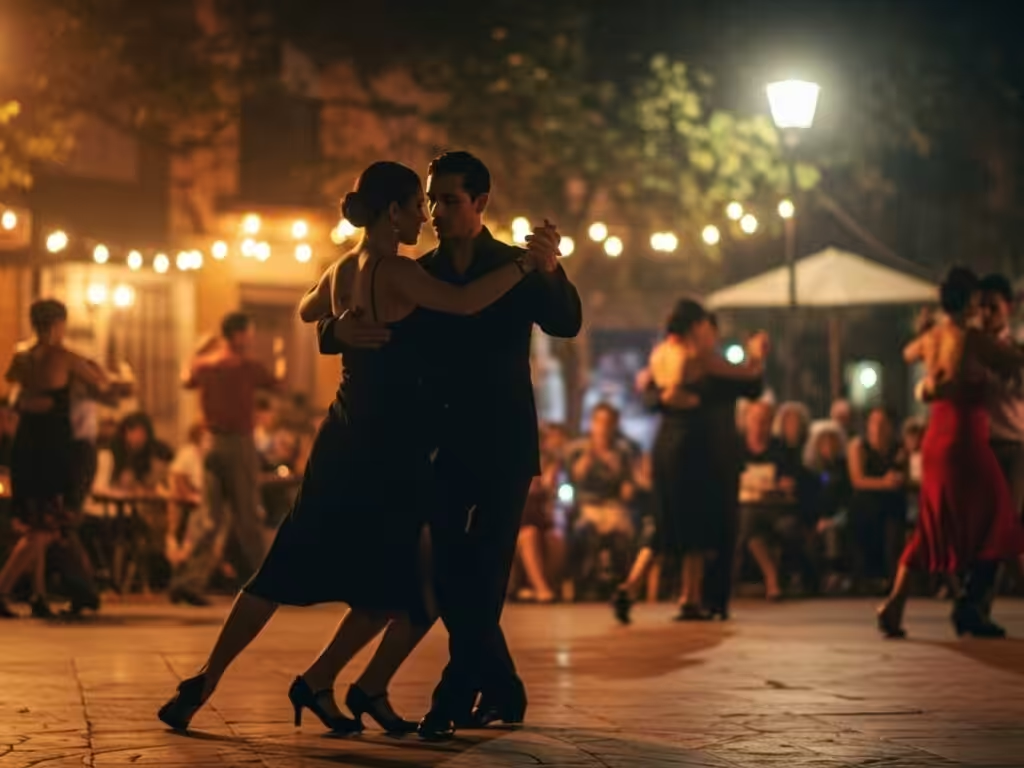
Tango started in working-class neighborhoods among immigrants. It was shaped by people who were far from home and building new lives. The dance felt raw and emotional, and it was often improvised.
At first, tango was not accepted by higher social classes. Many people saw it as too close and too intense. Everything changed when tango became popular in Europe, especially in Paris. Once it gained attention there, it returned to Argentina with a new image.
Today, tango is often seen as elegant and romantic. In the beginning, it was something much more personal, built from real experiences and constant improvisation.
How the Music Differs
Milonga uses a syncopated 2/4 beat, usually around 60 to 70 beats per minute. The rhythm keeps moving, so dancers take quick, compact steps. There is very little stopping, which gives the dance a lively feel.
Tango also uses 2/4 or 4/4 timing, but at a slower pace, often around 30 to 40 beats per minute. This slower phrasing creates room for pauses. Dancers can stretch movements, hold positions, and play with timing.
Both styles use similar instruments, including the bandoneón, piano, and violin. The difference is in how the music feels. Milonga sounds lighter and more rhythmic, while tango carries more depth and dramatic tension.
How the Steps Differ
Milonga and tango share much of the same step vocabulary, but they are used in different ways. Milonga steps are shorter and quicker, while tango steps are longer and more deliberate.
In milonga, movements stay close to the body to match the faster tempo. Dancers take compact steps and keep everything efficient. The axis stays more centered between the legs, which helps maintain balance and speed.
In tango, the axis fully transfers with each step. This creates a stronger sense of weight and direction. Movements travel more across the floor, and dancers have more time to shape each step.
Pauses are another key difference. Milonga keeps moving almost constantly. There is no space for long stops, so the dance feels continuous. Tango allows pauses, which gives dancers time to hold positions and play with timing.
Adornment also changes between the two. In milonga, embellishments are simple and used sparingly. The focus stays on rhythm and flow. In tango, adornments are more expressive, with extra time to add detail and style to each movement.
How the Embrace Differs
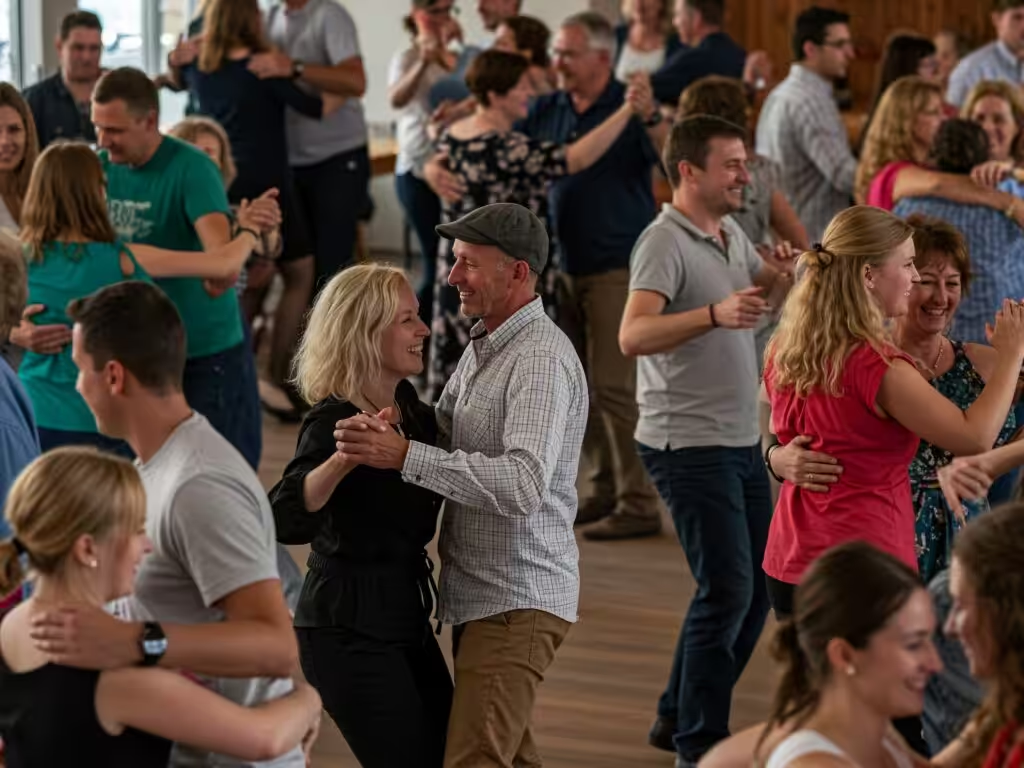
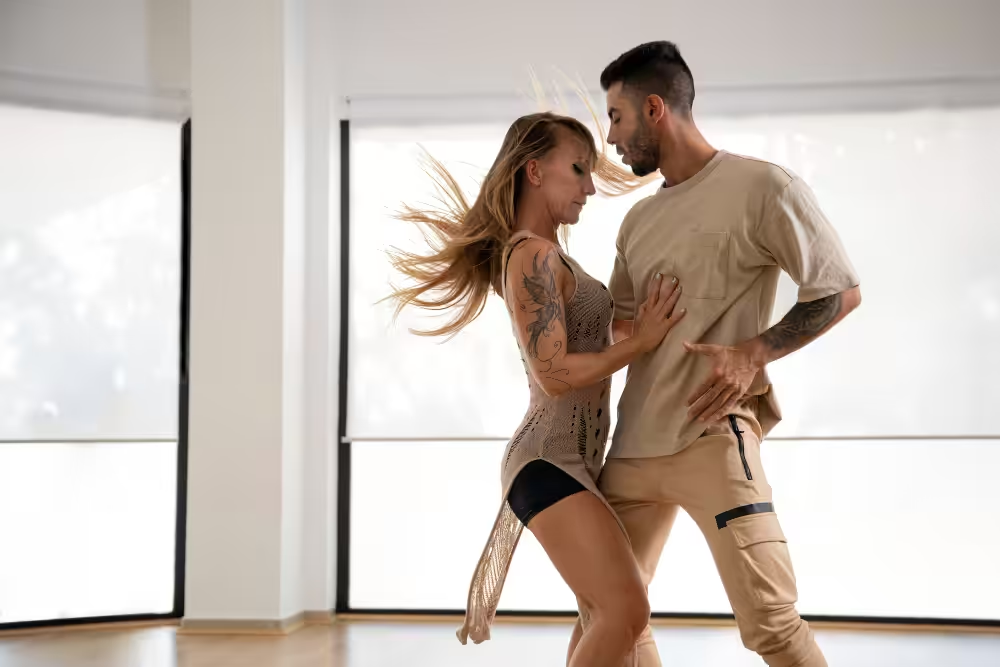
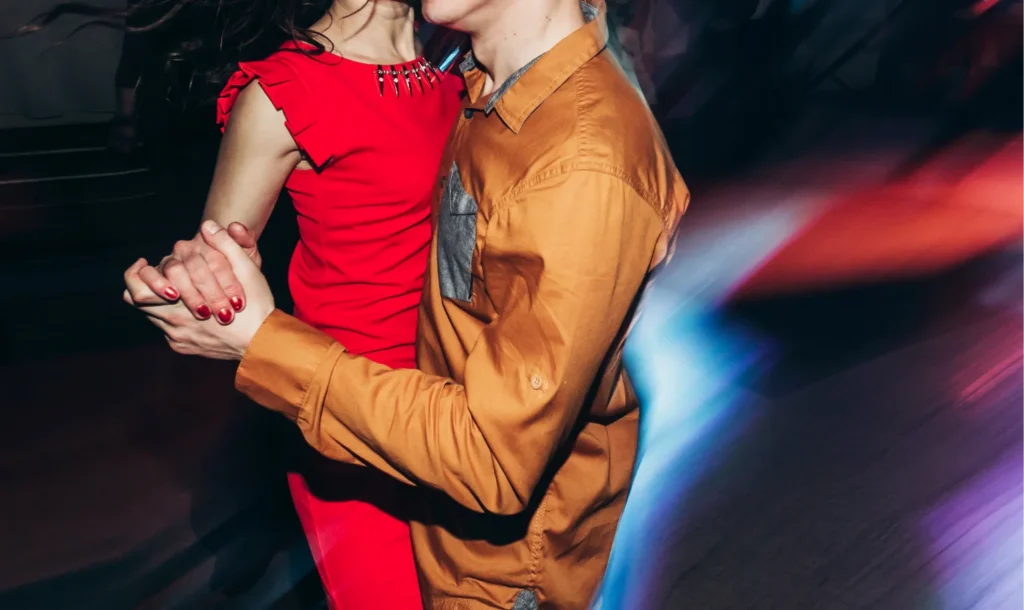
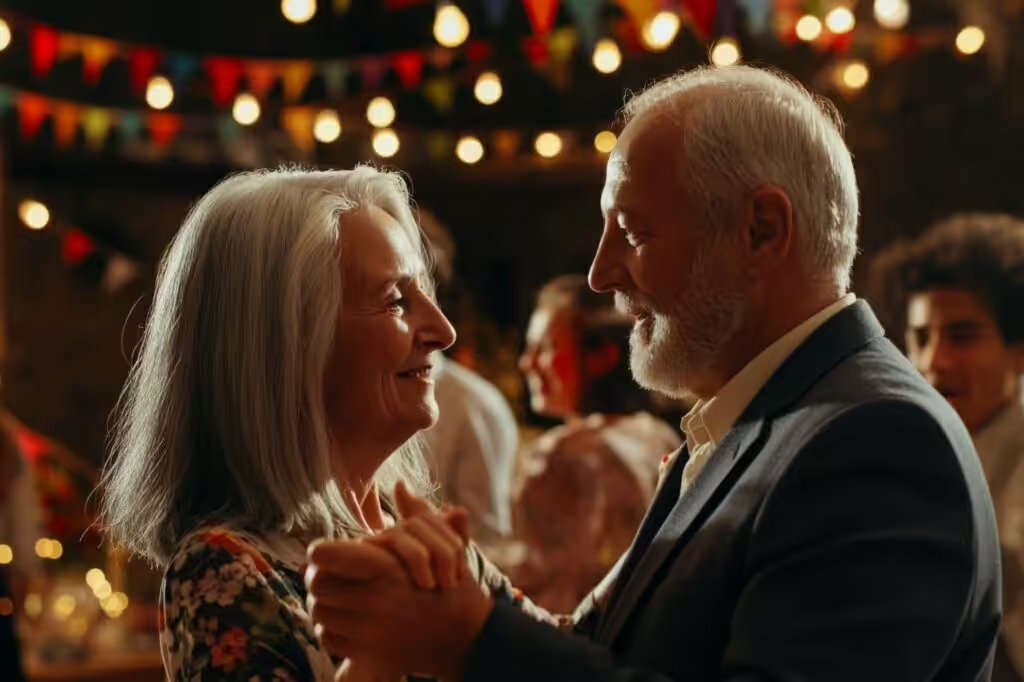
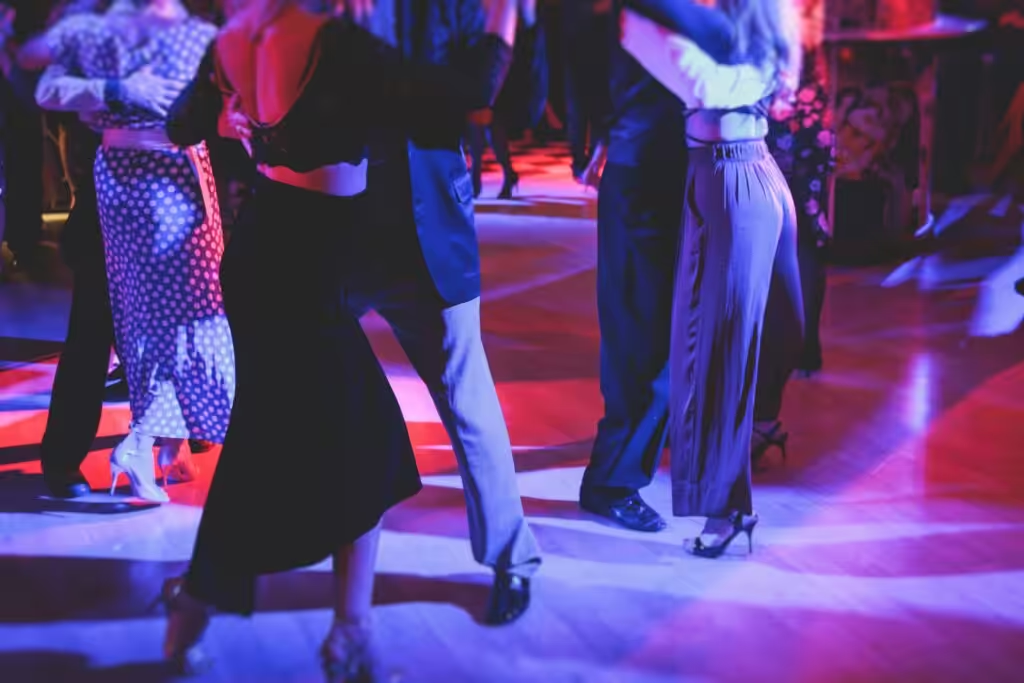
In milonga, partners stay close the entire time. The faster tempo requires stability and quick reactions, so there is no room to open up and reset the connection. A steady embrace helps both dancers stay aligned and move efficiently through each step.
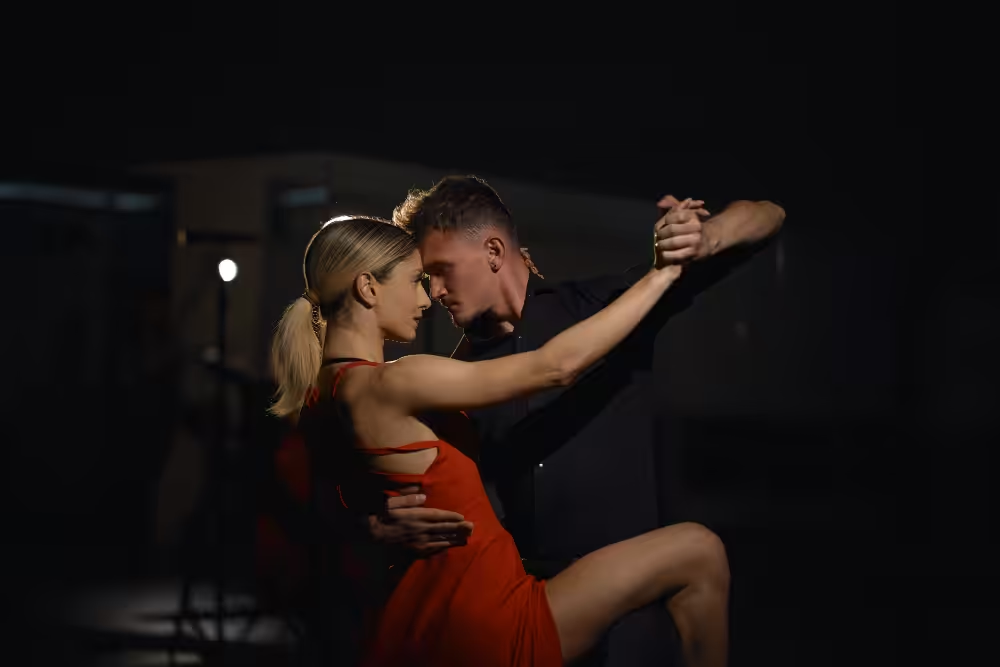
In tango, the embrace can change depending on the figure. Dancers often move between close and open positions to allow for turns, extensions, and more complex patterns. This flexibility gives tango a more dynamic feel, with visible changes in space and connection.
How the Mood and Character Differ
Milonga feels playful and light, while tango leans toward a more dramatic and introspective tone.
Key characteristics of milonga:
- The rhythm encourages quick reactions and a relaxed attitude.
- Dancers focus on staying connected to the beat and keeping the movement flowing.
- Expression comes through timing and subtle changes in direction.
Key characteristics of tango:
- The music often feels dramatic or melancholic, which invites dancers to slow down.
- Musicality becomes more flexible, with pauses, suspensions, and changes in speed.
- There is space for interpretation and personal expression.
Styles of Milonga
Milonga has two main styles. The difference comes down to rhythm and how you place your steps.
- Milonga Lisa is the simpler of the two. Dancers step on every beat and keep the movement steady and consistent. This creates a grounded rhythm that is easy to follow and keeps the dance flowing.
- Milonga con traspié adds more complexity. Instead of stepping only on the main beat, dancers use quick weight changes and double-time steps to play with the rhythm. This creates a more dynamic feel, with small variations that match the syncopation in the music.
Both styles use the same foundation, but they offer different ways to interpret the music and express timing on the dance floor.
Can You Learn Milonga at a Ballroom Studio?
Yes, you can learn milonga at a ballroom studio, including at Arthur Murray Dance Center. It is taught as a specialty dance alongside Argentine Tango and Tango Vals. Start here if you want to learn tango.
Most students begin with Argentine Tango. This builds a strong foundation, since milonga shares many of the same figures and partner connection. Once that base is in place, milonga is introduced as the next step.
From there, students learn how to adjust their timing, shorten their steps, and stay connected to the faster rhythm. The transition feels natural because the structure is already familiar, but the energy and pacing shift to match the music.
FAQ
Is milonga harder than tango?
No, milonga is not inherently harder. The figures are largely the same as tango. The challenge comes from the faster tempo, which requires smaller steps and quicker reactions. To speed up the learning process, private dance lessons are always a good choice.
Which came first, milonga or tango?
Milonga came first. It developed decades earlier and played a key role in shaping tango’s structure, including its embrace and social traditions.
Can you dance milonga to tango music?
No, you cannot dance milonga to tango music. Milonga uses a distinct 2/4 syncopated rhythm, while tango music follows a different phrasing. At a milonga event, each style has its own music and is played in separate sets.