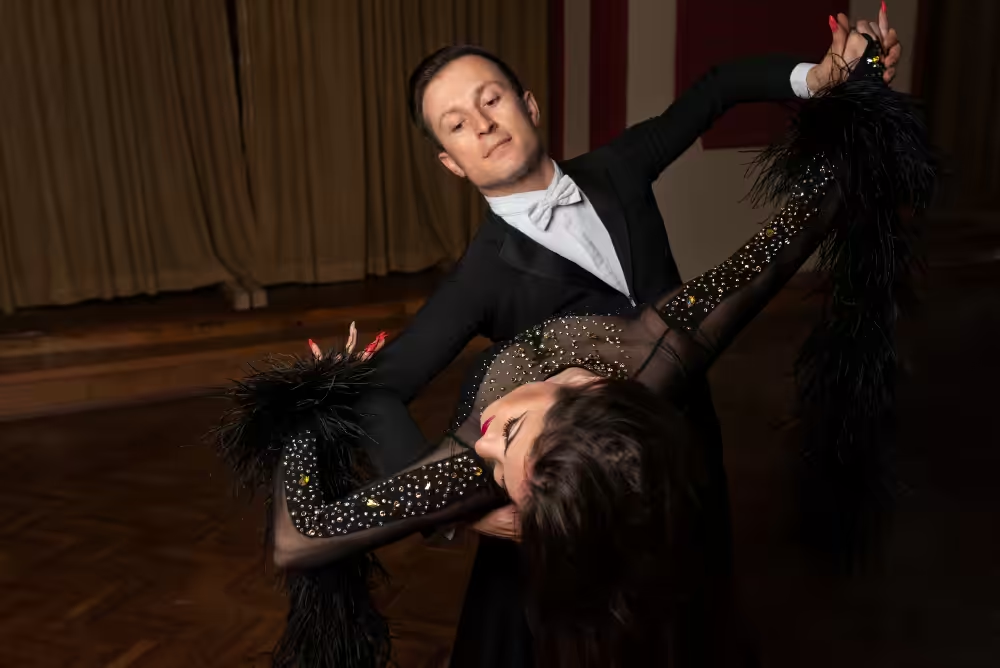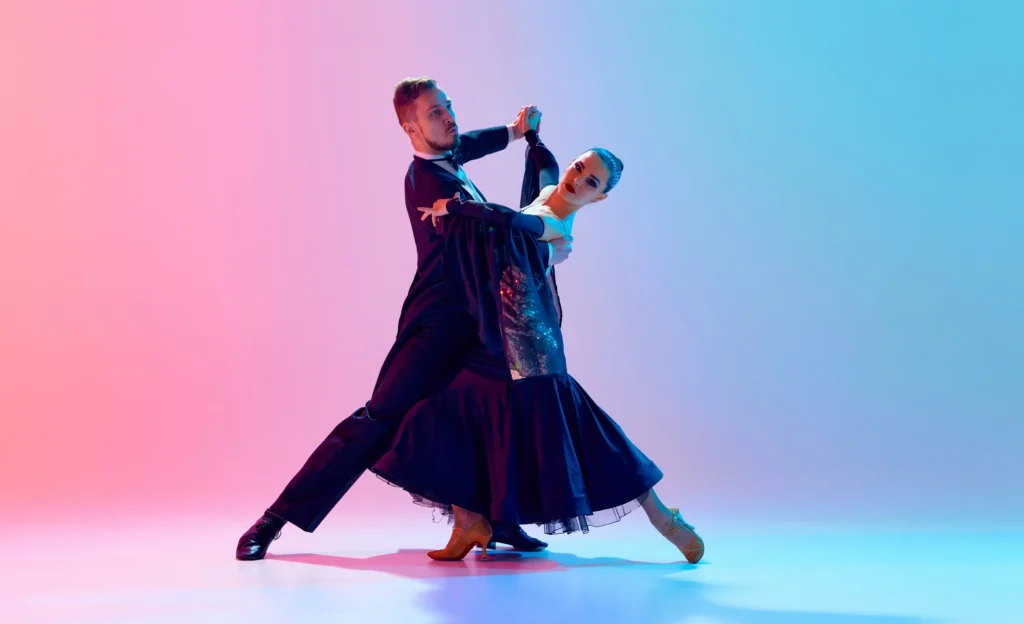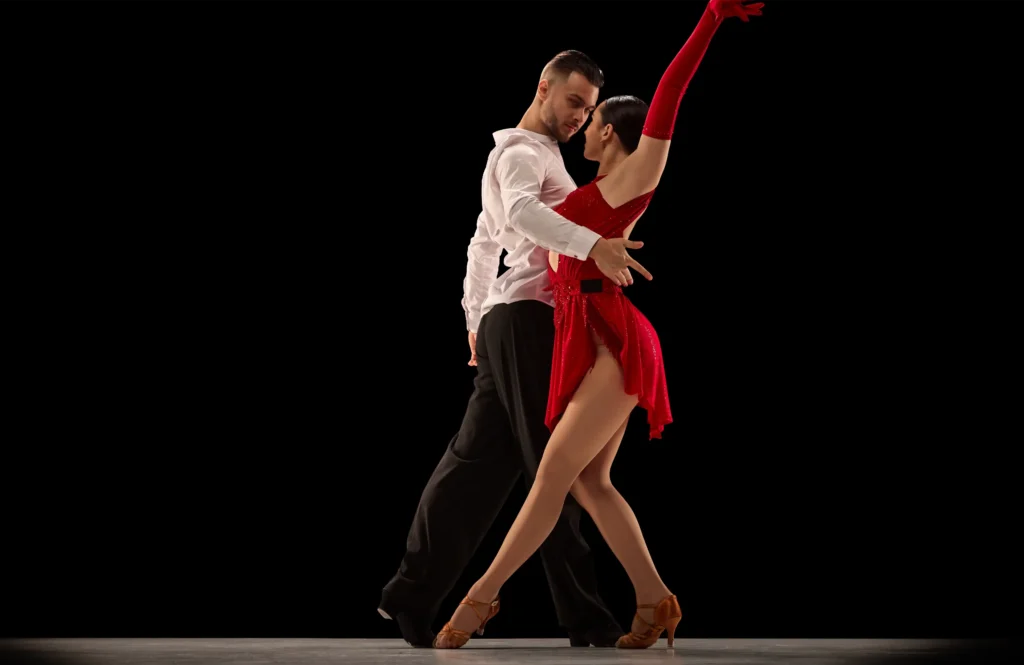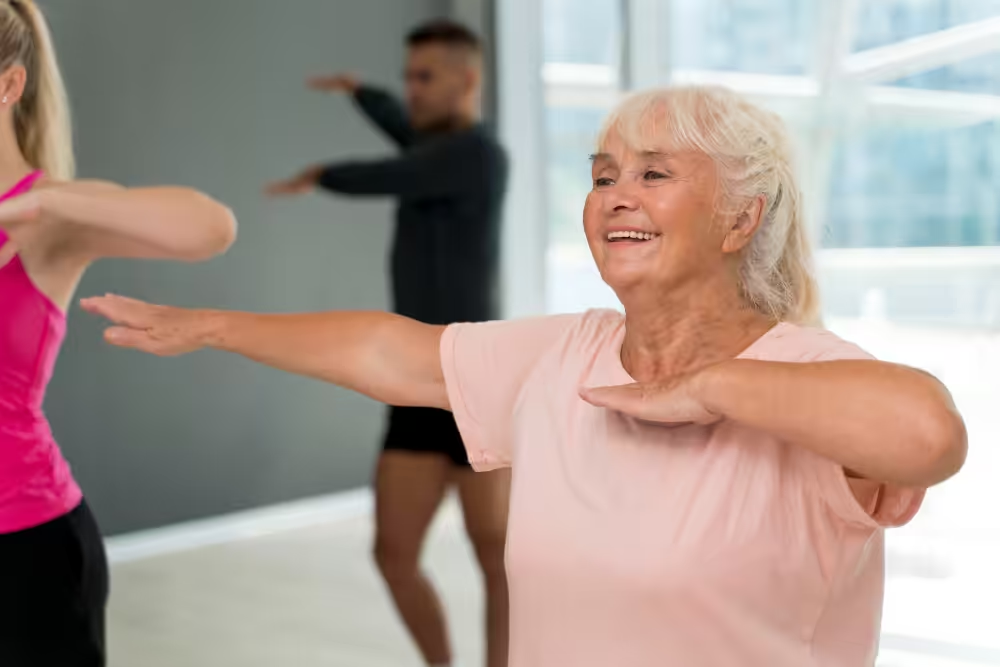
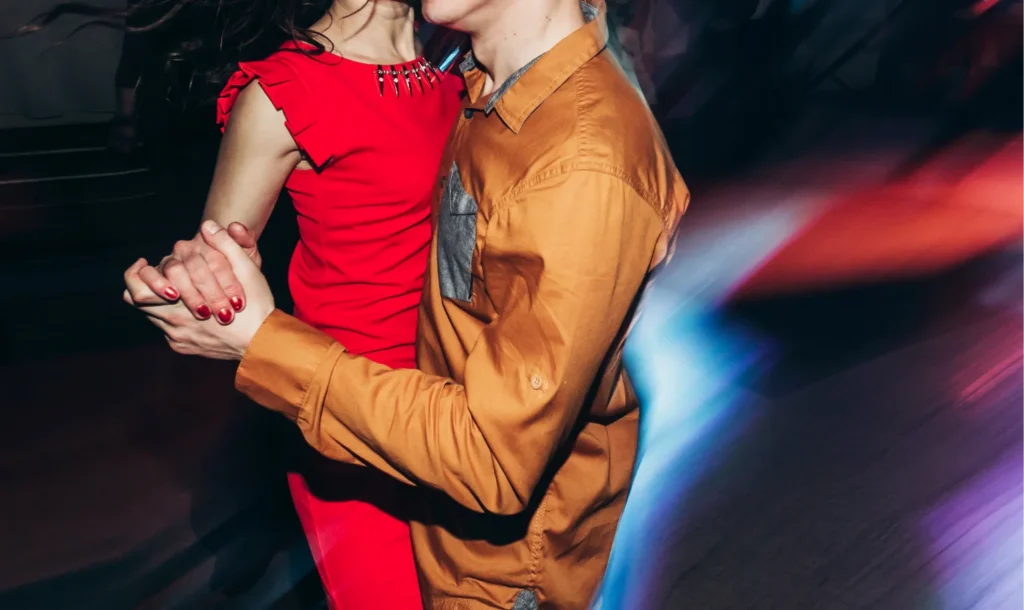
Did you know most modern pop and country ballads are written in 4/4 time, which makes them difficult to dance to with a traditional Waltz? That’s why so many couples end up stuck swaying in place during slow songs. The Nightclub Two-Step solves that problem with a smooth “Quick-Quick-Slow” rhythm that fits perfectly with romantic ballads. In this guide, you’ll learn the basic footwork, how to stay on beat, and how to move across the floor with more confidence.
Key Takeaways
- Versatility: Nightclub Two-Step works with pop, country, R&B, and soft rock.
- Ease of Learning: The rhythmic structure is intuitive for anyone who can count to four.
- Compact Movement: Nightclub Two-Step can be performed on a crowded dance floor without needing a wide “track.”
- Fluidity: Nightclub Two-Step emphasizes a lyrical, gliding motion that matches the emotional tone of romantic songs.
- Social Utility: Knowing this dance makes you a sought-after partner at weddings and social events.
The Foundation of Nightclub Two-Step
The beauty of this style lies in its simplicity. To get started, you don’t need years of training; you just need to understand the relationship between the beat and your feet. The basic step is the heartbeat of the entire dance, consisting of a simple “rock-step” followed by a side-gliding step.
Unlike the side-to-side “step-touch” people do instinctively, this structured movement creates a subtle momentum that keeps the dance from feeling repetitive. The leader typically starts by stepping to the left, while the follower mirrors the movement to the right, creating a symmetrical flow that is pleasing to both the dancers and the observers.
A Gentle Introduction: NC2S for Beginners
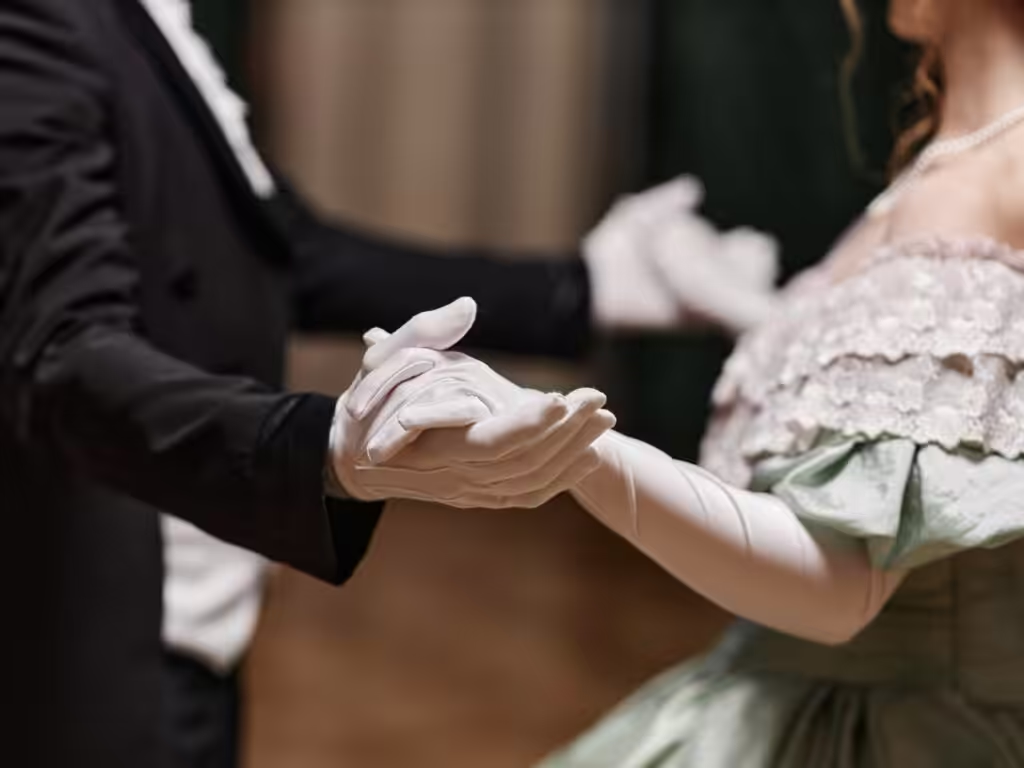
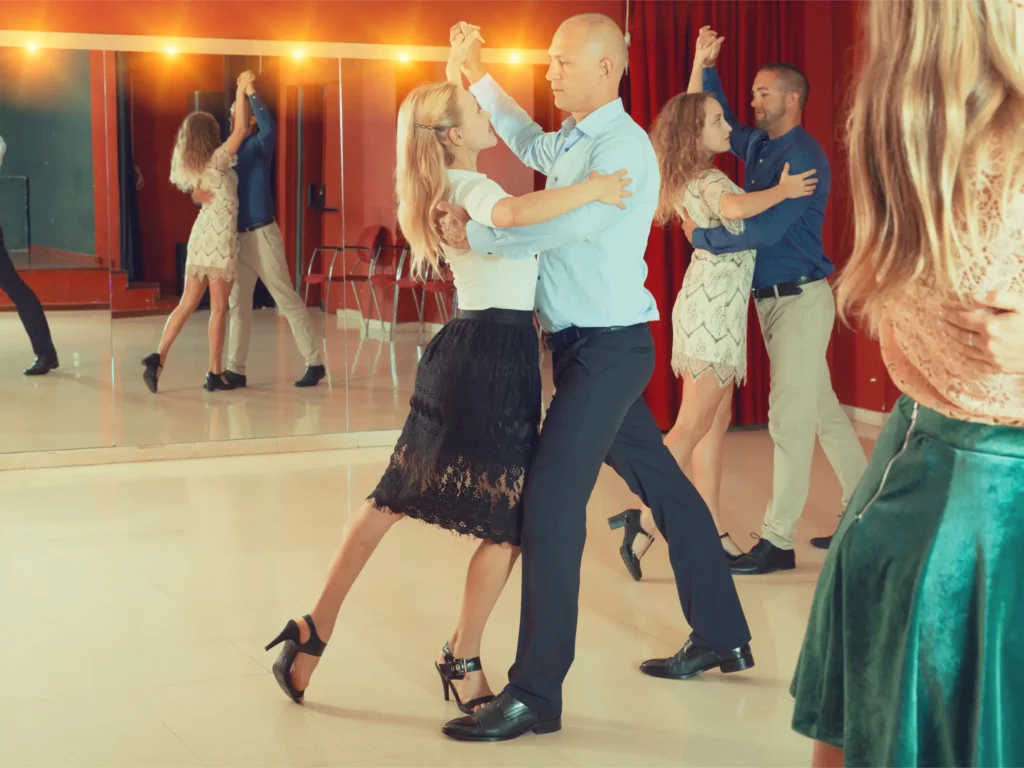
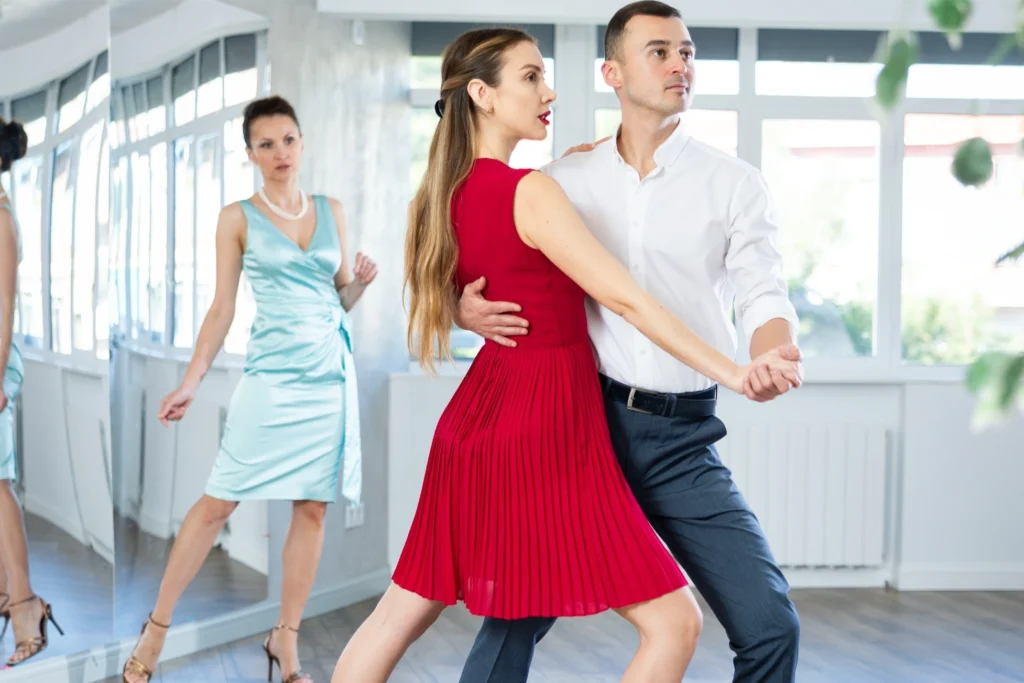
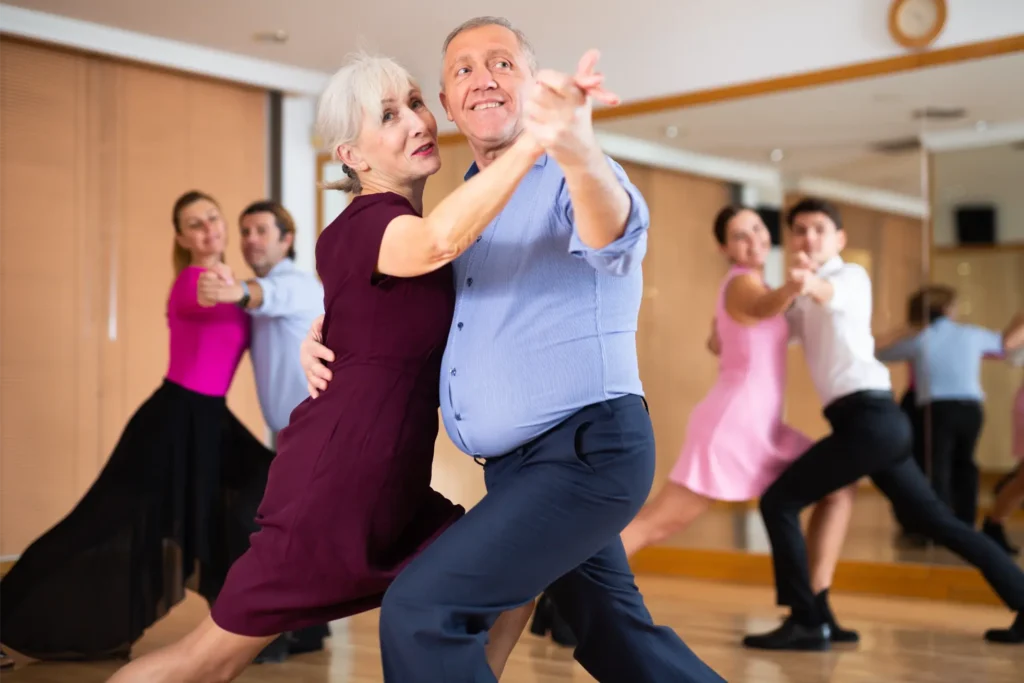
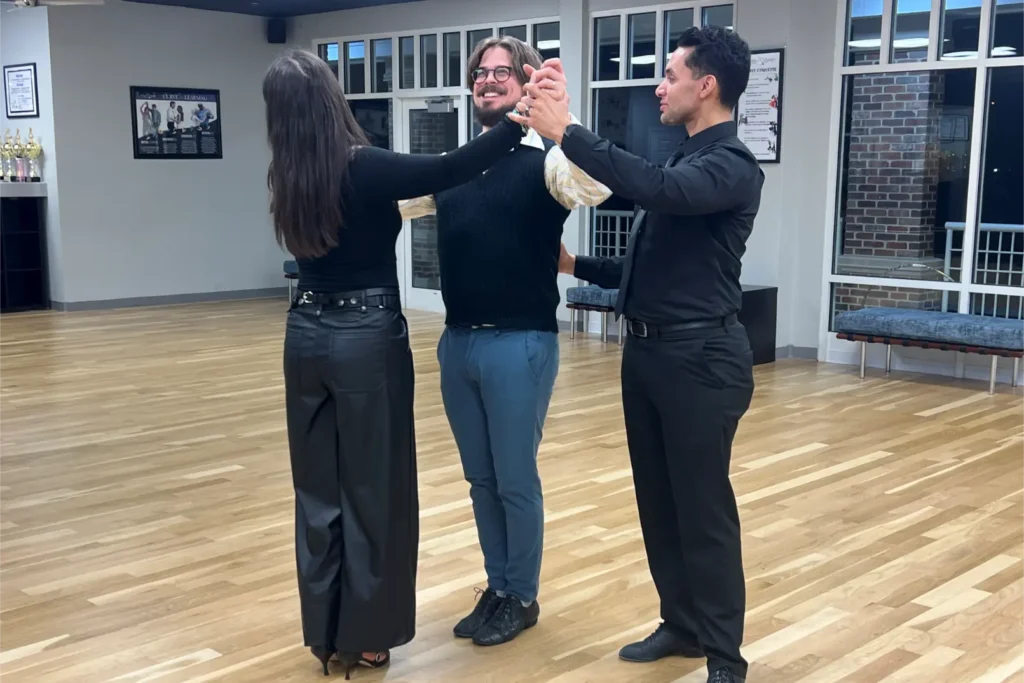
If you are just starting out, the most important thing to remember is the posture and the “frame.” In a typical NC2S for beginners lesson, the focus is on the connection between partners. You want to maintain a light but firm “resistance” in your arms—not so stiff that you’re pushing your partner away, but not so limp that they can’t feel your lead.
The feet should stay close to the floor, almost as if you are skating on a smooth surface. This “gliding” quality is what gives the dance its romantic, dreamy aesthetic. By keeping the steps small and the knees soft, you can maintain the rhythm without looking rushed or frantic.
Breaking Down the “Quick-Quick-Slow” Timing
To visualize the rhythm, think of a four-beat measure.
- On the “one” and “two,” you are performing the rock-step (Quick-Quick).
- On the “three” and “four,” you are taking a long, smooth step to the side (Slow).
This hesitation on the side step is where the magic happens. It allows the couple to breathe with the music. It provides a window for the leader to initiate a turn or for the couple to simply enjoy the proximity of the movement.
Because the “Slow” step covers more ground than the “Quicks,” the dance naturally travels slightly, but it stays within a small “slot,” making it perfect for the tight quarters of a busy nightclub or a wedding reception.
Common Mistakes to Avoid Early On
New dancers often make the mistake of “bouncing.” Because there is a rock-step involved, there is a temptation to hop or add a vertical lift to the movement. However, this is a “flat” dance. Your head should remain at a relatively constant level as you move.
Another common pitfall is over-rotating the hips. While there is a natural sway, the movement should be driven by the feet and the core, rather than an exaggerated wiggle. Keeping the frame quiet and the feet active ensures that you look elegant rather than erratic.
The Versatility of the Modern Dance Floor
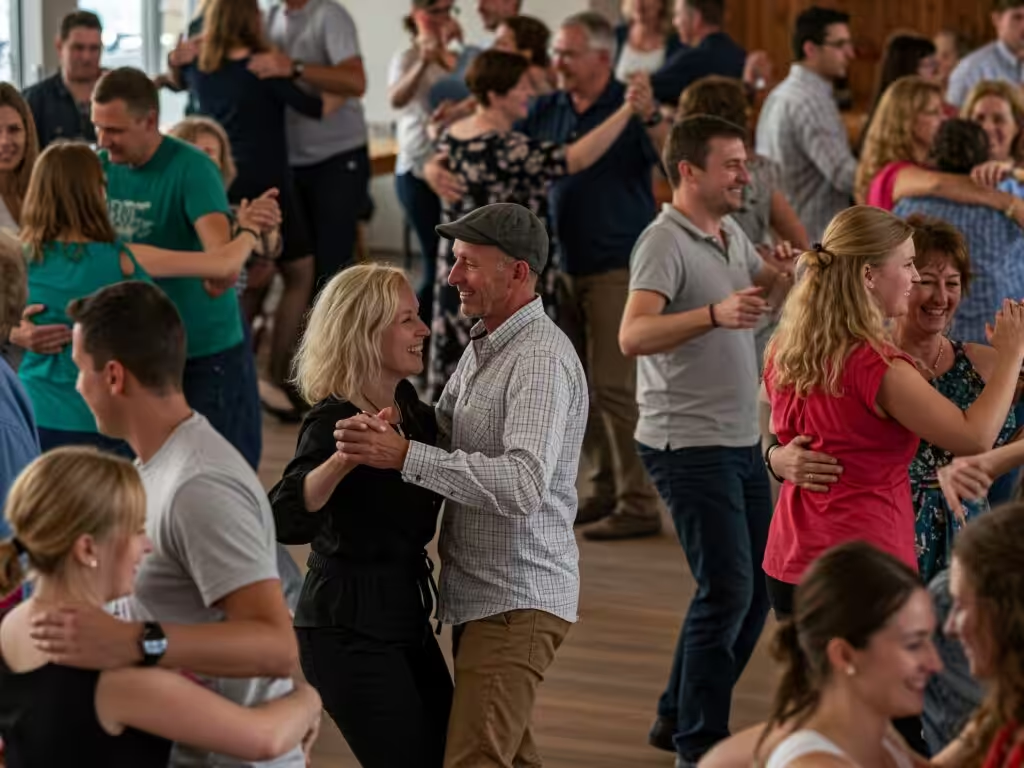
While it originated in pop and R&B circles, it has become an absolute pillar of Country Slow Dancing in recent years. If you walk into a country-western bar when a slow song comes on, you won’t see people doing a traditional waltz; you will see dozens of couples moving in the smooth, linear patterns of the two-step. It fits perfectly with the storytelling nature of country music, allowing the dancers to focus on the lyrics and their partner while the feet handle the rhythmic business.
Adapting to Different Tempos
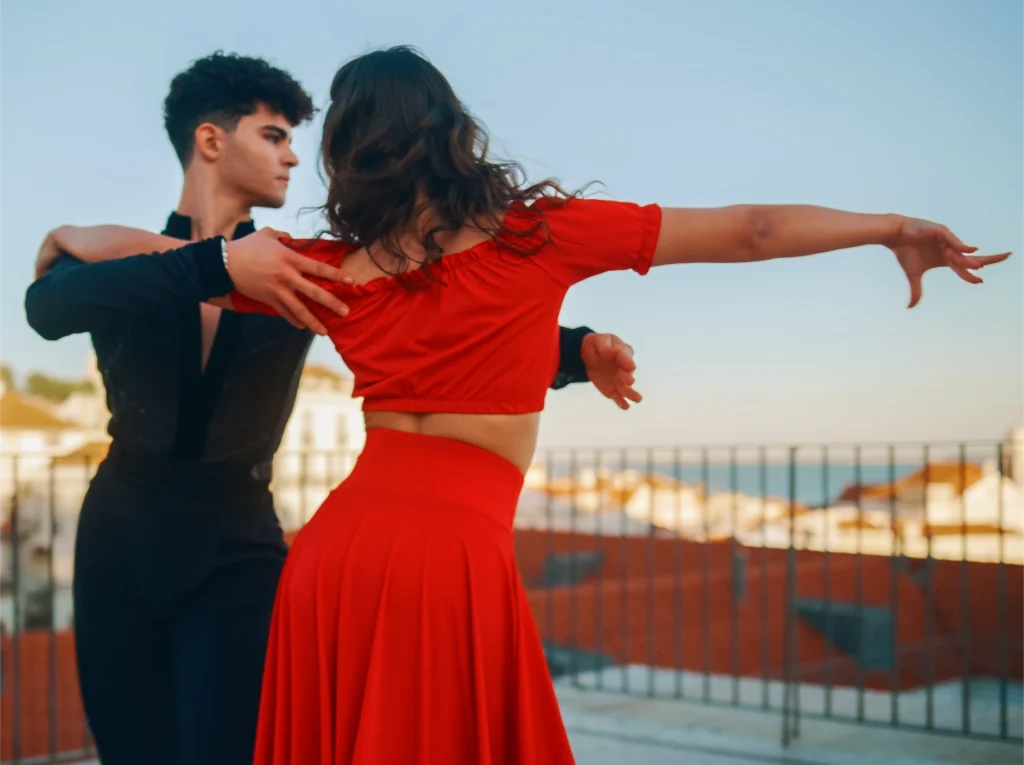
The beauty of the Nightclub Two-Step is that you can adjust the “size” of your steps to match the energy. For a song with a lot of orchestral swelling, you might take larger, more dramatic side steps and incorporate more spins.
For a quiet, intimate song, you can keep the movements tiny and centered, focusing more on the internal connection with your partner. This adaptability is why it is often called the “Swiss Army Knife” of social dancing.
Music Selection: What Works Best?
While we’ve mentioned pop and country, the dance also shines with light jazz, contemporary Christian music, and even some soft rock classics from the 70s and 80s.
Songs with a clear, steady 4/4 beat and a tempo between 60 and 80 beats per minute are the “sweet spot.”
Understanding the Landscape of Rhythmic Romance
When we look at the various types of slow dancing, we often find ourselves choosing between two extremes. On one end, you have the “High School Sway,” which lacks structure and can feel stagnant after the first thirty seconds of a song.
On the other end, you have formal ballroom dances like the Waltz or the Foxtrot. While beautiful, the Waltz requires a specific ¾ time signature, and the Foxtrot needs a significant amount of floor space to travel. Most modern romantic hits are written in 4/4 time, making the Waltz technically incompatible with the radio hits we love most.
The Origin of Nightclub Two-Step
The dance was originally developed in the mid-1960s by a teenager named Buddy Schwimmer in California. He wanted a way to dance with his partners to the popular ballads of the era without resorting to the static “hug and tug” method.
What he created was a linear, flowing dance that captured the “rock-step” energy of swing but slowed it down to a romantic crawl. Over the decades, it migrated from the West Coast into the national spotlight, becoming a staple in both the ballroom and country-western dance communities because of its adaptability.
Why it Outshines the Traditional “Slow Dance”
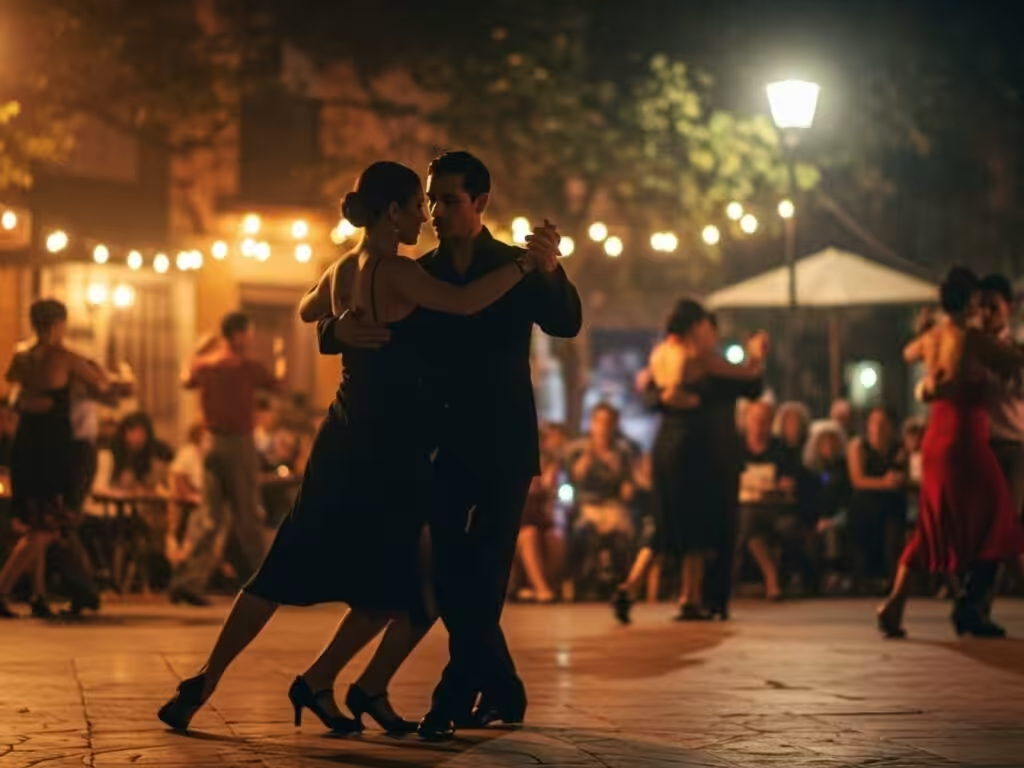
Traditional slow dancing often feels like a chore or a placeholder until a faster song comes on. This dance, however, turns a slow song into a performance of connection. Because it uses a “Quick-Quick-Slow” rhythm, it provides a pulse that matches the heartbeat of a ballad.
It allows for turns, wraps, and extensions that make the dancers look like they are floating. It transforms the experience from simply standing near someone to moving with them in a synchronized, artistic fashion.
The Lasting Appeal of Nightclub Two-Step
At its heart, this dance is about emotion. It was created because people wanted a way to express the feeling of a beautiful song through their bodies. It isn’t about rigid rules or winning trophies; it’s about the three minutes you spend with another person, moving in harmony to a melody that moves you.
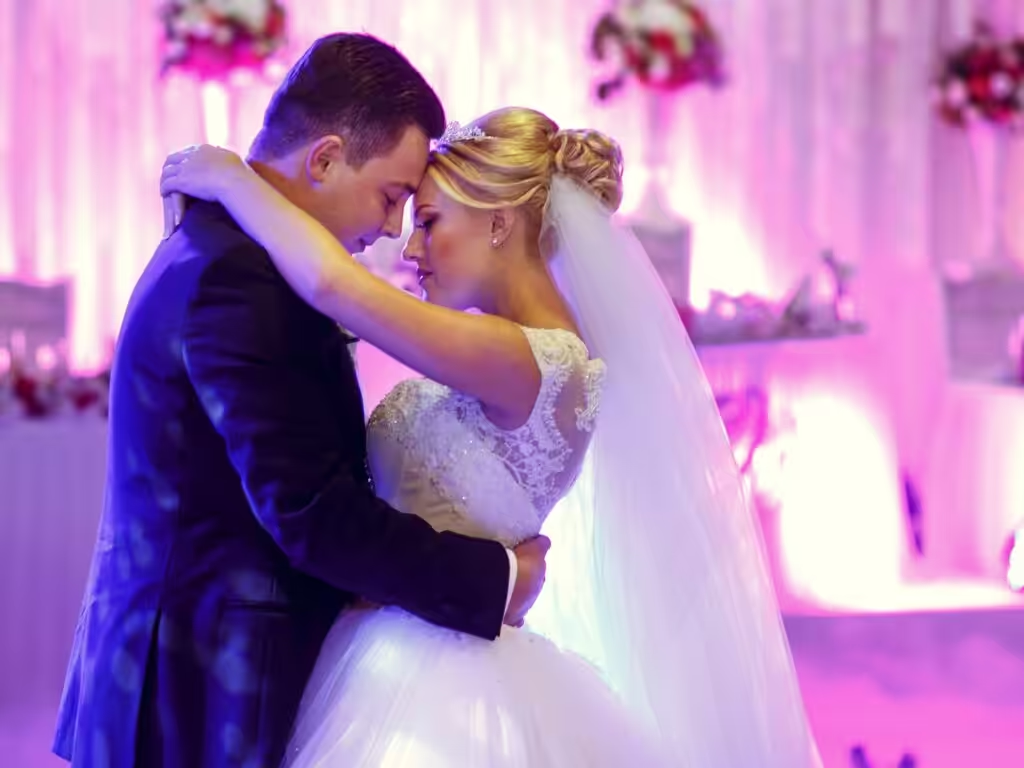
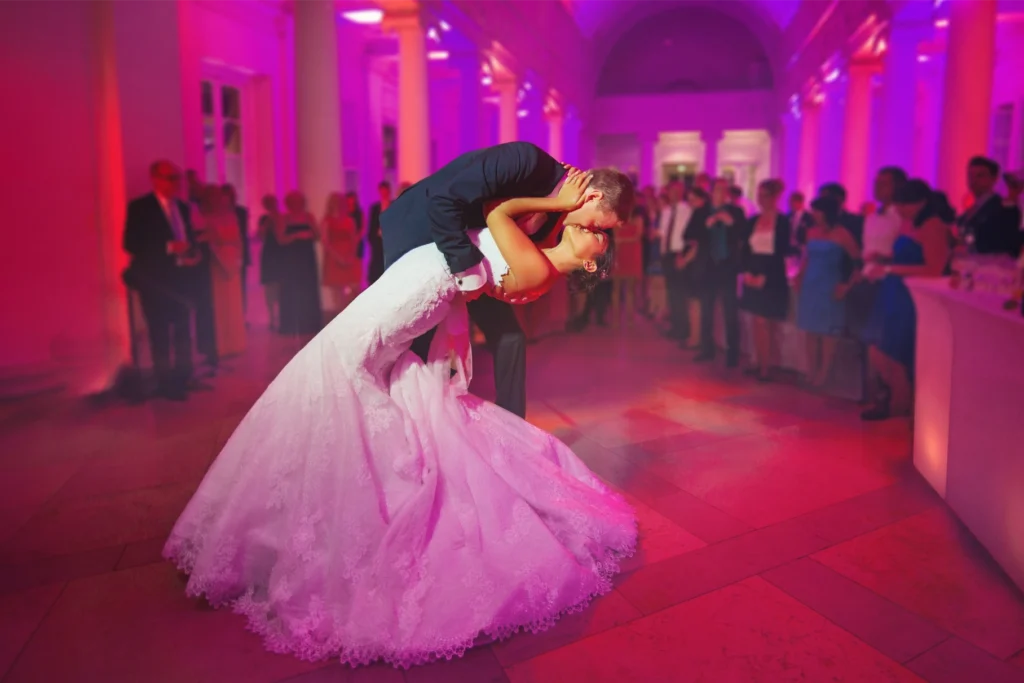
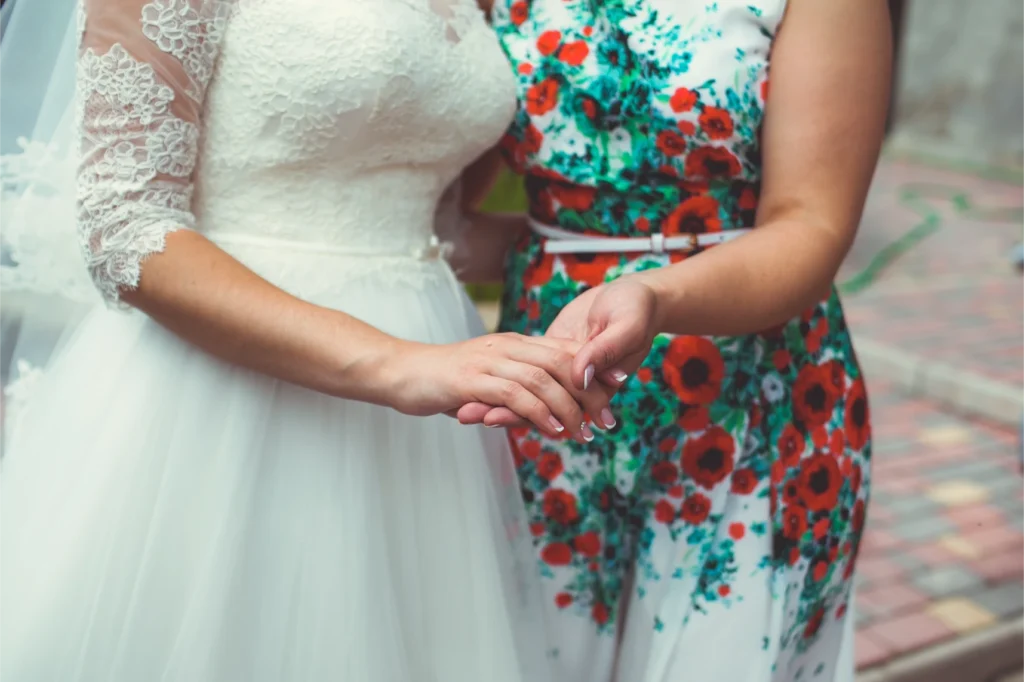
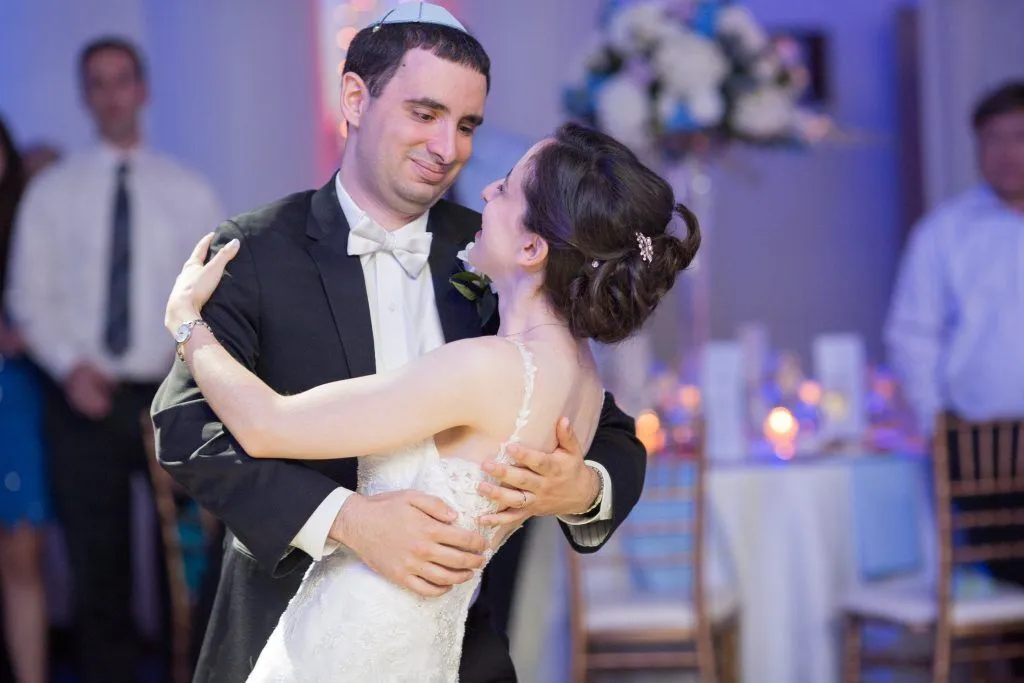
Whether you are preparing for your first dance as a married couple or you just want to feel more confident the next time a ballad plays at a party, mastering this style will change the way you experience music.
The Final Dip: Taking Your New Moves from the Kitchen to the Club
The Nightclub Two-Step remains one of the most practical and rewarding skills any social dancer can acquire. It bridges the gap between different musical genres and provides a structured yet flexible way to enjoy slow music. By focusing on the smooth, “Quick-Quick-Slow” rhythm and maintaining a solid connection with your partner, you can turn any dance floor into a stage for grace and romance.
FAQs
What kind of shoes should I wear?
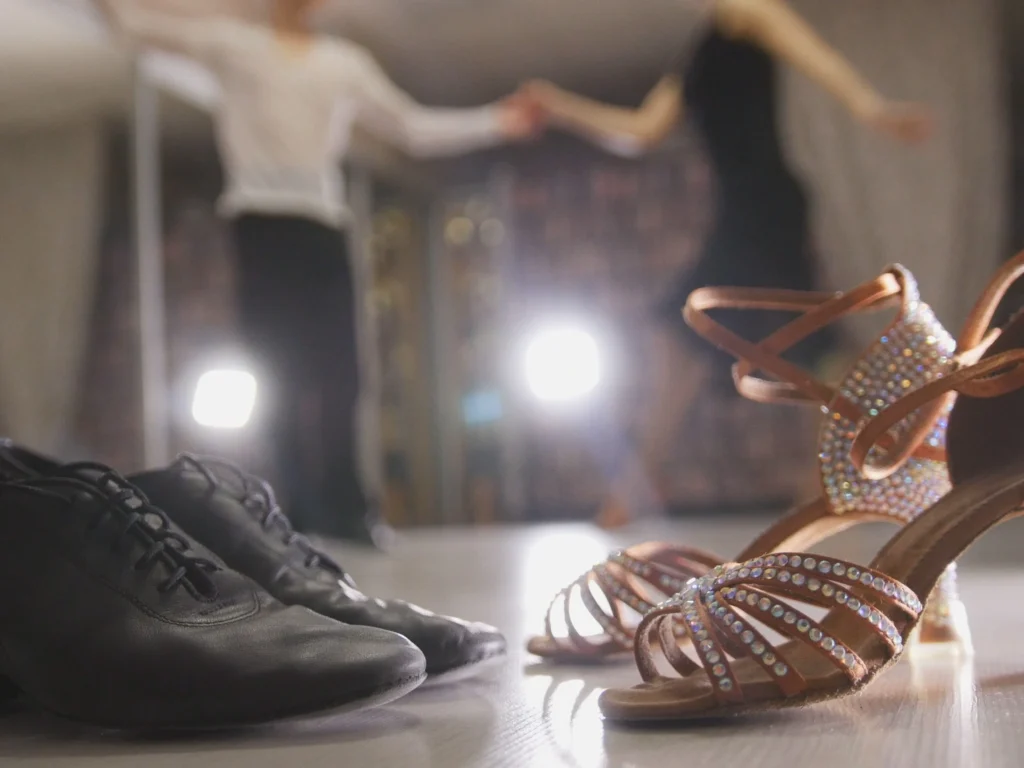
For this dance, shoes with a smooth sole (suede or leather) are ideal. Because there is a lot of gliding and pivoting involved, rubber-soled sneakers can “grip” the floor too much, which puts strain on your knees. If you are at a casual event, even a pair of dress shoes with a bit of wear on the soles will work better than high-traction athletic shoes.
How is this different from the Country Two-Step?
The Country Two-Step (or “Texas Two-Step”) is a progressive dance that travels rapidly around the outside of the floor in a counter-clockwise circle. It is designed for fast, upbeat music. In contrast, the nightclub version is much slower, stays mostly in one spot or a small “slot,” and is designed for romantic ballads.
Can I dance this to “Perfect” by Ed Sheeran?
Absolutely! While “Perfect” is technically in 6/8 time (which usually suggests a Waltz), many modern dancers adapt the Nightclub Two-Step rhythm to it by feeling the “large” beats. However, for a song that is a true 4/4 ballad like “All of Me” by John Legend, this dance is the perfect match.
Is it hard to learn the lead?
The lead is actually quite intuitive because it follows the natural weight shifts of the body. The biggest challenge for leaders is usually timing—learning to wait for the “Slow” beat and not rushing the “Quicks.” Once you internalize the pulse of the music, the leading becomes a natural extension of your movement.
Do I need a regular partner to learn?
No! One of the best things about the social dance community is that people frequently switch partners. Learning to dance with different people actually makes you a better dancer, as it forces you to refine your “lead” or “follow” signals so that they are clear to anyone, not just someone who knows your habits.