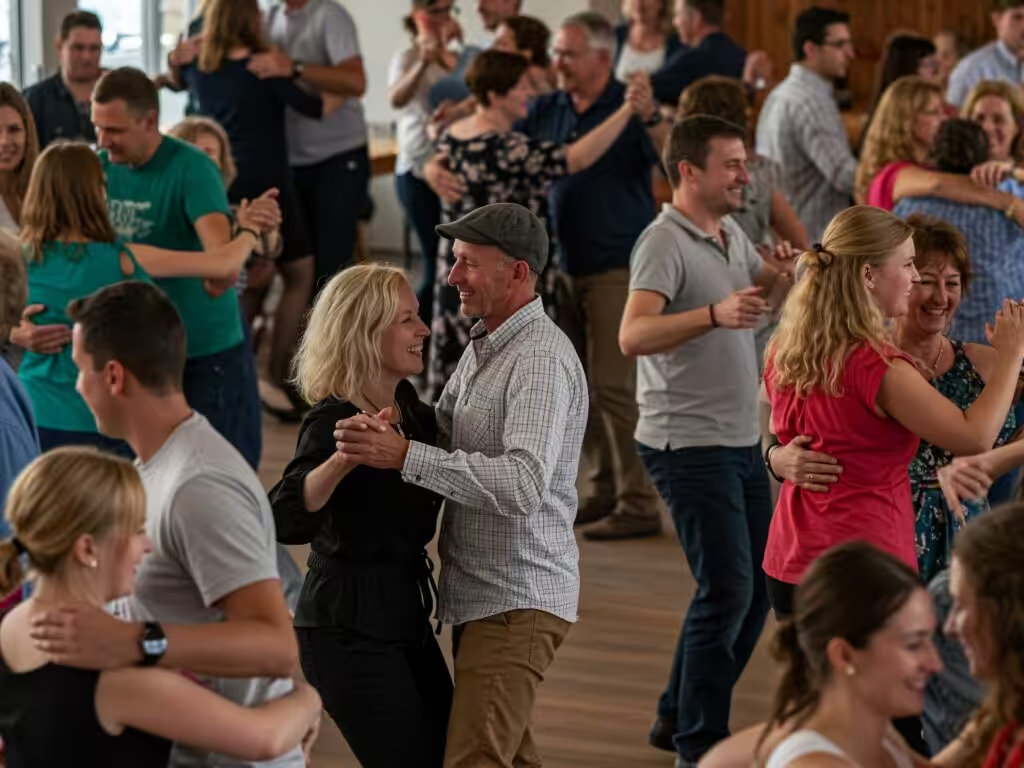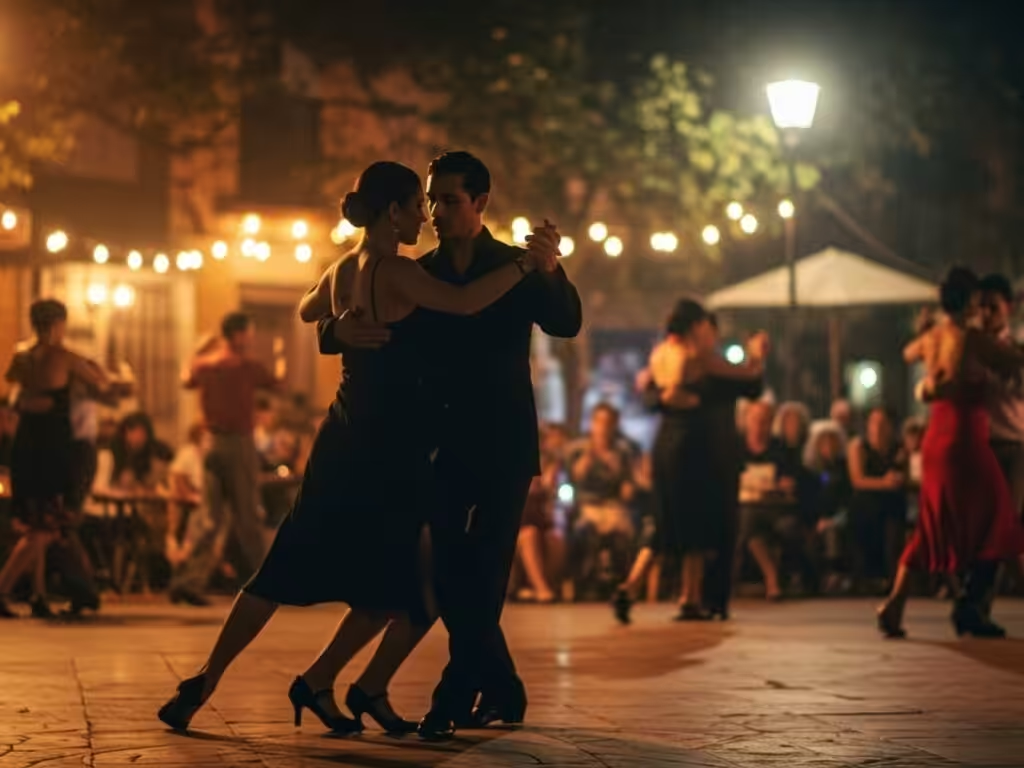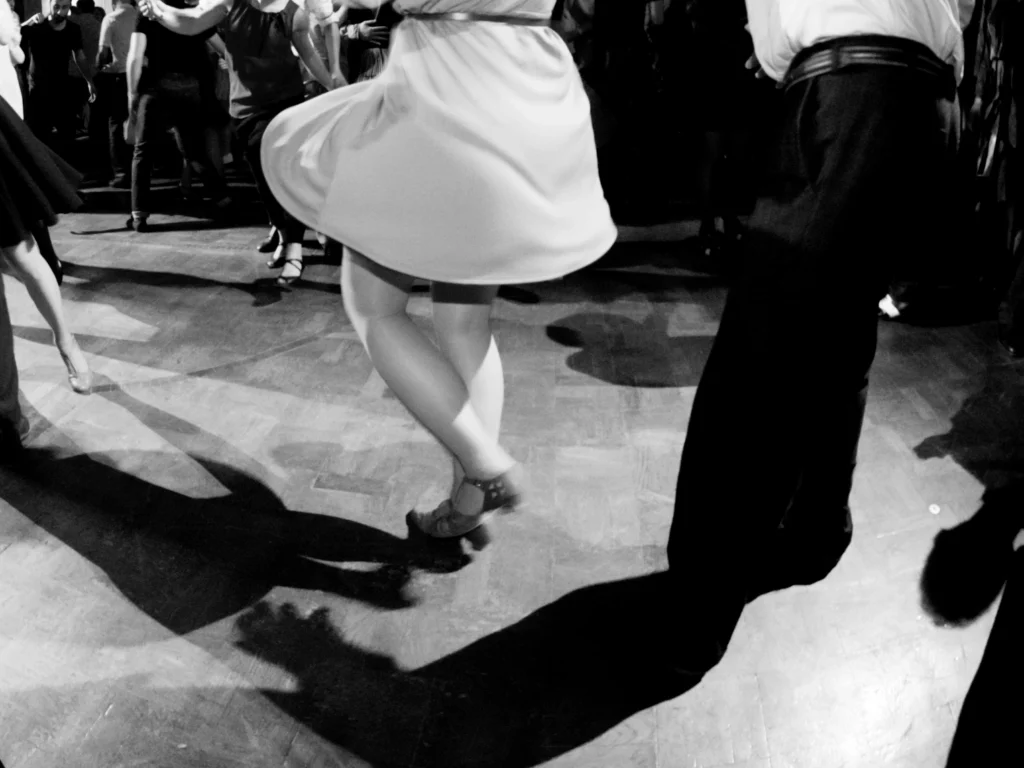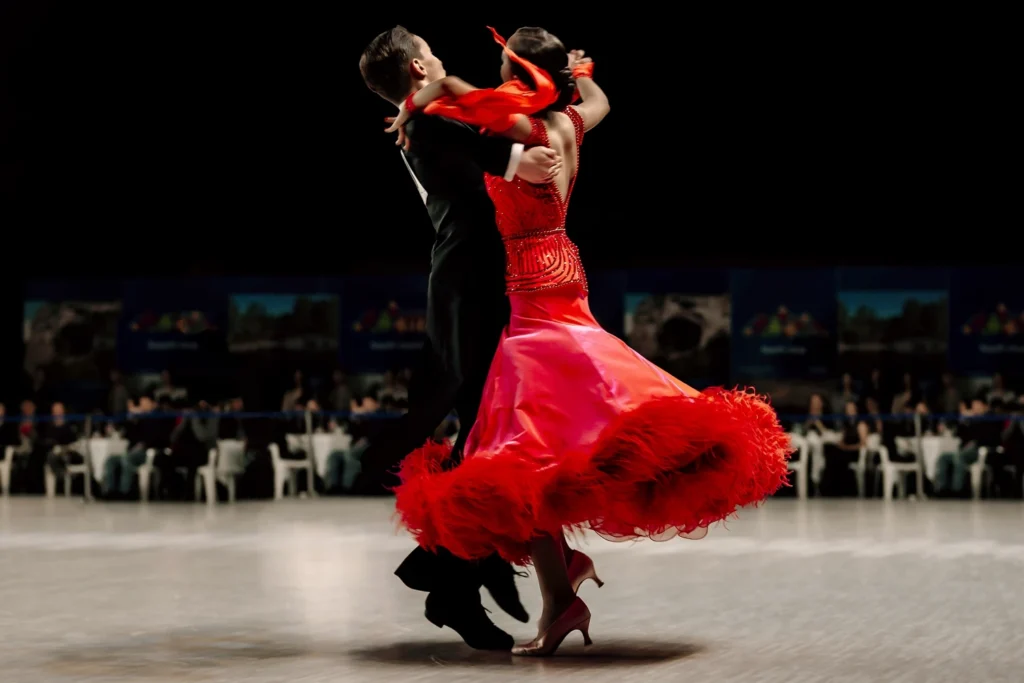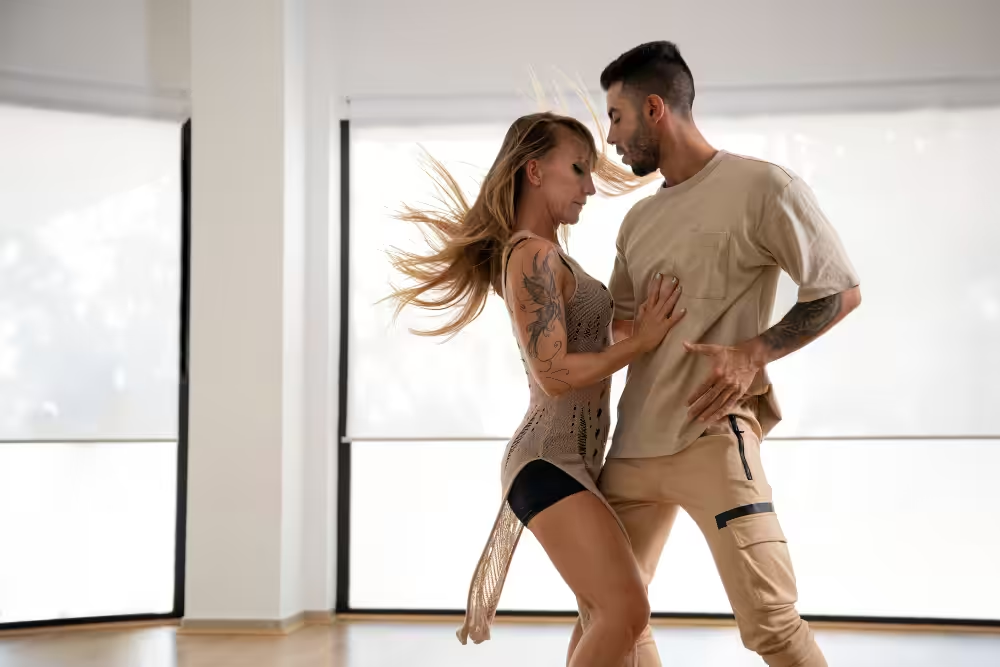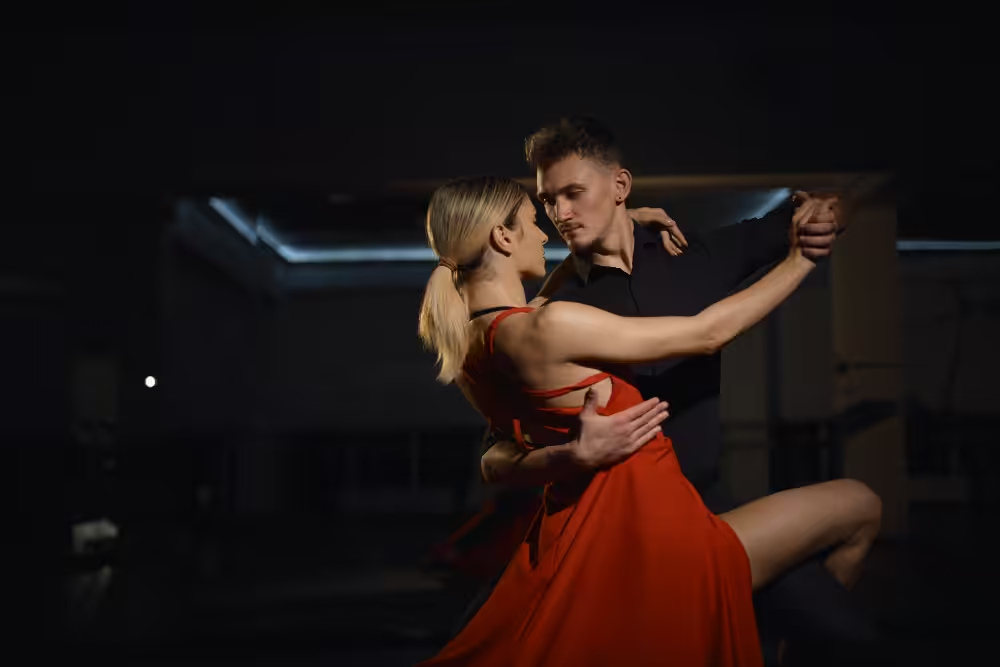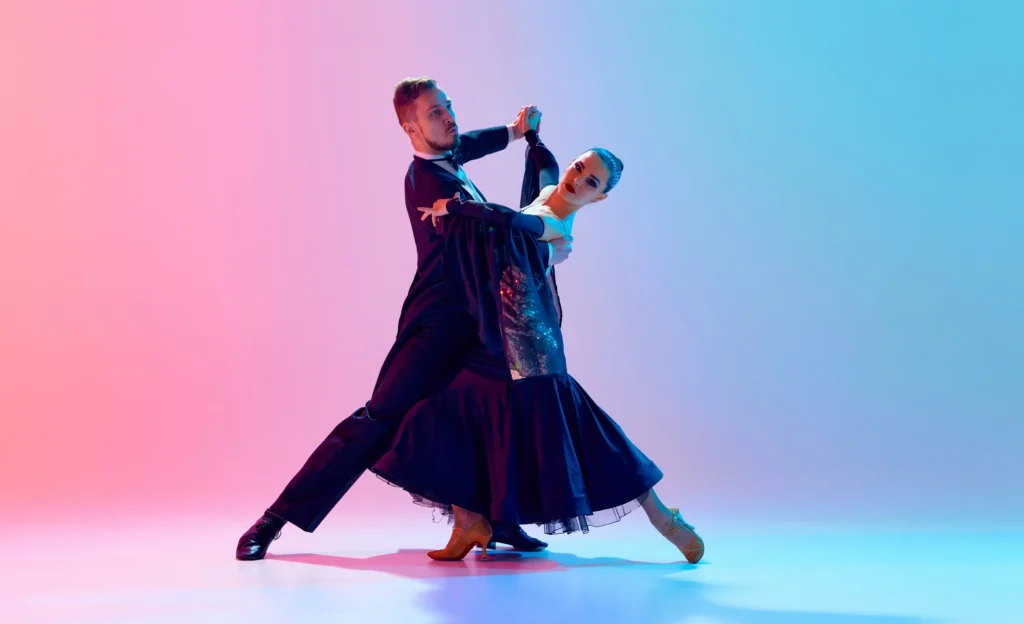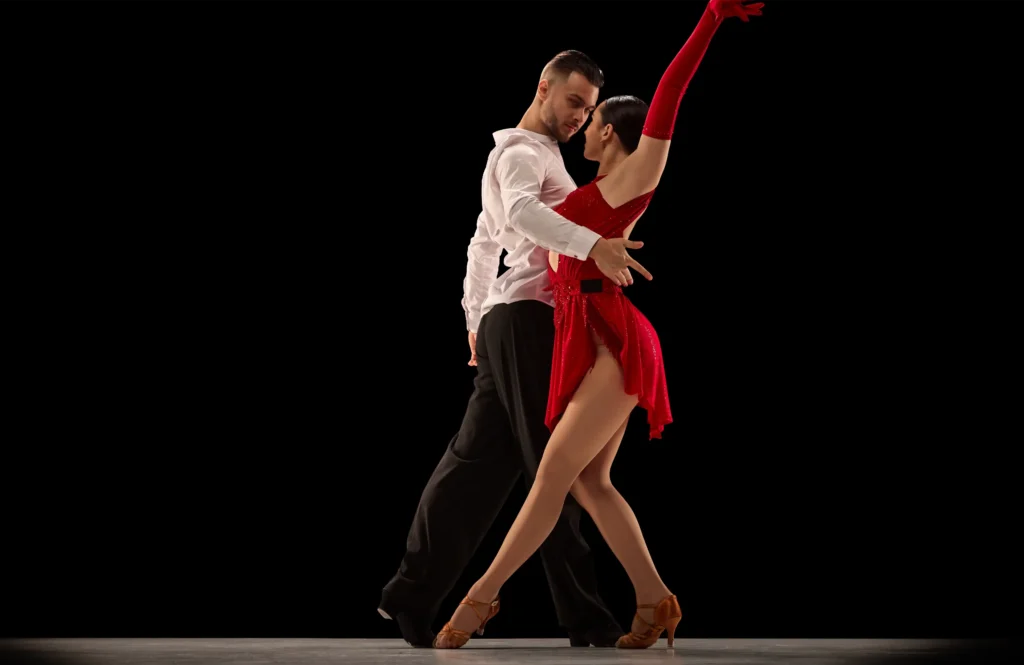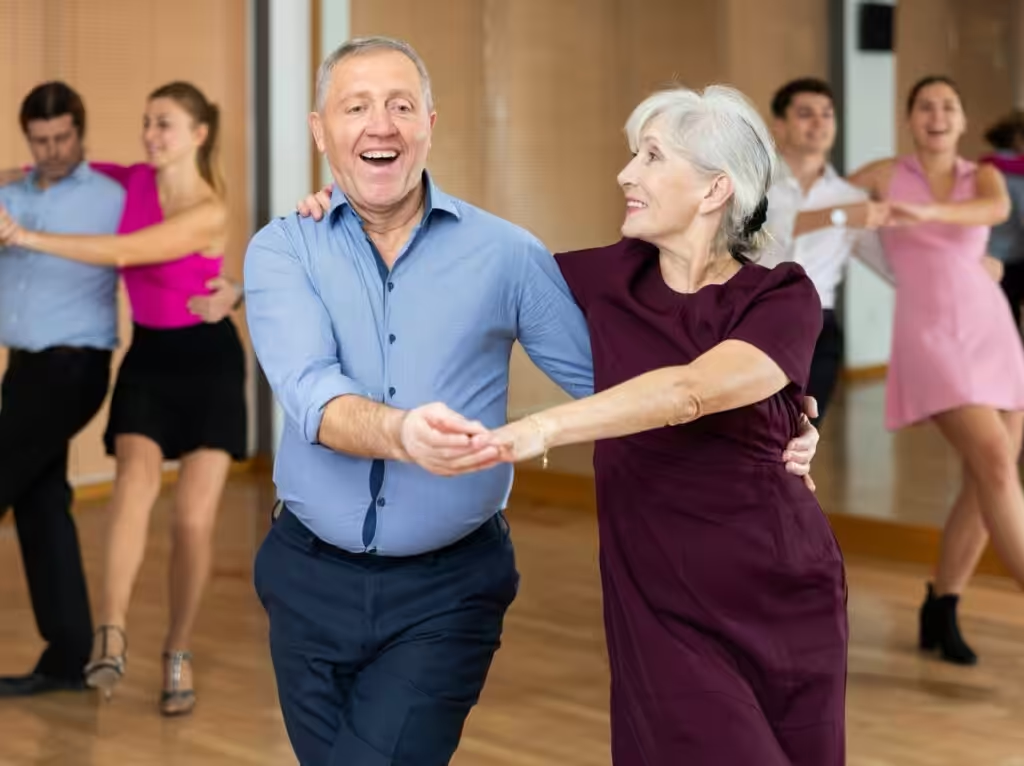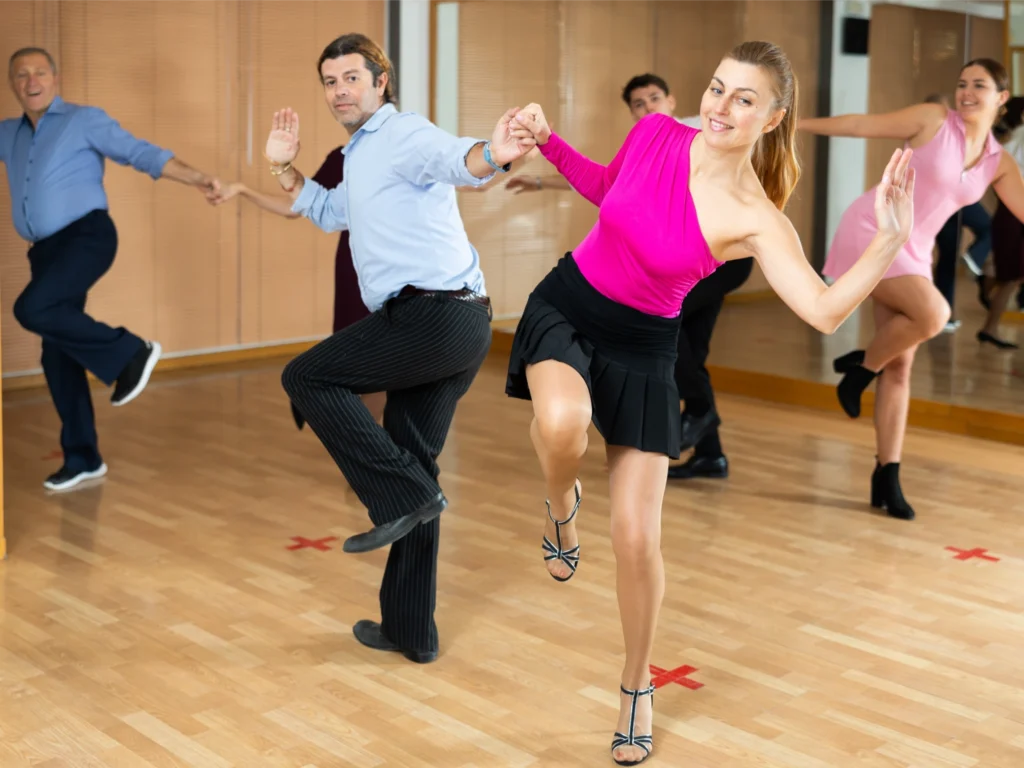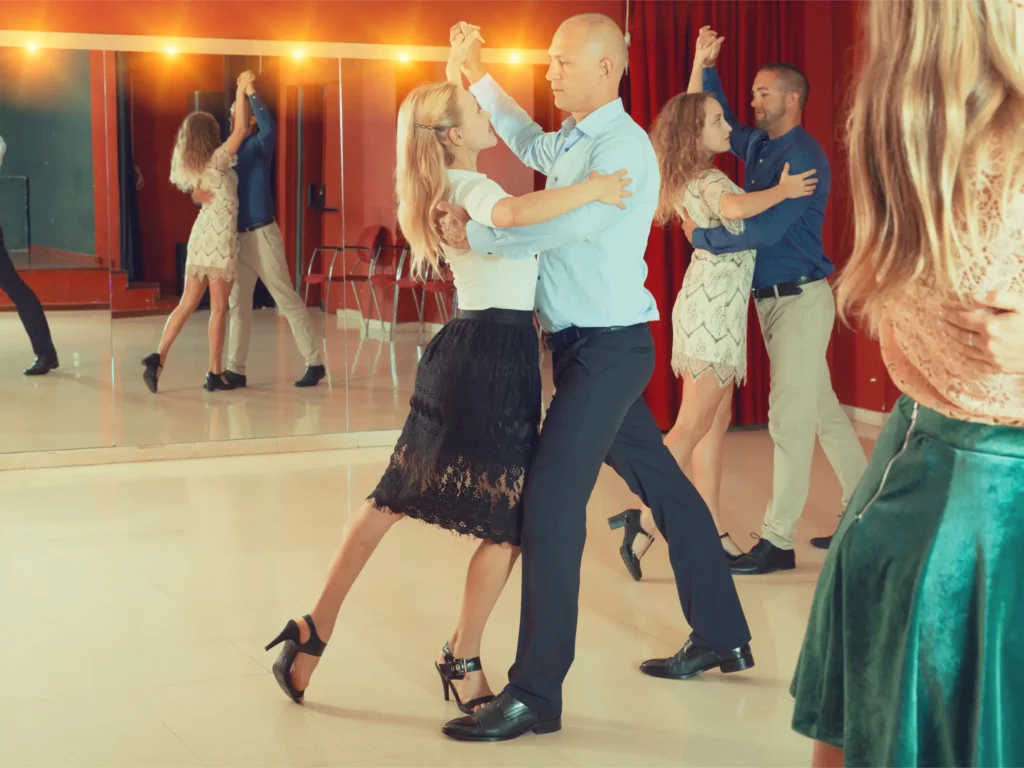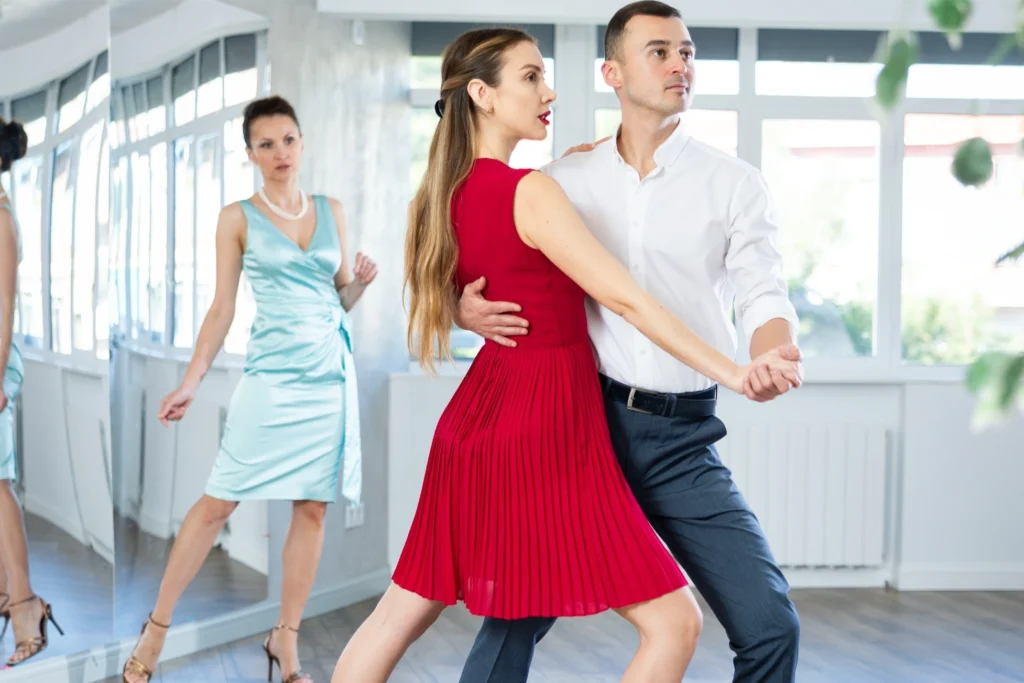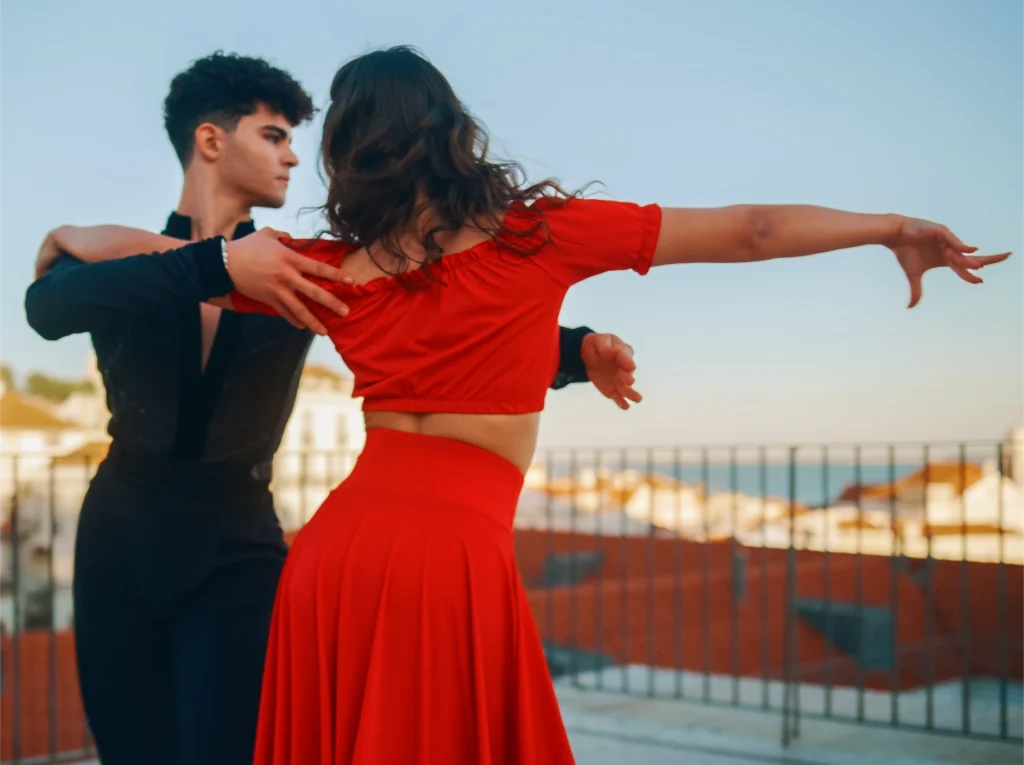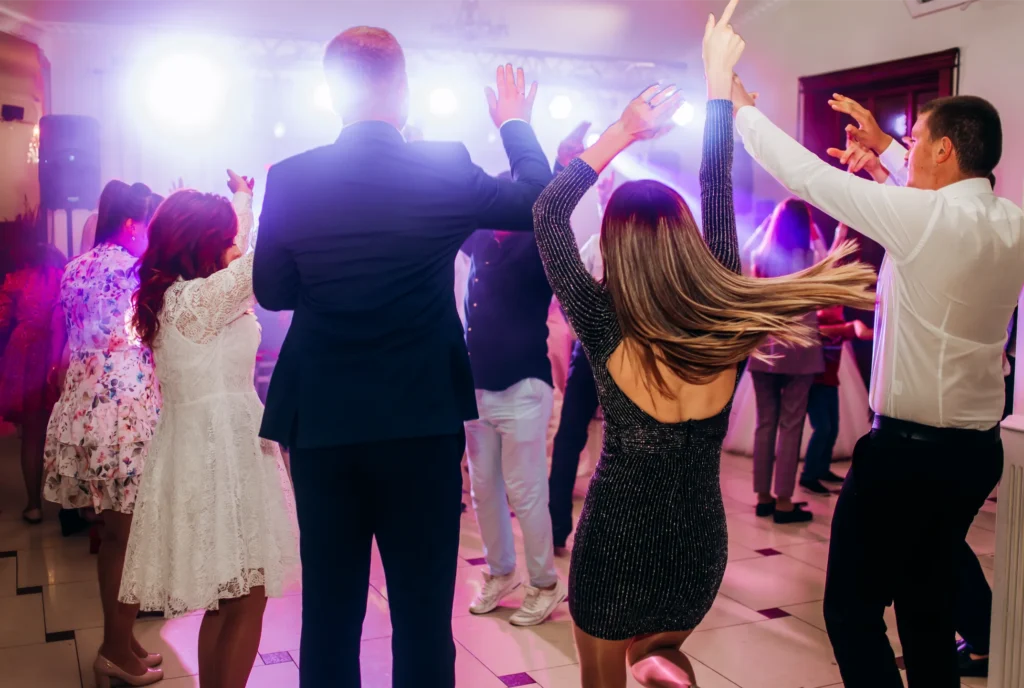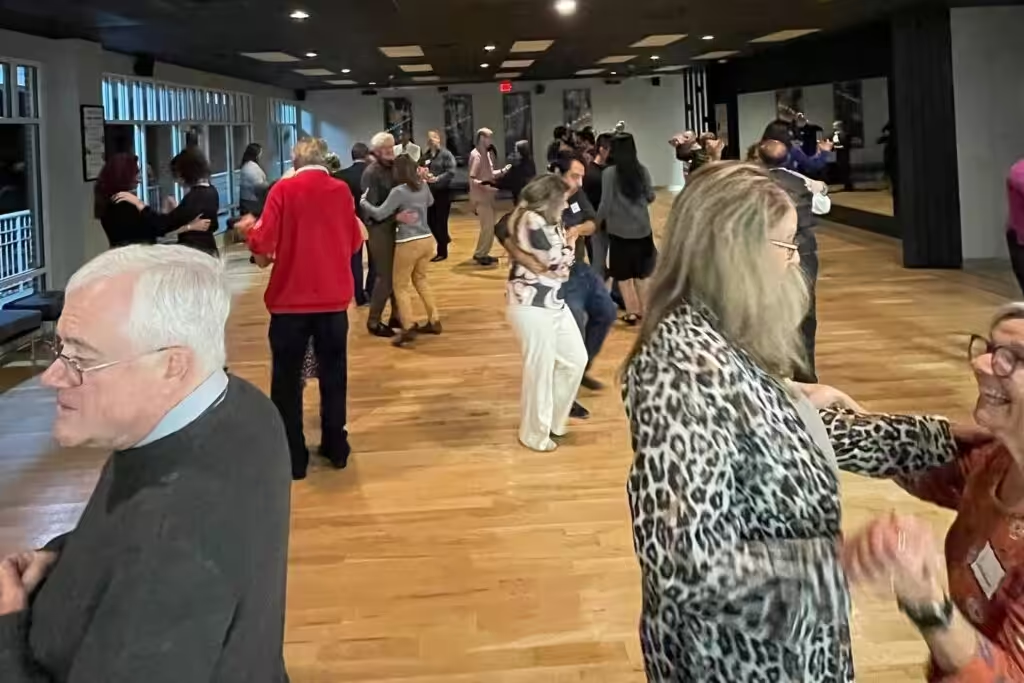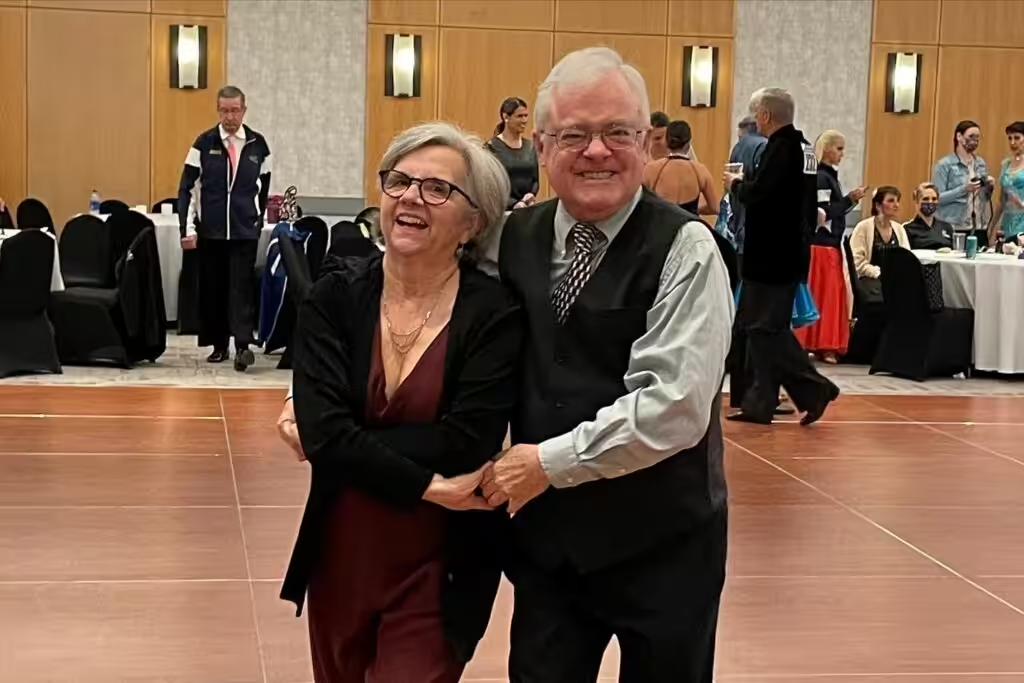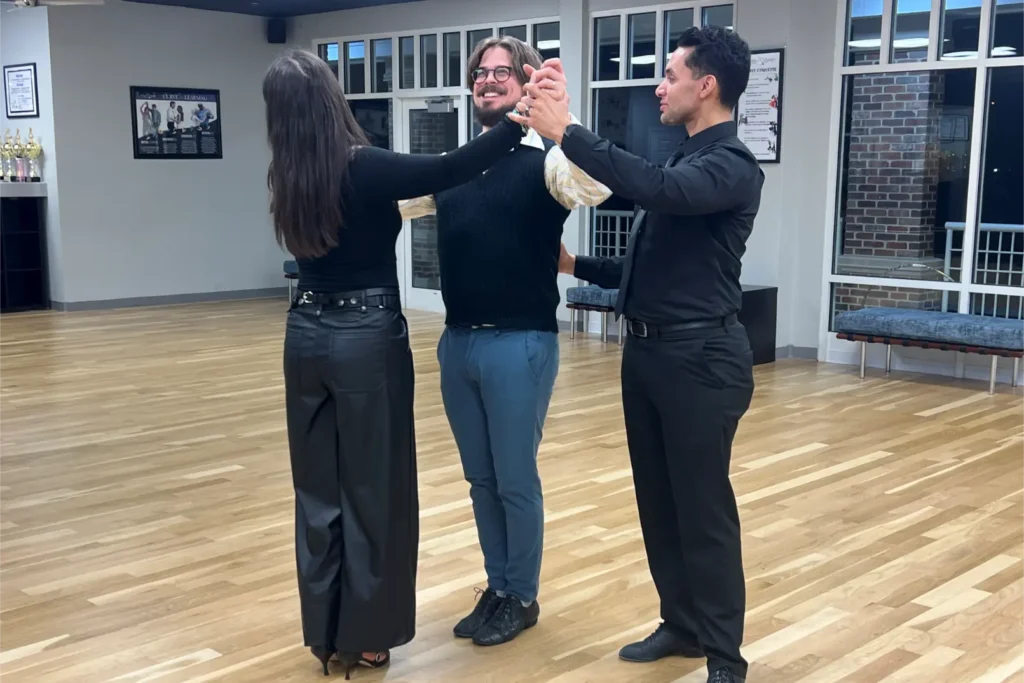
Lindy Hop is one style of Swing dance, while Swing refers to a broader family of dances that includes Lindy Hop, East Coast Swing, West Coast Swing, and others. Although these styles share common roots, they differ in their rhythm, footwork, and overall style.
Key Takeaways
- Lindy Hop originated in Harlem during the late 1920s jazz era.
- Lindy Hop uses an 8-count structure, while East Coast Swing follows a simpler 6-count pattern.
- The connection differs between the styles, with Lindy Hop emphasizing elastic momentum and improvisation.
- East Coast Swing was developed to make Swing dancing easier for beginners to learn.
- Both styles remain popular in social dancing and continue to evolve with modern music.
Lindy Hop vs Swing – What is the Difference?
The main difference between Lindy Hop and Swing is that Lindy Hop is one specific dance, while Swing is a family of dance styles that includes Lindy Hop, East Coast Swing, West Coast Swing, Jive, and others. Lindy Hop originated in Harlem during the late 1920s and became the foundation for many Swing dances that developed later. Understanding this relationship makes it easier to compare their history, technique, and rhythm.
What Is a Swing Dance?
The word “swing” pulled double duty in the 20th century, serving as both a description of a musical rhythm and a classification for the human movement that accompanied it. Musically, swing relies on a swung rhythm—a rhythmic syncopation where straight eighth notes are elongated and shortened to create a driving, triplet-based pulse. This music forced people to move their feet in entirely new ways.
As the big band era took over the global music charts from the late 1920s through the 1940s, the dances associated with it spread across continents.
Today, if you attend a social event, the term covers everything from the smooth, linear patterns of West Coast Swing to the lightning-fast kicks of the Charleston, the acrobatic theatricality of rockabilly jive, and the bouncing rhythms of the Shag. It is a massive, diverse family tree, but every single branch can trace its nutrients back to a singular root system.
The Origin of Lindy Hop in Harlem
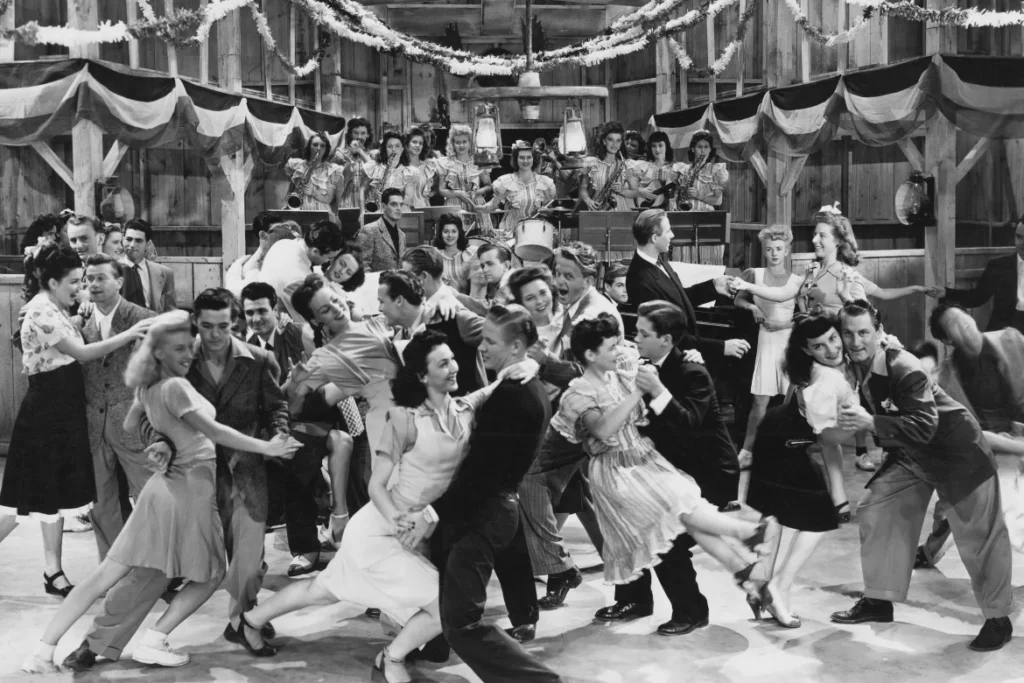
That root system was cultivated in the late 1920s in New York City, specifically within the African American community centered around the Savoy Ballroom in Harlem. As jazz legends like Chick Webb, Count Basie, and Duke Ellington pushed the boundaries of big band music, dancers on the floor pushed back with equal creativity. They blended elements of the Charleston, the breakaway, and traditional African movement to create something entirely revolutionary.
Legend has it that dancer George “Shorty” Snowden named the style after Charles Lindbergh’s famous solo flight across the Atlantic Ocean in 1927, known in the newspaper headlines as the “Lindy Hop.”
The dance captured that exact same feeling of flight, freedom, and breaking boundaries. It was characterized by a deep, athletic, horizontal posture, intense syncopation, and an open position where partners could break away from each other to solo improvise before snapping back together. It wasn’t just a structured routine; it was a rhythmic conversation between partners and the live band.
How Lindy Hop Influenced Other Swing Dances
As the original Harlem style traveled across the United States via touring performance groups like Whitey’s Lindy Hoppers, it encountered different regional subcultures and musical shifts. The original dance was fast, physically demanding, and deeply improvisational.
When it reached commercial spaces, dance studios realized that the average social dancer might struggle with the intense speed and complexity of an 8-count swingout.
Consequently, teachers began stripping away some of the intricate footwork, smoothing out the wild, bouncy counter-balance, and compressing the patterns into simpler counts.
Regional styles blossomed overnight. In Southern California, dancers developed a smooth, highly tracked variation that eventually became West Coast Swing. In the UK, it mutated into the high-energy Jive.
By altering the posture, the counting metrics, and the speed, an entire ecosystem of dances emerged, forever linking the world to the foundational energy of Harlem’s ballroom culture.
East Coast Swing vs Lindy Hop: Breakdown of the Sub-Styles
If you sign up for a beginner class at a local studio, chances are high you will be introduced to one of these two forms. While they share a common lineage, stepping onto the floor to dance them feels completely different due to their underlying structures, movement mechanics, and spatial designs.
What Is East Coast Swing
East Coast Swing is a structured, 6-count derivative designed with accessibility in mind. In the 1940s, commercial dance organizations took the fundamental elements of swing and standardized them into a neat syllabus that could be easily taught in a franchise studio setting. It operates primarily on a basic pattern consisting of two triple steps and a rock step, occupying a tidy six beats of music.
The mechanics are fundamentally grounded in a more upright posture compared to its predecessor. Because the basic pattern takes up six beats while jazz music is written in phrases of eight beats, the dance inherently cuts across the natural phrasing of the music in a way that feels playful and easy to maintain.
It is highly circular but stays relatively contained, making it an exceptional tool for crowded dance floors, pop music, slower jump blues tracks, and beginners who want to feel confident moving to a rhythm within their very first hour of instruction.
Read Next: East Coast Swing vs West Coast Swing
Comparing Lindy Hop and East Coast Swing
When we contrast these specific swing types, the core differentiator boils down to structural geometry and improvisational freedom. The original Harlem dance is built on a dynamic 8-count framework.
Its crown jewel is the “swingout,” a fluid, rotational maneuver where the follower is pulled into the leader’s center and spun back out into an open position over the course of eight beats. This matches the standard eight-beat phrasing of jazz music perfectly, allowing advanced dancers to seamlessly hit musical accents, breaks, and changes in the song’s structure.
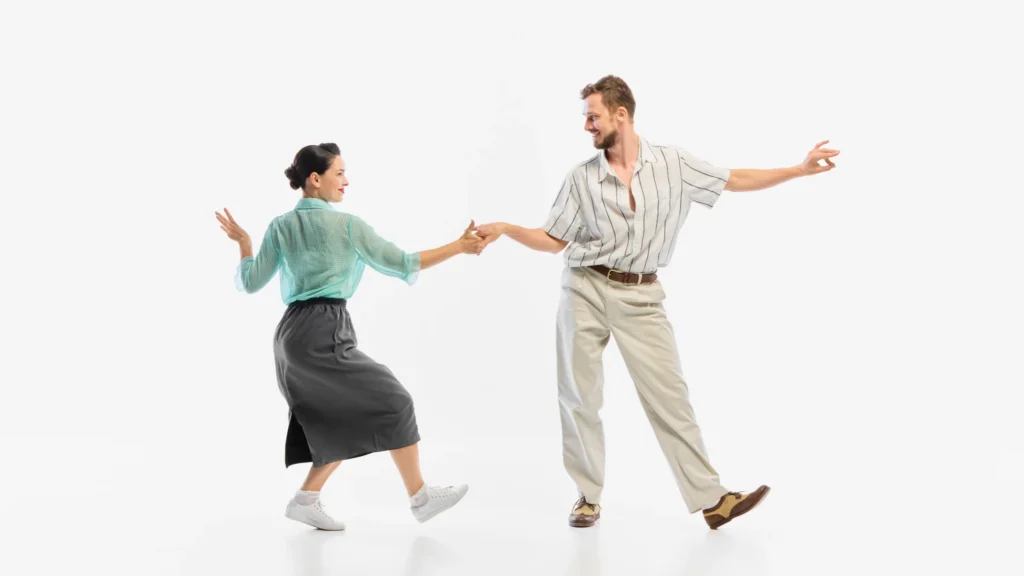
The physical connection also varies dramatically. The 6-count variant relies on a lighter, more consistent frame connection. The 8-count original uses an elastic, rubber-band-like tension and compression, where partners constantly use their body weight to build momentum, stretch away from each other, and snap back together like a slingshot.
Rhythm, Pulse, and Counting Differences
The internal pulse is what truly separates the experience on the floor. In the original Harlem style, the pulse is a deep, continuous, downward bounce that drives from the floor up through the hips. It requires keeping your knees bent and your weight balanced over the balls of your feet. Even when the feet are doing simple steps, the body is constantly embodying the driving rhythm of the big band rhythm section.
The 6-count version, while still rhythmic, often channels that energy into a lighter, side-to-side swaying motion or a crisp, sharp bounce. Because you are navigating a six-beat pattern over eight-beat musical bars, your rock step will constantly land on different beats of the music.
For instance, your first basic starts on beat one, but your second basic begins on beat seven. This structural quirk creates a rolling, continuous loop of movement that doesn’t strictly lock into the melody’s clean edges, whereas an experienced 8-count dancer will intentionally map their footwork to mirror the call-and-response format of classic big band arrangements.
Which Is Better: Lindy Hop or Swing?
If you are deciding between Lindy Hop and East Coast Swing, the best choice depends on your goals. East Coast Swing is easier for beginners because its 6-count patterns are simpler to learn and work well in a variety of social settings. Lindy Hop is a better fit if you want to dance to traditional swing music, enjoy improvisation, and learn the original style that inspired many modern Swing dances.
If you are looking for a dance studio in Princeton where you can learn both, check out Arthur Murray Dance Center. New students can get a first lesson for free.
Frequently Asked Questions
Can you mix 6-count and 8-count moves together while social dancing?
Yes, absolutely! In fact, high-level social dancing relies heavily on mixing different count structures seamlessly. Because both styles share the same underlying swung rhythm and basic connection concepts, a leader can easily transition from an 8-count swingout into a 6-count tuck turn and back again without disrupting the follower, provided the physical connection remains clear and the pulse stays consistent.
Do I need a dedicated partner to start learning these styles?
Not at all. The entire culture of this community is built around social dancing, which means switching partners after almost every single song is the standard norm. In group classes, instructors will have the lines rotate continuously so everyone gets a chance to practice with different people. This actually helps you learn the mechanics of leading and following much faster than practicing with just one person.
What kind of shoes are best for a beginner social dancer?
You want shoes that allow you to slide safely without being dangerously slick. For beginners, a low-profile canvas sneaker like Keds or classic Toms works wonderfully on wooden floors. Avoid heavy running shoes with thick rubber grips, as they can lock your feet to the floor and place unnecessary twisting strain on your knees and ankles during turns.