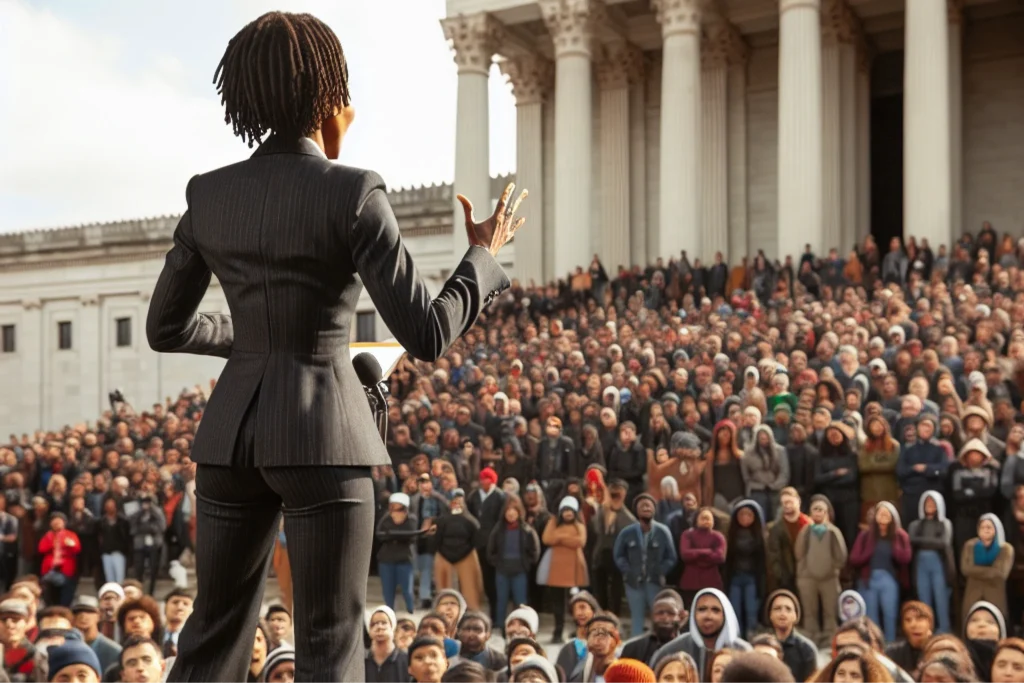
Up to 75% of people experience glossophobia—the fear of public speaking. For many, standing in front of a crowd triggers the same fight-or-flight response associated with genuine danger.
Fortunately, overcoming stage fright is not solely a mental exercise. Ballroom dancing offers a powerful physical approach to managing performance anxiety.
Key Takeaways
- Regular classes, socials, and showcases help dancers become comfortable being observed by others.
- Dance training promotes confident body language that counteracts stress-related physical reactions.
- Learning choreography and musical timing keeps attention anchored in the present moment.
- Dancers learn to channel nervous energy into expressive performance rather than fear.
- Studios provide a safe space to make mistakes, build resilience, and develop confidence.
Can Ballroom Dancing Help Overcome Stage Fright?
Public speaking anxiety affects both the mind and body. When facing an audience, the nervous system releases stress hormones that can impair focus, coordination, and communication. Ballroom dancing helps interrupt this cycle by demanding attention to movement, rhythm, and partner interaction.
Because dancers must focus on multiple physical and social cues simultaneously, there is less room for the self-critical thinking that fuels anxiety. Over time, the habits developed in dance training become automatic responses that support calmness and control during stressful situations.
Getting Comfortable Being Watched
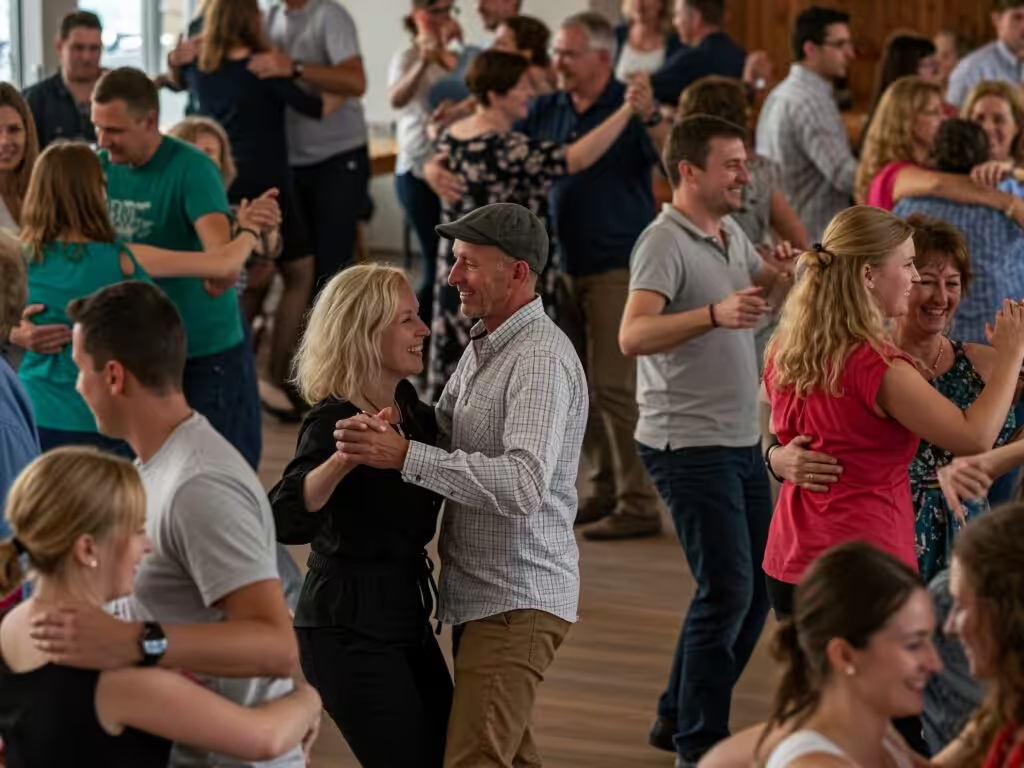
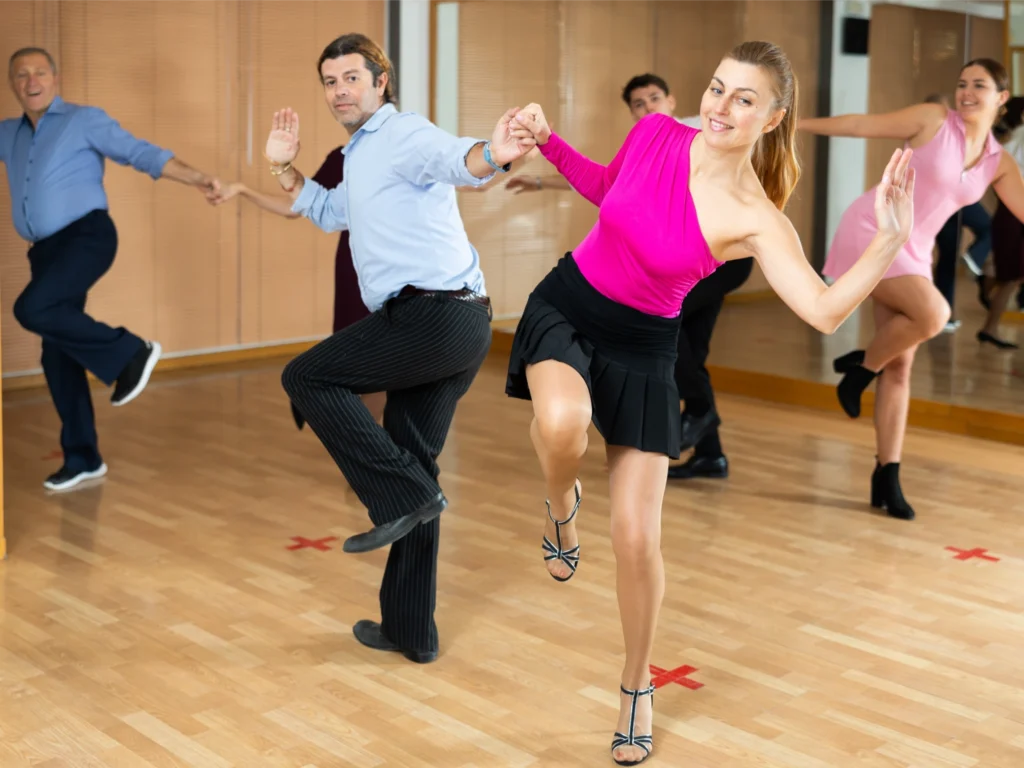
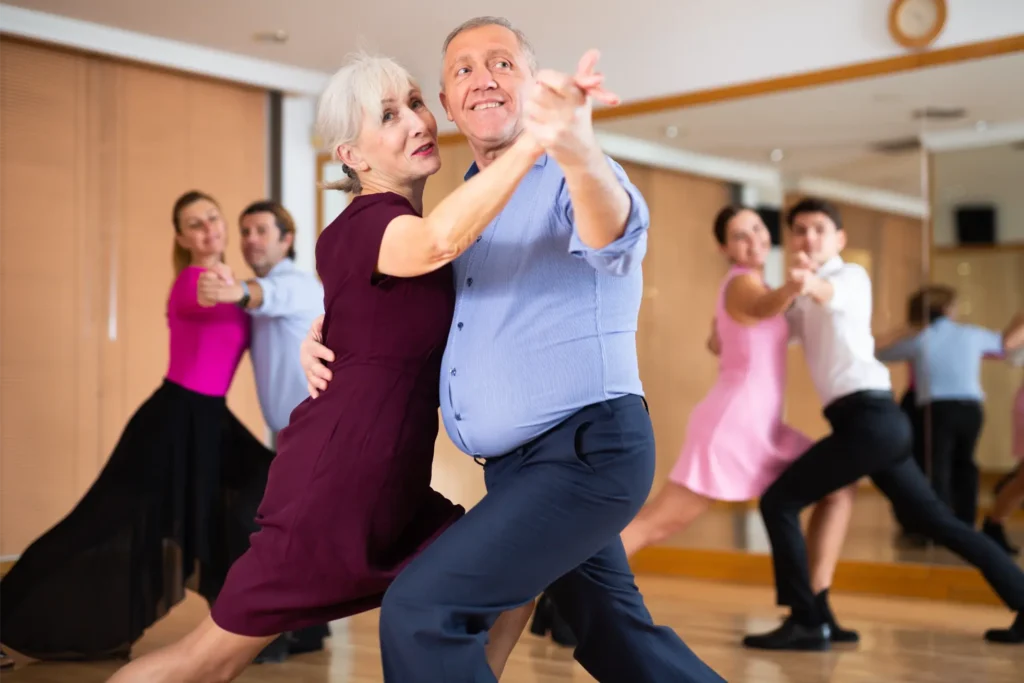
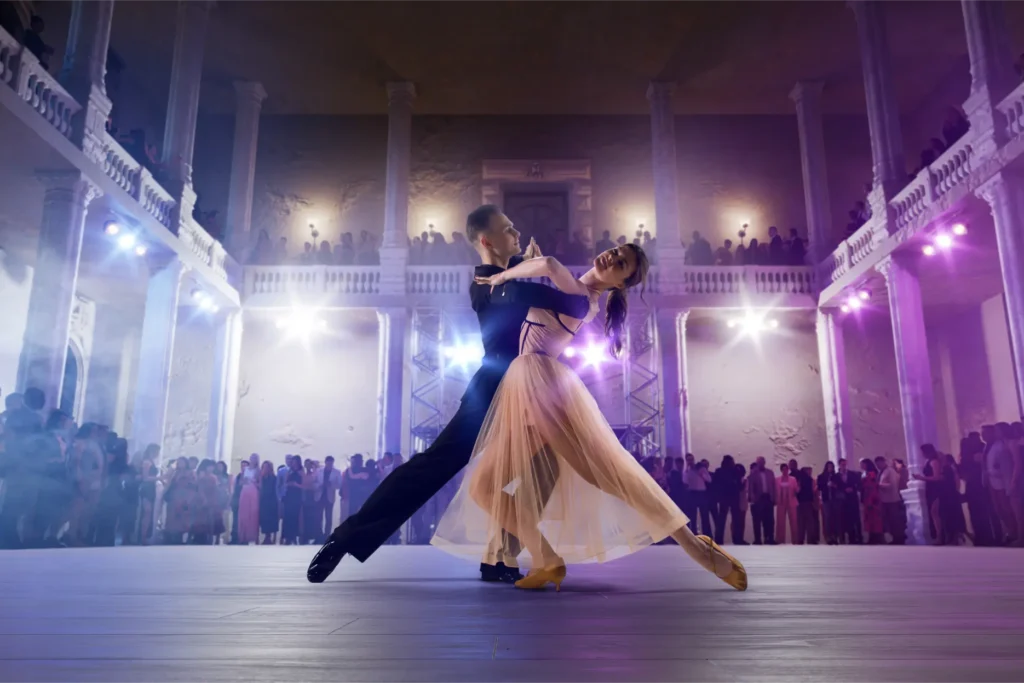
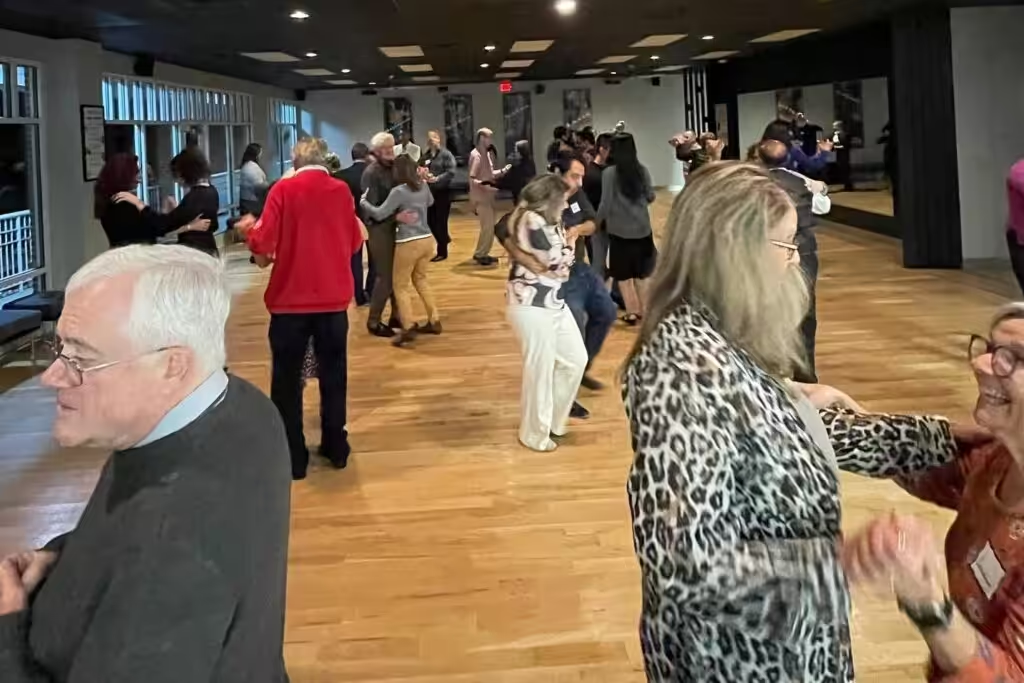
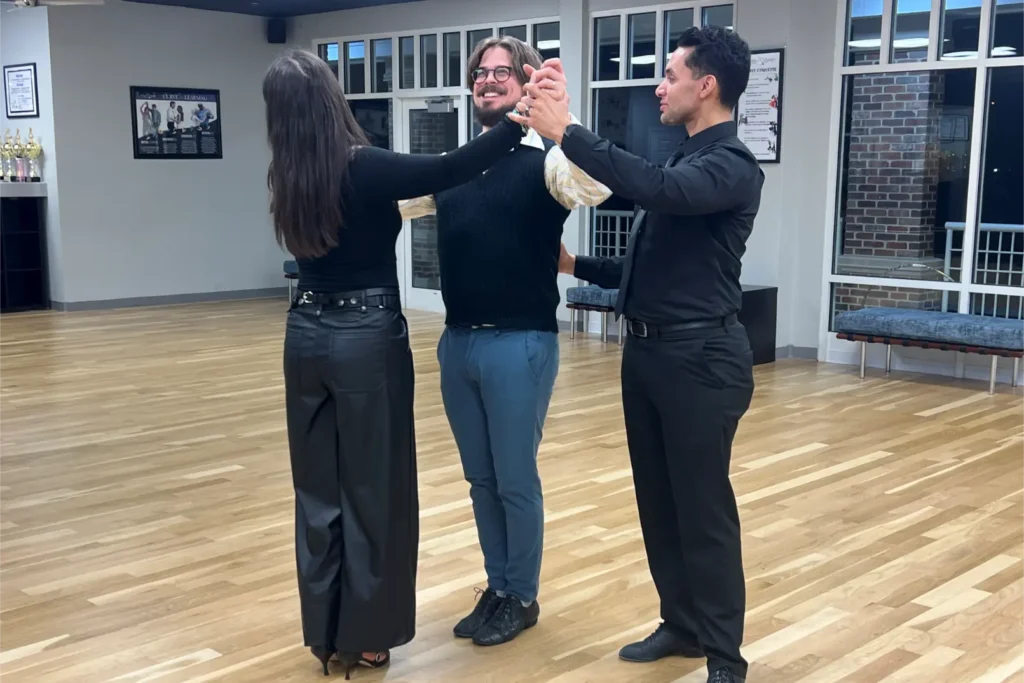
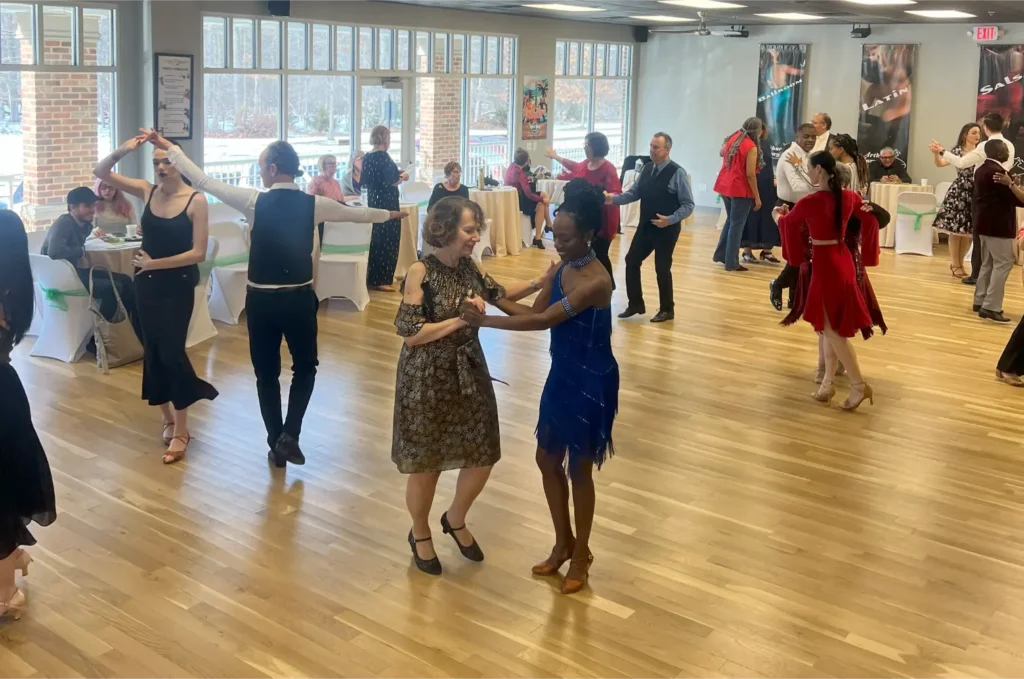
One reason ballroom dance lessons help overcome public speaking anxiety is that they gradually normalize being watched. Group classes, social dances, and studio events regularly place dancers in visible situations without the intense pressure associated with formal presentations.
Instead of focusing on the audience, dancers learn to direct their attention toward their partner and the task at hand. This shift reduces self-consciousness and teaches the brain that being observed is not a threat.
The shared focus created by partner dancing also strengthens concentration. Public speakers often become distracted by audience reactions, constantly interpreting facial expressions and body language. Dancers, however, are trained to focus on connection, timing, and movement. This ability to narrow attention becomes valuable when speaking publicly, allowing individuals to stay engaged with their message rather than worrying about how they are being perceived.
Building Confidence Through Better Body Awareness
Anxiety often creates feelings of disorientation. People may feel disconnected from their surroundings, making large rooms or stages seem intimidating.
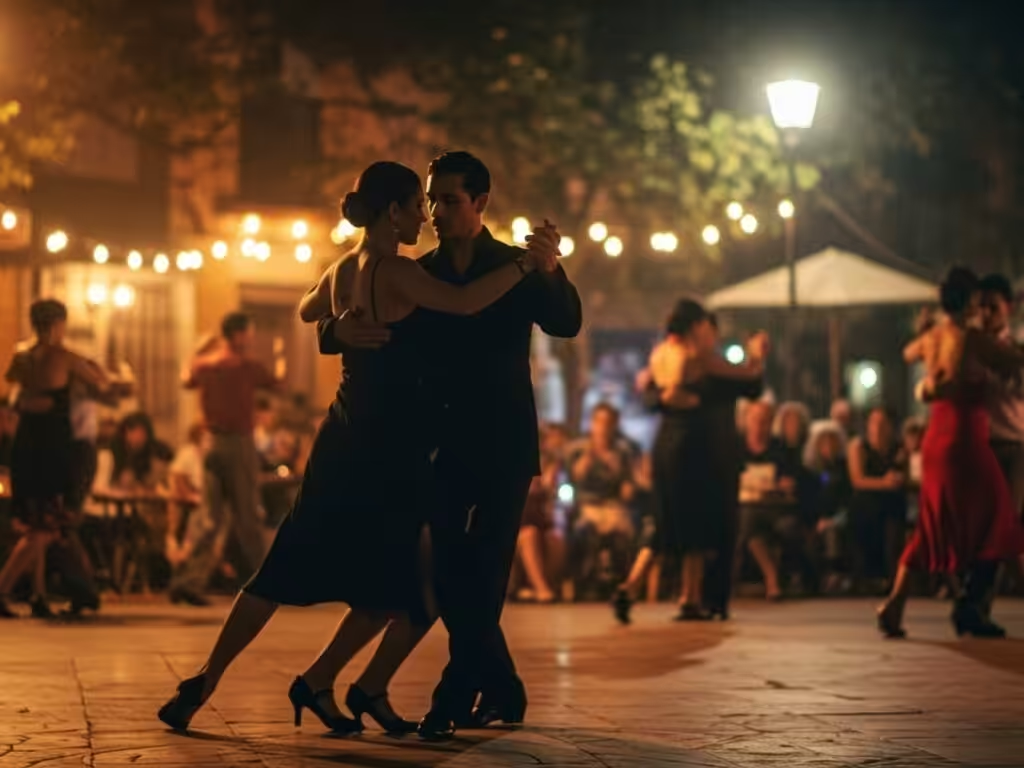
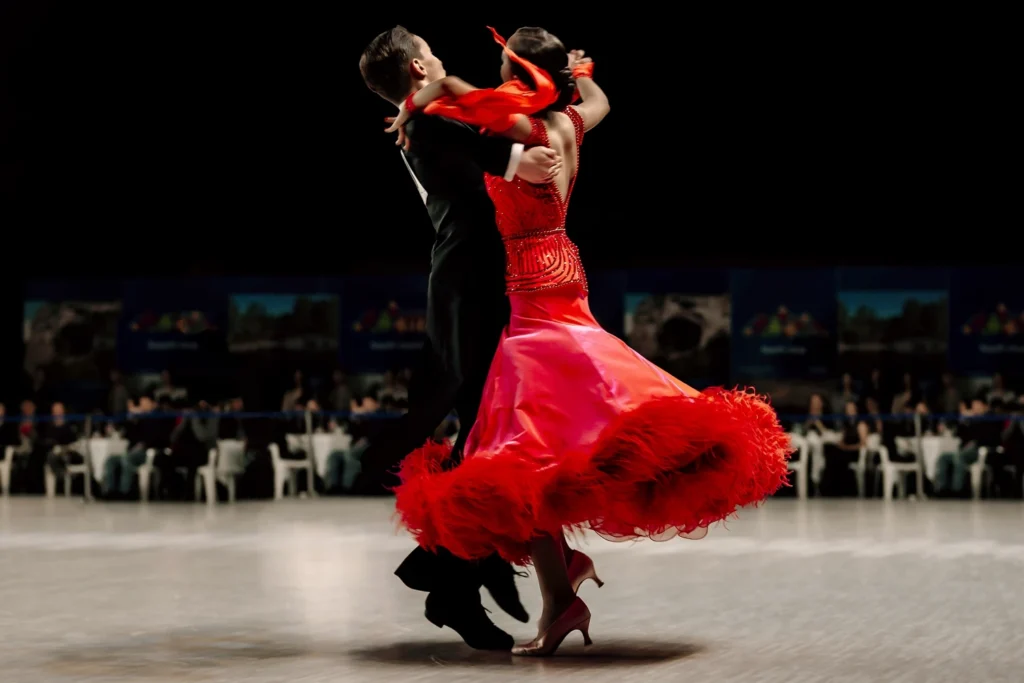
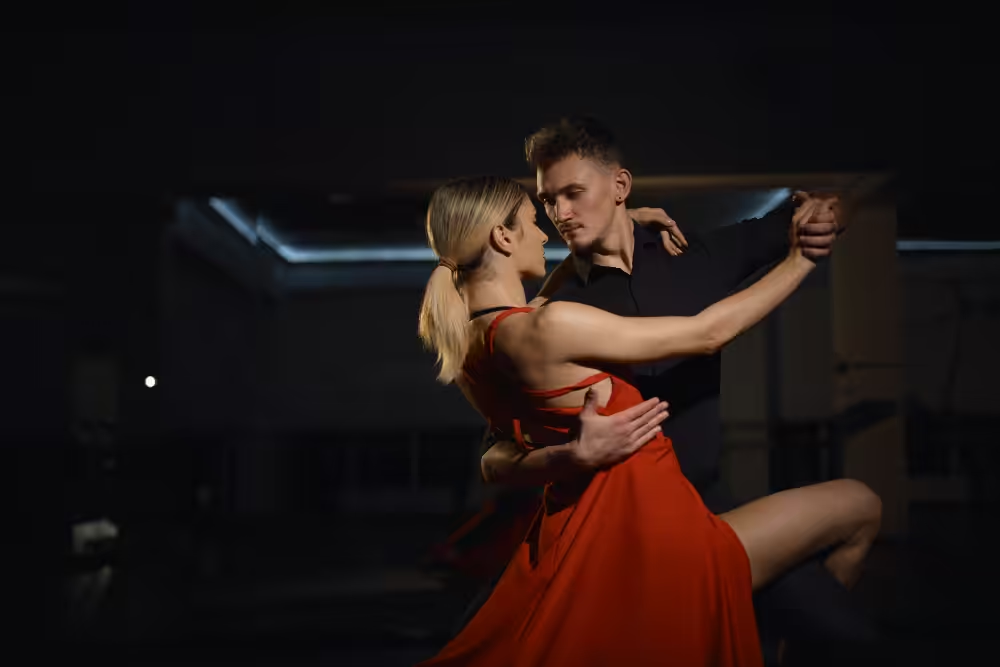
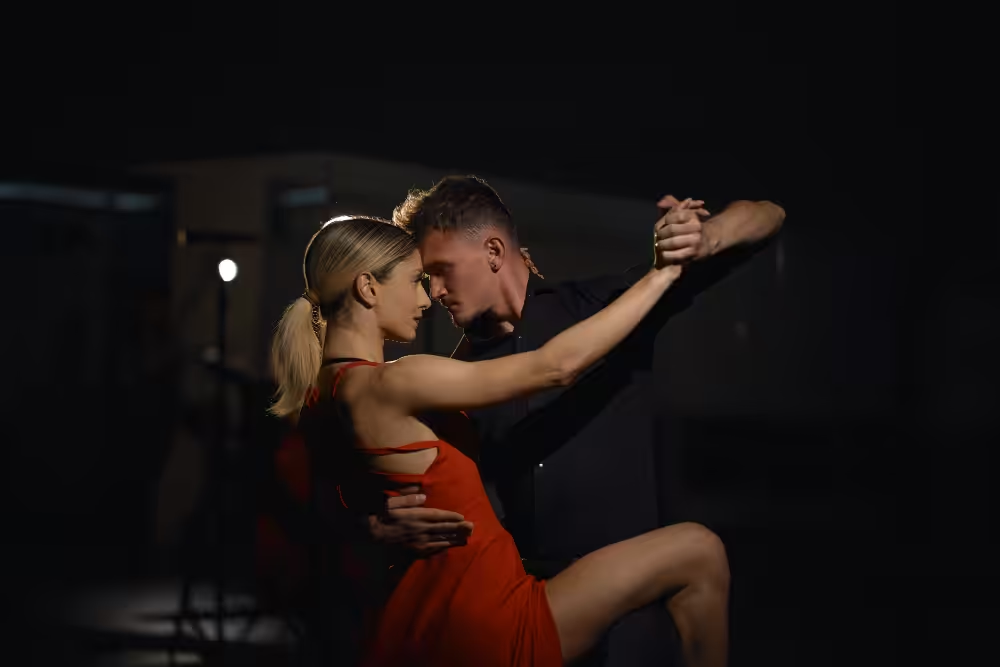
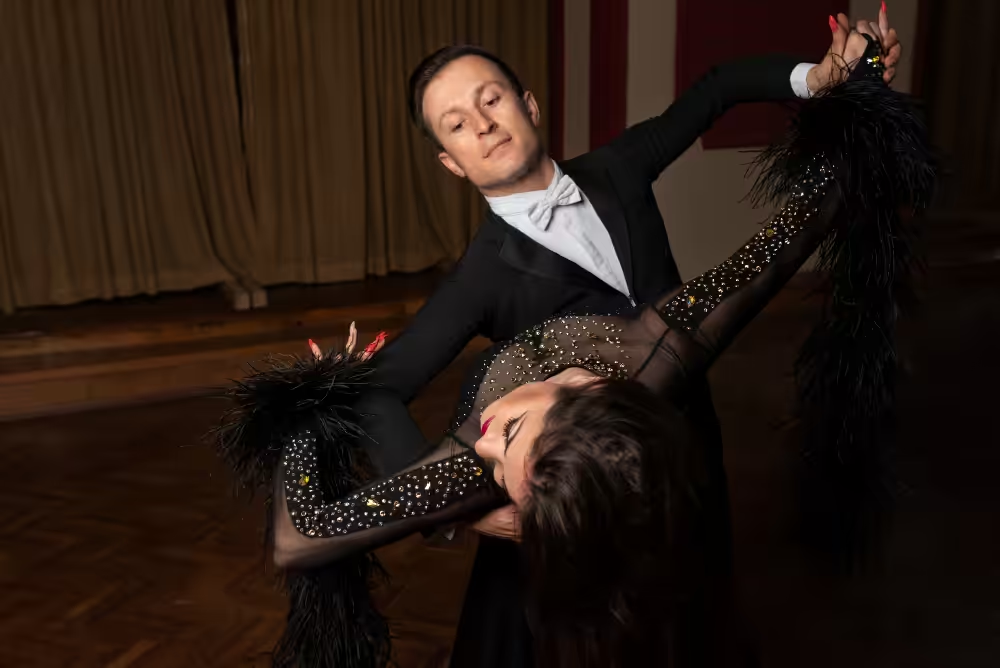
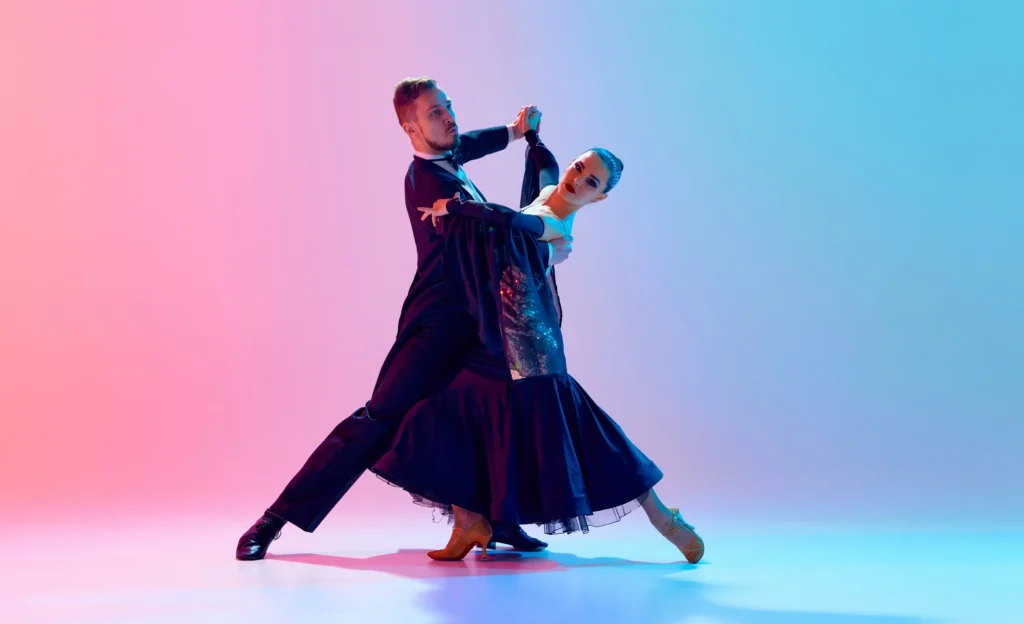
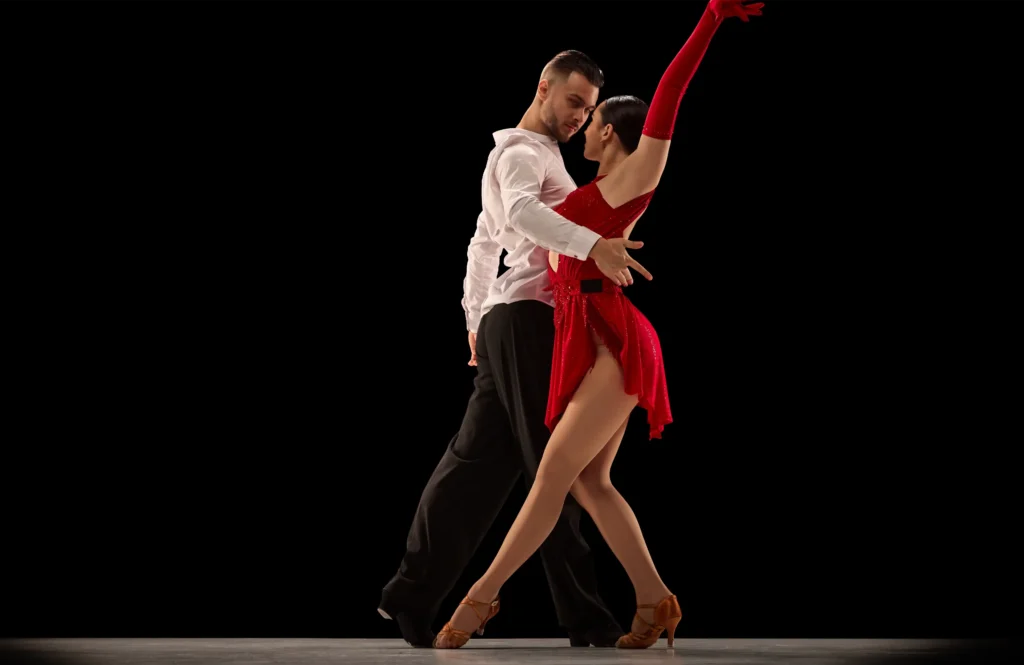
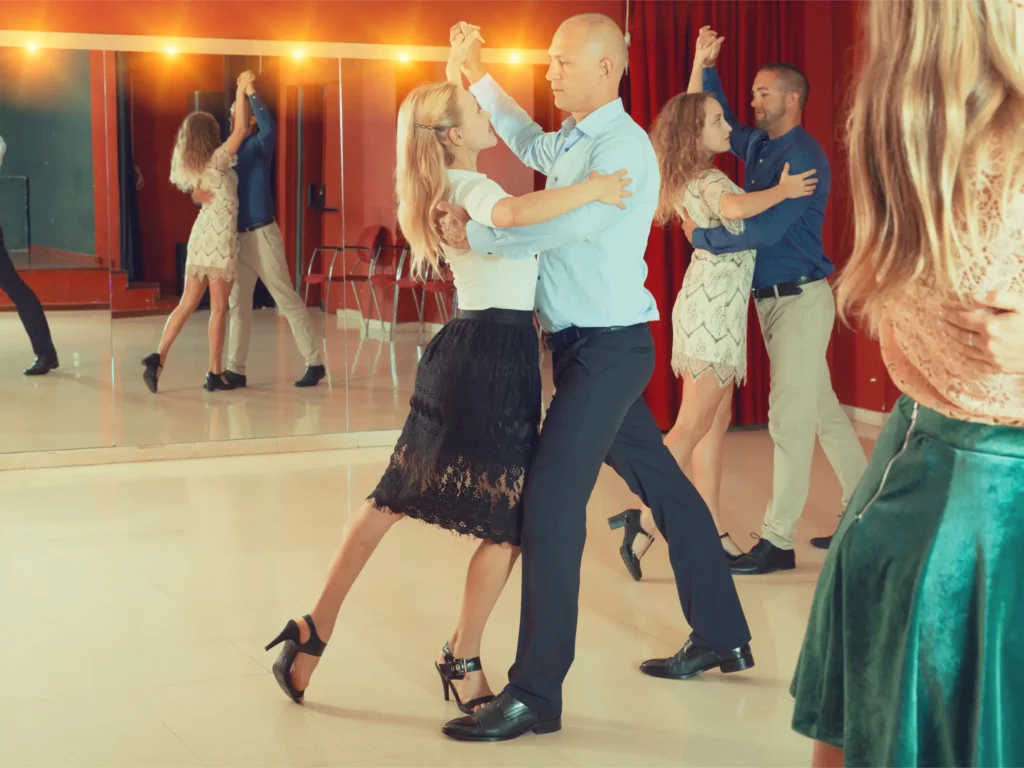
Ballroom dancing develops spatial awareness by requiring dancers to navigate shared floor space while maintaining balance, posture, and awareness of nearby couples. Whether performing a Waltz or Tango, dancers learn to move confidently within a defined environment.
This skill can transfer directly to public speaking. Rather than feeling overwhelmed by a room, individuals become more aware of the space they occupy and more comfortable moving within it. Understanding positioning, body alignment, and movement creates a stronger sense of control and stability.
As a result, speakers can appear more confident because they move with purpose rather than pacing nervously or remaining frozen behind a podium.
Learning to Make Mistakes Without Fear
Confidence grows when people learn that mistakes are survivable. Ballroom studios provide an ideal environment for this process.
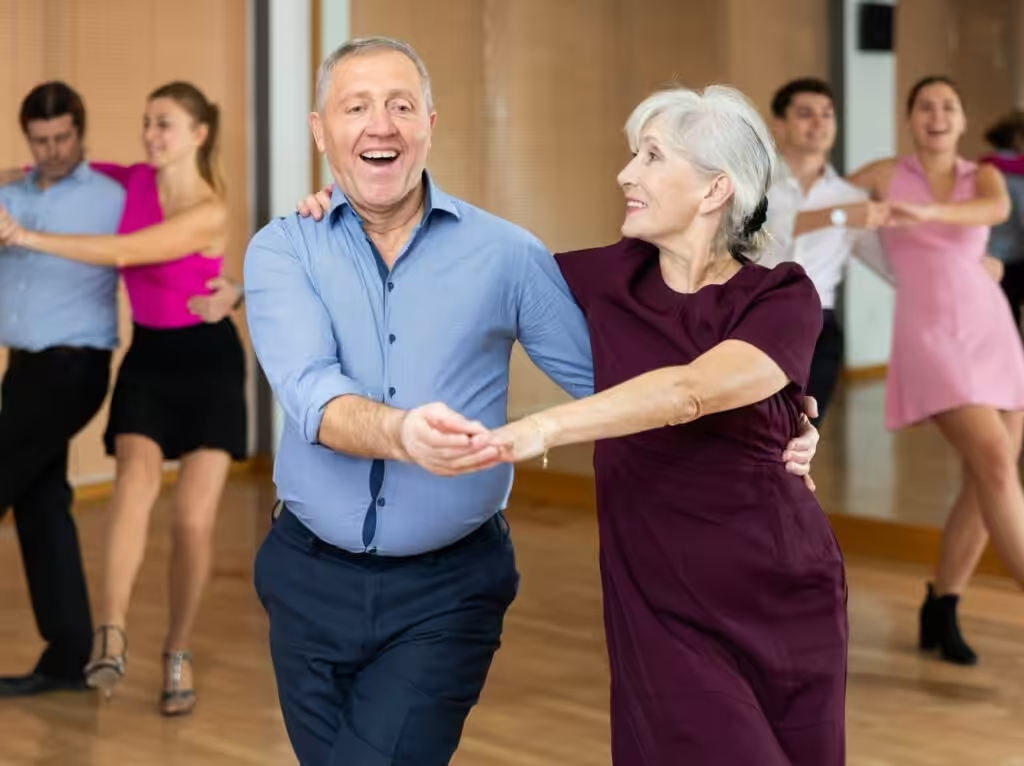
Most classes consist of beginners and experienced dancers learning together, creating a culture that encourages growth rather than perfection. Missing a step or losing the rhythm is treated as part of the learning process, not a failure.
Repeated exposure to small public mistakes teaches resilience. Dancers learn to recover quickly, adapt, and continue without becoming discouraged. Over time, this changes how the brain interprets public errors.
The same mindset benefits public speaking. If a presentation slide fails or a speaker loses their place, they are more likely to recover calmly rather than spiraling into panic. The ability to continue confidently after a mistake is one of the most valuable skills ballroom dancing develops.
How Ballroom Dancing Helps Reduce Anxiety
Anxiety and body language influence each other. When people feel nervous, they often hunch their shoulders, lower their gaze, and take shallow breaths. Unfortunately, these physical reactions reinforce feelings of fear.
Ballroom dancing teaches the opposite. Strong posture, open body positioning, and controlled movement encourage a sense of confidence and calm.
How Better Posture Reduces Anxiety
Learning proper dance posture requires an upright spine, engaged core, open chest, and lifted head. These qualities are essential not only for dancing but also for projecting confidence in any public setting.
When people feel anxious, they instinctively try to make themselves smaller. Dance training counters this reaction by teaching individuals to maintain an expansive, balanced posture even under stress.
The benefits extend beyond appearance. Strong posture supports deeper breathing, better vocal projection, and improved emotional regulation. When speakers stand tall and breathe effectively, they are less likely to experience the physical symptoms that intensify anxiety.
Over time, maintaining confident posture becomes second nature, providing a reliable foundation whenever public performance is required.
How Ballroom Dancing Improves Mental Focus
Anxiety thrives on anticipation and worst-case scenarios. Ballroom dancing disrupts these thought patterns by demanding complete attention to the present moment.
A dancer must listen to the music, remember patterns, respond to a partner, and coordinate movement simultaneously. This leaves little mental capacity for worrying about potential mistakes or audience judgment.
The result is a state of focused engagement often described as flow. During flow, attention remains anchored in the task rather than drifting toward fear-based thinking.
Public speakers can apply the same principle by focusing on delivery, breathing, pacing, and communication rather than imagined criticism. The mindfulness developed through dance creates a practical tool for managing performance anxiety in any environment.
How to Turn Nervous Energy Into Confidence
One of the most valuable lessons learned through ballroom dancing is that nervousness and excitement share many of the same physical sensations. Both involve increased energy, elevated heart rate, and heightened awareness.
The difference lies in interpretation.
Dance instructors often encourage students to view adrenaline as a resource rather than a warning sign. Instead of resisting nervous energy, dancers learn to channel it into movement, expression, and performance quality.
This perspective can dramatically improve public speaking. Rather than seeing a racing heartbeat as evidence of failure, speakers can view it as energy that enhances enthusiasm and engagement.
By changing the meaning attached to physical sensations, anxiety becomes easier to manage and far less intimidating.
Step Off the Hardwood and Onto the Stage with Unshakeable Confidence
Overcoming public speaking anxiety does not require eliminating nervousness altogether. The goal is to develop the skills needed to function confidently despite it.
Ballroom dance provides a practical and enjoyable path toward that goal. The confidence developed on the dance floor extends far beyond the studio. Whether presenting in a boardroom, speaking at an event, or addressing a large audience, the same skills that create poise in dance can create confidence in public speaking.
When you learn to move with purpose, stay present under pressure, and embrace the energy of performance, stepping into the spotlight becomes an opportunity rather than a fear.
FAQ
I have no rhythm and severe stage fright. Can ballroom dance still help?
Yes. Ballroom dancing is a learned skill, not an innate talent. Lessons break movement and timing into manageable steps, allowing confidence to develop gradually through practice.
Do I need to compete or perform publicly to gain the benefits?
No. Group classes, social dances, and regular studio activities provide sufficient opportunities to become comfortable being seen by others without participating in competitions or showcases.
Why is ballroom dancing more effective than traditional confidence-building exercises?
Ballroom dancing combines physical conditioning, social exposure, posture training, and mental focus in a single activity. By addressing both the psychological and physiological aspects of anxiety, it often creates lasting improvements in confidence and performance under pressure.