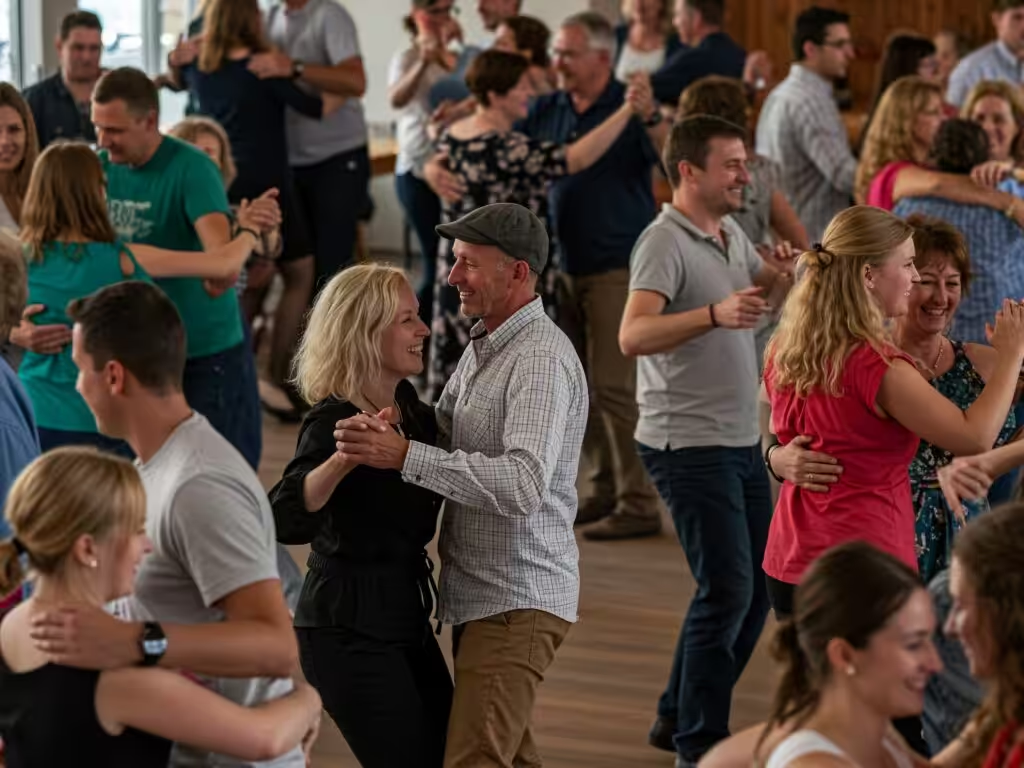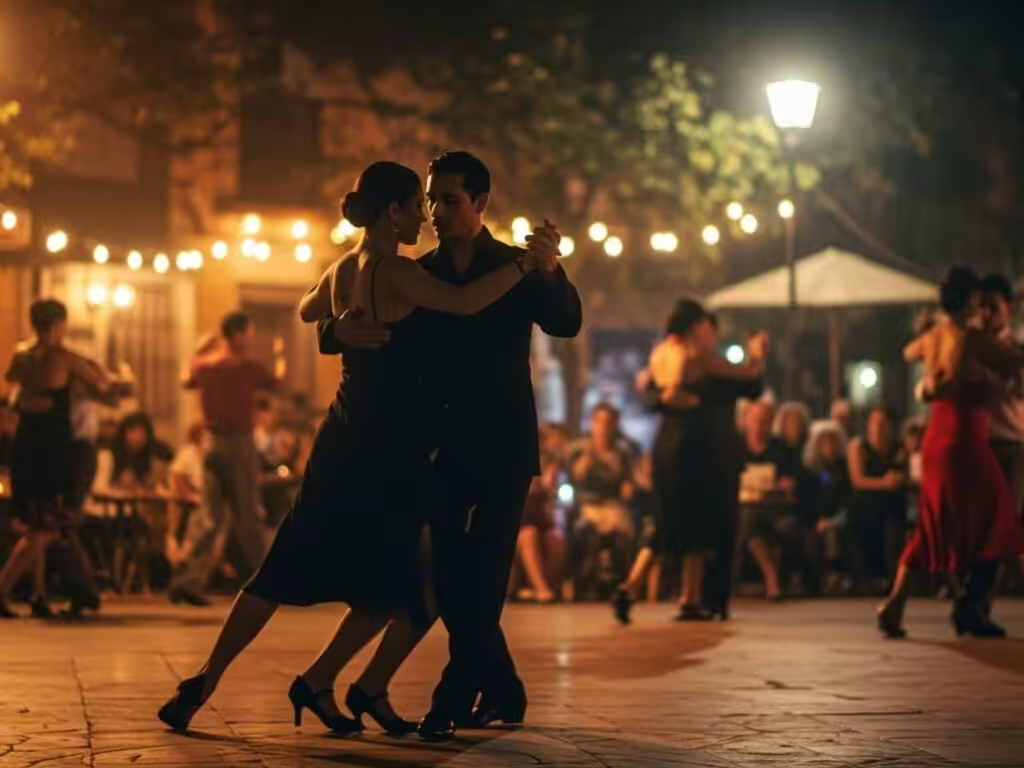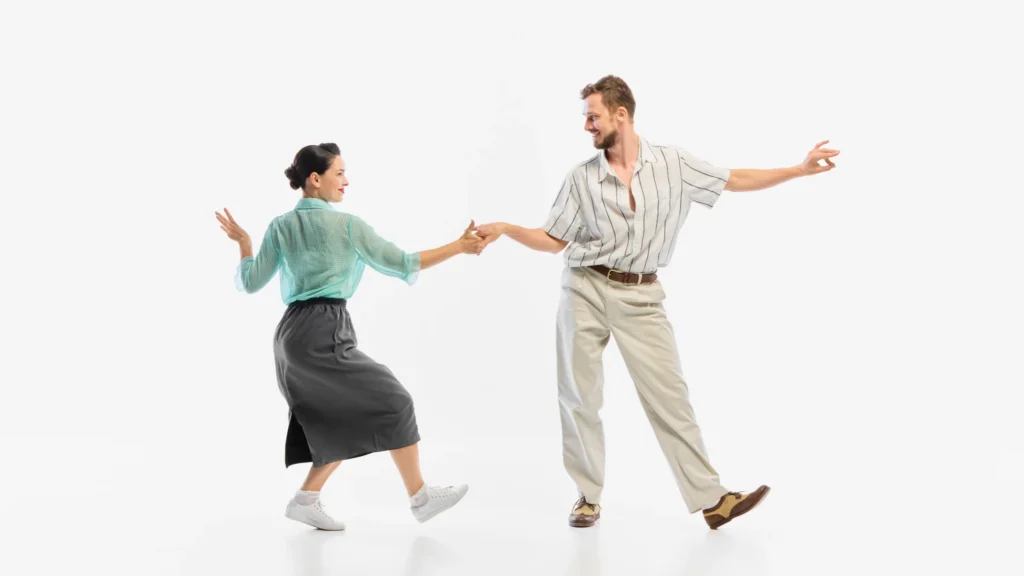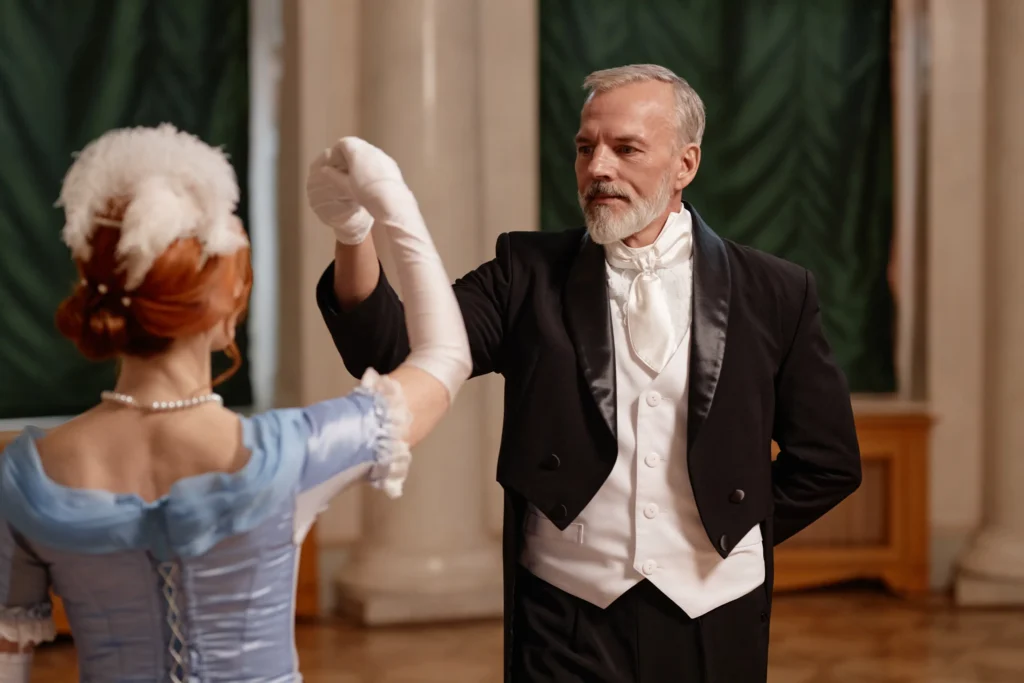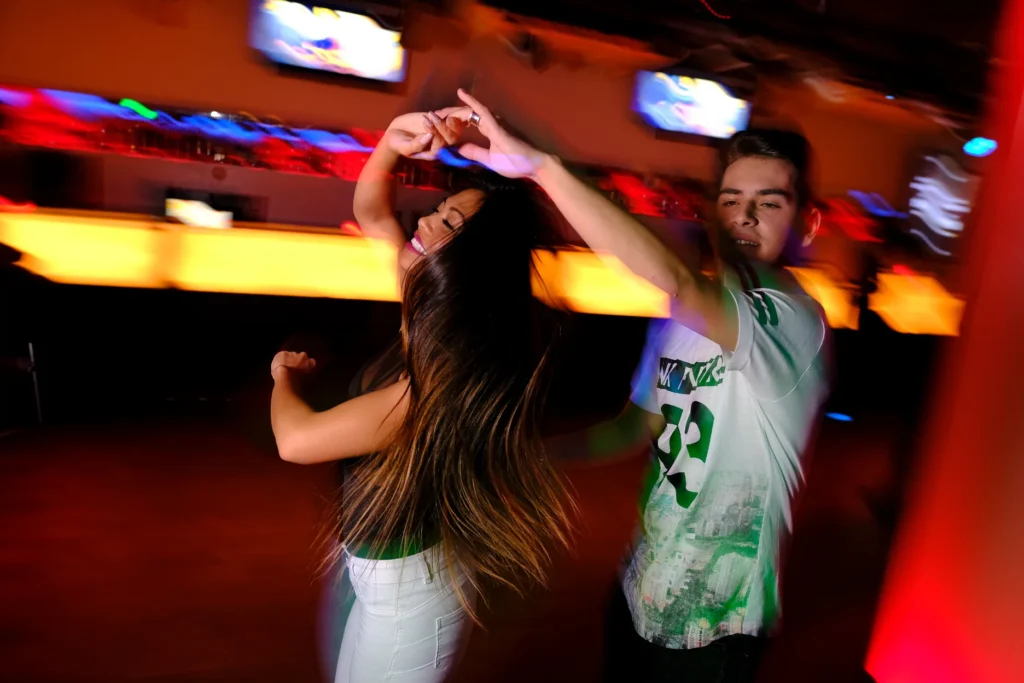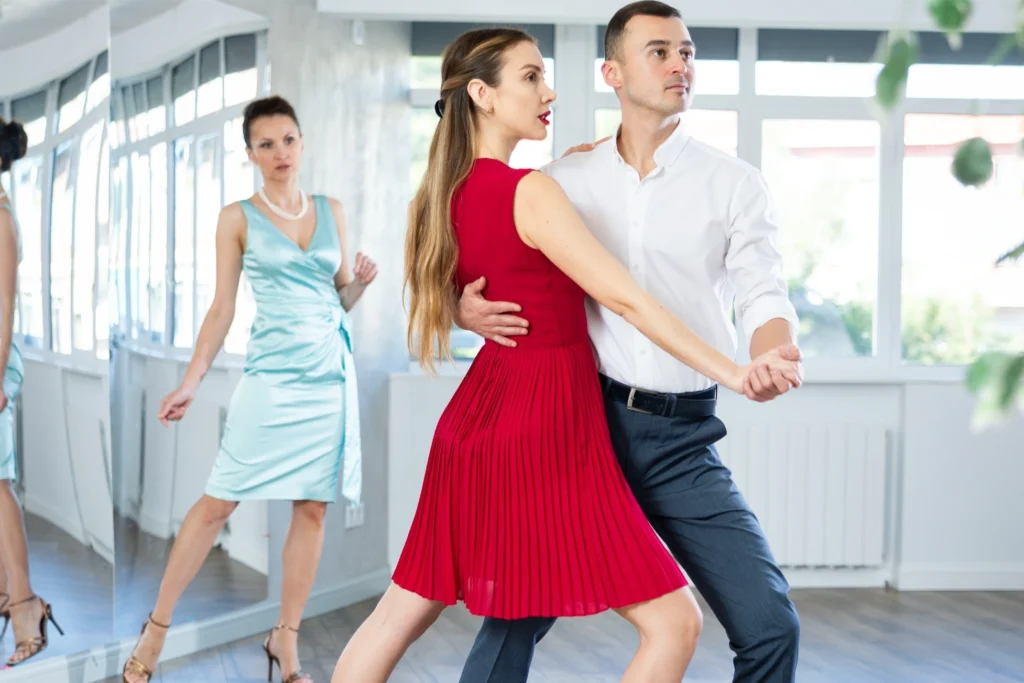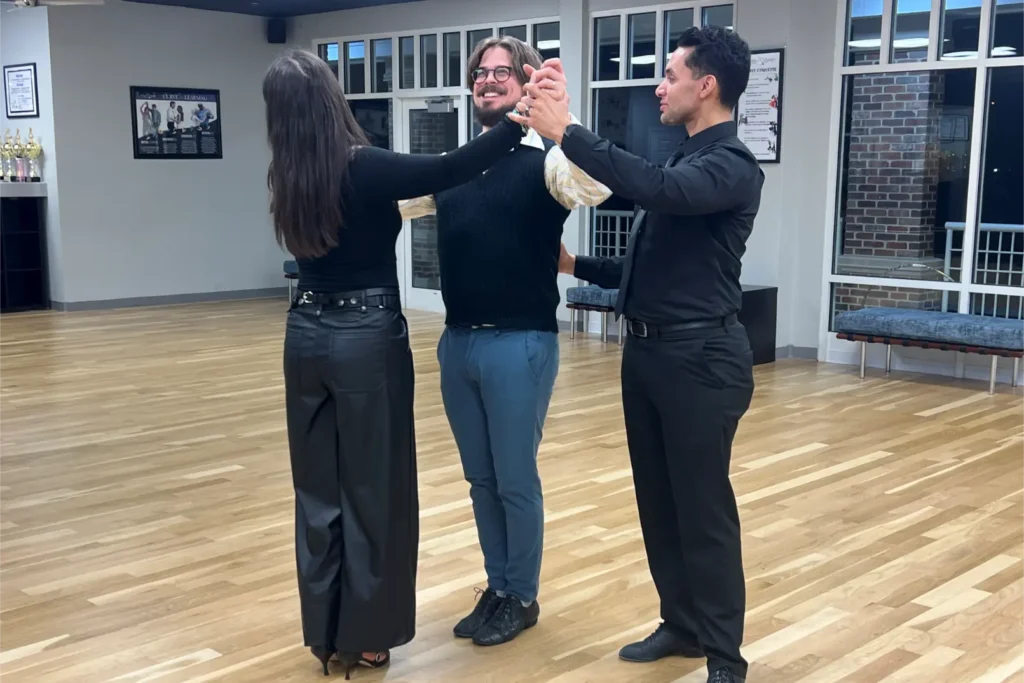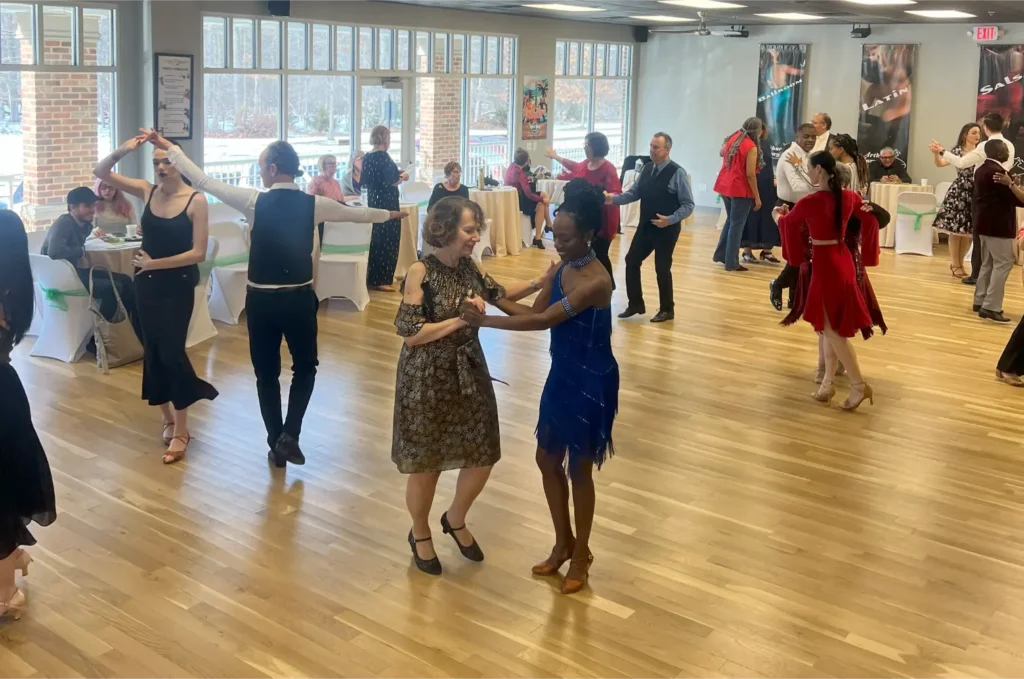
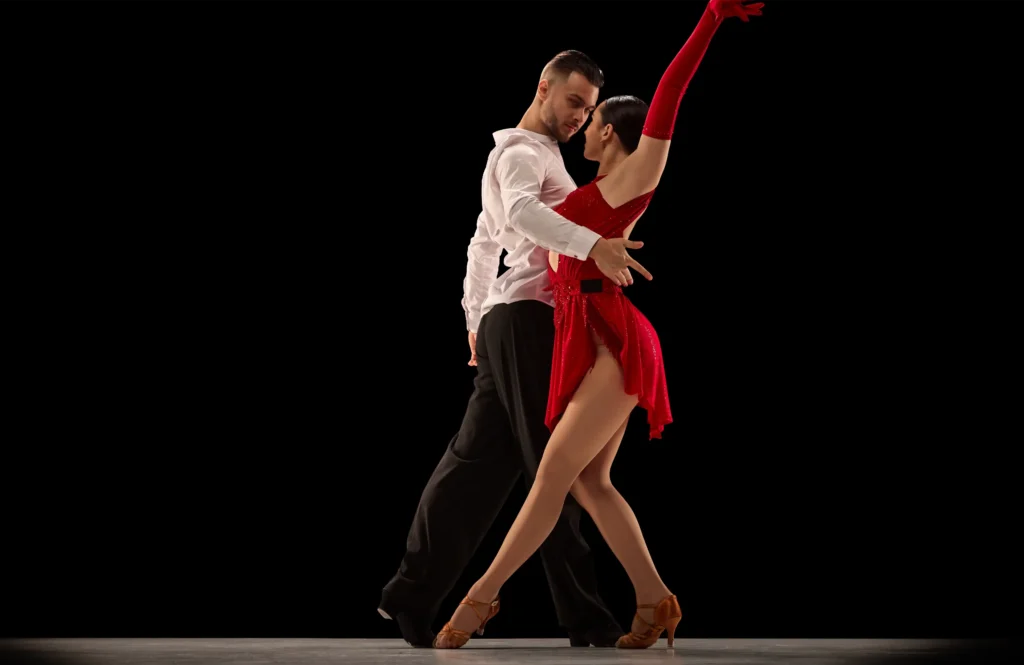
The main difference between Mambo and Salsa is timing and musical emphasis. Mambo traditionally breaks on the second beat and is tied to the sharper, brass-heavy sound that grew out of New York’s Palladium era, while Salsa became a broader umbrella term for related Latin music and dance styles, most commonly danced on 1 in many social settings. In practice, the two are closely related, but Mambo usually feels more syncopated and rhythm-driven, while Salsa is often taught and recognized as the more modern, widely accessible social dance.
Key Takeaways
- Mambo and Salsa come from the same broader Latin dance family, but they are not exactly the same in timing, feel, or historical context.
- Mambo is traditionally danced on 2, which gives it a more syncopated, musically grounded feel that matches the rhythm section closely.
- Salsa is a broader term that grew in popularity in the 1970s and came to represent a mix of related musical and dance traditions.
- Many social dancers learn Salsa on 1, especially in L.A. style, while New York style Salsa is commonly danced on 2 and overlaps heavily with Mambo.
- Mambo is often associated with the Palladium era and big-band Latin music, while Salsa is more closely tied to the Fania era and its global popularization.
- The easiest practical distinction is this: if you are deciding how to dance, pay attention to the timing of the break step and the feel of the music.
Exploring the Roots of the Mambo Movement
To understand the Mambo dance origin, we have to travel back to the late 1930s in Havana, Cuba. Before the glitz of New York, there was the “Danzón-Mambo.” Musicians like Orestes López and Israel “Cachao” López took the stately, formal Danzón and injected it with a heavy dose of African syncopation. This wasn’t a gradual change; it was a rhythmic revolution. The “Mambo” part of the song was originally just the final, fast-paced section of a longer piece where dancers could finally let loose.
However, the dance didn’t stay in Cuba for long. As the 1940s arrived, the sound migrated to Mexico City and then New York, fueled by the brassy, jazz-influenced arrangements of Pérez Prado. This era defined the aesthetic we now associate with mid-century cool: sharp suits, big bands, and a dance style that required incredible precision and “weight.”
The Evolution of the Mambo Sound in Cuba
The Mambo dance history is defined by the transition from small charanga ensembles to the “Big Band” format. Pérez Prado, the “King of the Mambo,” was the catalyst. He took the syncopated basslines of the López brothers and layered them with screaming trumpets and grunting vocalizations.
This created a sound that was aggressive, sophisticated, and perfect for the stage. Unlike later styles, this music was designed for high-level performance and ballroom competition.
The Palladium Ballroom and the New York Craze
In the 1950s, the Mambo found its spiritual home at the Palladium Ballroom in New York City. This was the “Big Three” era: Tito Puente, Tito Rodriguez, and Machito. The dance floor at the Palladium was a democratic space where race and class took a backseat to skill. It was here that “Classic Mambo” was refined into the “On 2” style we know today.
Dancers like the Mambo Aces and Pedro “Cuban Pete” Aguilar turned the dance into an art form, emphasizing the break on the second beat of the measure to align perfectly with the conga’s tumbao rhythm.
The Technical Signature of Mambo
What sets Mambo apart technically is the “break on 2.” In a standard 4/4 musical measure, the Mambo dancer waits for the first beat and takes their first step on the second beat.
This creates a specific “groove” that feels like the dancer is pulling against the music, creating a tension and release that is still the hallmark of Mambo today. The movement is generally more compact than what we see in modern Salsa. The steps are smaller, the knees remain slightly bent, and the upper body stays relatively still while the hips do the work.
The Birth and Evolution of Salsa
If Mambo was the sophisticated “uptown” cousin, Salsa was the “downtown” rebel. When people ask, “Where did salsa dance come from?” they often look for a single city, but the truth is it was born in the melting pot of the Bronx and Spanish Harlem in the late 1960s. It was the sound of a new generation of Puerto Rican and Cuban immigrants who wanted a music that reflected their urban reality—the grit, the struggle, and the pride of the barrio.
Salsa wasn’t a brand-new rhythm; it was a rebranding. It took the foundations of Mambo, Son Montuno, Guaracha, and Cha-cha-cha and blended them with the rebellious spirit of the 1970s. It was faster, it featured more prominent trombones, and it spoke to the people in a way the polished Mambo of the 50s no longer did.
The Fania Records Era and Global Recognition
The Salsa dance history is inextricably linked to the rise of Fania Records. Founded by Johnny Pacheco and Jerry Masucci, Fania marketed this “new” sound under the singular name “Salsa.” This was a stroke of marketing genius.
Instead of explaining the difference between a Guajira and a Boogaloo to a mainstream audience, they simply called it “Salsa”—a spicy mix of ingredients. This allowed the music to travel globally, reaching markets in Europe, Asia, and across South America.
Migration and the Geographic Roots
The origin of the Salsa dance is a story of migration. While the rhythmic structures came from Cuba, the “heart” of Salsa was Puerto Rican. The Nuyorican (New York-Puerto Rican) community took the Cuban Son and Mambo and added a unique “street” flavor.
This led to different styles emerging based on geography. In Cali, Colombia, the music was played at a breakneck pace, leading to the lightning-fast footwork of Salsa Caleña. In Los Angeles, the influence of Hollywood and ballroom led to “Salsa On 1,” characterized by flashy spins and theatrical dips.
The Intersection of Culture and Rhythm
To understand the Salsa dance origin and history, one must see it as a political statement. In the 1970s, Salsa lyrics began to change. Instead of just singing about love and dancing, artists like Willie Colón and Ruben Blades sang about social injustice and the immigrant experience.
This “Salsa Dura” (Hard Salsa) demanded a dance style that was equally powerful and expressive. It moved the dance out of the formal ballrooms and into the streets, the parks, and the local clubs.
Technical Comparison: Mambo vs. Salsa
The distinction between these two is often debated, but it largely comes down to the relationship between the feet and the floor. While many use the terms interchangeably, the “feel” is what defines the expert.
Timing and the “Break” Step
The most significant technical distinction is when the “break step” occurs.
- Mambo: You break on the 2nd beat. This is often called “Salsa on 2,” but “Classic Mambo” emphasizes the “hold” on the 4 and 8 counts differently.
- Salsa: While “New York Style” Salsa is danced on 2, the most popular form globally is “Salsa on 1” (L.A. Style). In this style, you break on the very first beat. This makes the dance feel much more “driving” and energetic.
Musical Texture and Style
Mambo music is often described as “staccato”—sharp, disconnected, and punctuated. Think of the sharp “Pa-pa-pa-PA!” of a trumpet section. Mambo dancers reflect this with sharp, crisp movements. Salsa, conversely, is often more “legato” or fluid. The transitions between moves in Salsa tend to be more circular and flowing, especially in the Cuban style (Casino).
Instrumentation and Complexity
While both use the Clave (the five-beat rhythmic foundation), the instrumentation varies. Mambo usually features a full brass section (trumpets and saxophones). Salsa often leans more heavily on the trombone, which gives it a darker, grittier tone. Furthermore, Salsa music often has a longer “Montuno” section—the part of the song where the singer improvises and the piano plays a repetitive, rhythmic riff—giving dancers more time to perform complex turn patterns.
Conclusion: A Shared Legacy
In the end, whether you are dancing Mambo or Salsa, you are participating in a rich, centuries-old tradition of expression. Mambo provided the technical foundation and the sophisticated brass sound that allowed Latin music to take over the world in the 1950s. Salsa took that foundation and turned it into a voice for the people, an “umbrella” that sheltered various rhythms and gave a sense of identity to millions. Understanding the difference isn’t about being a snob; it’s about respecting the history and the musicians who created the soundtrack to our lives.
FAQs
What is the easiest way to tell the difference between Salsa and Mambo music?
Listen for the piano. If the piano is playing a repetitive, driving riff (the montuno) and the brass sounds “heavy” or “gritty” (often with trombones), it’s likely Salsa. If it sounds like a 1950s Jazz orchestra with a very sharp, clean trumpet section, it’s probably Mambo.
Can you dance Salsa to Mambo music?
Yes, absolutely. Most social dancers will dance “Salsa on 2” to a Mambo track. The rhythms are compatible, though the “vibe” of Mambo usually calls for more “shines” (solo footwork) and less flashy “L.A. Style” acrobatics.
Is “Salsa on 2” exactly the same as Mambo?
Not quite. “Salsa on 2” (specifically the Eddie Torres style) is a standardized version developed for modern social dancing. “Classic Mambo” often involves a different weight distribution and sometimes starts on a different beat (the “split-weight” timing), though for most social dancers, the terms are now treated as synonyms.
Why do some people say Salsa is just a marketing term?
Because in the 1970s, Fania Records needed a way to sell a variety of Cuban and Puerto Rican rhythms to a global audience. Instead of marketing “Son,” “Guaracha,” “Mambo,” and “Cha-cha-cha” separately, they grouped them under “Salsa” to make it a recognizable brand.