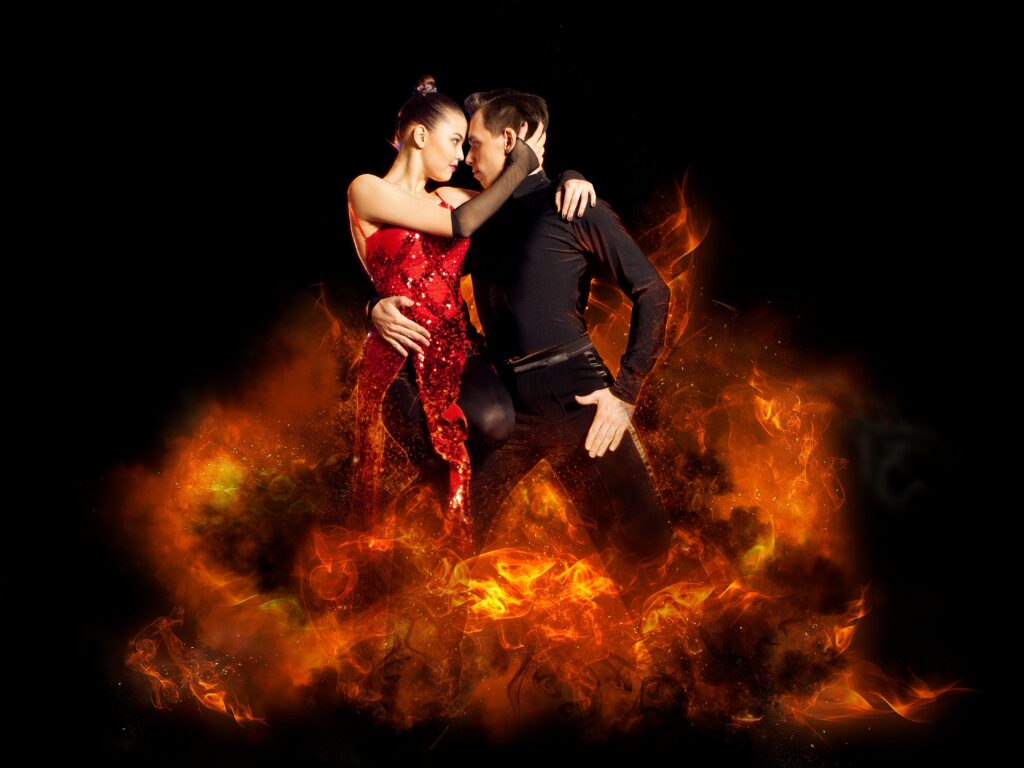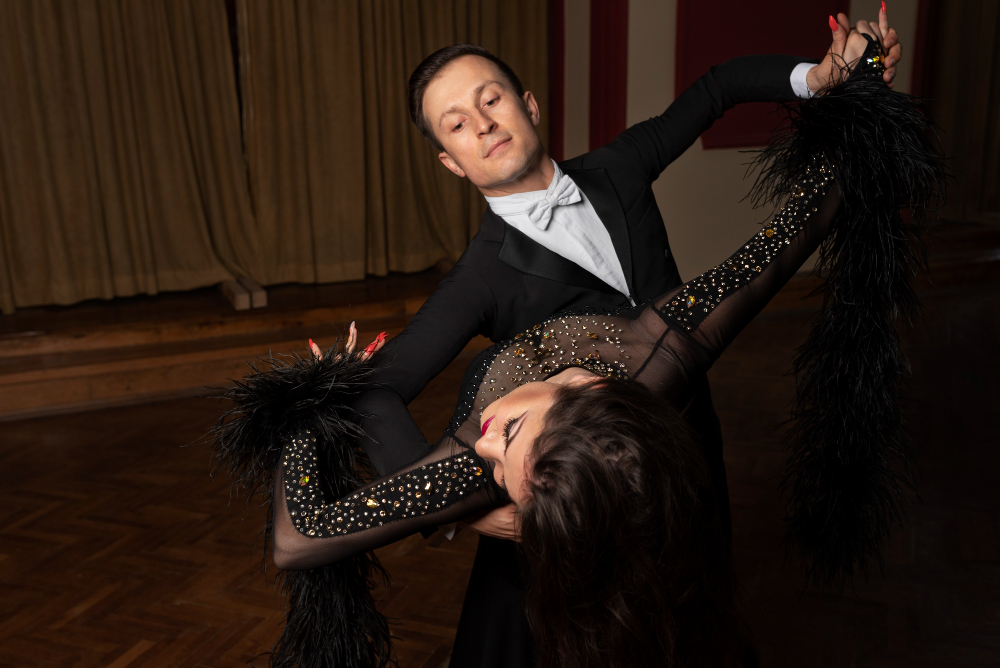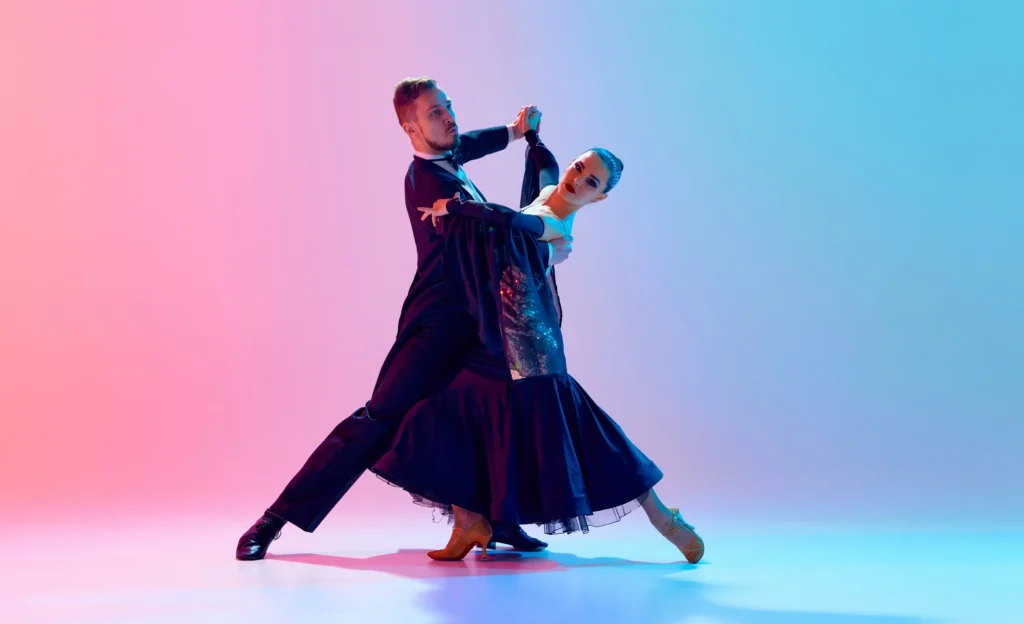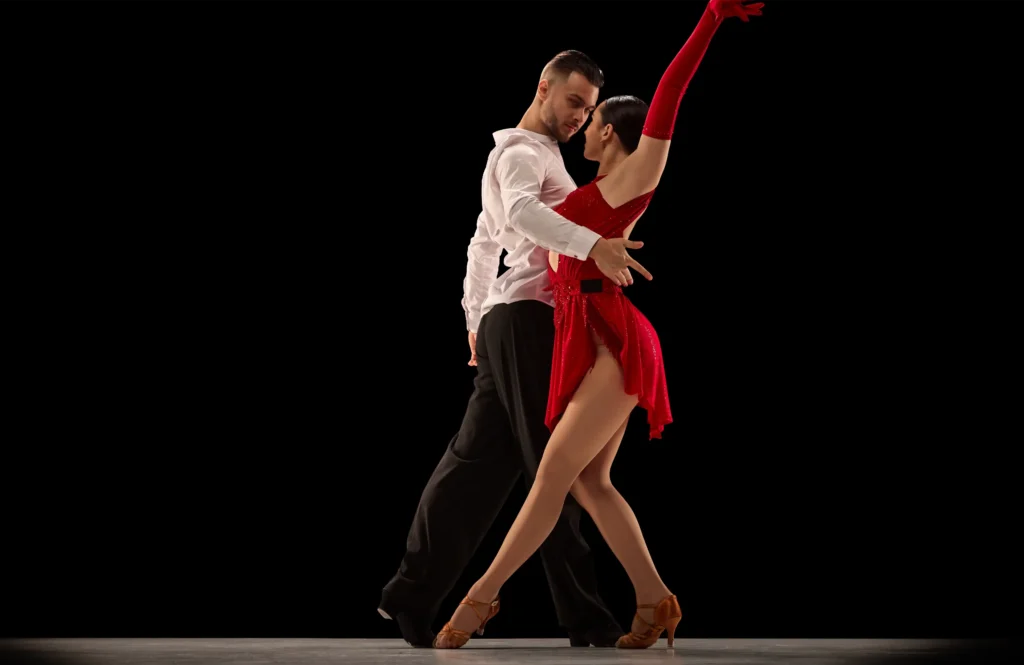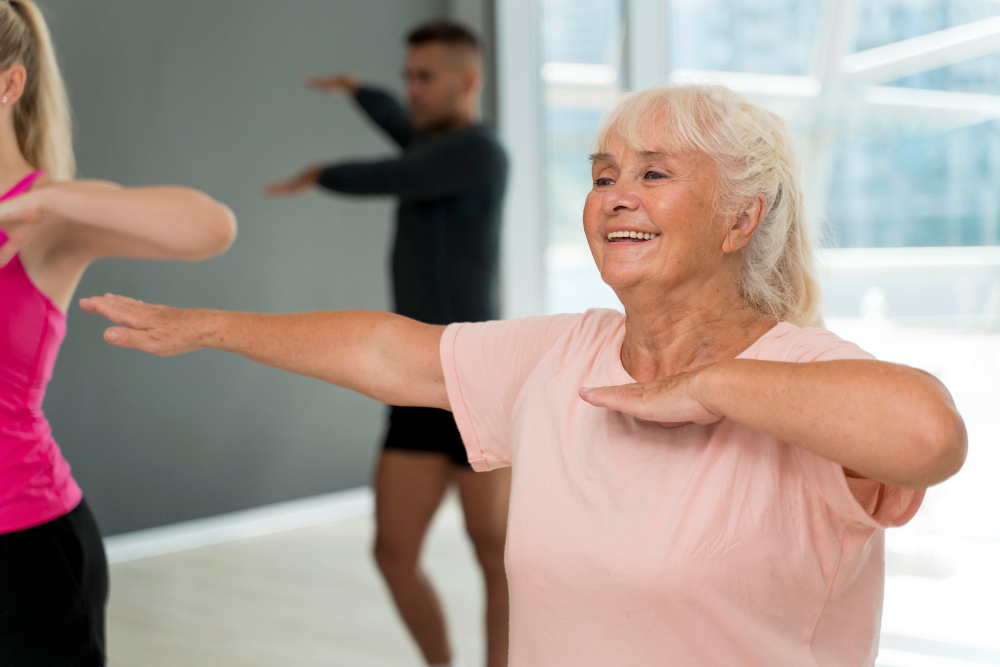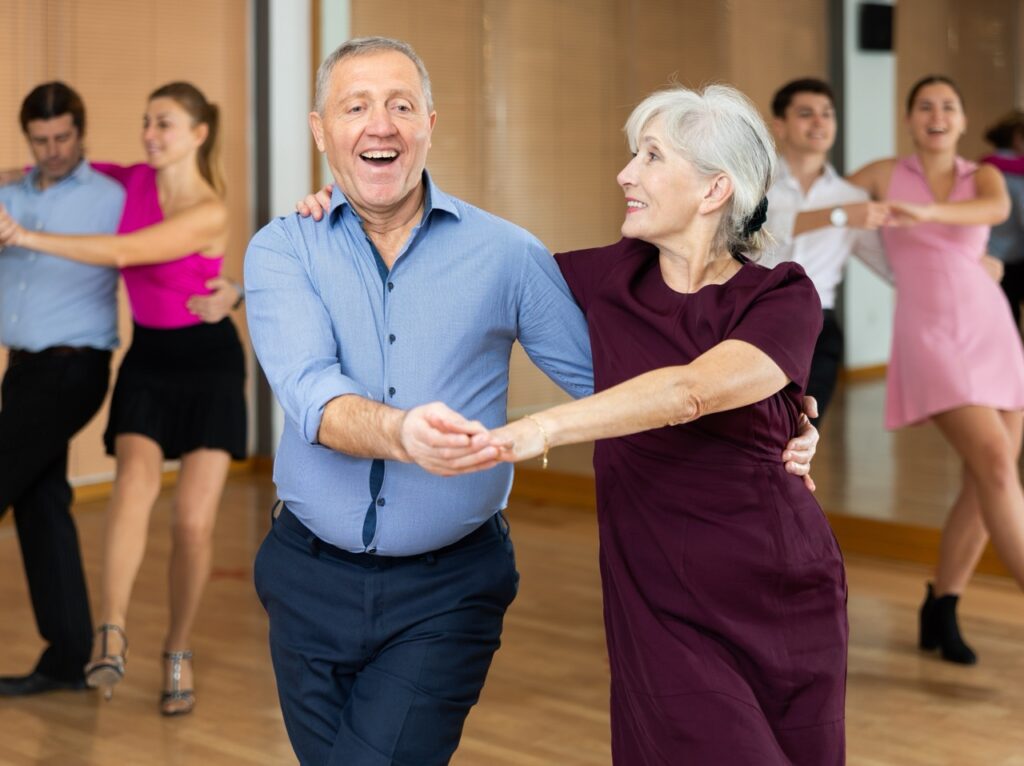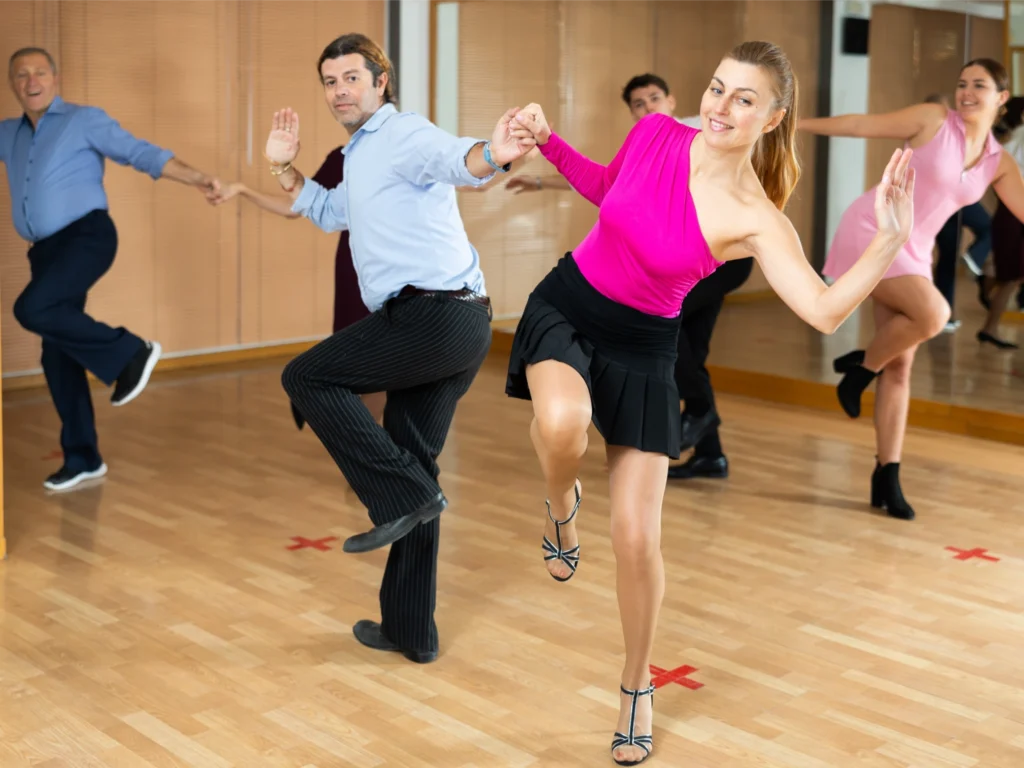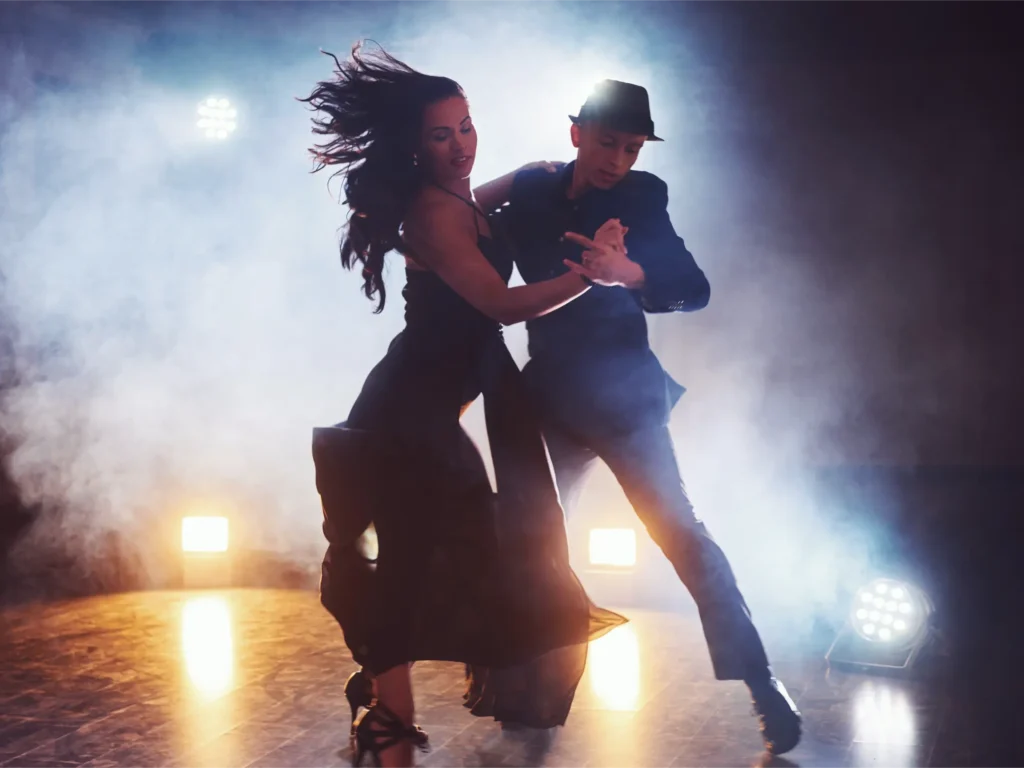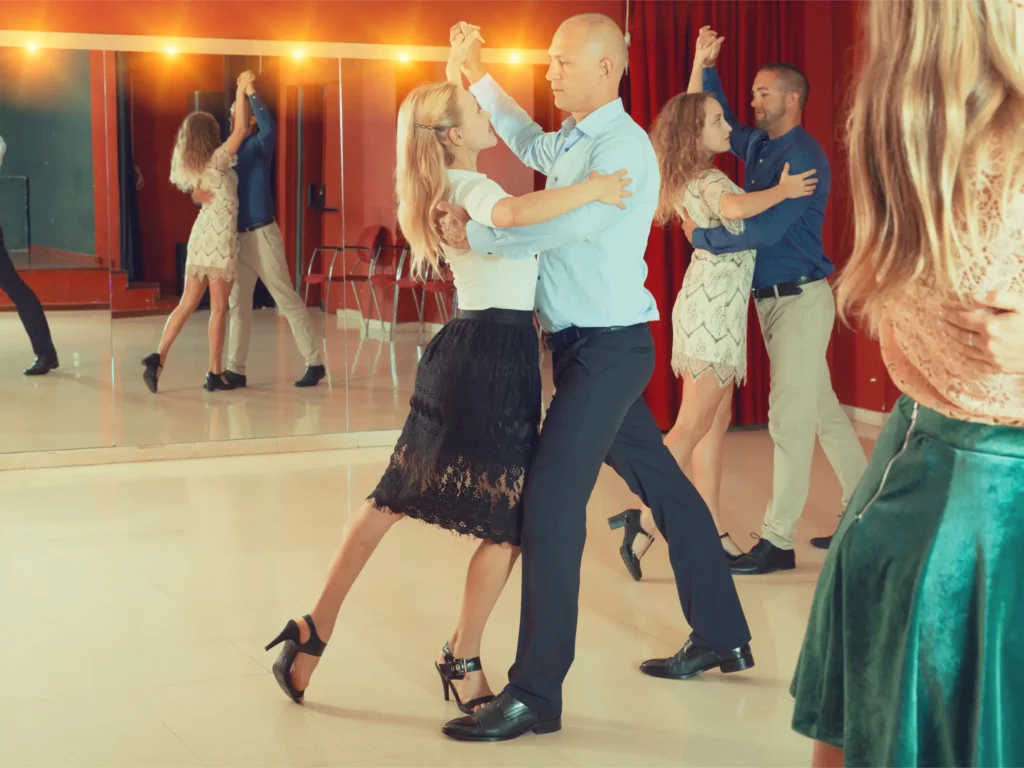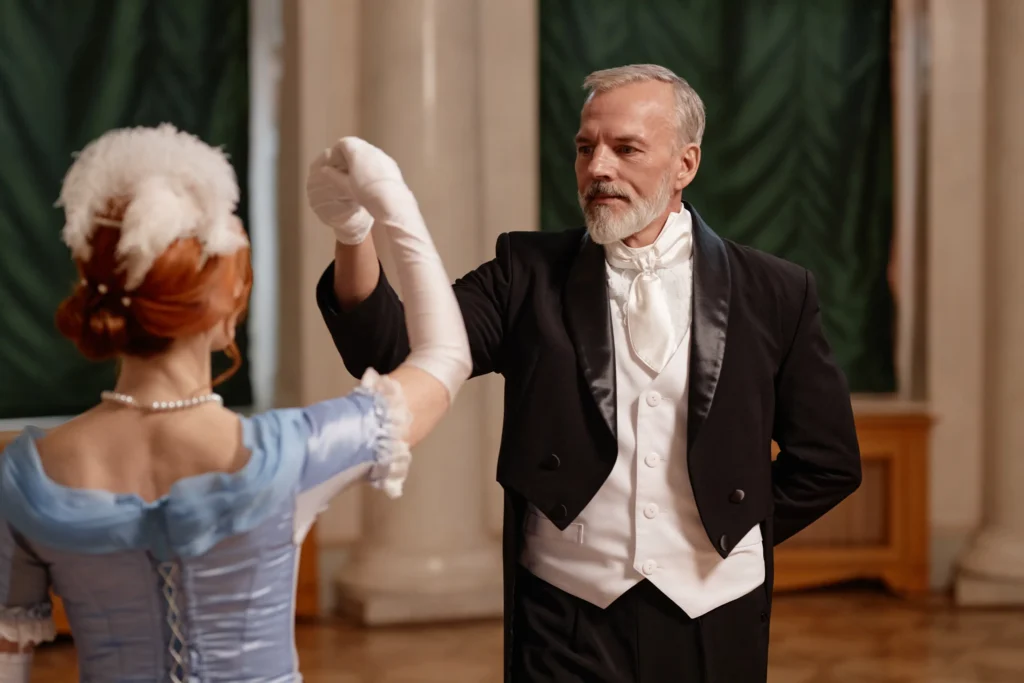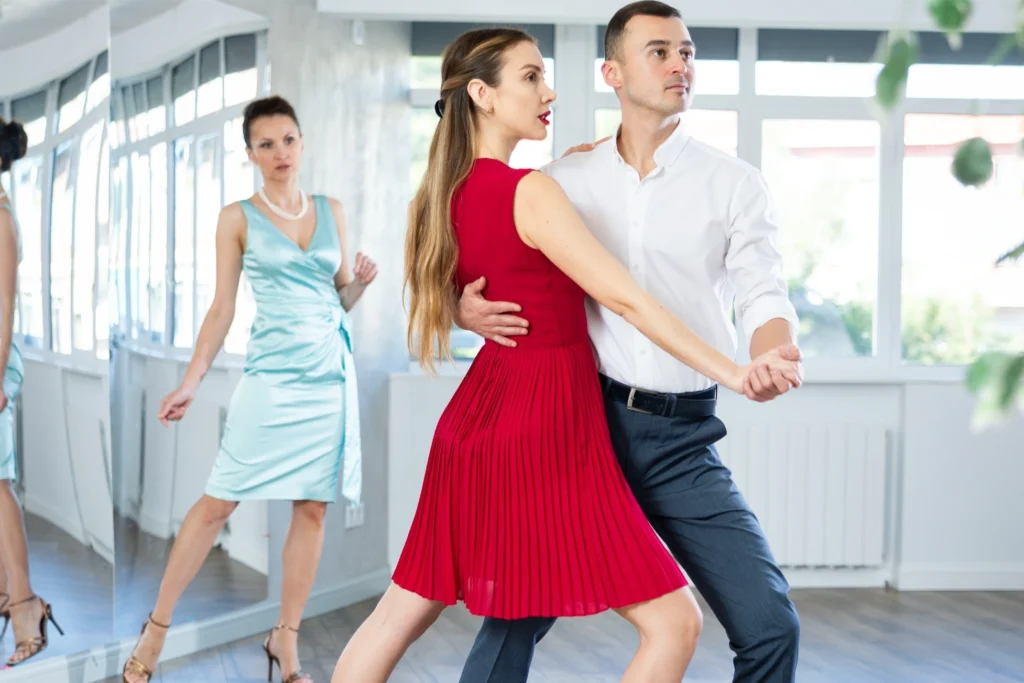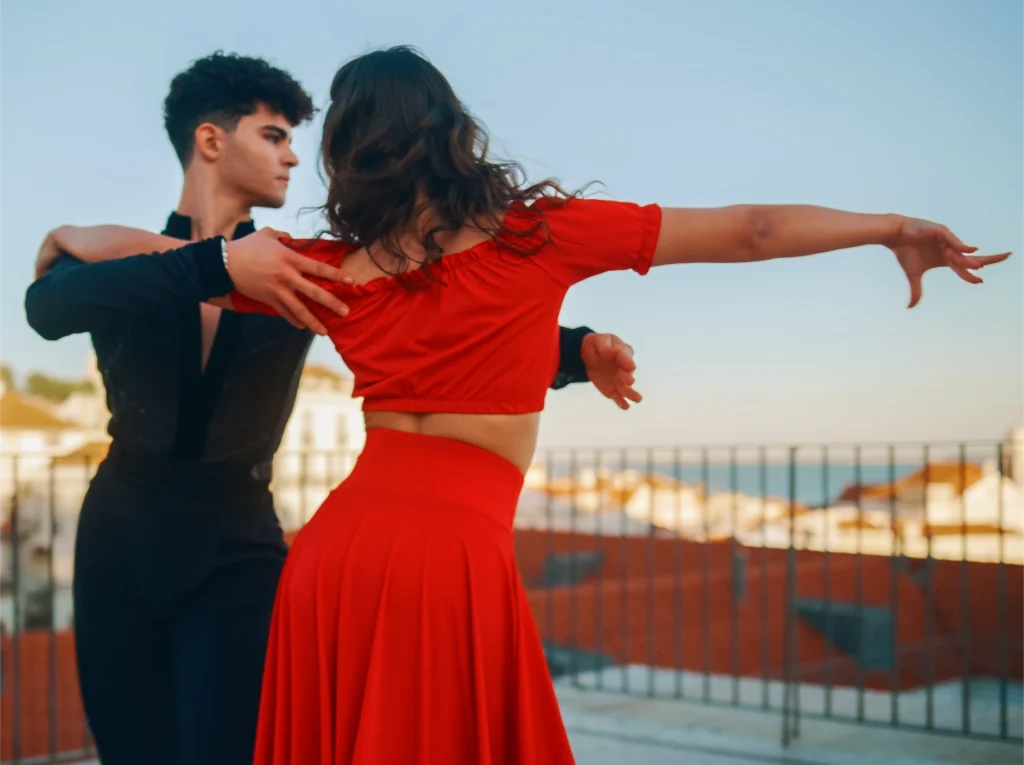
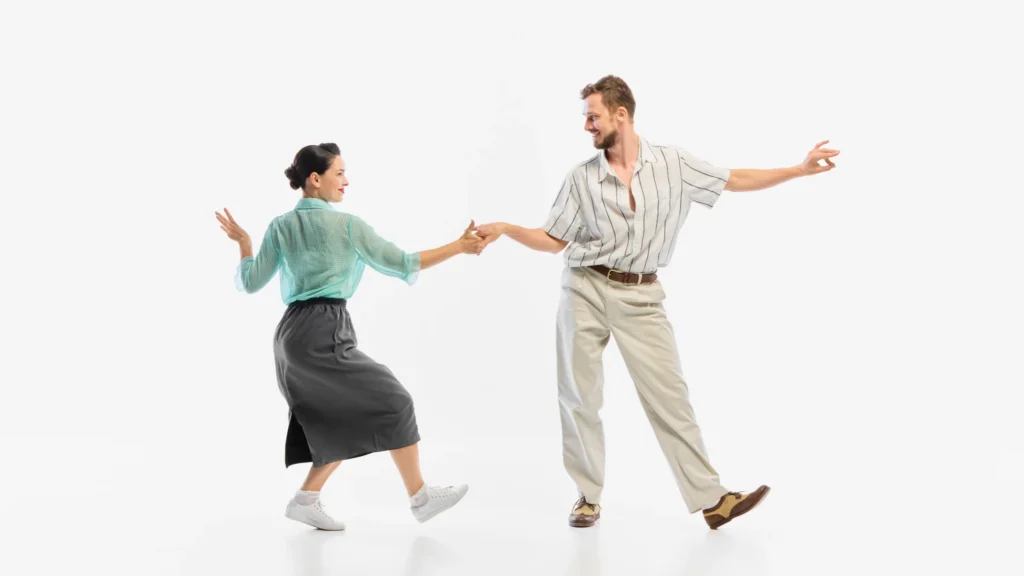
Dancing is a good workout because it blends cardio + coordination + full-body muscle engagement — and the intensity can scale from “easy, low-impact movement” to “sweat-through-your-shirt” fast. Depending on the style, tempo, and how continuously you move, 30 minutes of dancing can burn roughly a couple hundred calories (and more if you’re doing high-energy partner styles). In this guide, we’ll break down which partner dances push your heart rate the most, which ballroom styles build balance and strength, and how to use dance sessions to hit your weekly fitness minutes without defaulting to the treadmill.
Key Takeaways
- Yes — dancing counts as cardio when it keeps your heart rate elevated for sustained periods (social dancing naturally creates an interval effect with songs + breaks).
- Calorie burn varies by style and effort: faster partner dances (Salsa, Swing/Jive) usually burn more than slower, technical ballroom styles (Waltz/Foxtrot), but all can support fitness when done consistently.
- For “best dance exercises,” prioritize high-movement styles with continuous steps, turns, and traveling patterns if your goal is fat loss or conditioning.
- Ballroom builds muscle control + balance through posture, frame, and lower-body endurance — great if you want strength, stability, and joint-friendly training.
- Use the weekly activity target as your anchor: aim for multiple sessions per week and treat dance nights as workout blocks, not “just entertainment.”
High-Energy Partner Dances: The Cardiovascular Champions
When most people think about fitness through dance, they are often looking for an activity that significantly raises their heart rate and burns a substantial amount of energy.
The dances that fall into this category are typically fast-paced, involve continuous motion, and demand high levels of coordination and stamina. If your primary goal is to use physical activity to manage your weight and feel energized, the high-energy Latin and Swing styles are excellent starting points. They are not only fun but are also proven methods to get a great workout.
Salsa and Bachata: The Latin Heat Workout
Salsa and its slower but still vigorous cousin, Bachata, are undeniably fantastic options for anyone looking to lose weight by dancing. These dances are characterized by quick, intricate footwork, frequent turns, and constant hip and torso movement, making them a true full-body workout.
A typical hour of social Salsa dancing can be equivalent to a brisk jog or cycling session. The constant weight transitions and engaging the core muscles are crucial for stability and posture.
The dynamic nature of the dance ensures that you are rarely standing still for long, providing a sustained cardiovascular challenge. The social environment also encourages dancers to keep moving for longer periods than they might if they were exercising alone. This consistent engagement makes it an incredibly effective form of cardio.
For more weight loss and dance, explore our research-backed article about the impact of dance on reduced body mass.
Swing and Jive: The Aerobic Powerhouses
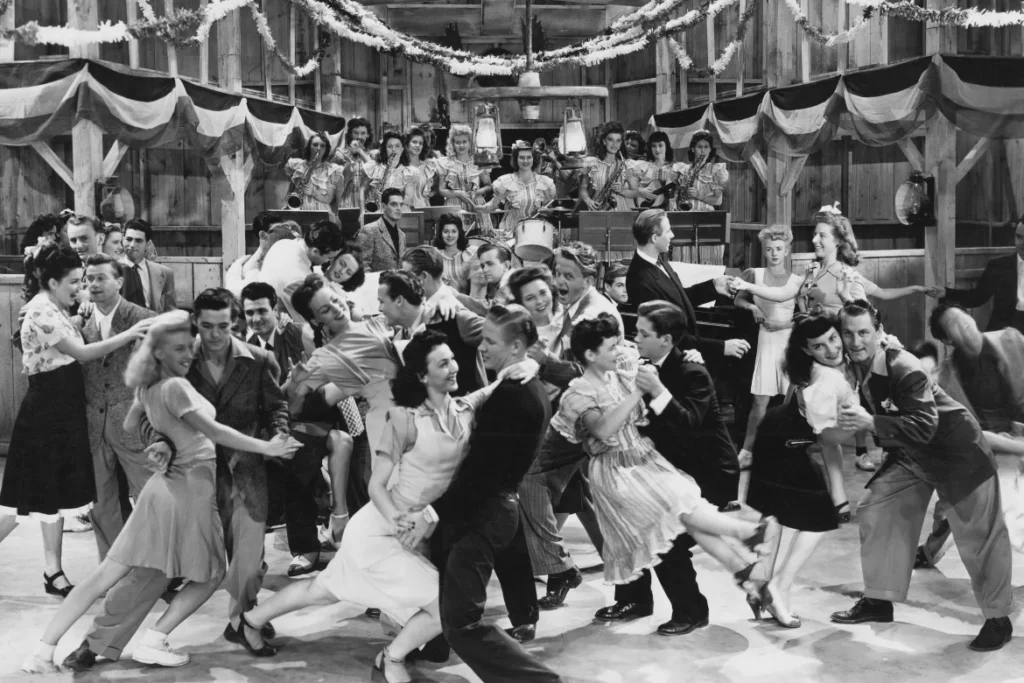
For sheer explosive energy and high caloric output, the Swing and Jive dances are hard to beat. Styles like Lindy Hop, East Coast Swing, and West Coast Swing involve jumping, hopping, fast foot patterns, and often athletic movements.
Lindy Hop, in particular, is an incredible aerobic workout. It requires a sustained, high-level effort due to its faster tempos and athletic movements. The dance involves a lot of “bouncing,” which keeps the leg muscles (quadriceps, hamstrings, and calves) constantly engaged. The dynamic partnering heavily recruits the core and upper body for control and connection.
A fast song in a Swing social can feel like a series of short sprints. It’s certainly one of the contenders for the title of best dance to burn calories. The continuous movement and high intensity are key factors in maximizing energy expenditure. The joy and improvisational nature of the dance also make it feel less like a rigid exercise routine and more like a playful, energetic conversation between partners, which significantly aids adherence.
Maximizing Your Workout
To ensure you are getting a complete and effective workout, focus on technique:
- Maintain proper posture: Engaging your core maximizes muscle work.
- Use your full range of motion: Full hip movement in Salsa and full extension in Swing steps increase the physical demand.
- Stay on the balls of your feet: This keeps your calf muscles constantly activated, enhancing leg strength and endurance.
Technical Ballroom Dances: The Muscle and Balance Builders
While the Latin and Swing dances focus on cardio and high output, the classic ballroom styles, often referred to as International Standard or American Smooth, offer an equally valuable set of physical benefits.
These dances prioritize posture, precise technique, balance, and controlled movement, making them excellent for building core strength, improving flexibility, and enhancing body awareness.
Waltz and Foxtrot: The Foundation of Poise and Strength
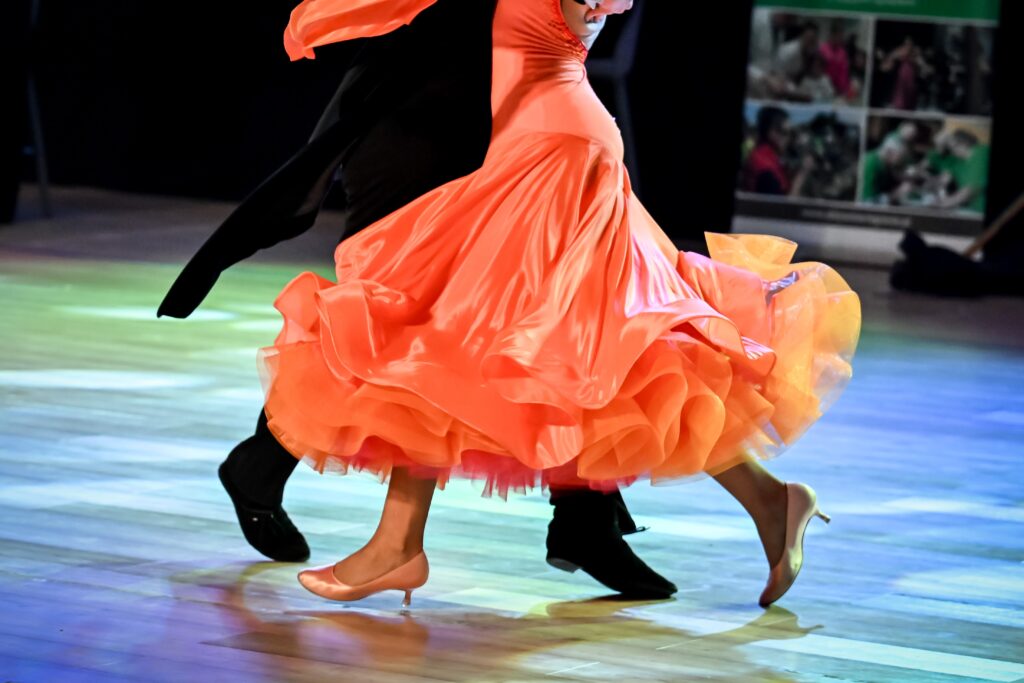
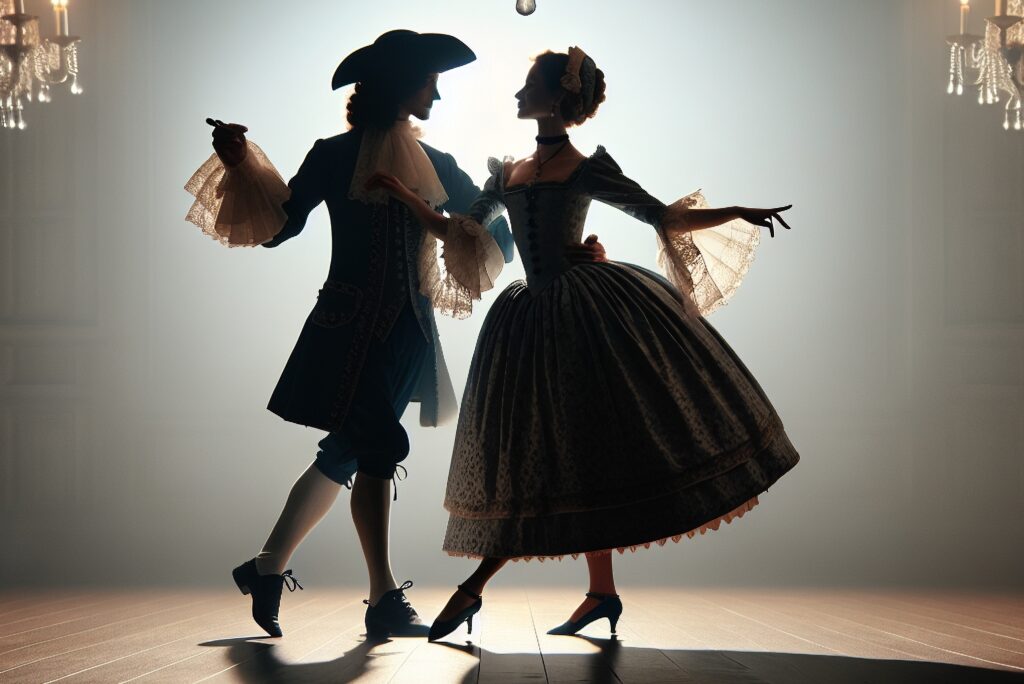
Dances like the Waltz (especially the high-tempo Viennese Waltz) and the Foxtrot require an incredible amount of lower-body control and core engagement. The focus here is not speed, but continuous, smooth movement across the floor.
The sustained “rise and fall” action in the Waltz demands constant eccentric and concentric control from the leg muscles, building muscle endurance in the calves, quadriceps, and glutes.
The Foxtrot, with its long, gliding steps, requires incredible balance and core stability to maintain the elegant frame. The continuous, flowing nature of these dances also provides a steady-state cardiovascular workout, less intense than Salsa but maintained over a longer period.
Tango and Quickstep: Intense Control and Coordination
Tango, particularly Argentine Tango, provides an exceptional workout for the stabilizing muscles. The dramatic pauses, quick changes in direction, and close embrace require intense focus and control. The repetitive weight shifts and the need to maintain a strong axis without visible swaying are a constant challenge for the core and leg stabilizers.
The Quickstep, a much faster relative of the Foxtrot, is physically demanding, requiring the lead and follow to cover a lot of ground with speed and precision. This blend makes it highly effective for improving agility and reaction time.
The Holistic Value of Ballroom Dance
Ballroom dancing significantly contributes to overall well-being. By focusing on alignment and posture, these dances help correct muscle imbalances.
Moreover, the mental coordination required to execute complex patterns while maintaining frame and navigating other dancers is a powerful form of neurobic exercise, keeping the brain sharp and active.
See how this plays out in real life – read our waltz-to-wellness brain-health benefits guide compares a single ballroom waltz lesson to time on the treadmill for long-term cognitive health.
Optimizing Your Dance Workout: Duration and Intensity
A common question for those new to using dance for fitness is about the necessary commitment level to see real physical results. Understanding the relationship between intensity and duration is key.
Defining an Aerobic Workout through Dance
An aerobic workout generally means maintaining a target heart rate for a sustained period. So, how long should I dance to get an aerobic workout? Health organizations recommend at least 150 minutes of moderate-intensity or 75 minutes of vigorous-intensity aerobic exercise per week.
When translating this to partner dancing:
- Vigorous Intensity (e.g., Fast Salsa, Lindy Hop): If conversation is difficult, you are in the vigorous zone. Three 25-minute sessions a week meets the minimum health guidelines.
- Moderate Intensity (e.g., Social Bachata, Foxtrot): If you can talk but need to pause to catch your breath, you are in the moderate zone. This requires roughly five 30-minute sessions per week.
The Role of Breaks and Social Dancing
The social nature of partner dancing means breaks between songs, creating a natural interval-training effect—periods of high exertion followed by periods of rest. This is highly effective for improving cardiovascular fitness.
A two-hour social dance event, with active dancing for at least 60-70% of the time, is an extremely effective way to meet and exceed weekly exercise goals.
Your First Step onto the Dance Floor
Choosing the right partner dance is a highly personal decision driven by your fitness goals and musical tastes.
Whether you are drawn to the high-intensity cardio of Salsa and Swing or the posture-enhancing control of Waltz and Tango, one thing is certain: partner dancing is one of the most effective, engaging, and enjoyable ways to incorporate regular exercise into your life.
You’ll gain strength, endurance, flexibility, better cognitive function, and a vibrant new social circle—all while having too much fun to realize you’re working out. The best time to start is now. Find a local dance studio, sign up for an introductory class, and take your first step toward a fitter, happier you.
FAQs: Getting Started with Partnership Dance for Fitness
Do I need a partner to start learning?
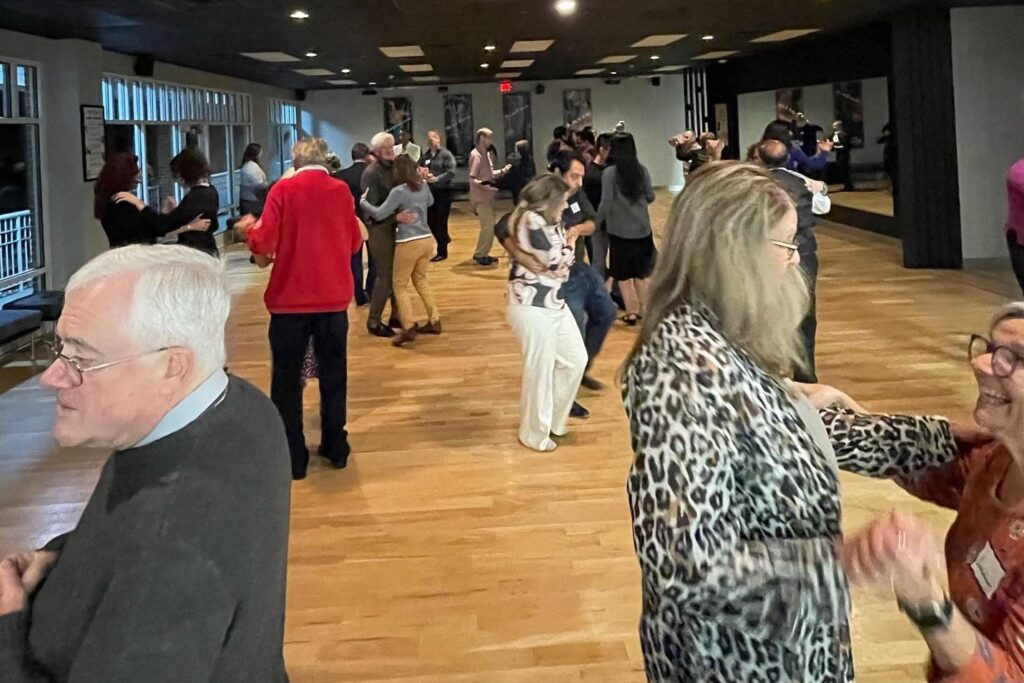
Generally, no! Most dance studios rotate partners during group classes, which is actually a better way to learn because you adapt to different styles. You will meet plenty of potential partners in class and at social events.
Is partner dancing suitable for all age groups?
Absolutely. From teenagers to seniors, there are dance styles that cater to all levels of mobility and fitness. Styles can be adapted—for example, a slower Bachata or Foxtrot is excellent for those looking for low-impact exercise.
What should I wear to a dance class?
Wear comfortable clothing that allows for a full range of movement. For footwear, start with smooth-soled shoes (leather or suede are ideal) that won’t stick to the floor. Avoid rubber soles as they can cause knee injury.