Merengue may look like the “easy dance you learn in 10 minutes,” but its backstory is anything but simple. Behind the famous legends—like the likely fictional tale of a limping war hero—there’s a real story about class, identity, and power in the Dominican Republic, including how leaders later pushed merengue as a symbol of national unity. In this guide, you’ll separate folklore from the historical record, understand what drives the basic rhythm, and see how merengue evolved from local tradition into a global dance-floor staple.
Key Takeaways
- Merengue’s origin story includes popular folklore, but historians generally trace its roots to 19th-century Dominican society and regional cultural blending.
- The dance and music reflect an African–European fusion, with percussion-driven rhythm (especially tambora and güira) powering the signature feel.
- Merengue’s rise wasn’t just cultural—it was political: it was promoted and standardized as a national symbol during the Trujillo era.
- The basic two-step is simple; the challenge is in timing, hip action, partner connection, and the speed/turn work of modern social styles.
- Merengue spread globally through migration and major artists, becoming one of the most recognizable “gateway” dances at Latin socials worldwide.
Tracing the Roots: The Enigmatic Merengue Dance Origin
The precise genesis of the merengue is a subject of scholarly debate and lively folklore, adding a layer of mystique to its already captivating history. While its earliest recognizable forms appeared in the mid-19th century, the cultural ingredients that gave it life were simmering long before.
It is widely accepted that the Dominican Republic is the primary home of the merengue, though a similar, and perhaps related, form also developed in neighboring Haiti, known as meringue (or méringue). The shared geography of the island of Hispaniola inevitably led to a cultural exchange, but the Dominican style is what ultimately gained international recognition.
The Theory of the Limping Hero
One of the most charming, if apocryphal, theories about the merengue dance origin relates to a war hero. The story suggests that a triumphant general, returning from battle, was honored with a grand festival.
Having sustained a severe leg injury, he could only dance with a distinctive limp. Out of respect and camaraderie, the other dancers subtly imitated his uneven gait, thus establishing the basic, side-to-side step pattern of the merengue.
While a romantic notion, historical evidence suggests the origin is far more complex and rooted in socio-economic stratification.
The African and European Synthesis
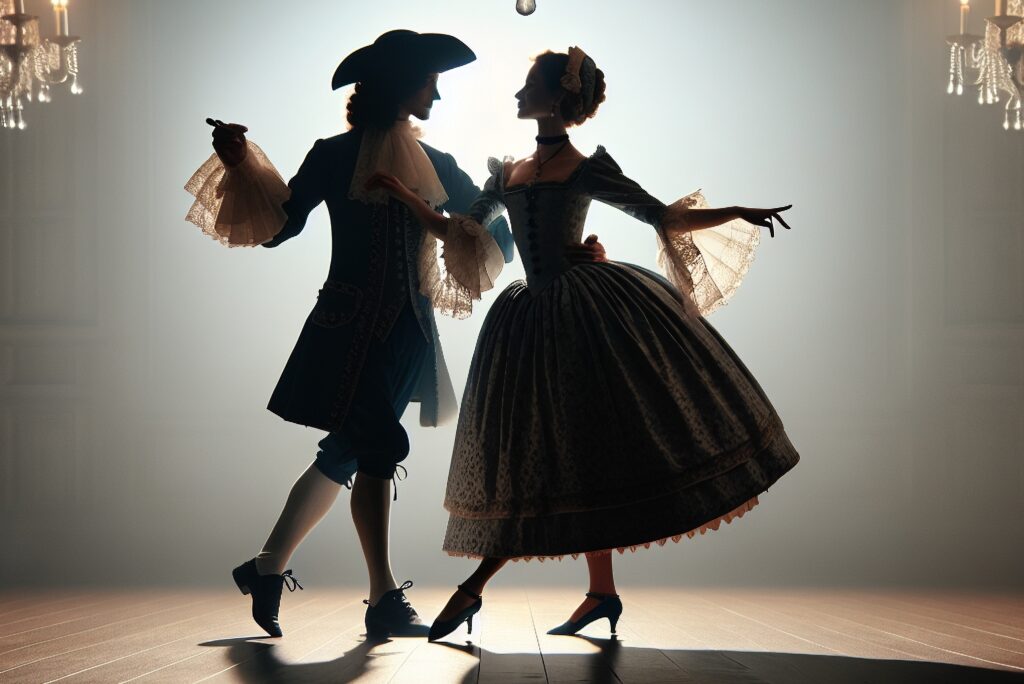
A more rigorous historical analysis points to a profound synthesis of African rhythms and European ballroom traditions. The Contradanza or Tumba Francesa, dances brought by French settlers and Haitian refugees to the Dominican Republic, provided the foundational structure—the partnered, closed embrace, and the formal structure of a ballroom dance. However, the fundamental rhythmic pulse and the emphasis on the cadera (hip movement) are distinctively African.
The merengue’s characteristic beat is heavily influenced by African drumming traditions. Instruments like the tambora (a two-headed drum) and the güira (a metal scraper) are central to the music, providing the driving, syncopated rhythm. The marriage of the formal European dance structure with the earthy, hip-centric movements and powerful African rhythms created a dance that was unique: accessible yet energetic, simple in its basic step yet endlessly complex in its performance and improvisation.
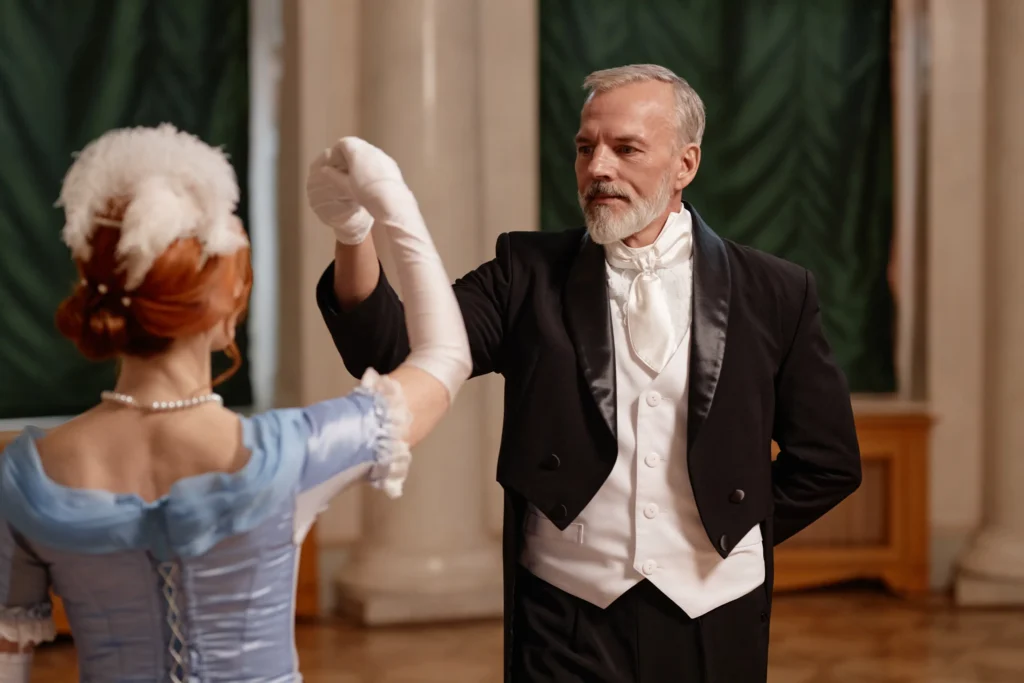
The initial form of the dance, often referred to as pambiche or merengue de salón, was slower and more reserved, primarily danced by the elite. It wasn’t until the dance was embraced by the working class, particularly in the Cibao region, that it developed the faster tempo and dynamic energy recognized today. This evolution was critical in shaping the identity and accessibility of the dance. The dance’s eventual nationalization was a deliberate effort by leaders like Rafael Trujillo, who co-opted the music’s popular appeal to create a cultural symbol for the nation.
The Evolution and Modern Practice of Dancing Merengue
The journey of the merengue from a regional folk dance to a national treasure and global phenomenon is a testament to its infectious rhythm and versatility. Throughout the 20th century, the music and the dance underwent several transformations, evolving to meet the demands of different social settings and new generations of dancers.
The early 20th-century merengue de salón was sophisticated but restrictive, often requiring a formal setting. The working-class response, known as merengue apambichao, was freer and more improvisational.
From Folk to Formal: The Nationalization of Merengue
A pivotal moment in the merengue dance history occurred during the dictatorship of Rafael Trujillo (1930–1961). Trujillo, a known patron of the arts, championed the merengue, elevating it from a “vulgar” folk music, often looked down upon by the upper classes, to the official national music and dance of the Dominican Republic.
This move was a calculated political maneuver, but it had the effect of standardizing the music and popularizing it across all social strata. It led to the rise of big band orchestras (Orquestas) that adapted the traditional instruments (tambora, güira, and accordion) for a broader, more sophisticated sound, incorporating horns and piano. This “Orquesta Merengue” became the dominant form and the version that eventually crossed international borders.
The Contemporary Merengue Style
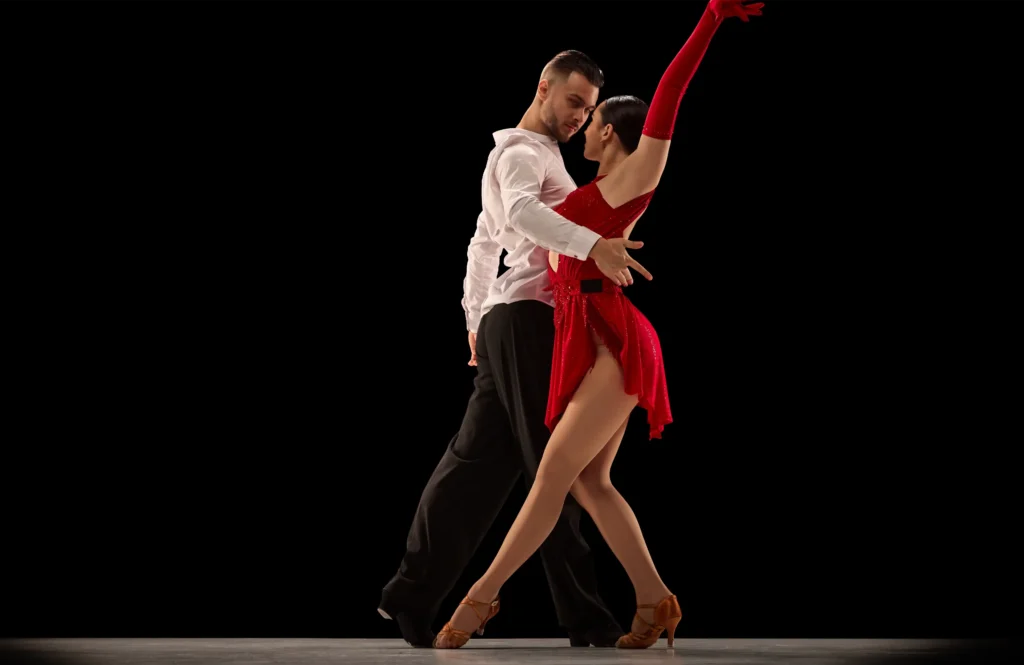
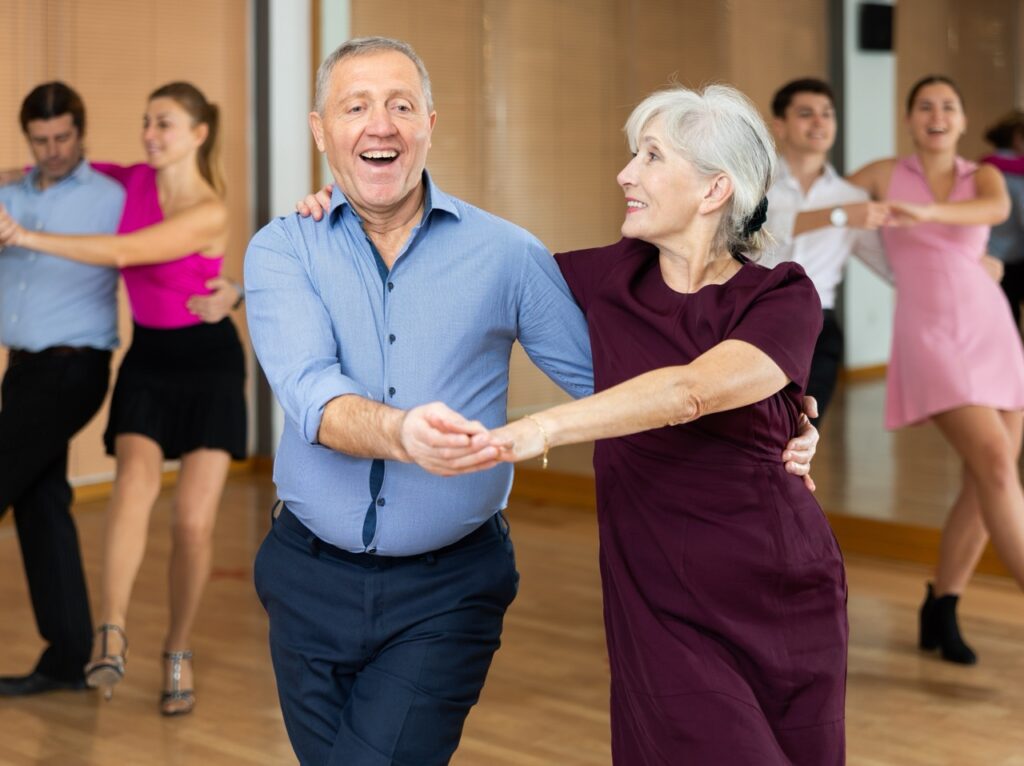
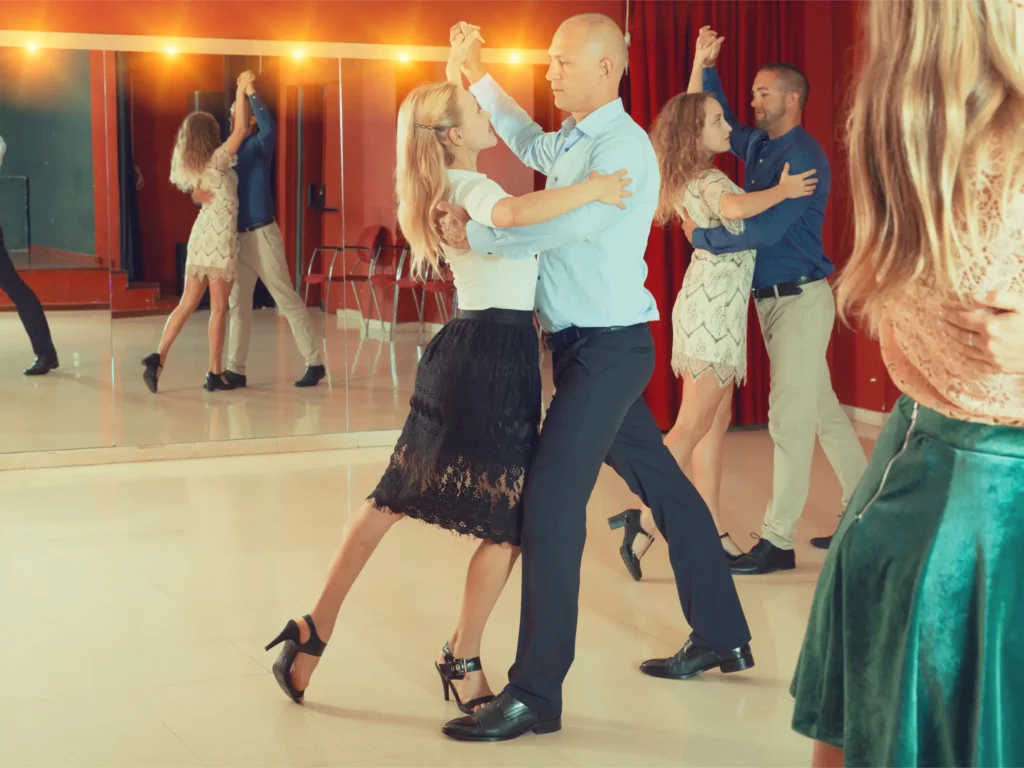
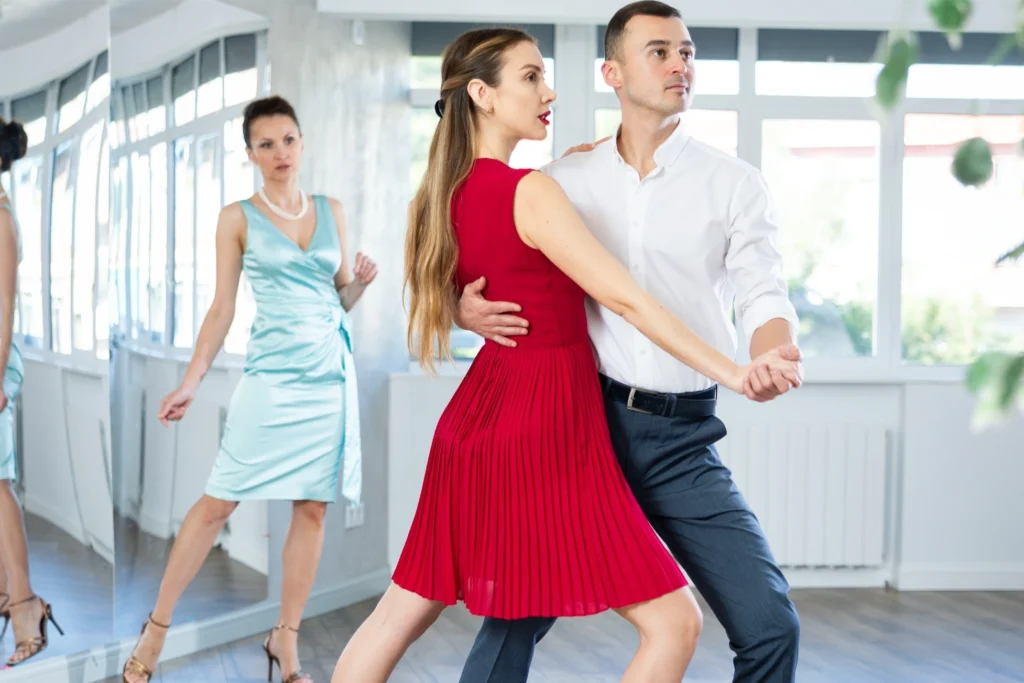
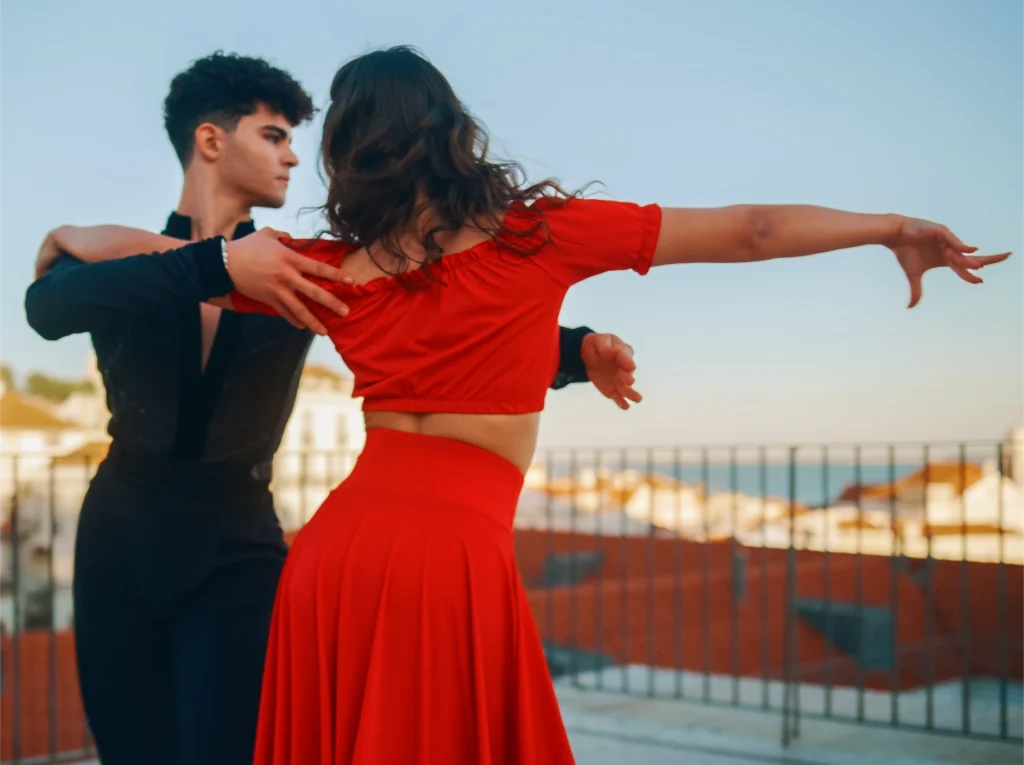
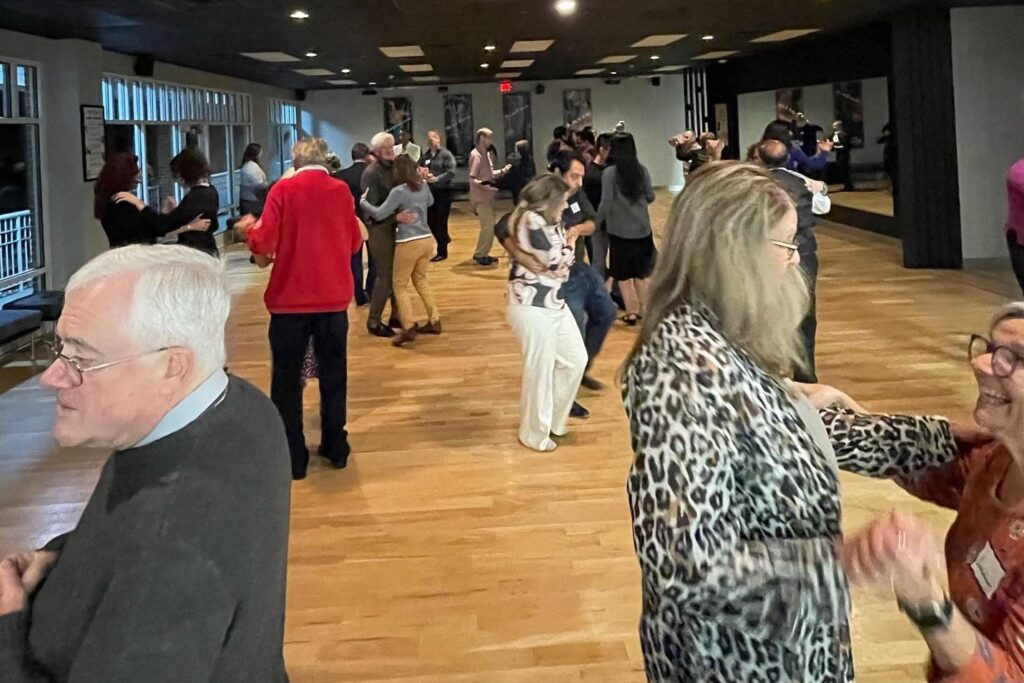
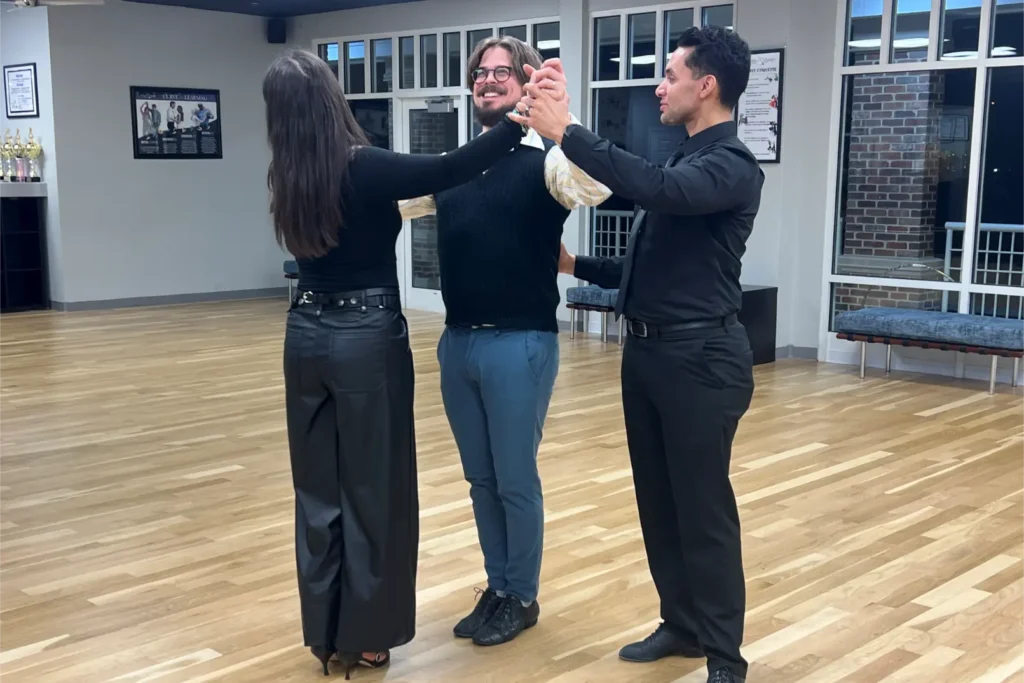
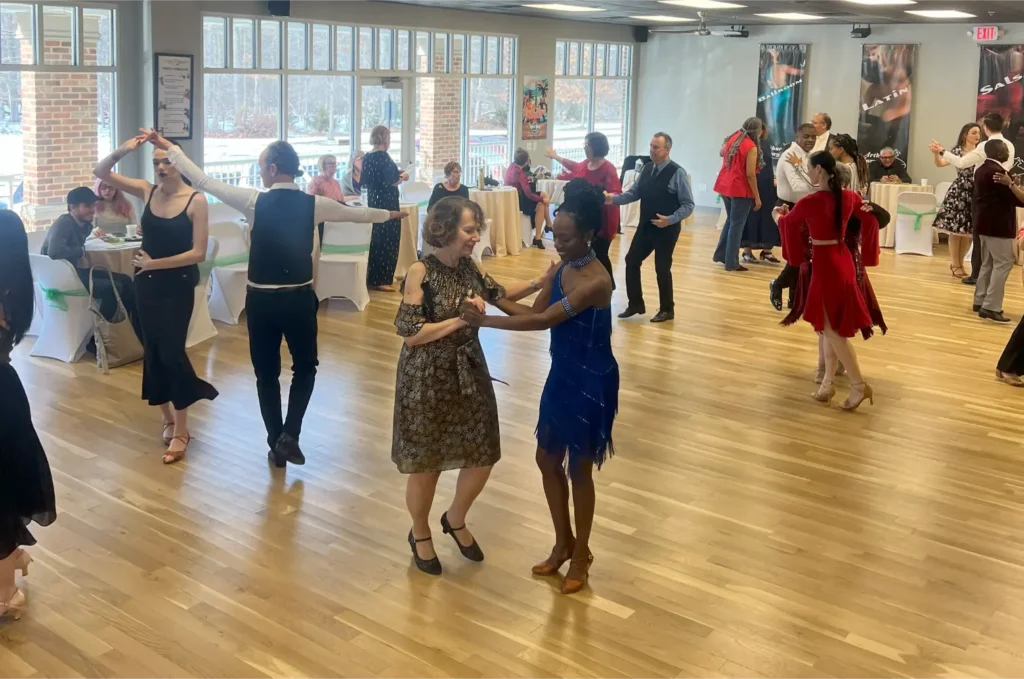
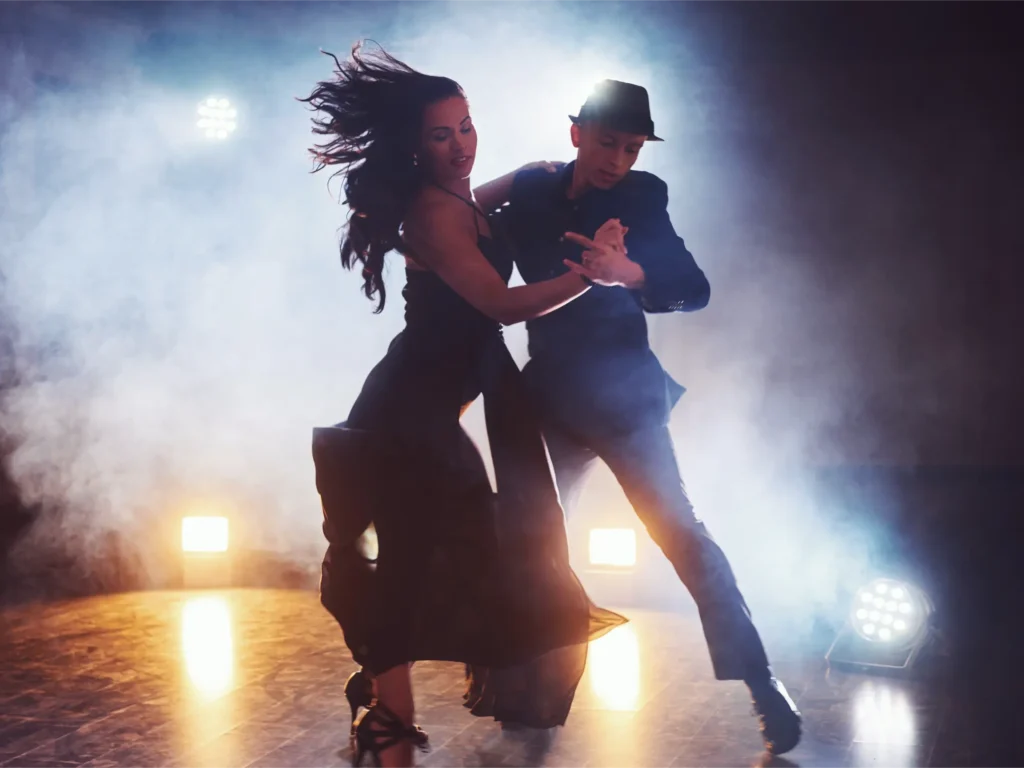
Today, merengue dance is characterized by a simple, two-step pattern executed in a closed hold. The music is in 2/4 time, making it one of the easiest Latin dances to pick up.
The basic step involves shifting weight from one foot to the other, creating a distinctive hip sway that is the signature of the dance. Unlike the highly complex footwork of salsa or the rhythmic complexity of bachata, the merengue’s difficulty lies not in the steps but in the feeling and the connection with your partner.
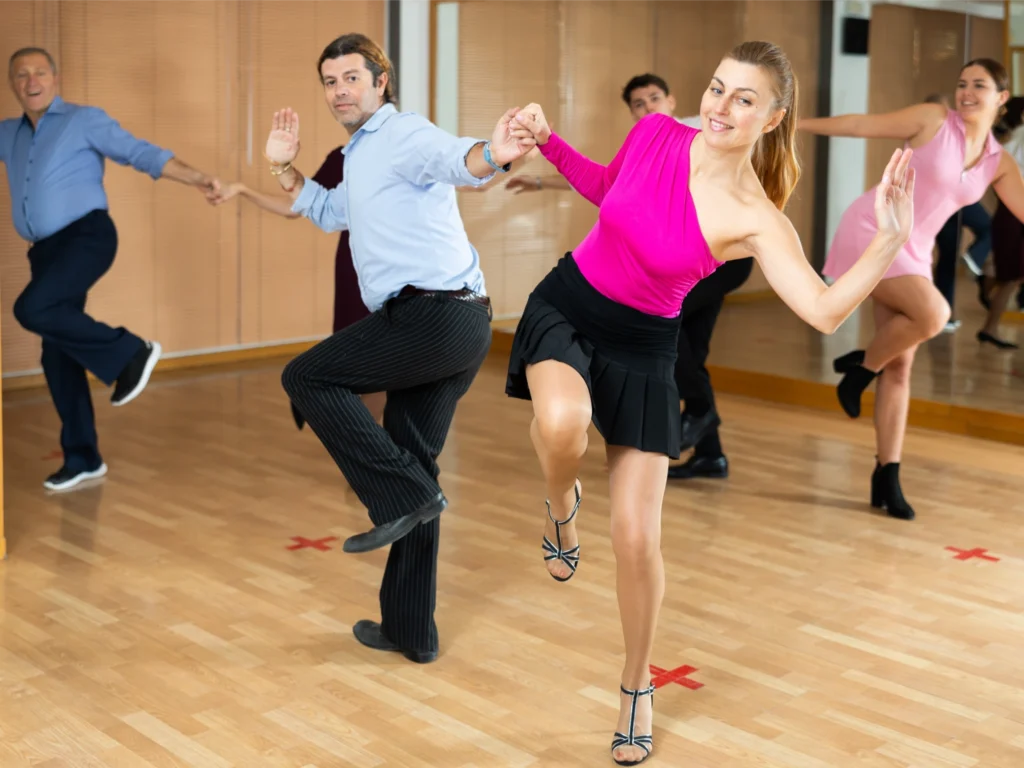
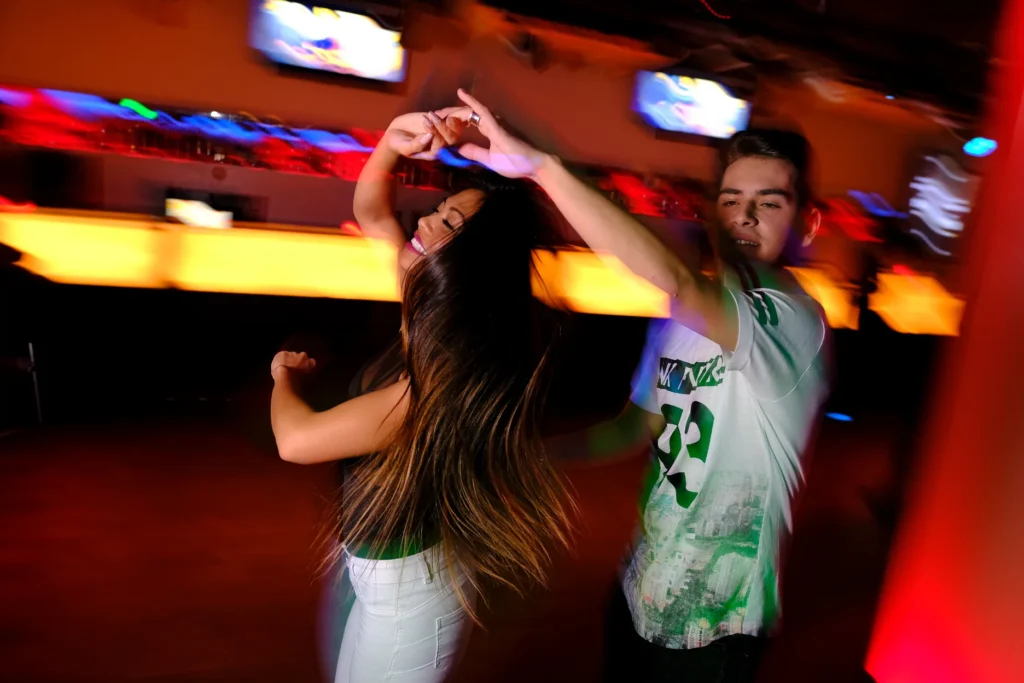
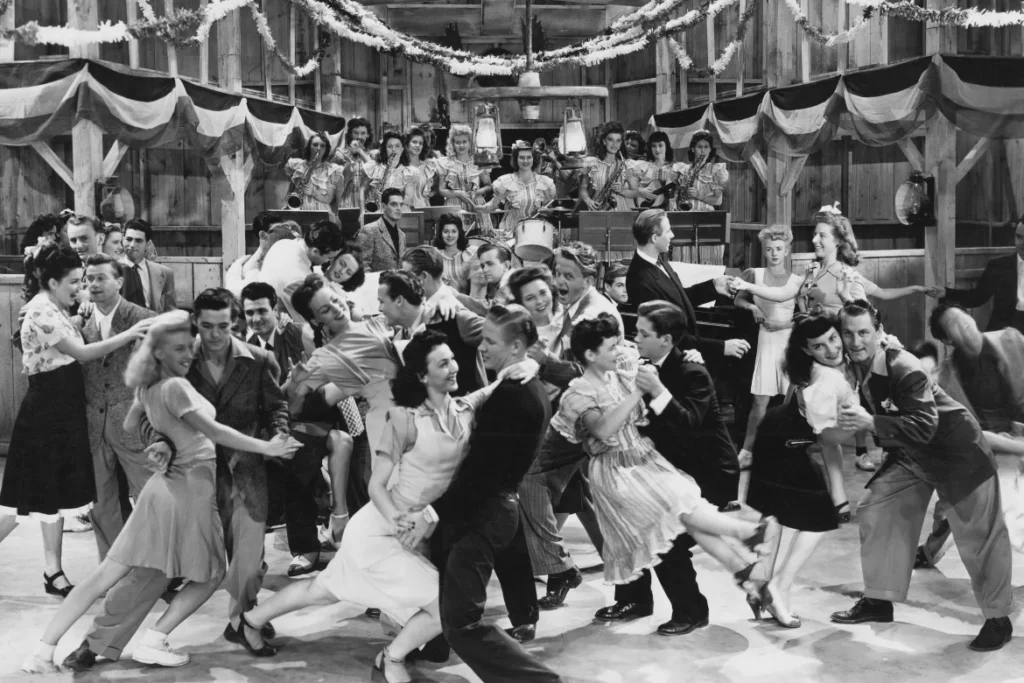
The modern style, often called Merengue de Calle (Street Merengue), is faster and more athletic than its historical counterpart. It features frequent turns, intricate hand-holds (known as figuras), and rapid-fire footwork sequences, all while maintaining the fundamental paso de la cuna or “cradle step” that keeps the hips swaying. T
he simplicity of the basic step allows dancers of all skill levels to join in, making it a staple at any Latin social event. The contemporary dance is less about prescribed moves and more about spontaneous connection, rhythm, and joy.
The Cultural Significance and Global Reach
The merengue dance history is intrinsically linked to the national identity of the Dominican Republic. It serves as a powerful cultural marker, an art form that encapsulates the nation’s history of struggle, celebration, and hybridity. It is played at virtually every Dominican celebration, from intimate family gatherings to massive national festivals like the Festival del Merengue in Santo Domingo.
The diaspora of the Dominican people, particularly to the United States (New York City being a major hub) and other global centers, fueled the merengue’s international rise. Musicians like Juan Luis Guerra, Wilfrido Vargas, and Johnny Ventura became global ambassadors, bringing the sounds of the Caribbean to a worldwide audience.
In the 1980s and 1990s, the “merengue boom” saw the music dominate Latin radio, making it a dance floor staple across North and South America and Europe. This period also saw the dance simplify even further for a mass audience, cementing its status as the beginner’s gateway into Latin social dancing.
The Perpetual Pulse: Merengue’s Enduring Legacy
From the controversial and debated accounts of its 19th-century origins to its current status as a vibrant global dance, the merengue has proven to be one of the most resilient and joyful cultural expressions in the Caribbean. Its simple, driving rhythm, born from the fusion of African percussion and European structure, offers an immediate connection to the music and a shared experience between partners.
Whether you are delving into its complex merengue dance history or simply learning the basic steps, the merengue offers a profound sense of alegría (joy). It is a dance that invites everyone to the floor, requiring only a willingness to sway and a heart open to the rhythm. The heartbeat of Hispaniola continues to pulse, and the invitation to dance is forever open.
FAQs
Is Merengue music always fast?
No. While modern merengue dance music is generally up-tempo, historical forms like pambiche or merengue de salón were significantly slower and more dignified, reflective of the social settings in which they were first danced. The speed of the music has generally increased over the decades, moving from a steady ballroom tempo to the rapid-fire beat common in today’s clubs.
Is merengue difficult to learn?
The basic step is often cited as one of the easiest steps in all of Latin social dance. The core side-to-side motion is very intuitive. The challenge lies in developing the natural hip movement and learning the intricate, fast-paced turns (figures) that characterize advanced merengue. However, you can master the basic step and feel comfortable on the dance floor in a single evening!
What is the difference between Dominican Merengue and Haitian Meringue?
While related due to the shared island of Hispaniola, they are distinct. Dominican Merengue (Merengue Típico/Orquesta) is generally fast, and its classic instrumentation focuses on the tambora, güira, and accordion. Haitian Meringue (Méringue or Meringue Haïtienne) often features a slightly different rhythmic structure, often incorporating elements of Haitian Kompa music, and is frequently played by a smaller ensemble or a brass band. The fundamental partnered dance concept remains, but the musical feel is different.