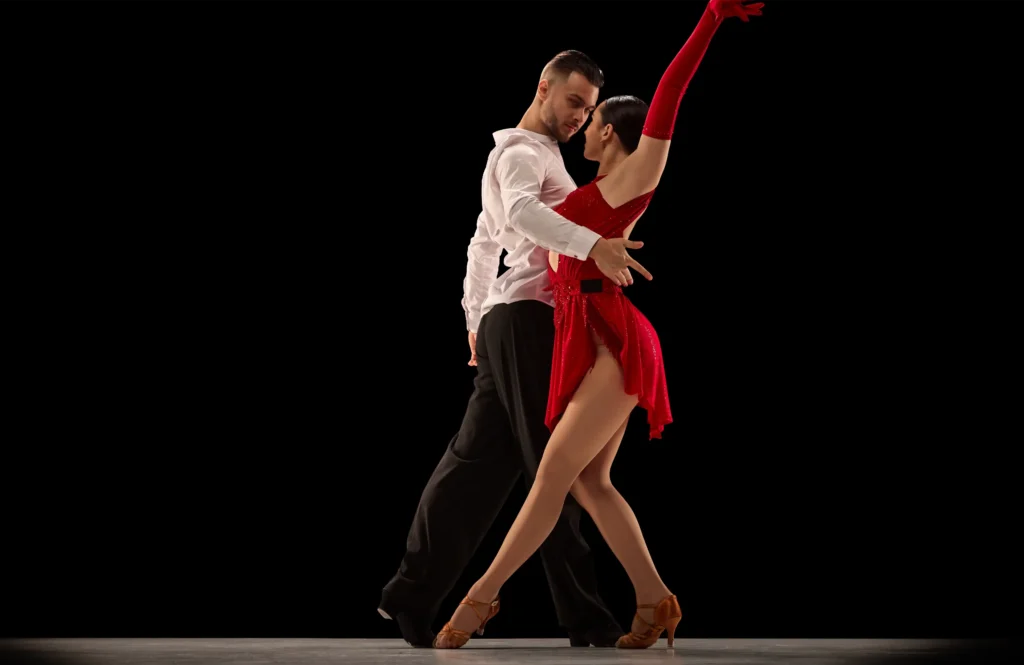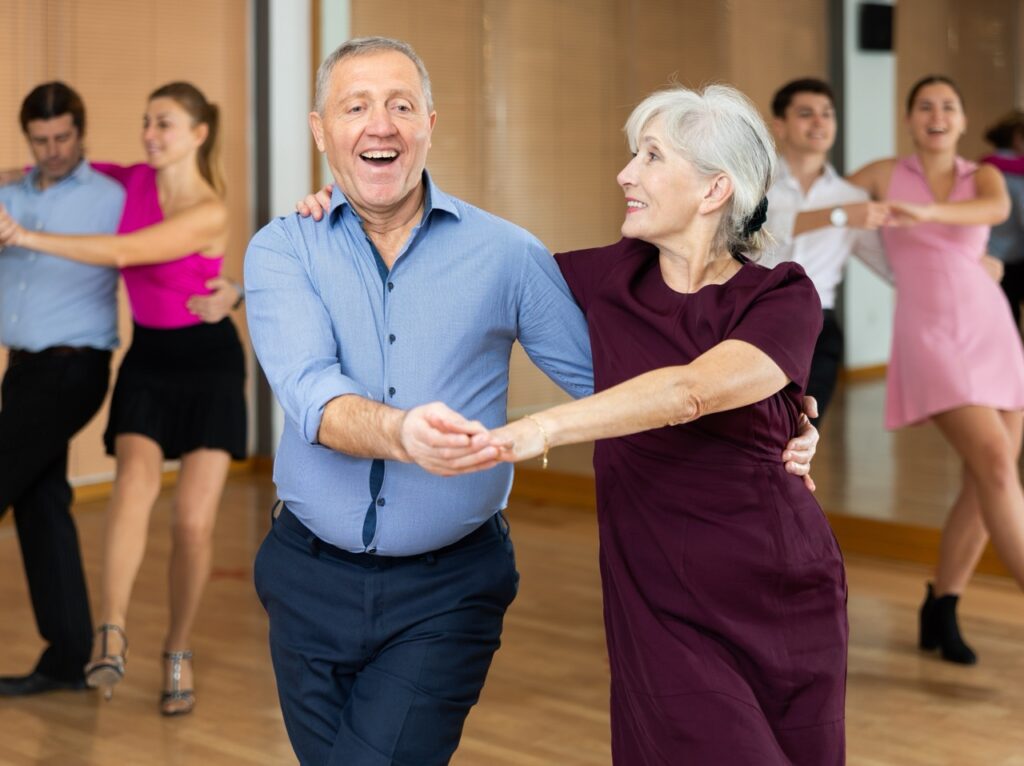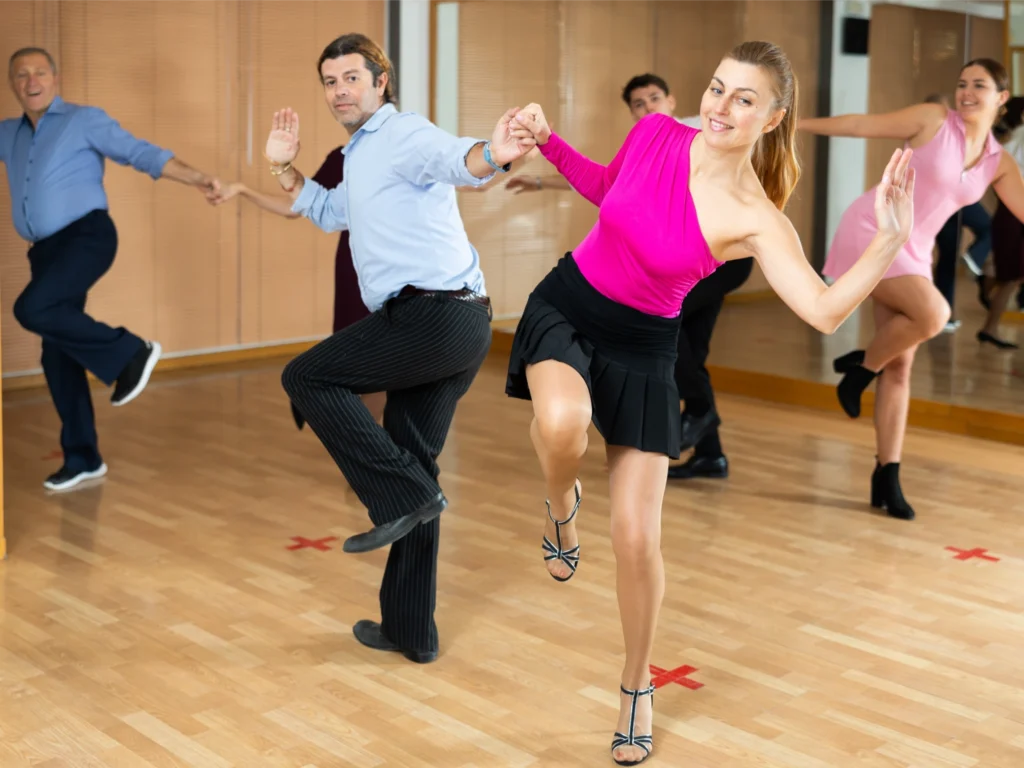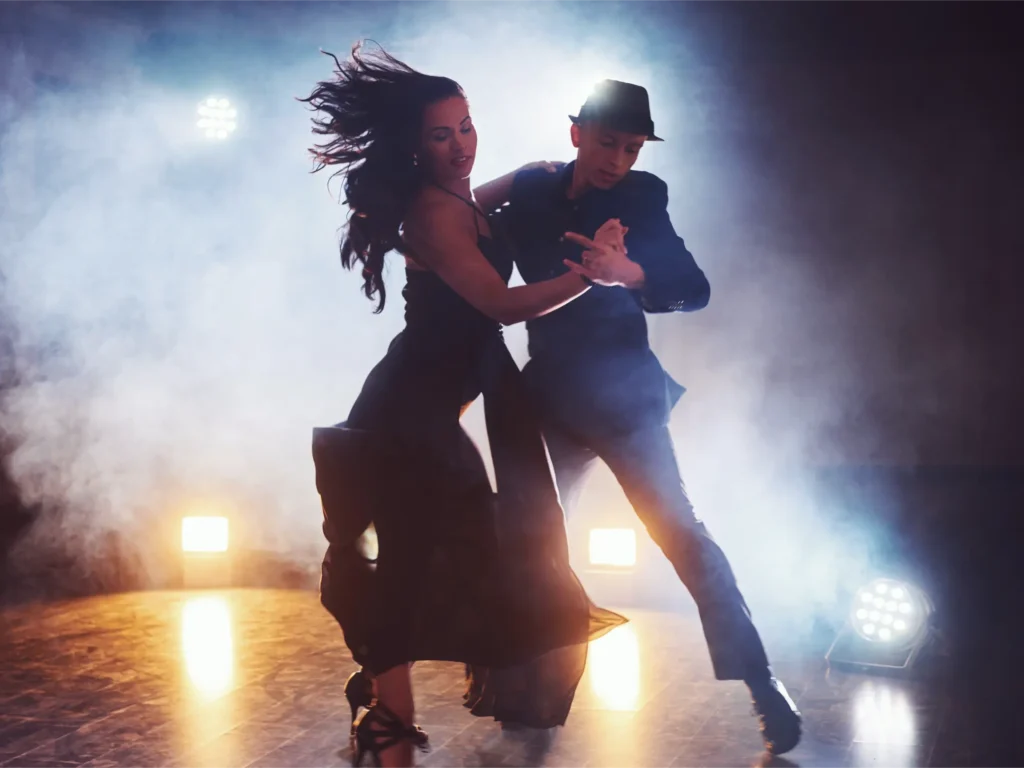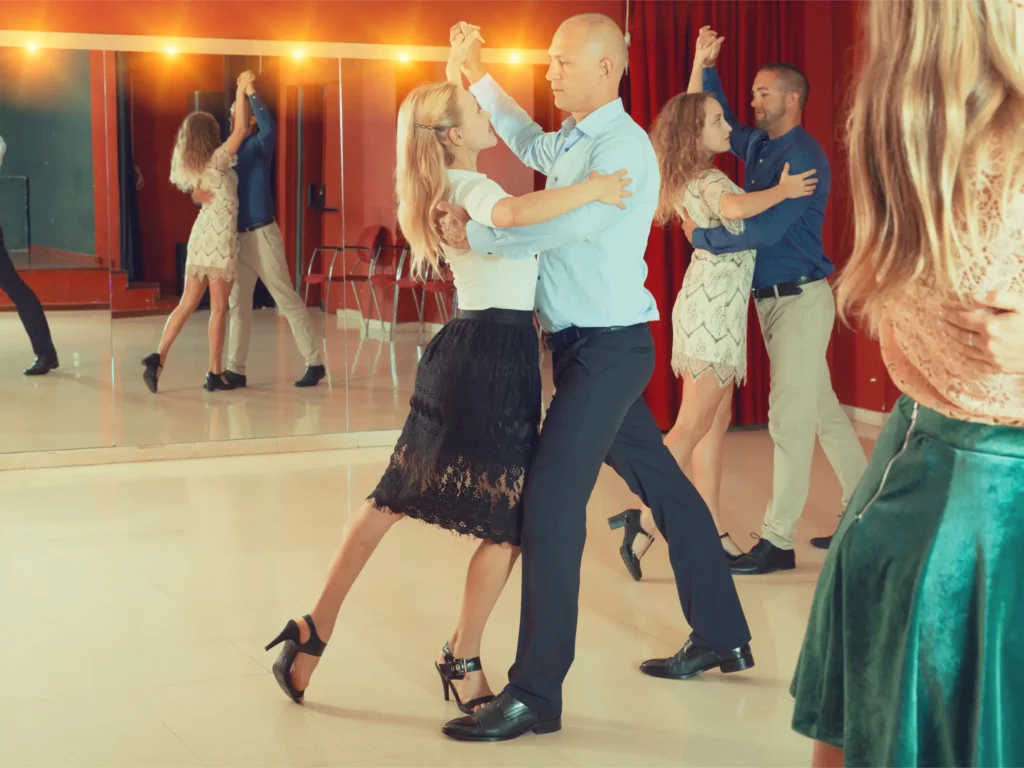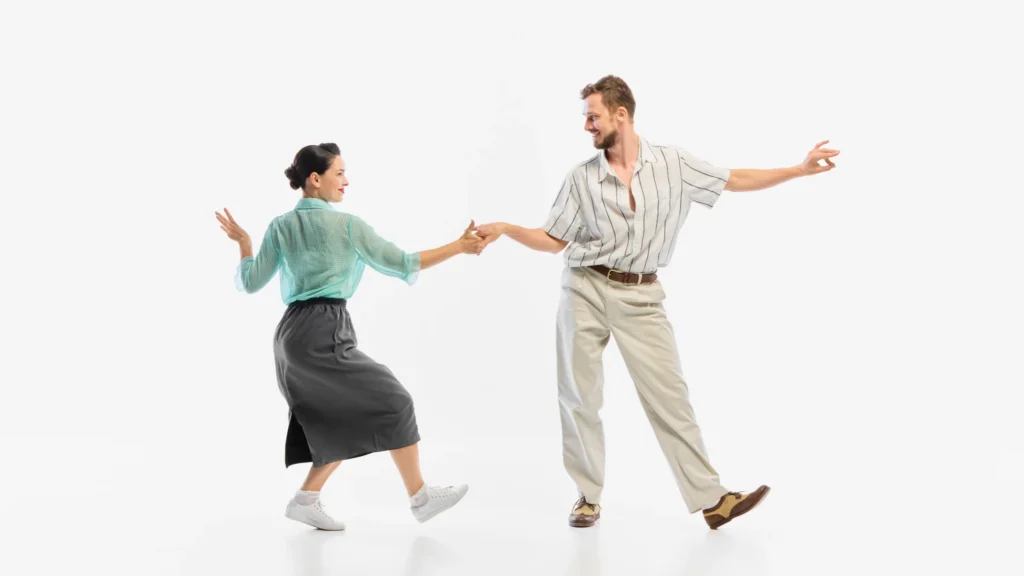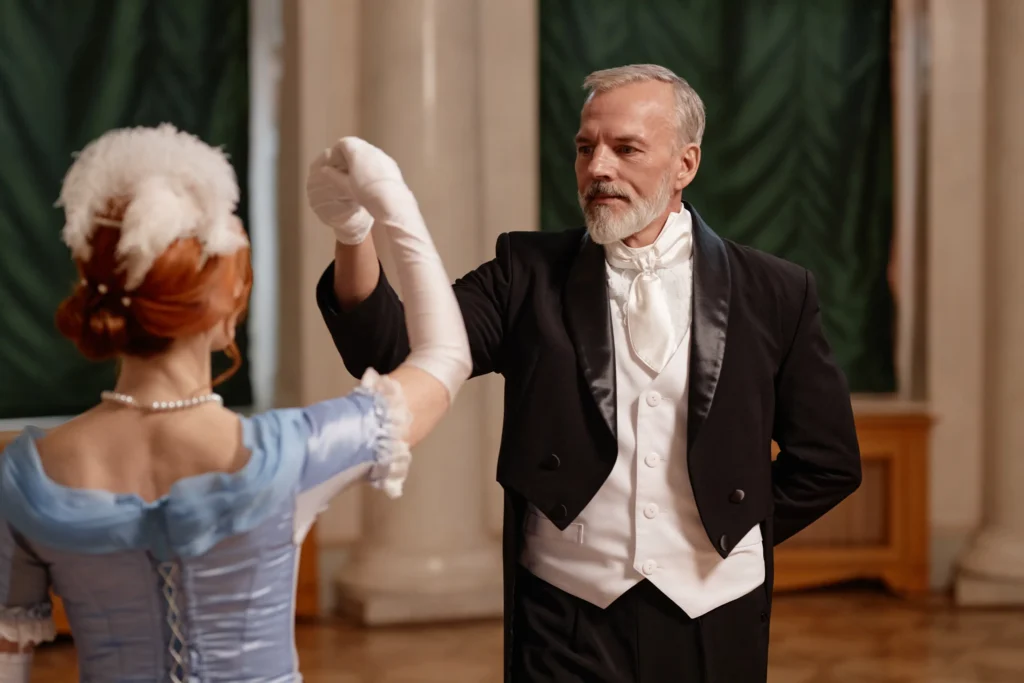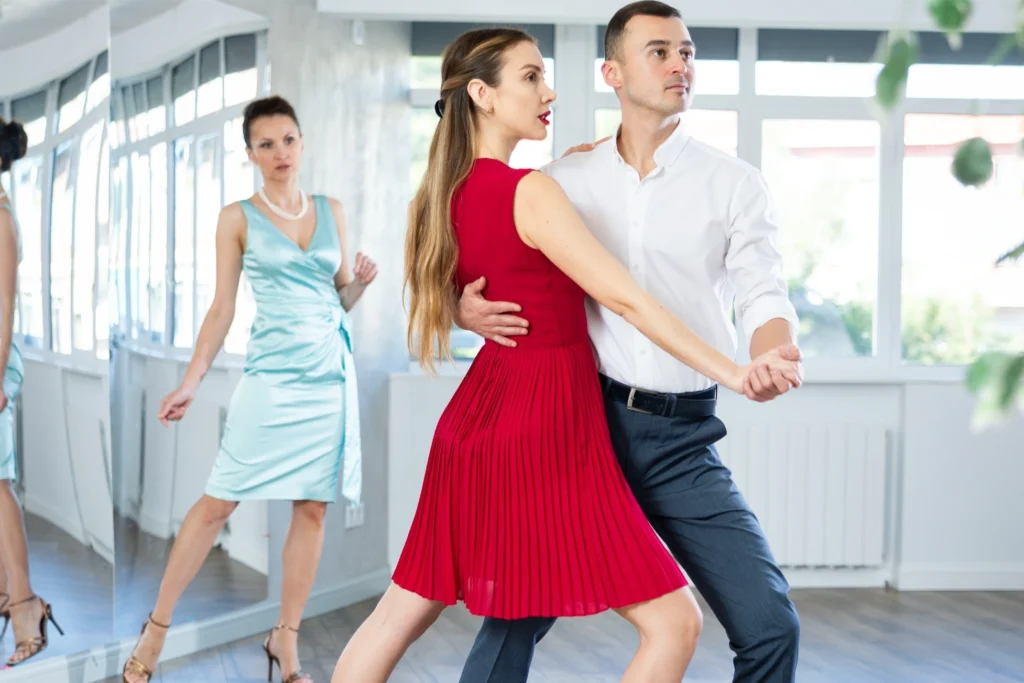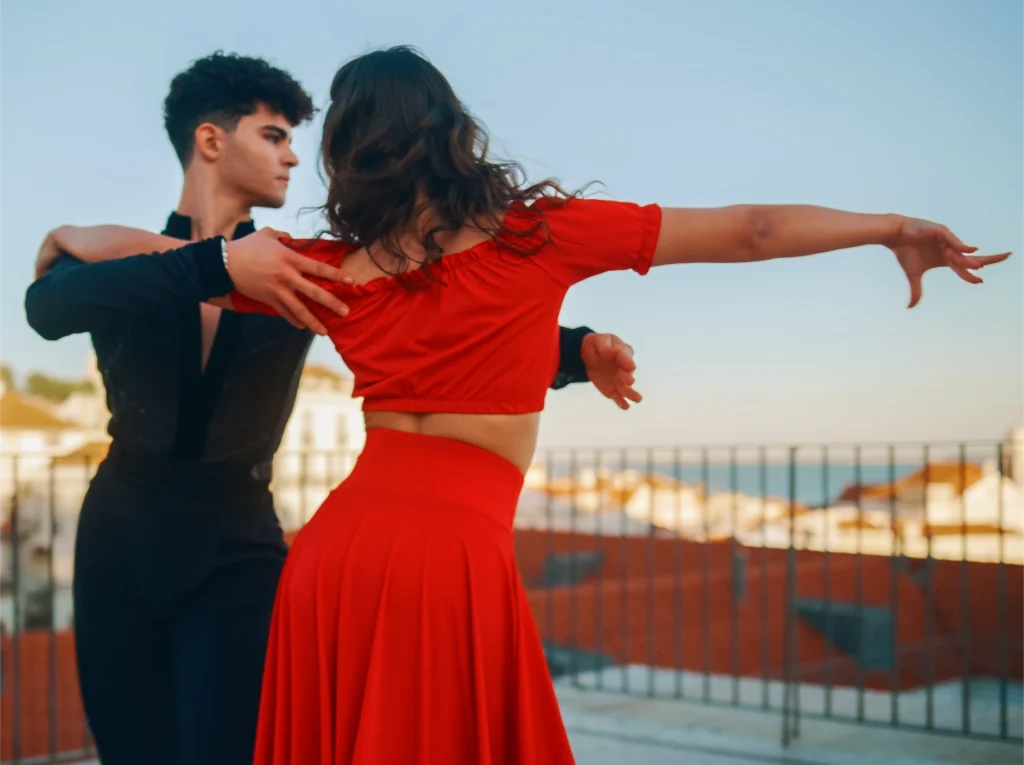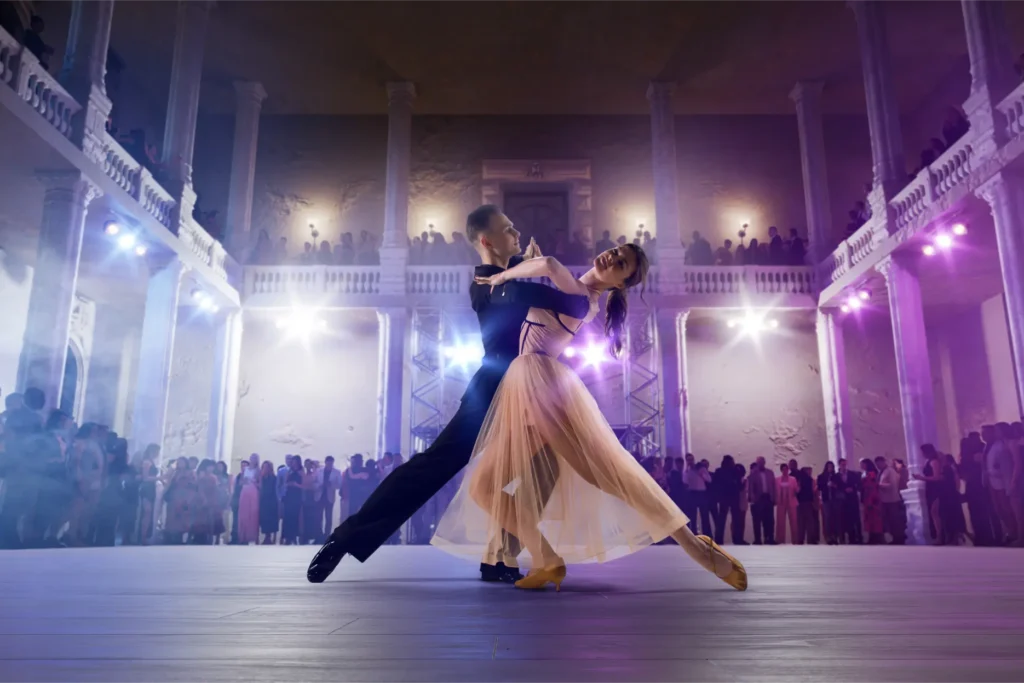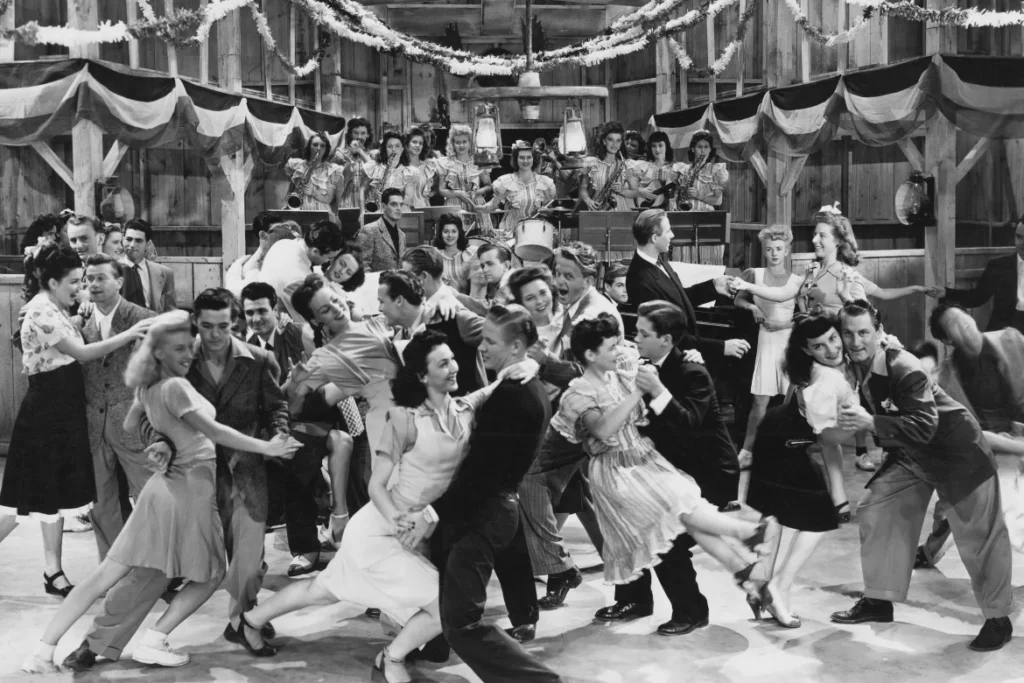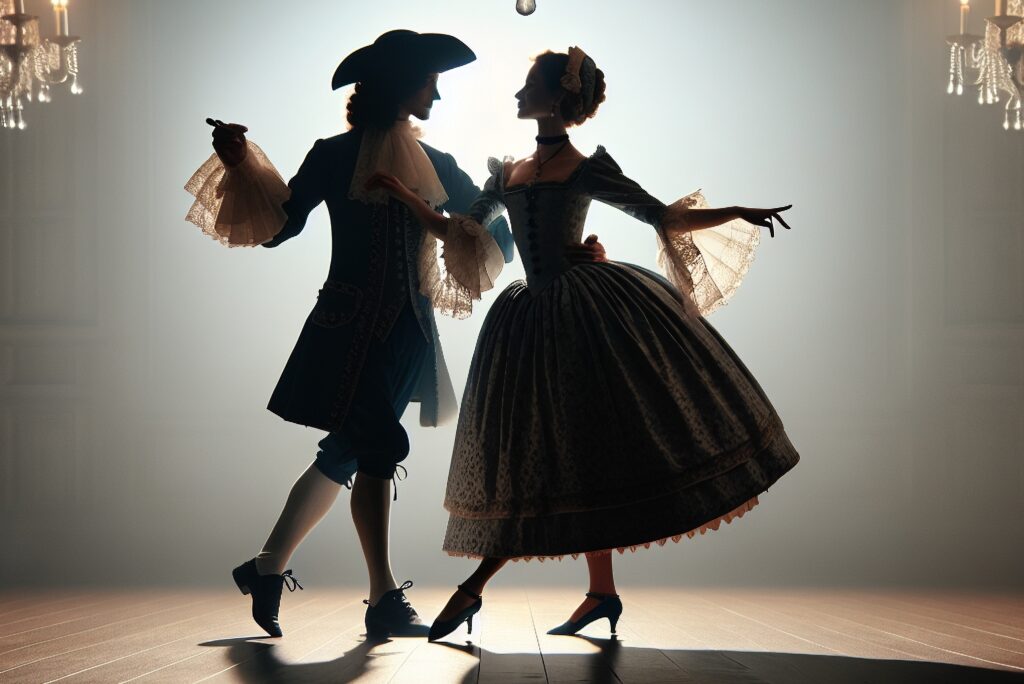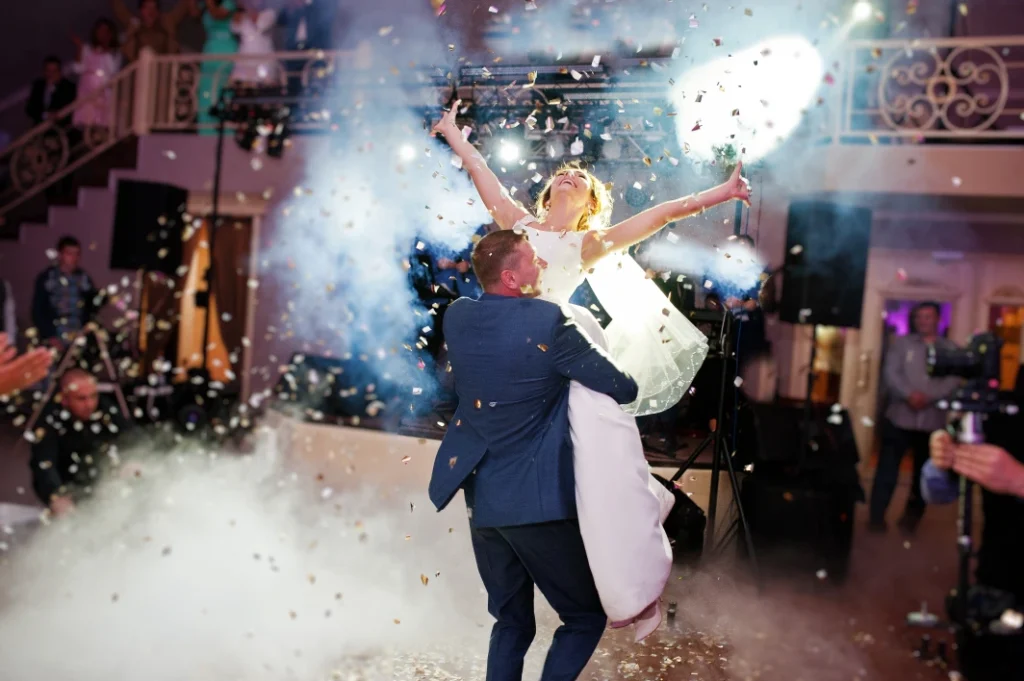
The simplest difference between the Viennese Waltz and the Slow Waltz is tempo—and tempo changes everything. Slow Waltz gives you time to shape each “rise and fall,” stretch lines, and settle your balance before the next step. Viennese Waltz moves so quickly that you’re managing continuous rotation and momentum instead of “posing” between figures. In this guide, you’ll learn how that speed difference changes the feel, the technique, the music choices, and even the training approach—so you can tell which waltz you’re watching (and which one you should learn first).
Key Takeaways
- Tempo is the real separator: Slow Waltz is built for shaping and control; Viennese Waltz is built for nonstop travel and rotation.
- Slow Waltz emphasizes rise-and-fall and sway: you have time to lower, drive, rise, and soften—creating the classic “floating” look.
- Viennese Waltz emphasizes momentum management: steps are more compact, the body stays more centered, and your frame has to stay stable through rapid turns.
- The syllabus differs because of speed: Slow Waltz supports lots of figures and picture moments; Viennese Waltz relies heavily on core turns (and a few advanced rotations) executed cleanly.
- Training goals aren’t the same: Slow Waltz is the “technique lab” (balance, footwork, posture); Viennese Waltz is the “endurance + rotation test.”
The Historical Divergence: From Alpine Slopes to Royal Courts
To truly master these dances, you have to understand where they came from. The waltz wasn’t born in a ballroom; it was born in the mud and the mountains. It started as the Ländler, a rustic German folk dance where peasants wearing heavy, hobnailed boots would stomp and hop in circles. When this movement reached the urban centers, it had to be cleaned up for the aristocratic floorboards, but it never lost its dizzying, circular core.
The Scandal that Defined the Viennese Waltz
In the late 1700s, Vienna was the cultural heartbeat of Europe. When the waltz arrived, it caused a moral panic. For the first time, men and women were dancing in a “closed hold,” with the man’s hand on the lady’s waist and their bodies in close proximity. Critics called it “indecent,” and doctors even warned that the rapid spinning would cause dancers to faint or suffer internal damage.
Despite the backlash—or perhaps because of it—the dance exploded in popularity. Composers like the Strauss family leaned into this high-octane energy, writing music that pushed the tempo to its absolute limit. This established the Viennese Waltz as a dance of endurance and pure, unadulterated momentum. If you weren’t spinning, you weren’t waltzing.
The British Refinement and the Slow Waltz
By the time the dance reached England in the early 19th century, the cultural climate was different. The British “Standard” style sought to refine the raw energy of the Viennese version into something more controlled and expressive. Around 1910, the “Boston” waltz—a slower American import—began to merge with the traditional style.
The result was the slow waltz, often called the “Waltz of the English Style.” By cutting the speed in half, dancers suddenly had the “real estate” in the music to explore side-sway, intricate patterns, and a much higher degree of “rise and fall.” This slower tempo transformed the dance from a spinning whirlwind into a storytelling medium, where every step became an opportunity for emotional depth.
Technical Mechanics: Centrifugal Force vs. Controlled Gliding
The physical sensation of these two dances couldn’t be more different. In a slow waltz, you are essentially walking with extreme grace. In the faster variation, you are managing a constant state of falling and recovery.
Rotation and the Physics of Momentum
In the faster Viennese style, the primary challenge is the sheer speed of the turn. Because the music is moving so fast, you cannot rely on muscle power alone to move across the floor; you must use physics. Dancers use a “cross-step” on the reverse turns to lock their legs together, creating a tighter axis for faster spinning.
If you take viennese waltz lessons, one of the first things you’ll learn is that “bigger is not better.” If your steps are too large, you’ll never finish your turn in time for the next beat. It is a dance of compact efficiency, where the frame must be like steel to withstand the pull of the rotation.
The Mechanics of “Rise and Fall”
The slower variation is defined by its verticality. On beat one, the “drive” step, the dancer lowers into the knees, pushing off the floor with power. On beats two and three, the dancer rises onto the toes. Because the music is slow, this rise can be stretched and elongated.
This creates the “floating” illusion. In the faster style, there is almost no time for a full rise and fall. If you rise too high in a fast waltz, you lose your center of gravity and the centrifugal force will throw you off balance. Therefore, the fast version stays much “flatter” to the floor than the romantic, sweeping slow version.
The Importance of Sway and Alignment
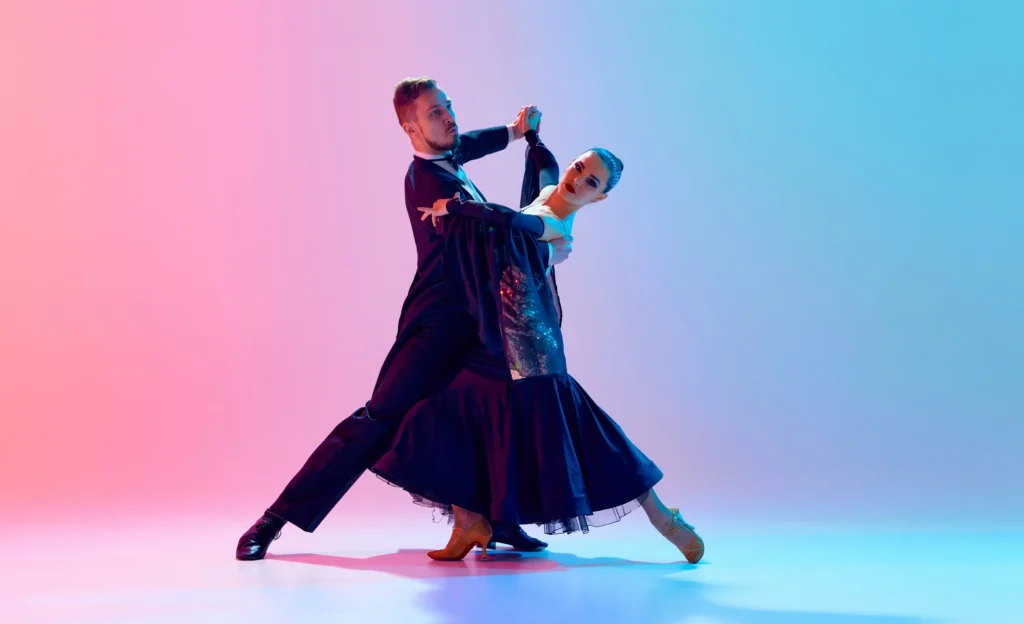
In the slow waltz, “sway” is used to help the body slow down and change direction. It’s like a plane banking into a turn. The dancer tilts the upper body away from the direction of travel to maintain balance. In the faster version, sway is almost non-existent because the speed is so high that any lateral tilt would result in a loss of control. The focus remains on a vertical, centered spine that acts as a pivot point for the rapid-fire turns.
Training and Progression: Building the Foundation
How do you decide which one to learn first? Most ballroom curricula start with the slower tempo for a very specific reason: it forces you to face your technical flaws.
Why the Slow Waltz is the Best Laboratory
At 30 measures per minute, every mistake is visible. If your balance is off, or if your footwork is sloppy, the slow music will expose it. This is why beginners are encouraged to master the “International Standard” or “American Smooth” waltz first. It teaches the “Long-Short-Short” rhythm and the proper “Heel-Toe” footwork that forms the foundation of all ballroom dancing. Mastering the slow version gives you the “balance vocabulary” needed to survive the faster tempos later on.
Transitioning to Viennese Waltz Lessons
Once a dancer has the core mechanics down, they move to the faster style to test their reflexes. Training for the fast waltz is essentially cardiovascular conditioning. You aren’t just learning steps; you are learning how to breathe while spinning for three minutes straight.
A typical lesson for the faster style focuses heavily on the “Natural” and “Reverse” turns. These are the “bread and butter” of the dance. While the slower dance has hundreds of possible figures—underarm turns, weaves, and whisks—the Viennese version is much more limited in its syllabus because of the speed. The beauty comes not from the complexity of the patterns, but from the perfection and speed of the execution.
A Tale of Two Tempos
Whether you are drawn to the breathless, classical elegance of the Viennese Waltz or the cinematic, romantic sweep of the slow waltz, both styles represent the peak of partner dancing. One is a test of fire and speed, a relic of the grand balls of the 19th century. The other is a modern masterpiece of control and artistry, allowing couples to express intimacy and grace at a more measured pace.
Understanding the “why” behind the speed allows you to appreciate the work that goes into both. It’s not just about moving your feet to a 3/4 beat; it’s about choosing how you want to inhabit the music. One dance spins you through history, while the other lets you glide through the present moment.
Frequently Asked Questions
Which waltz is better for a wedding?
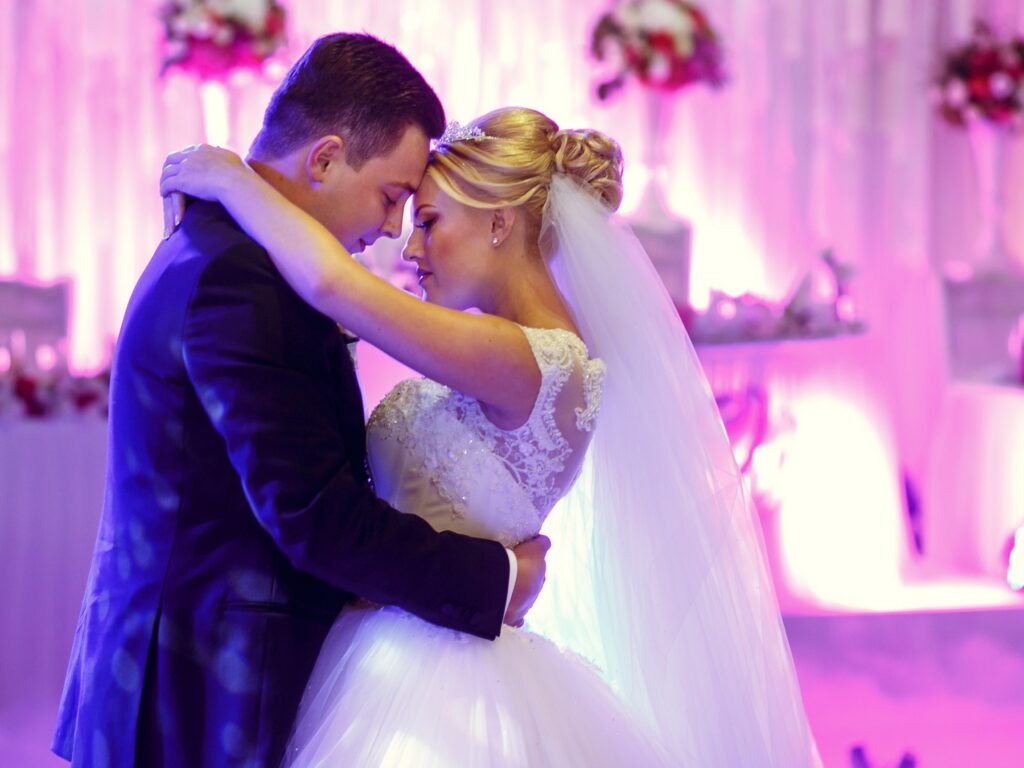
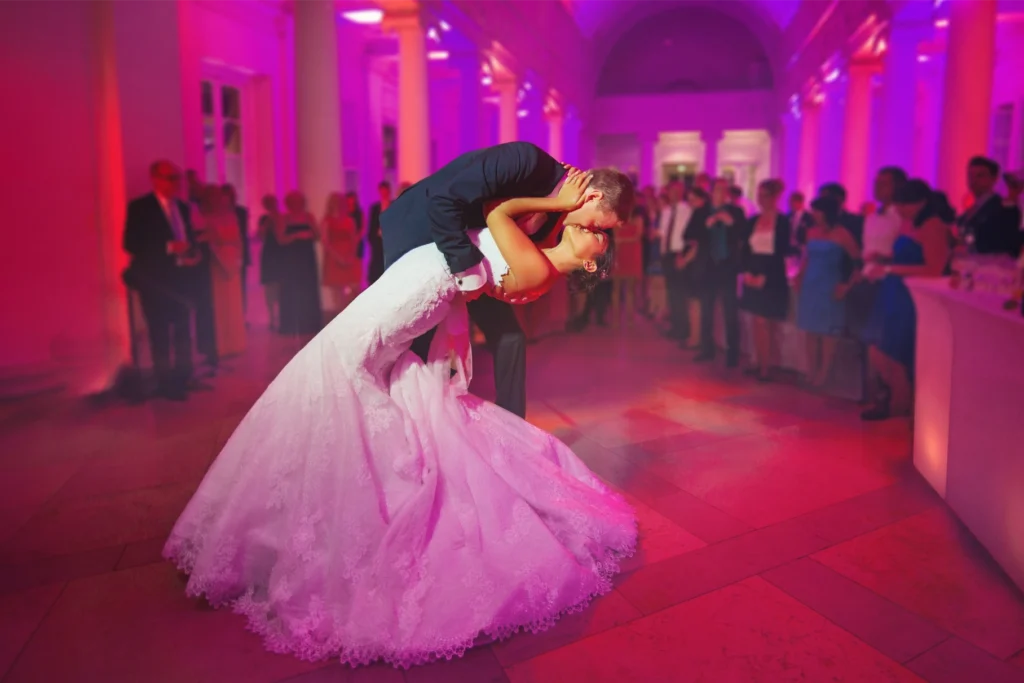
The slow waltz is almost always the better choice for weddings. Its tempo is easier for beginners to manage, and it allows for “picture poses” and underarm turns that look great in photography. The faster version requires much more space and athletic training.
How many steps are in the Viennese style compared to the slow style?
The “Syllabus” for the fast version is quite small, often consisting of only about 6 to 10 core movements (Natural Turns, Reverse Turns, Fleckerls). The slow style, however, has dozens of recognized patterns and variations because the tempo allows for more complex footwork.
Why do I get dizzy when I try the faster waltz?
Dizziness is common in the fast version because of the constant rotation. Professionals use a technique called “spotting” (to a lesser degree than ballet) and focus on keeping their eyes level. Taking professional viennese waltz lessons can help you learn how to use your peripheral vision to stay oriented.
Is the music the same for both?
No. While both are in 3/4 time (counting 1-2-3), the tempo is the defining factor. You cannot dance a slow waltz to a Strauss piece, nor can you dance a Viennese Waltz to a modern ballad like “Moon River.”