Ballroom and Latin dancers have good posture because dancing trains them to keep the head, shoulders, rib cage, and hips aligned while moving. This creates a strong frame, improves core engagement, supports balance, and helps the spine stay upright instead of collapsing into the slouched positions that are common in daily life.
Key Takeaways
- Ballroom and Latin dancing improve posture by training full-body alignment, especially through the relationship between the head, shoulders, rib cage, and hips.
- A strong dance frame depends on core and back engagement, not just pulling the shoulders back or standing stiffly.
- Smooth and Latin styles use posture differently, but both require balance, spinal control, and coordinated movement.
- Better posture in dance can support daily comfort by reducing strain on the neck, upper back, and lower back.
- Consistent practice helps make better posture more natural, so the benefits can carry over beyond the dance floor.
- Posture training should feel active but not painful, which is why proper instruction and gradual practice matter.
The Foundation of Alignment: How to Improve Posture in Ballroom Dancing
If you’ve ever walked into a dance studio, you’ve likely seen a teacher poking at a student’s shoulder blades or telling them to “grow taller.” It’s not just for aesthetics; it’s about structural integrity.
To understand the mechanics of how to improve posture in ballroom dancing, you have to stop thinking of your body as a single unit and start seeing it as a series of heavy blocks. In the world of high-level competitive dance, we focus on the “Body Block” theory.
Imagine four heavy bricks stacked perfectly on top of one another. If one brick shifts two inches to the left, the brick above it must shift to the right to prevent the whole tower from falling. This is exactly what happens when your hips tuck under or your head leans forward—your spine becomes a jagged zig-zag rather than a supportive column.
The Head and the Cervical Spine: The Crown of the Frame
The topmost block is the head, and in the ballroom, it is the “crown.” Most of us suffer from “forward head posture” caused by years of staring at keyboards and steering wheels.
In dance training, we learn to lengthen the back of the neck by imagining the vertebrae at the base of the skull opening up. This isn’t just about looking “proud”; it’s about clearing the airway and allowing the vestibular system (your internal balance sensor) to function correctly.
When your head is perfectly balanced over your spine, your neck muscles, which are often chronically tight, can finally relax because they are no longer pulling a 12-pound weight back from the brink of a fall.
The Core and Rib Cage Connection: The Power of the “Knit”
The second and third blocks—the shoulders and the rib cage—are where most people lose their stability. Have you ever noticed how some people look stiff when they try to stand up straight?
That’s usually because they are flaring their ribs out and arching their lower back. In ballroom, we use a technique called “knitting the ribs.” This involves engaging the intercostal muscles and the transverse abdominis to pull the front of the rib cage down and in, creating a flat, solid front.
This engagement acts like a natural corset, protecting the spine and creating a “connected” feeling that allows a dancer to lead or follow a partner with just a few grams of pressure.
The Pelvic Tilt and Lower Body Stability: Finding Your True Center
The fourth block is the pelvis, the heavy anchor of the torso. Most office workers develop “Lower Crossed Syndrome,” where the hip flexors are tight and the glutes are “asleep,” leading to a painful arch in the lower back (anterior pelvic tilt).
Ballroom training fixes this by teaching a neutral pelvic floor. By slightly engaging the lower abdominals and lengthening the tailbone toward the floor, you create a stable platform. This alignment allows the legs to swing freely from the hip socket, enabling the long, gliding strides seen in the Waltz or the sharp, percussive footwork of the Cha-Cha.
Style-Specific Techniques: Enhancing Posture in Ballroom Dancing
While the “blocks” provide the foundation, the way we carry our weight changes depending on the music. This is where the art meets the science.
Whether you are aiming for the soaring elegance of a Waltz or the grounded sensuality of a Rumba, the nuances of posture in ballroom dancing require a deep level of body awareness that standard gym workouts rarely provide.
Achieving the Perfect Smooth Ballroom Dance Posture
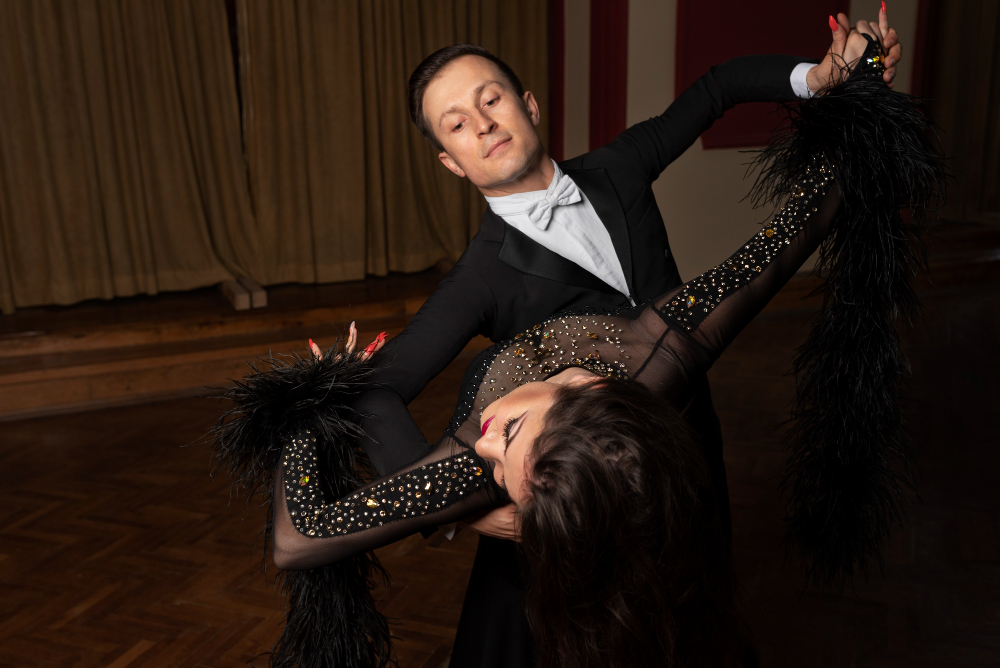
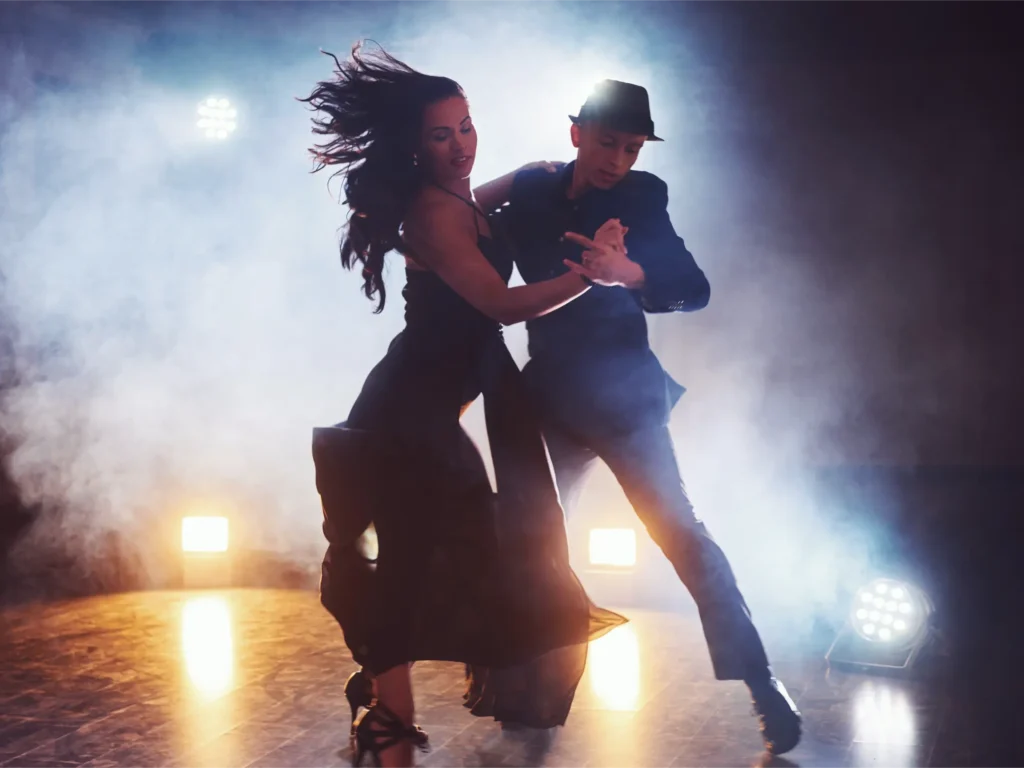
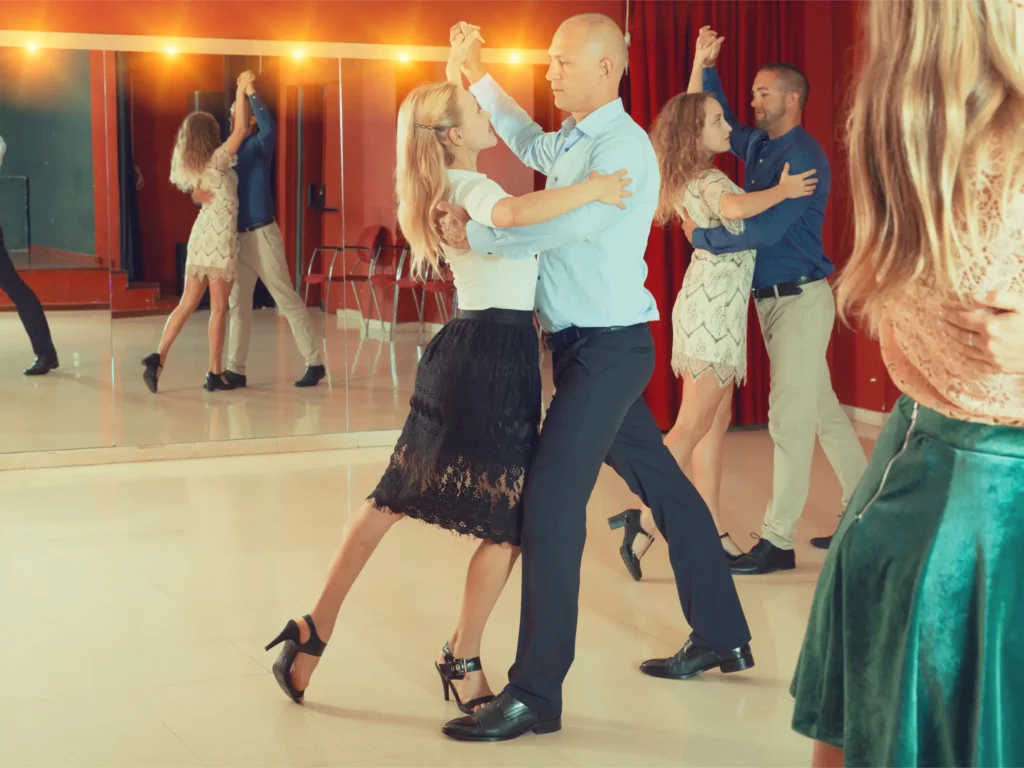
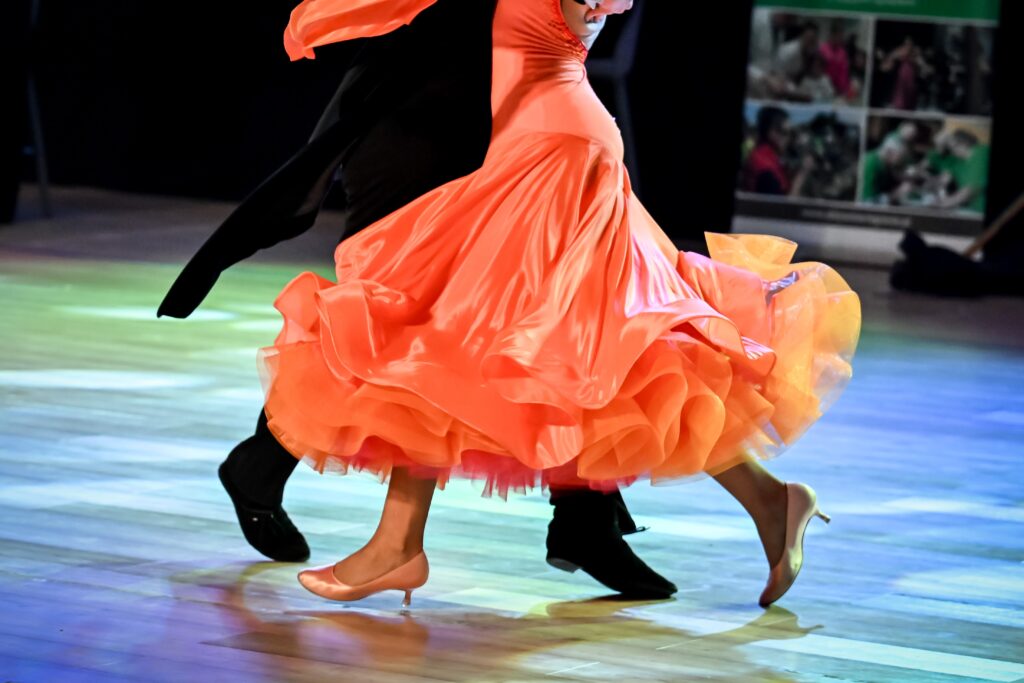
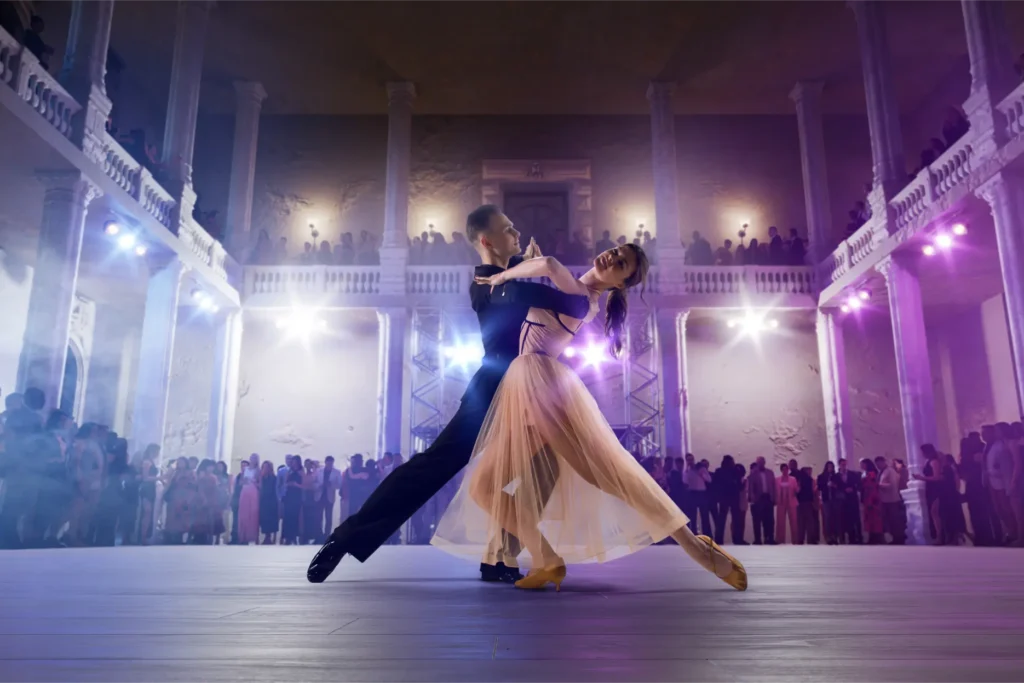
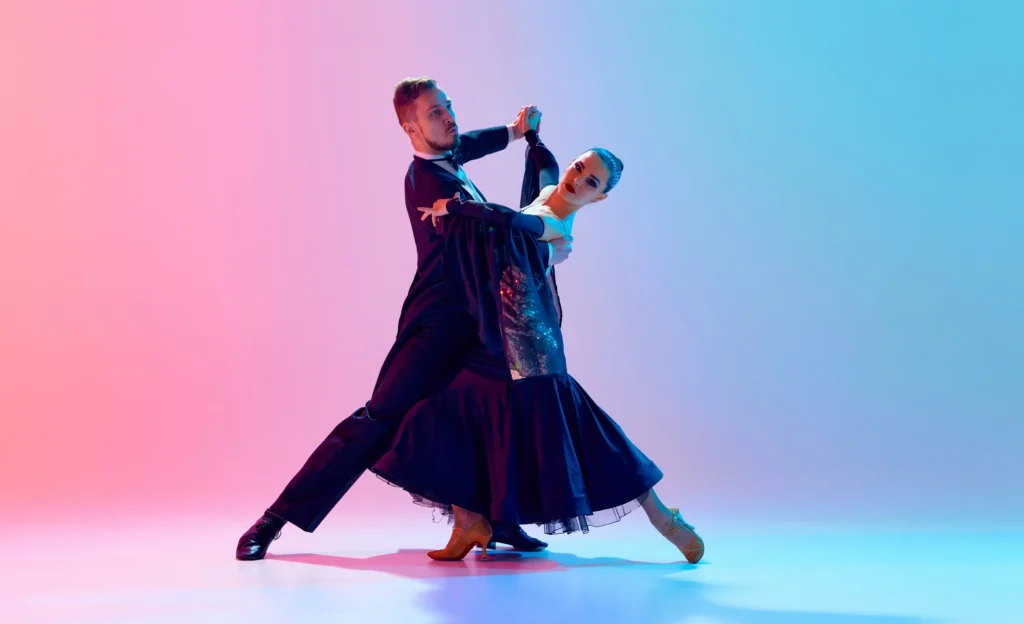
In the International Standard or American Smooth categories, the goal is to create maximum volume. Think of a parachute catching the wind.
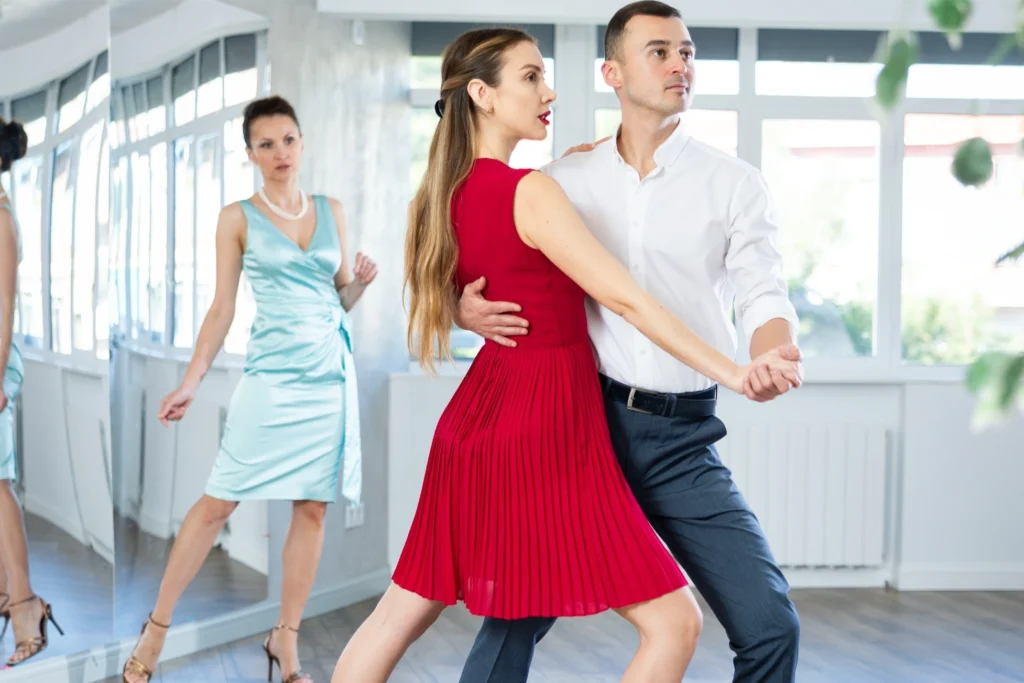
To achieve a smooth ballroom dance posture, the dancer must stretch their spine upward while simultaneously broadening the chest. It’s a dual action: the spine goes up, but the shoulder blades slide down the back into “pockets.”
This creates a massive, stable frame that looks light as air but is actually incredibly strong. For the average person, practicing this “Standard” stance is the ultimate antidote to the “slump,” as it forces the pectoral muscles to stretch and the upper back muscles (the rhomboids) to engage.
Mastering the Energetic Latin Dance Posture
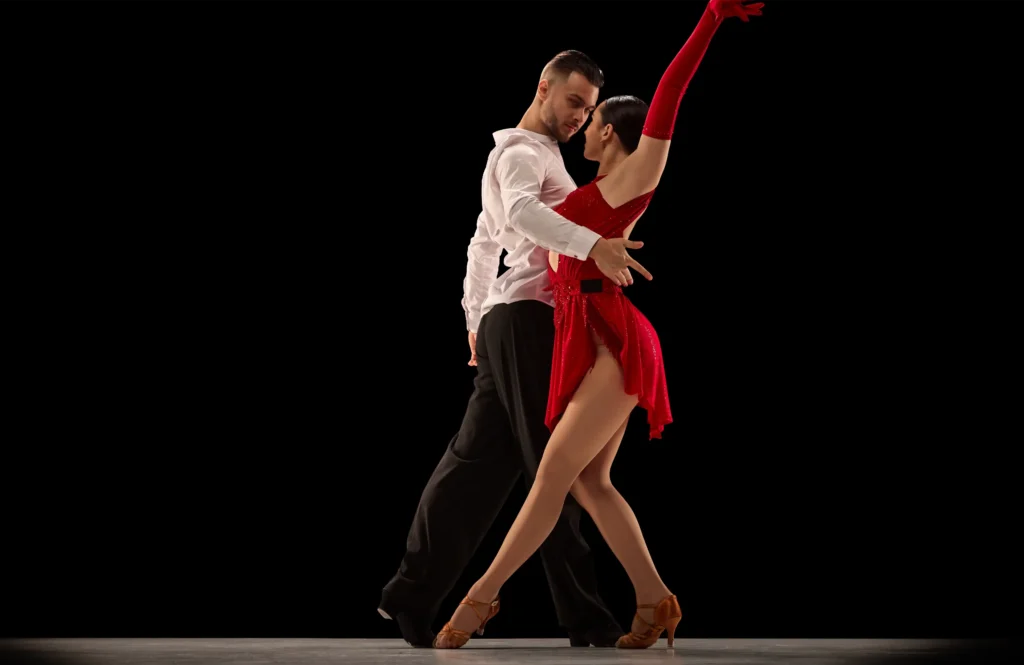
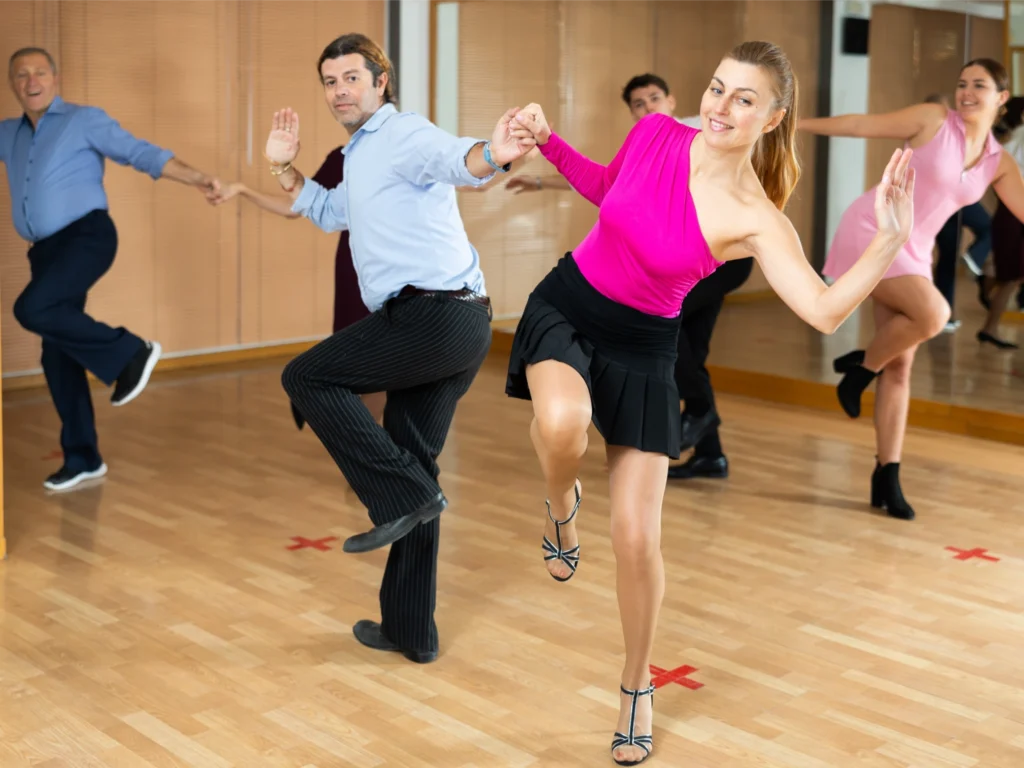
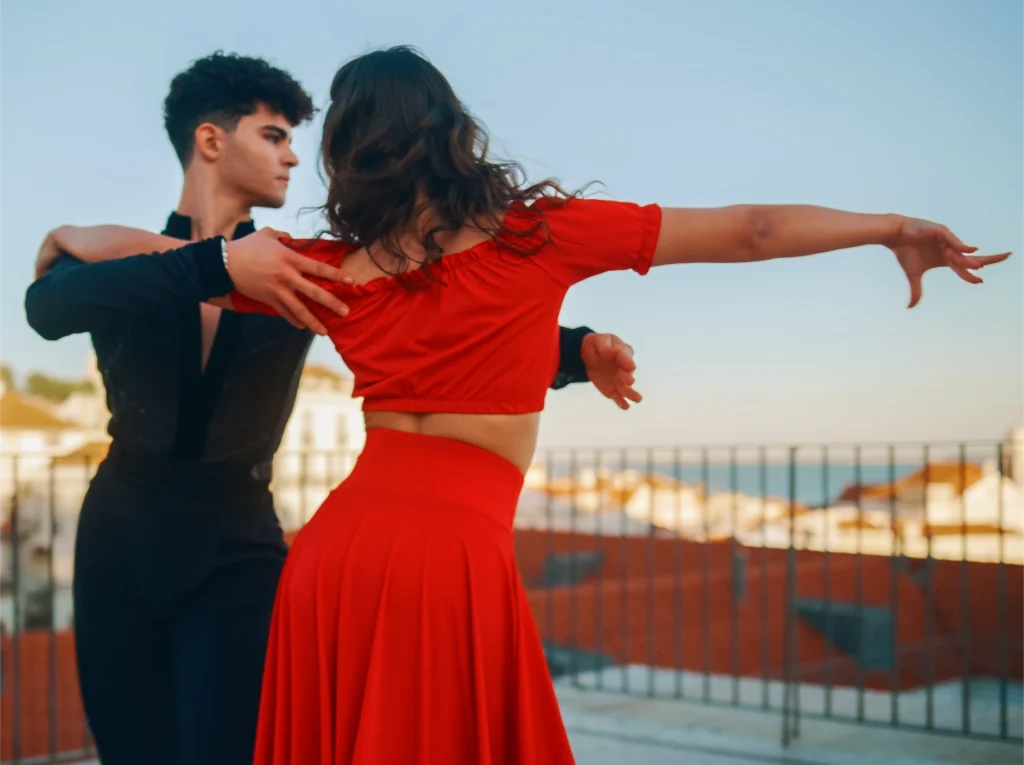
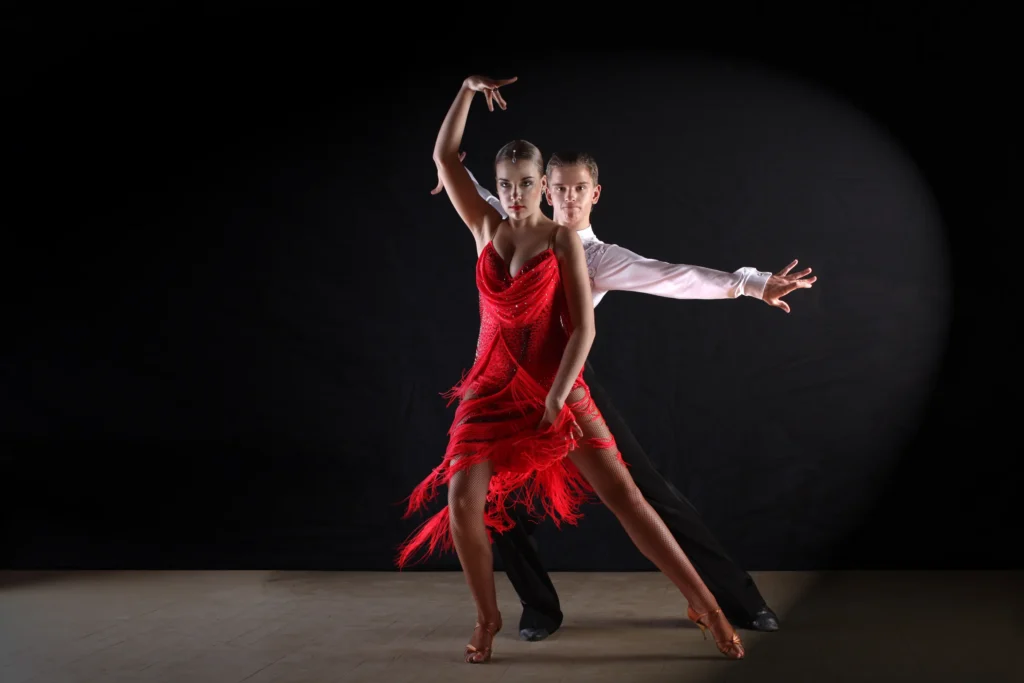
Latin dancing—Samba, Rumba, Cha-Cha, Paso Doble, and Jive—requires a completely different mechanical approach. A proper Latin dance posture is much more “over the balls of the feet.”
While Smooth dancing is about “flow,” Latin is about “action and reaction.” The weight is shifted forward, which might feel counterintuitive at first, but it allows for the rapid hip rotation known as “Cuban Motion.”
This forward-weighted stance forces the calves and glutes to be constantly active, which in turn supports the lower back. It’s an athletic, “ready-for-anything” posture that builds incredible lower-body strength and balance.
The Role of the Frame: Why Your Arms Are Your Back
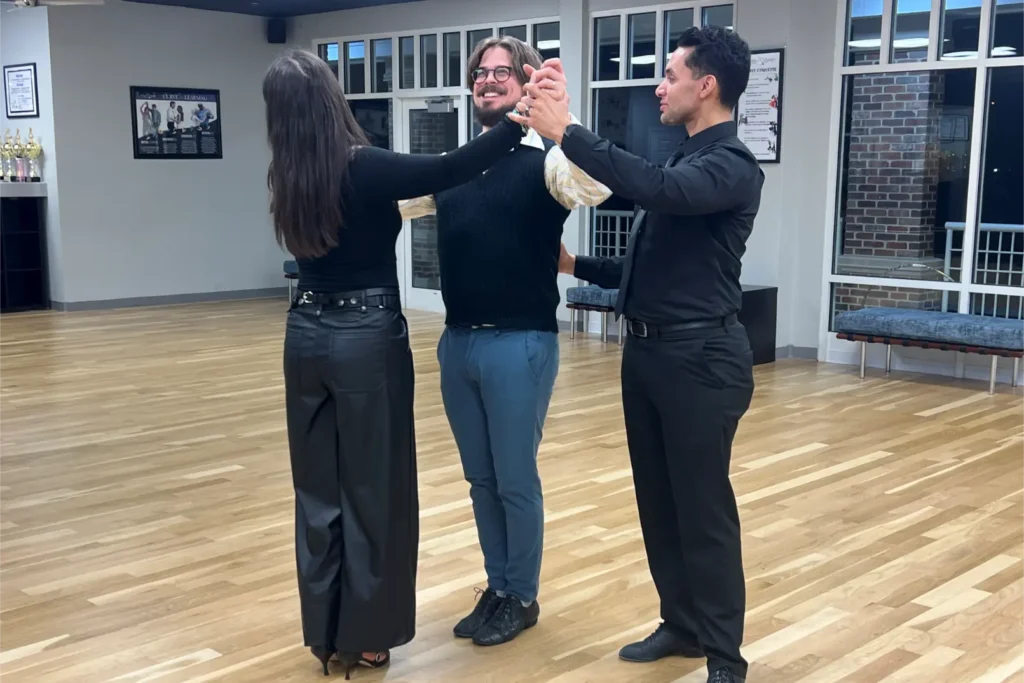
One of the most common misconceptions in dance is that the “frame” (how you hold your arms) is a shoulder exercise. In reality, a good frame is a back exercise.
Dancers are taught to “hold their arms with their lats.” By engaging the large muscles of the mid-back, you take the tension out of the neck and tops of the shoulders. This is why dancers have such defined, elegant backs.
Maintaining a frame while moving requires constant micro-adjustments in the core, making it a full-body workout that reinforces perfect alignment even when the body is under the stress of rapid movement.
The Long-Term Health Benefits of Dance-Based Alignment
It’s one thing to look good on a Saturday night, but the real magic of ballroom dance happens on Tuesday morning when you realize you’re sitting at your desk without that familiar ache between your shoulder blades. The repetitive discipline of keeping those four body blocks aligned creates a new “default” for your nervous system.
Injury Prevention and Joint Health
When your body is misaligned, your joints wear down unevenly, much like tires on a car with a bad alignment. By mastering the “stack,” you ensure that the pressure of your body weight is distributed through the centers of your joints rather than the edges. This is particularly vital for the knees and lower back.
Ballroom dancers often find that as their posture improves, their chronic joint pain reduces because the muscles are finally doing the job they were designed to do: supporting the skeleton.
Psychological Impact and Confidence
There is a profound psychological shift that occurs when you change your physical stance. In psychology, this is known as “embodied cognition.” When you adopt a ballroom-style posture—head high, chest open, core engaged—your brain receives signals that you are safe, confident, and in control.
Breath and Internal Organ Function
Try this: Slouch as far forward as you can and take a deep breath. Now, stand up in a ballroom frame and do the same. Notice the difference? A collapsed posture physically compresses your lungs and digestive organs.
By opening the rib cage and lengthening the torso, you create the space your body needs to function. Improved lung capacity means more oxygen to the brain, which leads to better focus and less fatigue. It’s no wonder that ballroom dancers often seem to have boundless energy—they are literally breathing more efficiently than the rest of us.
If you’ve been thinking about starting dance and are searching for a welcoming, professional dance studio in Princeton, we’d love to meet you. Arthur Murray Princeton offers beginner-friendly lessons, experienced instructors, and a supportive environment that makes learning to dance fun. Come see how easy and enjoyable dancing can be.
Conclusion: Living the Ballroom Alignment
The journey to perfect posture doesn’t end when the music stops. The ultimate goal of this training is to turn a conscious effort into an unconscious habit. Whether you are walking to your car, standing in line for coffee, or sitting in a long meeting, the principles of the four body blocks remain the same.
Ballroom and Latin dancers maintain exceptional posture due to the necessity of a strong, connected “frame” for partner communication, intense core engagement, and the requirement to constantly align their spine. This upright, disciplined stance enables effortless movement, balance, and elegance while preventing injury, which is cultivated through specialized training that focuses on controlling four main body blocks: head, shoulders, rib cage, and hips. By embracing these techniques, you aren’t just learning to dance; you are learning to inhabit your body with the grace and strength it was always meant to have.
Frequently Asked Questions (FAQs)
Can I improve my posture if I’ve been slouching for decades?
Absolutely. While it may take more time to stretch tight fascia and strengthen dormant muscles, the body is remarkably adaptable. Ballroom dance is one of the most effective ways to “re-map” your brain’s connection to your muscles at any age.
Do I need special shoes to practice these posture techniques?
While professional ballroom shoes help by providing the correct heel height and floor feel, you can practice the “Body Block” stacking in your bare feet or flat shoes. The alignment starts in the core and spine, not just the feet.
How often should I practice to see a permanent change?
Consistency is more important than duration. Ten minutes of focused “posture drills” every day is more effective than one three-hour session once a week. Your nervous system needs frequent reminders of what “correct” feels like.
Is it normal for my back to feel tired when I first start?
Yes. You are using small stabilizer muscles that have likely been inactive for a long time. This is “good tired”—the feeling of muscles growing stronger. However, you should never feel sharp or radiating pain.