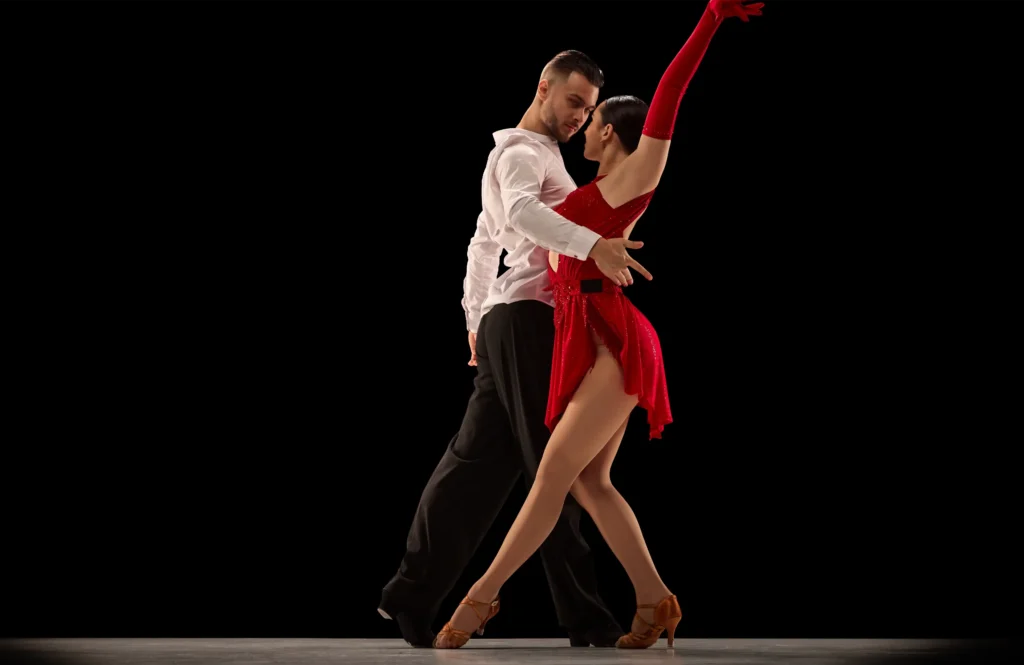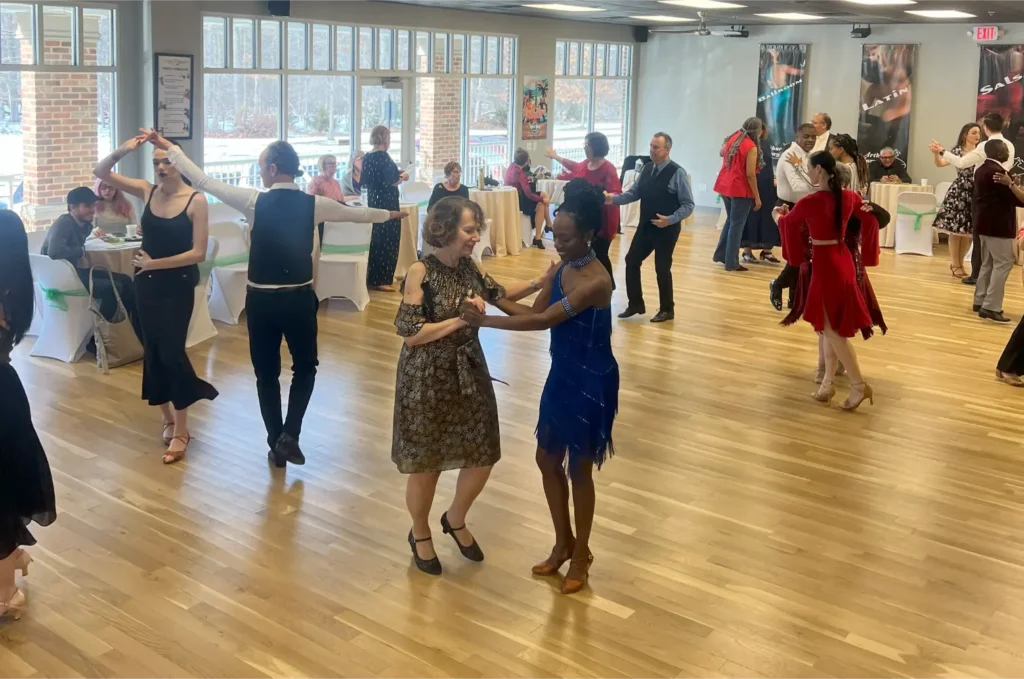
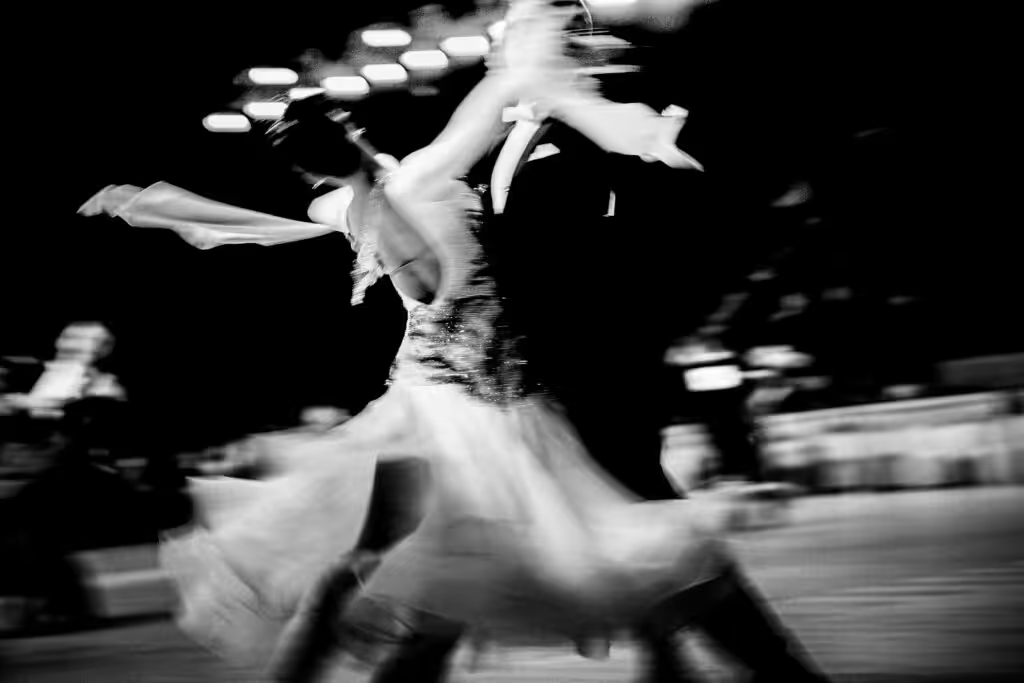
Ballroom dancing is divided into two schools, International and American. Together, they include four competitive styles, International Standard, International Latin, American Smooth, and American Rhythm, with 13 dances in total. Many dance studios also teach social dances like salsa and hustle alongside these competitive styles.
Key Takeaways
- Choose your style before you choose your dance.
- Waltz, Tango, Foxtrot, and Viennese Waltz are part of both Standard and Smooth, but each style uses different rules and techniques.
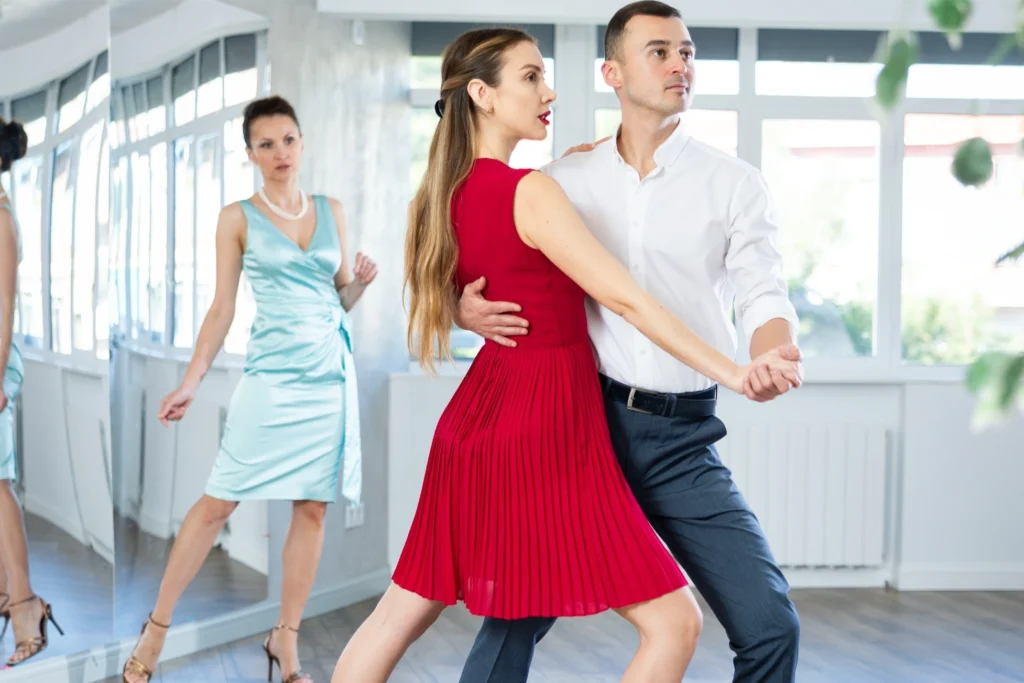
- Standard dancers stay in a closed hold for the entire dance.
- Smooth dancers can move into open positions and dance apart from their partner.
- Standard and Smooth travel around the floor in a counter-clockwise direction.
- Latin and Rhythm mostly stay in one area instead of moving around the floor.
How Many Types of Ballroom Dances Are There?
Competitive ballroom dancing includes 13 unique dances across four categories. International competition includes 10 dances, while American competition includes 9. Four dances appear in both systems, so the combined total is 13 unique dances rather than 19.
| Category | Dances |
| International Standard | Waltz, Tango, Viennese Waltz, Foxtrot, Quickstep |
| International Latin | Cha Cha, Samba, Rumba, Paso Doble, Jive |
| American Smooth | Waltz, Tango, Foxtrot, Viennese Waltz |
| American Rhythm | Cha Cha, Rumba, East Coast Swing, Bolero, Mambo |
Many dance studios also teach social dances like Salsa, Bachata, Hustle, Argentine Tango, West Coast Swing, and Country Western. These dances are popular for social dancing, but they are not part of the four main ballroom competition categories.
International Standard Dances
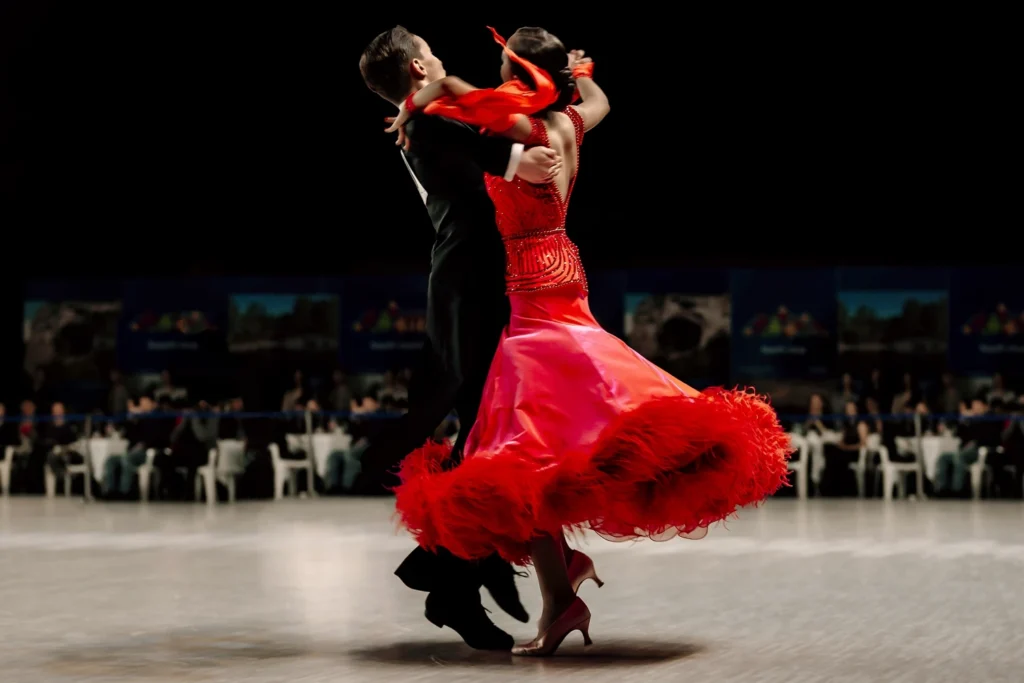
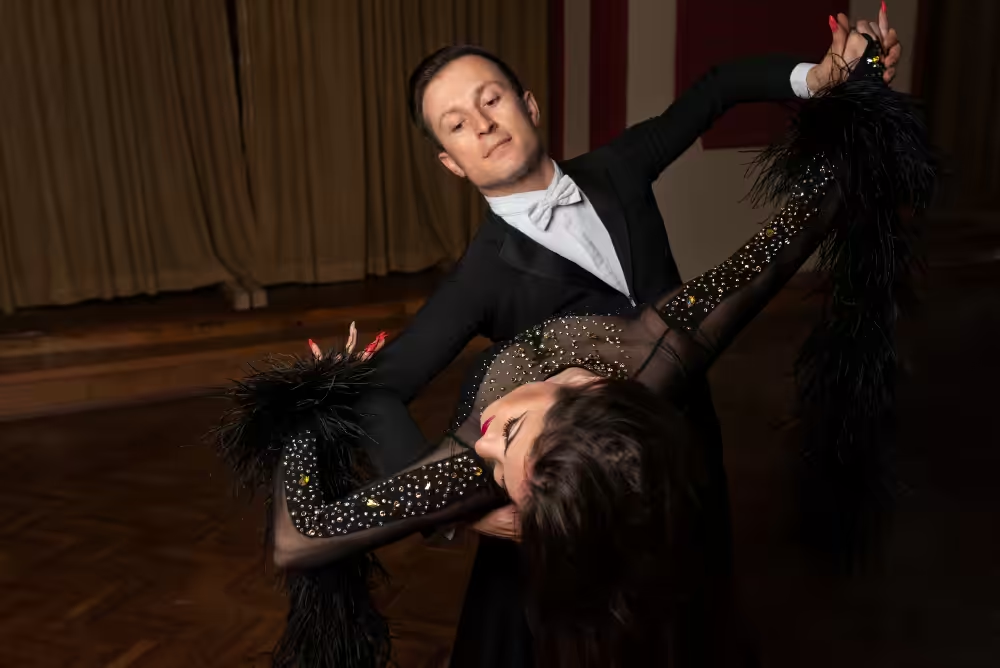
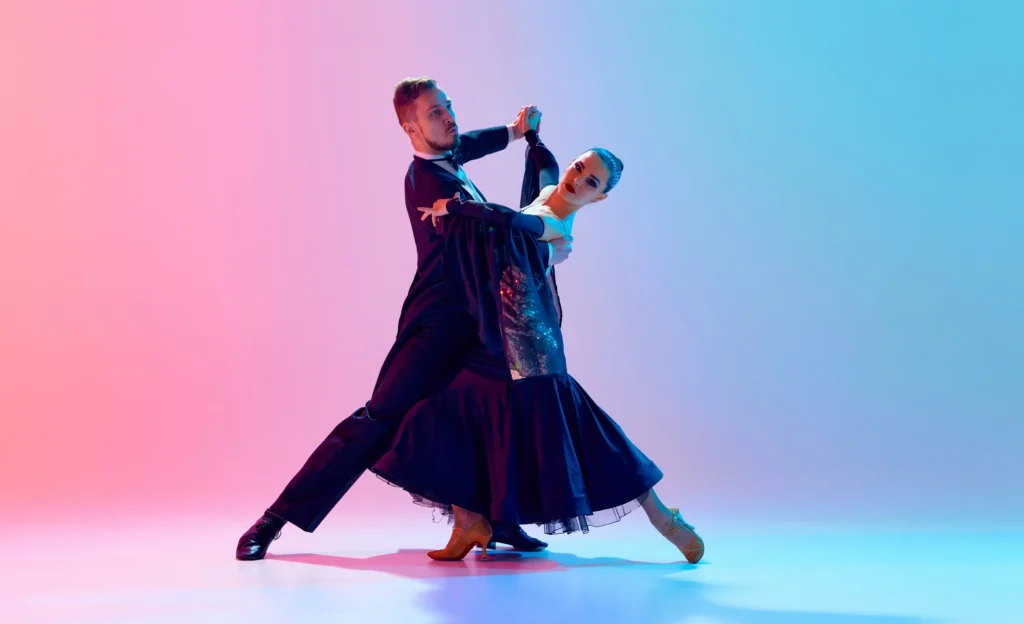
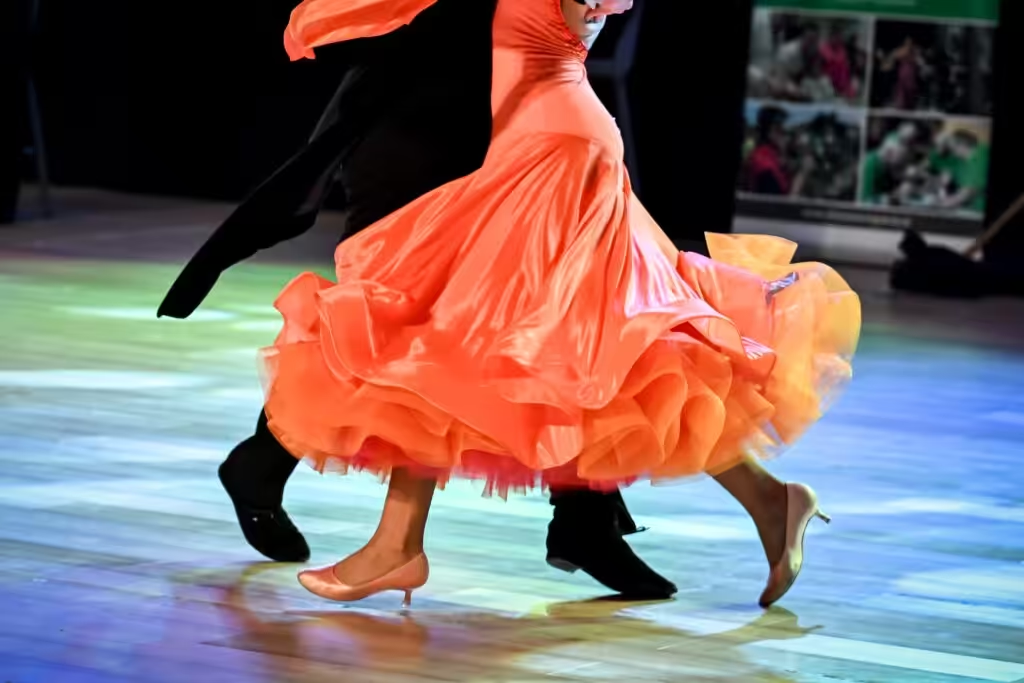
International Standard includes five dances: Waltz, Tango, Viennese Waltz, Slow Foxtrot, and Quickstep. Every dance stays in a closed hold from start to finish and follows the line of dance around the ballroom. Each one has its own tempo, rhythm, and technique.
Waltz
Waltz is known for its smooth rise and fall and flowing movement across the floor. Dancers perform it at 84 to 90 BPM, creating a calm, elegant look that makes it one of the most recognizable ballroom dances.
Learn more about how it compares to its faster counterpart in our guide to the Viennese Waltz vs. Slow Waltz.
Tango
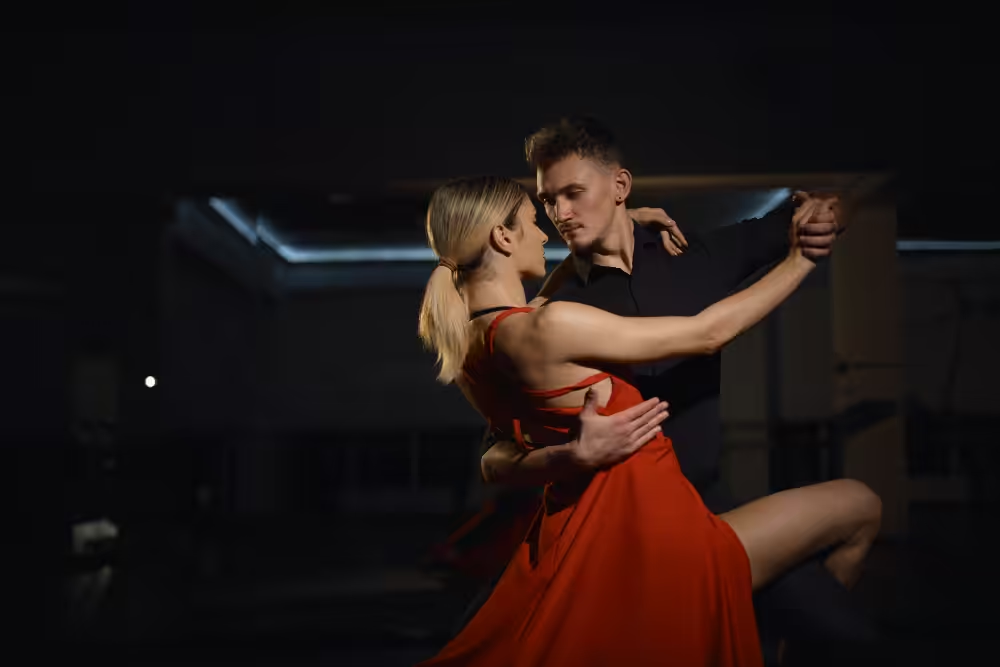
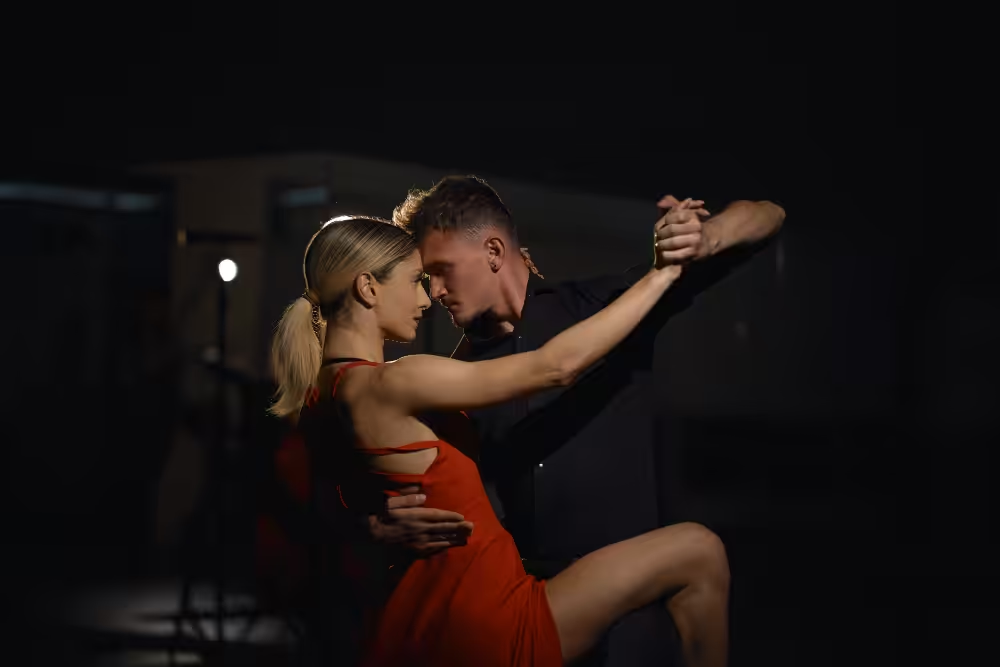
Tango uses sharp changes of direction, grounded movement, and dramatic pauses. Unlike the flowing action of Waltz, Tango stays level with little rise and fall. Competition music is set at 128 BPM.
If you want a closer look at this style, read our guide on Tango. You can also compare Tango with Milonga to see how the two dances differ.
Viennese Waltz
Viennese Waltz is much faster than the Slow Waltz and features continuous turning movements around the floor. Competition tempo ranges from 174 to 180 BPM, so balance and timing are essential.
Slow Foxtrot
Slow Foxtrot combines long, smooth steps with precise timing. It has a controlled, effortless appearance, even though it requires excellent balance and footwork. Competition music ranges from 112 to 120 BPM.
Learn more about Foxtrot dance here.
Quickstep
Quickstep is the fastest dance in International Standard, with music played at 200 to 208 BPM. Fast footwork, light movement, and quick changes of direction give the dance its lively, energetic character.
International Latin Dances
International Latin includes five dances: Cha-Cha, Samba, Rumba, Paso Doble, and Jive. Unlike Standard dances, these styles are mostly danced in one area of the floor instead of traveling continuously around the room. Each dance has its own rhythm, character, and technique.
Cha-Cha
Cha-Cha is a lively dance with quick footwork and playful rhythm. Its signature triple step gives the dance a sharp, energetic feel that rewards precise timing.
Learn more about the Cha Cha dance here.
Samba
Samba is known for its bouncing action and upbeat tempo. The dance combines rhythmic movement with traveling patterns to create a lively, festive style.
Rumba
Rumba is the slowest of the International Latin dances. It emphasizes controlled movement, musical timing, and strong partner connection over speed.
Learn more in our complete guide to the Rumba dance.
Paso Doble
Paso Doble is inspired by the drama of a Spanish bullfight. Strong shapes, powerful movements, and bold character define this theatrical dance.
Jive
Jive is the fastest International Latin dance. Quick kicks, flicks, and energetic footwork give it a fun, high-energy style that demands stamina and control.
If you’d like to explore these dances in more detail, read our guide to the different Latin dance styles.
American Smooth Dances
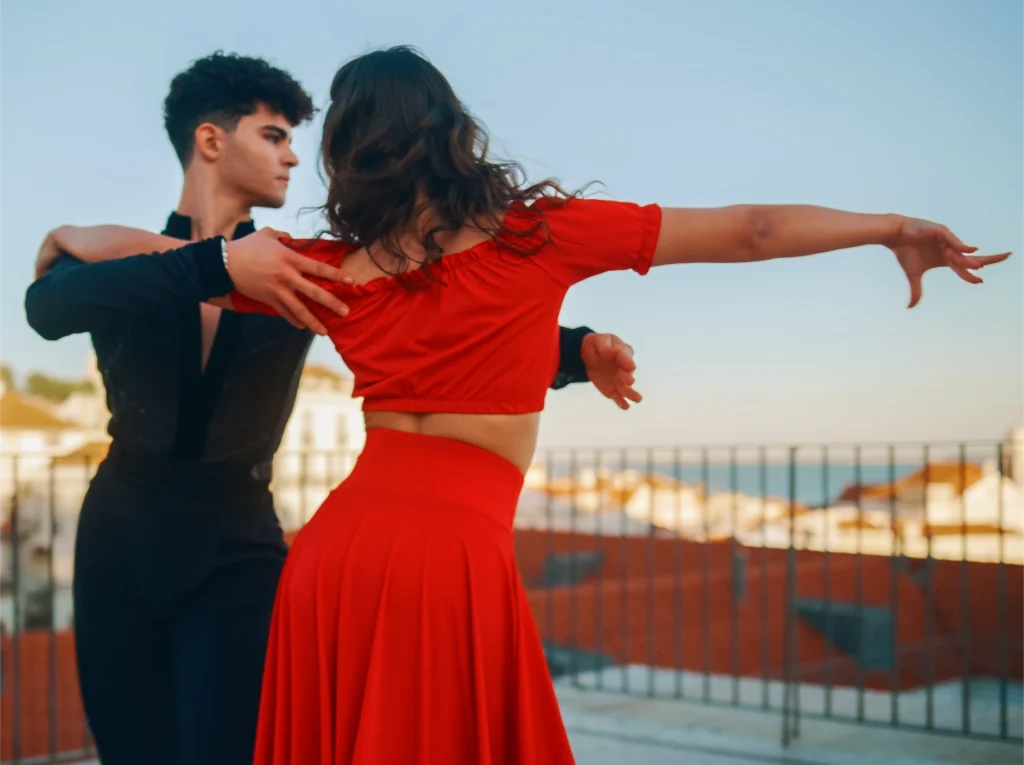
American Smooth includes Waltz, Tango, Foxtrot, and Viennese Waltz. These dances share their names with International Standard, but they allow dancers to leave the closed hold and perform open choreography. That freedom creates more opportunities for expressive movement and storytelling.
Waltz
Waltz often includes open turns, side-by-side movements, and sweeping arm lines that are not allowed in International Standard.
Tango
Tango blends its sharp character with dramatic moments in open hold. Partners can separate, reconnect, and change direction in ways that create a more theatrical performance.
Foxtrot
Foxtrot gives dancers more room to personalize their choreography. Open figures and changing partner positions create greater variety without losing the dance’s smooth, elegant style.
Viennese Waltz
Viennese Waltz combines continuous rotation with open choreography. Many routines alternate between classic turning patterns and expressive figures that showcase balance and timing.
A Brief History of Peabody
Peabody was once part of American ballroom dancing and helped shape the development of American Smooth. Although it is rarely included in modern competitions, its influence remains in the flowing, social style that later became popular through dancers like Fred Astaire and Ginger Rogers and studios such as Arthur Murray.
American Rhythm Dances
American Rhythm includes Cha-Cha, Rumba, East Coast Swing, Bolero, and Mambo. While Cha-Cha and Rumba also appear in International Latin, the American versions use different timing, technique, and styling. East Coast Swing, Bolero, and Mambo are unique to the American Rhythm.
Cha-Cha
Cha-Cha uses different timing and movement than the International style. The American version places more emphasis on social dancing and individual expression.
Rumba
Rumba uses a box step instead of the forward-and-back basic taught in International Latin. This makes it one of the easiest ballroom dances for many beginners to learn.
East Coast Swing
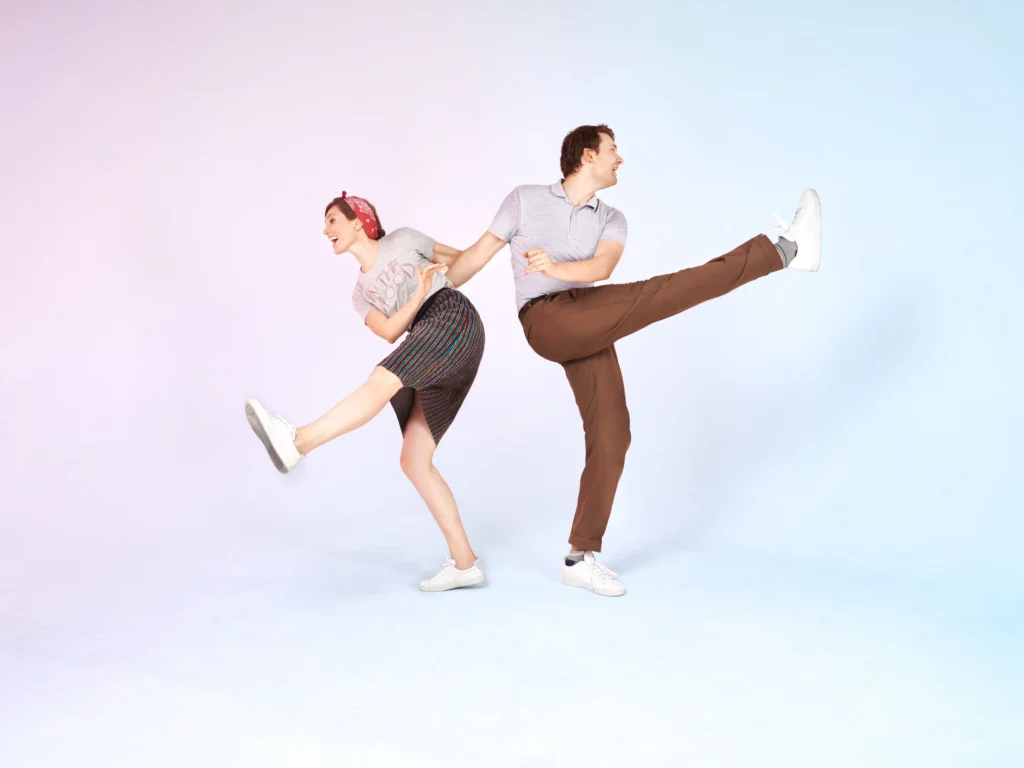
East Coast Swing is unique to American Rhythm. It gives dancers a ballroom version of swing that works well for social dancing and beginner classes.
You can learn more about swing dancing here.
Bolero
Bolero stands out because it blends smooth ballroom movement with Latin rhythm. It is the only American Rhythm dance that includes rise and fall.
Read our complete guide to the Bolero dance.
Mambo
Mambo shares its roots with salsa but follows its own ballroom syllabus and technique. In competition, dancers focus on precise timing and clean partner work rather than improvisation.
What’s the Difference Between International and American Style?
International Standard and American Smooth share four dances, but they follow different rules. International Standard requires dancers to stay in a closed hold throughout the entire dance. American Smooth allows partners to separate, dance side by side, and reconnect as the choreography changes.
The same contrast appears in the Latin categories. International Latin follows a single set of rules used in competitions worldwide, while American Rhythm uses different timing, technique, and dance selections for some styles. Both systems teach strong partner skills, but each has its own approach to movement and musical expression.
If you plan to compete, your choice usually depends on the organization and events available in your area. International competitions follow the standards and judging systems established by the World DanceSport Federation. You can learn more about those judging criteria on the World DanceSport Federation website.
Social and Nightclub Dances Taught at Ballroom Studios
Social and nightclub dances are partner dances you can use at weddings, parties, clubs, and other events. They are more relaxed than competitive ballroom dances and focus on having fun with the music. Many ballroom studios teach them to help students feel more confident dancing in real-life situations.
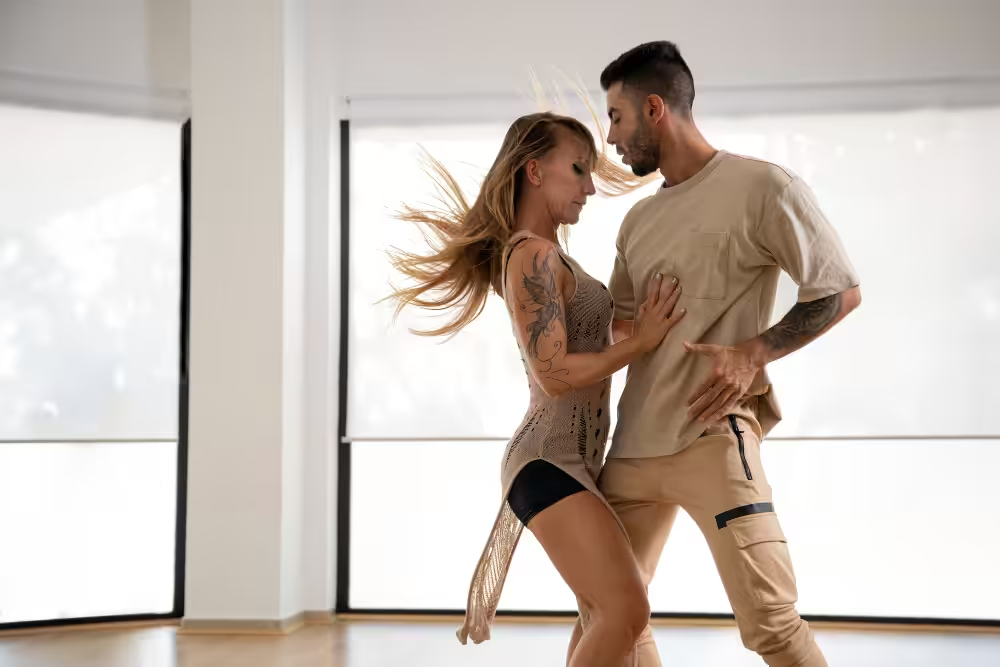
- Salsa is a fast-paced Latin dance with quick footwork, turns, and partner patterns. It is one of the most popular social dances in the world.
- Bachata uses simple side-to-side steps and close partner connection. Its relaxed pace makes it a popular choice for beginners.
- Merengue features an easy marching rhythm that is simple to learn and works well for social dancing.
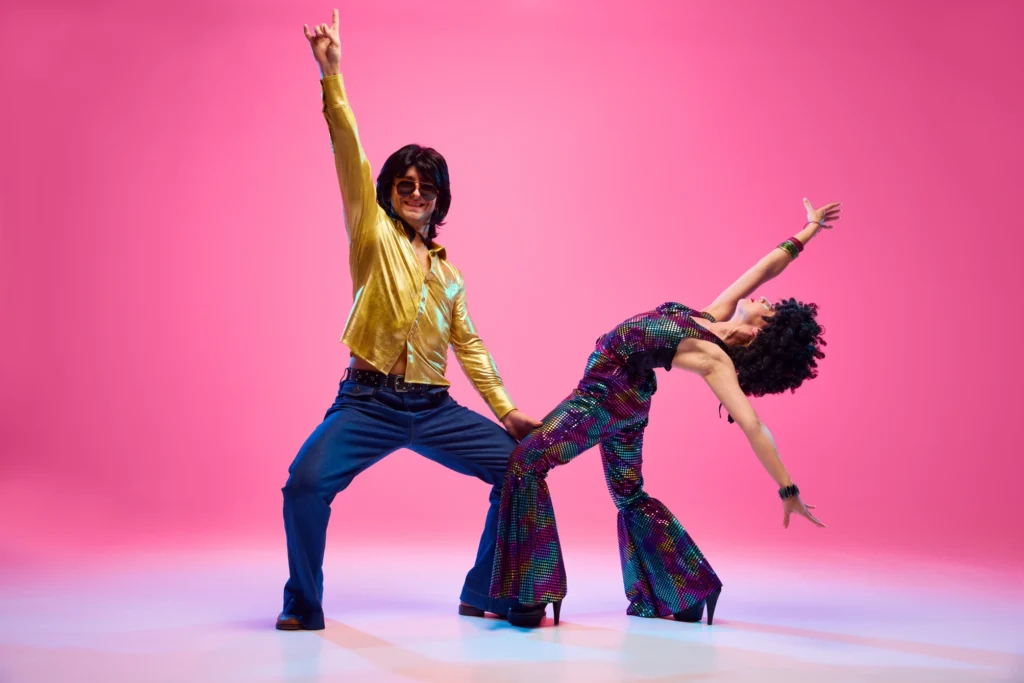
- Hustle became popular during the disco era and combines smooth traveling patterns with spins and turns that match modern music.
- West Coast Swing is danced to a wide range of music, including blues, pop, and contemporary hits. Its elastic connection allows dancers to improvise and adapt to different songs.
- Nightclub Two-Step is a slow partner dance designed for ballads and romantic music. It is a popular choice for weddings and formal events. Learn more in our complete guide to Nightclub Two-Step.
- Milonga is a faster, more playful relative of Argentine Tango. While ballroom studios may teach it alongside Tango classes, it follows a different style and tradition. Compare the two in our guide to Milonga vs. Tango.
Is Salsa a Ballroom Dance?
No, Salsa is not one of the four competitive ballroom categories. It belongs to the social dance family and has its own competition formats, techniques, and styles.
Many ballroom studios, including Arthur Murray Dance Centers, teach Salsa because it is one of the most requested partner dances for social events.
Which Ballroom Dance Should You Learn First?
Some dances are better for weddings, while others help you build strong technique or keep up with faster music.
- For weddings: Waltz and Nightclub Two-Step are excellent choices for slow songs and formal events.
- For social dancing: Salsa, Bachata, and East Coast Swing are popular at parties, clubs, and community dance nights.
- For beginners: Rumba is often the easiest place to start because its slower pace gives you more time to learn the basics.
- For technique: Waltz and Foxtrot build balance, posture, partner connection, and movement that carry over to many other ballroom dances.
- For energy: Jive, Quickstep, and East Coast Swing are great if you enjoy fast music and active footwork.
- For performance: American Smooth is a good choice if you like expressive choreography and open movements.
- For competition: Start with the style offered by your dance studio or the competitions you plan to enter. Learning one system first makes it easier to build consistent technique.
If you’re looking for a dance studio in Princeton Junction, Arthur Murray Dance Center is a great place to start. Get your first lesson for free. Claim it here so you can experience the classes and meet our team before deciding on a program.
FAQ
What is the hardest ballroom dance?
Many dancers consider Quickstep, Viennese Waltz, and Tango to be the most challenging ballroom dances. Quickstep demands speed and precise footwork, Viennese Waltz requires continuous turning at a fast tempo, and Tango relies on sharp timing and strong control.
Is ballroom dancing an Olympic sport?
No. Ballroom dancing, also called DanceSport, is recognized by the International Olympic Committee through the World DanceSport Federation, but it is not part of the Olympic Games. Breaking appeared at the 2024 Olympics, but Standard and Latin ballroom events have not been included.
What is the oldest ballroom dance?
The Waltz is widely considered the oldest modern ballroom dance. It developed in Austria and Germany during the late 18th century and became the foundation for many ballroom traditions that followed.